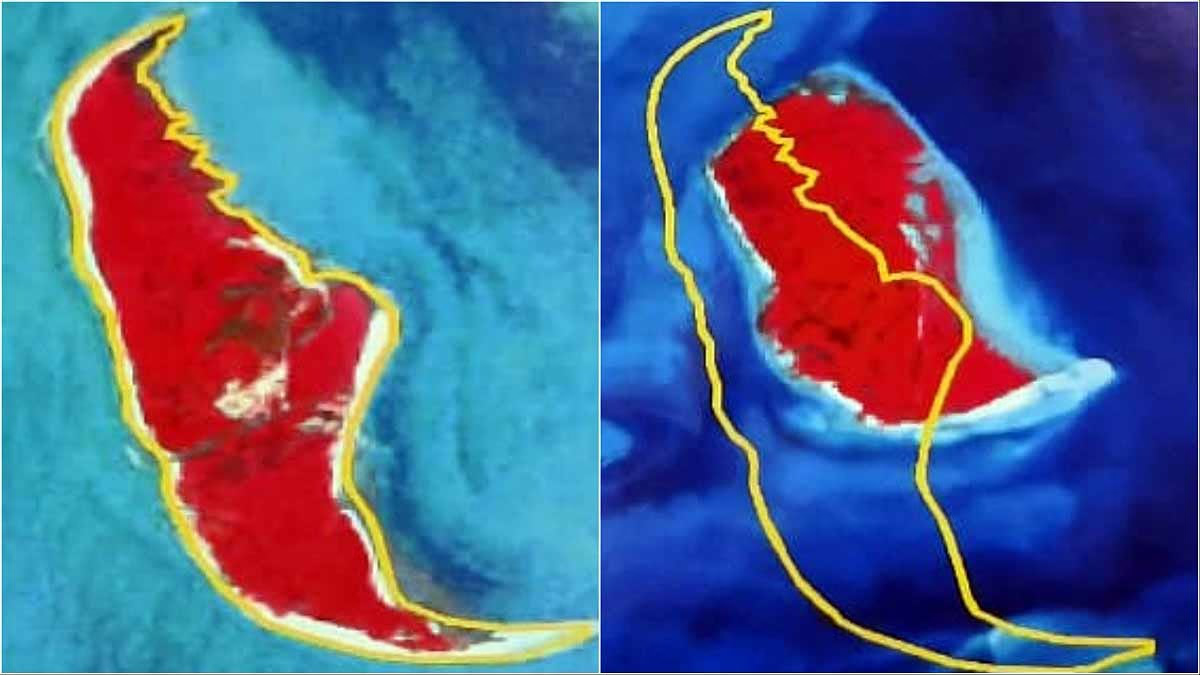
The mangrove forests of Sundarbans are revered as the planet's most formidable natural shield, yet climate change is now dismantling this bastion. Over the past 30 years, the islands of Bhanganaduni and Jambudwip have nearly vanished. The Forest Survey of India's 2023 report reveals a reduction of 7.43 sq km in mangrove cover since 2021, leaving India with 4,992 sq km in total.
In West Bengal, the Sundarbans' mangrove cover has shrunk by 2 sq km, while Gujarat has seen a significant 36 sq km depletion. Should this trend persist, by 2050, parts of 113 coastal cities could be underwater. Let us delve into the science and recent data to grasp the severity of this crisis.
Also Read:
The saga of Bhanganaduni Island, perched at Sundarban's southern edge, is a tale of despair. Once vividly depicted as a lush mangrove island in India's 1975 survey maps, its verdant landscape captured in a Landsat-2 satellite image, faced devastation by 1991 under Landsat-5's lens. Mangrove roots, weakened by encroaching sea salt and relentless waves, eroded dramatically — by 2016, Landsat-8 photos showed it halved from its 1975 expanse. Analyst Anupam Ghosh from FSI confirmed the sea's claim over 23 sq km between 1991 and 2016.
Source: aajtak
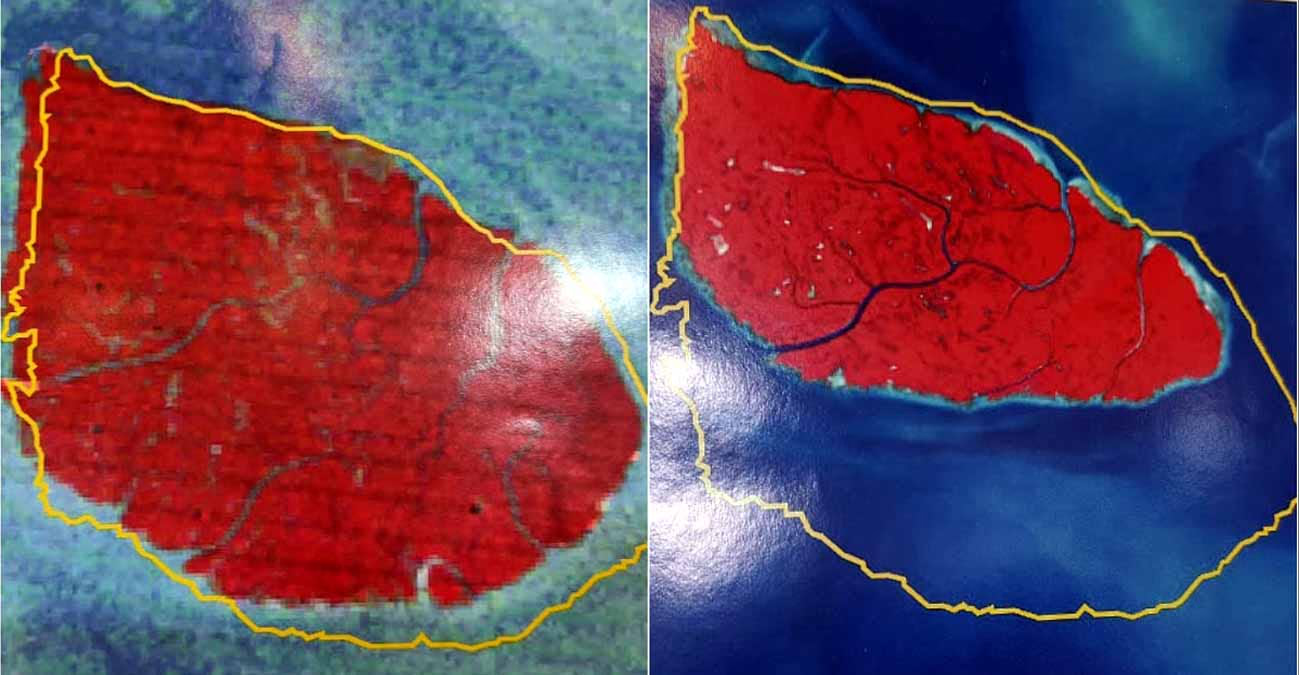
Jambudwip shares this fate. Expansive in 1991, only to shrink dramatically by 2016 — not just contracting, but morphing due to wave-driven erosion that shifted its lower portions. Data from NASA and WWF for 2024-2025 indicates a troubling annual land submersion rate of 3 cm in the Sundarbans, doubling the global average.
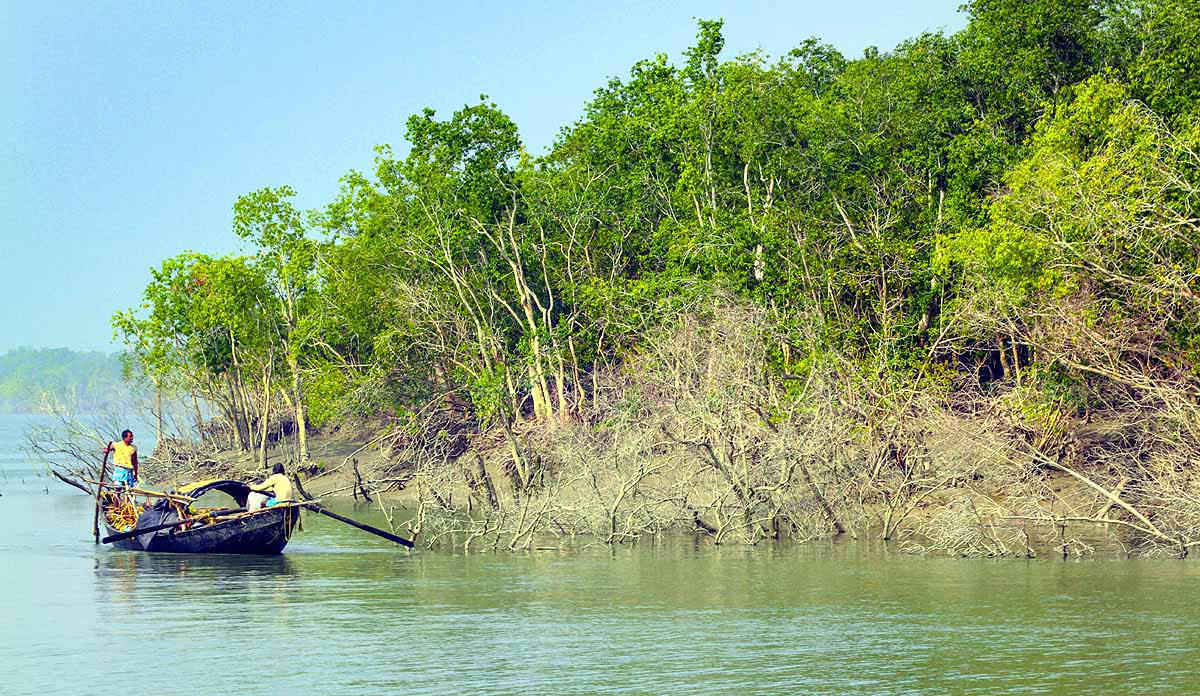
The root cause is climate-induced sea level rise. The IPCC's 2023 report lays bare the issue: global warming is causing ocean water to expand thermally while Himalayan glaciers melt. In the Sundarbans, the sea level rises annually by 3.9 mm, twice the global norm (1.7 mm). Increasing saline encroachment is decimating mangrove roots crucial for soil stability.
Source: aajtak
Sea Level Rise (SLR): Forecasted surge of 62-87 cm by 2100 (INCOIS 2025 report).
Coastal Erosion: 97% of the coastline is eroding; 163 sq km lost between 1969-2001 (Jadavpur University studies).
Human Activities: Dams restrict Ganga-Brahmaputra flow, and fishing nets are ravaging mangroves.
Cyclones: Cyclones like Fani, Amphan, Yaas from 2019-2024 displaced 40,000 homes.
Scientifically, mangroves act as carbon sinks, absorbing CO2, yet a 20% reduction threatens weather patterns.
Also Read:
FSI's authoritative 18th India State of Forest Report (2023) states...
Total Mangroves: Covering 4,992 sq km, accounting for 0.15% of the national area.
Reduction: 7.43 sq km decline since 2021; Gujarat (-36.39), Andaman (-4.65), West Bengal (-2).
Expansion: Andhra (+13), Maharashtra (+12), Odisha (+8).
Sundarbans: Over 25 years, four islands (Bedford, Lohachara, Kabasgadi, South Talpati) fully submerged.
2024-2025 Update (Down to Earth): Sundarbans see a 3 cm annual submergence rate; Mawshuni Island could lose 15% by 2030.
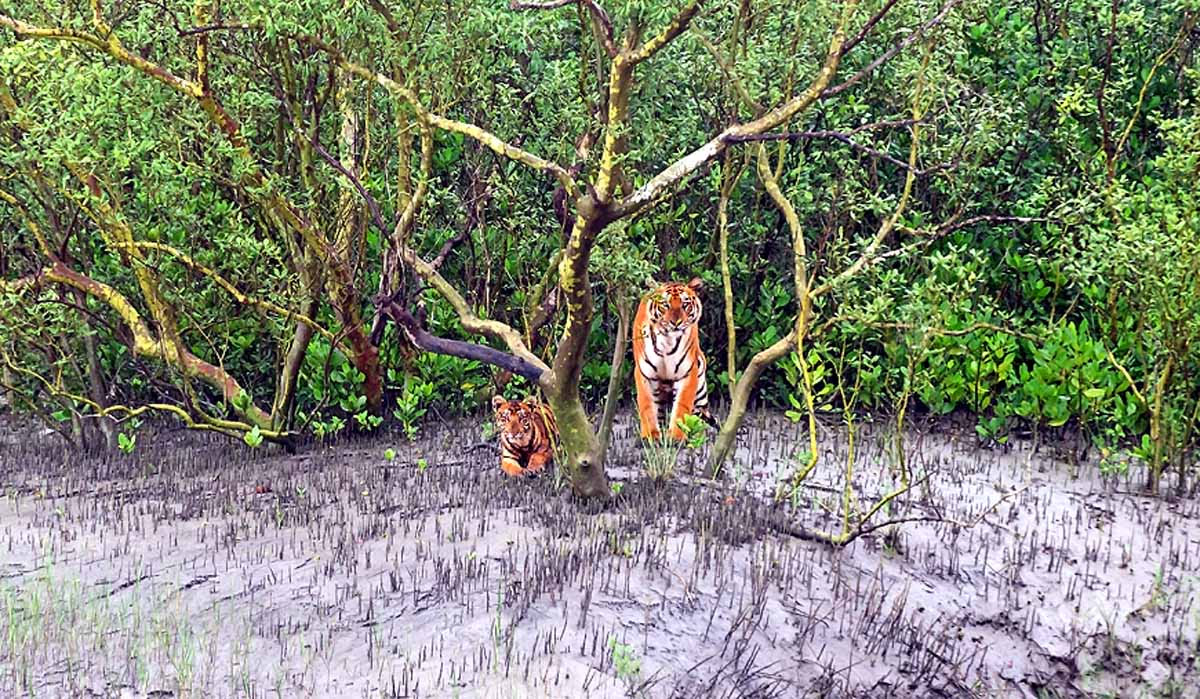
Source: aajtak
With over 50 inhabited among Sundarbans' 102 islands, four have already vanished. According to WWF-INCOIS 2025, these areas face imminent threats:
In Sundarbans: Ghoramara, Mawshuni, Sagar (30 sq km lost); potentially 15% surface loss by 2030.
Other Islands/Regions: Andaman-Nicobar (1 sq km of mangrove loss); low-lying Lakshadweep islands.
Coastal Cities: 113 cities at risk by 2050 (IDR 2024) — Bhavnagar, Gujarat (87 cm SLR), Kochi, Kerala, Visakhapatnam, Andhra Pradesh (62 cm), Mumbai, Kolkata, Chennai. Abrasion could claim 1,500 sq km by 2050 (WRI).
In West Bengal, the Sundarbans face a 15% island loss, impacting nearly 4.5 million lives. Bhavnagar in Gujarat will see sea levels rise by 87 cm, imperiling over a million people. In Tamil Nadu, Chennai's existence contends with flooding and coastal erosion, risking 7 million lives.
Also Read:
Mumbai, Maharashtra faces a rate of subsidence at 2 millimeters each year, endangering over 20 million residents. Kochi, Kerala joins the list of India's 113 coastal cities where more than half a million people will experience direct impacts. These numbers sound the alarms — without immediate action, our coasts risk becoming barren.
This is not just an environmental crisis; millions of lives are in jeopardy. Mangrove restoration, sea wall construction, and robust climate adaptation policies (NDMA 2023) are government mandates. Yet the pressing question remains: Will we act timely or witness our coasts succumb like the Sundarbans?