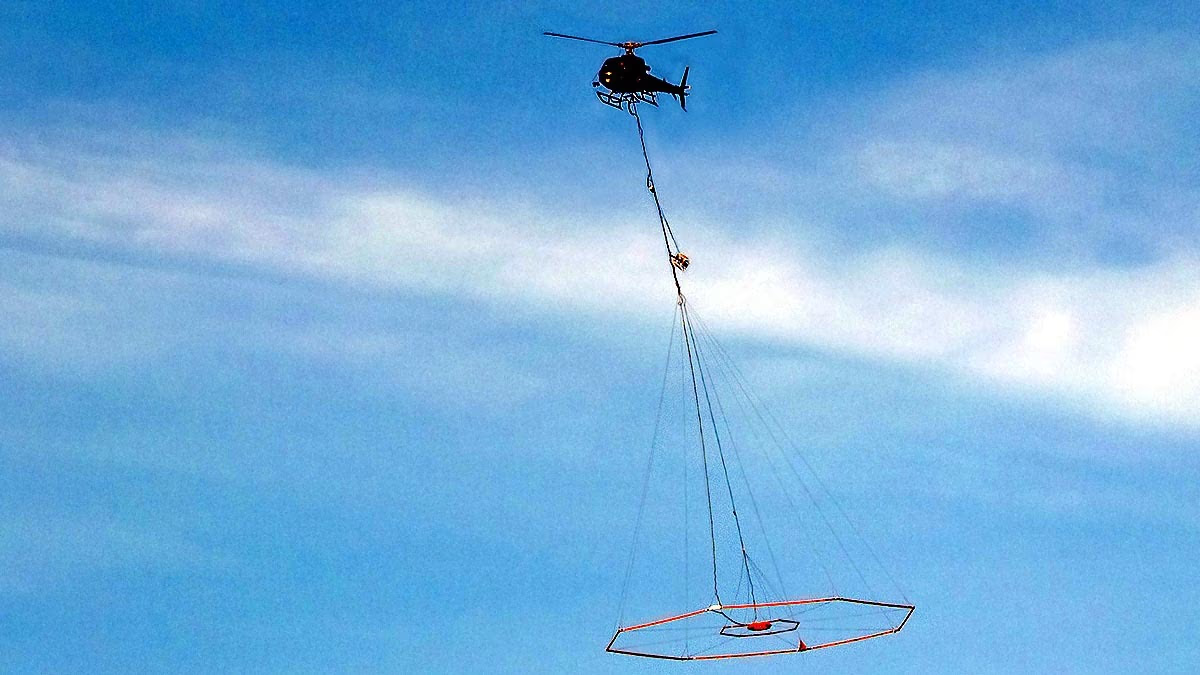
The groundbreaking efforts of India's Ministry of Jal Shakti have resulted in remarkable findings from the Heliborne Geophysical Survey conducted in Rajasthan's desert areas during 2021-22. This survey identified 64 potential sites in the Jaisalmer district that could be rich in groundwater.
Some of these sites have never yielded water through traditional methods before. This discovery could provide a long-term solution to water scarcity in Western Rajasthan's drought-prone areas.
Discover more:
Details of the Survey
Conducted using helicopters, the heliborne survey employs electromagnetic and geophysical technologies to gather data up to 500 meters beneath the ground. This method is fast, accurate, and capable of covering large areas. The survey uncovers groundwater sources, their depths, areas of saline and fresh water, ancient river paths (paleochannels), and suitable locations for artificial recharge.
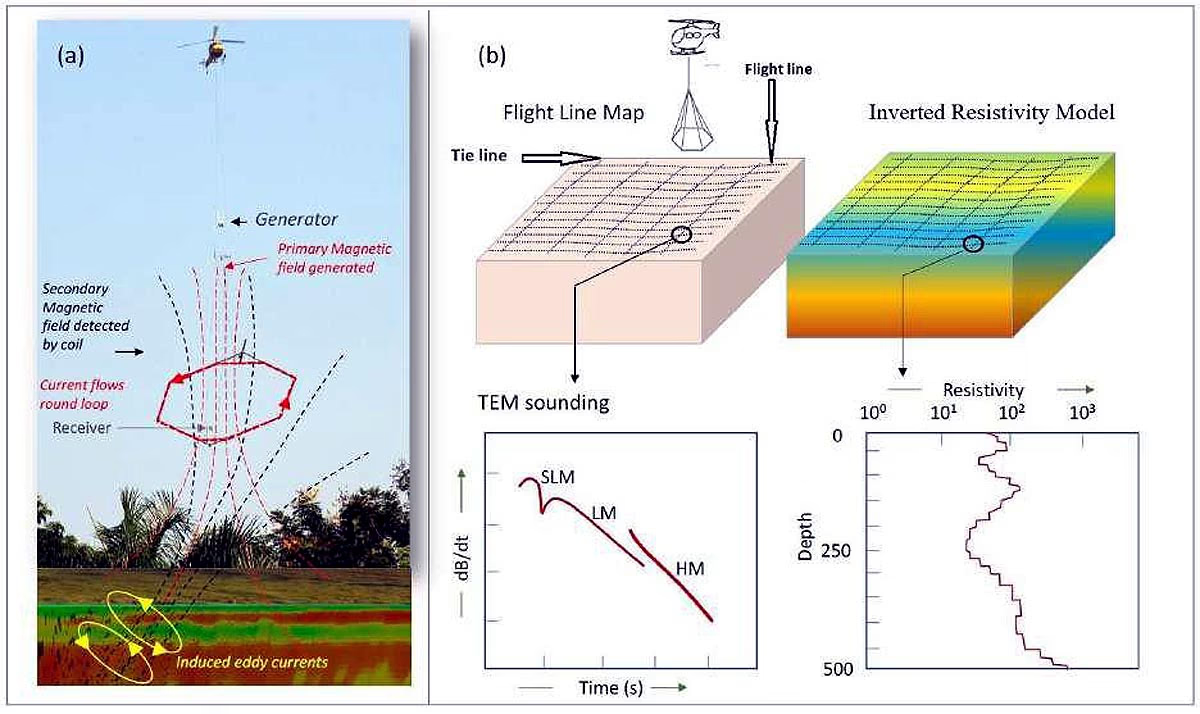
Source: aajtak
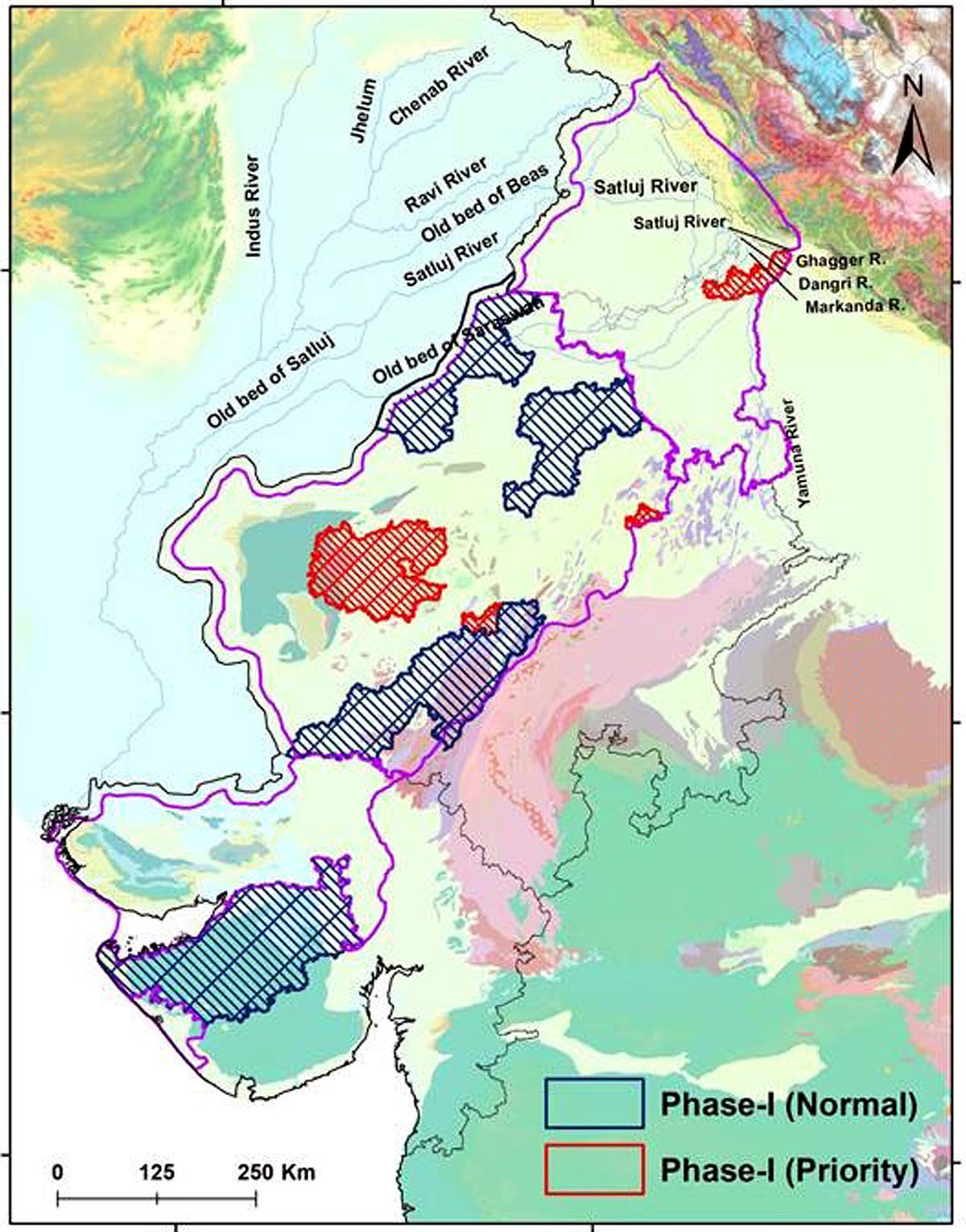
This project was a collaborative effort of the Central Ground Water Board (CGWB), the Ministry of Jal Shakti, and the CSIR-National Geophysical Research Institute (NGRI), Hyderabad. It covered a vast expanse of 66,810 square kilometers across key districts like Jaisalmer, Jodhpur, and Sikar. In Jaisalmer alone, approximately 15,000 square kilometers were surveyed.
Significant Discovery in Pokhran
According to esteemed groundwater scientist Dr. Narayan Das Inkhia, most of Pokhran tehsil was considered weak in terms of groundwater availability. However, the heliborne survey has sparked hope for reservoirs between villages like Phalsoond and Chhan, and from Dhudsar to Rajgarh. There's a newfound promise of groundwater availability at 64 locations, many of which rely heavily on scant drinking water supplies. Previous examinations failed to locate water here.
Read more:
The Phalsoond region is particularly crucial, as discovering groundwater here would be a notable achievement. Although canal water is available in Pokhran and Bhaniyana, tube wells could be drilled at these sites to offer emergency access to water.
Source: aajtak
Benefits of the Survey
Identifying new groundwater sources.
Locating optimal sites for artificial recharge (groundwater replenishment).
Providing permanent solutions to water scarcity in crisis areas.
Alleviating water issues in arid zones like the Sankra block with high-resolution aquifer mapping.
This survey is part of the National Aquifer Mapping Program (NAQUIM), which aims to cover 388,000 square kilometers across parts of Rajasthan, Gujarat, Haryana, Punjab, and Himachal Pradesh. It will significantly contribute to water conservation and sustainable development.
Dr. Inkhia mentioned that the findings have been shared with the Jaisalmer District Collector and the State Ground Water Board. Future investigations and tube well construction are expected to benefit thousands.