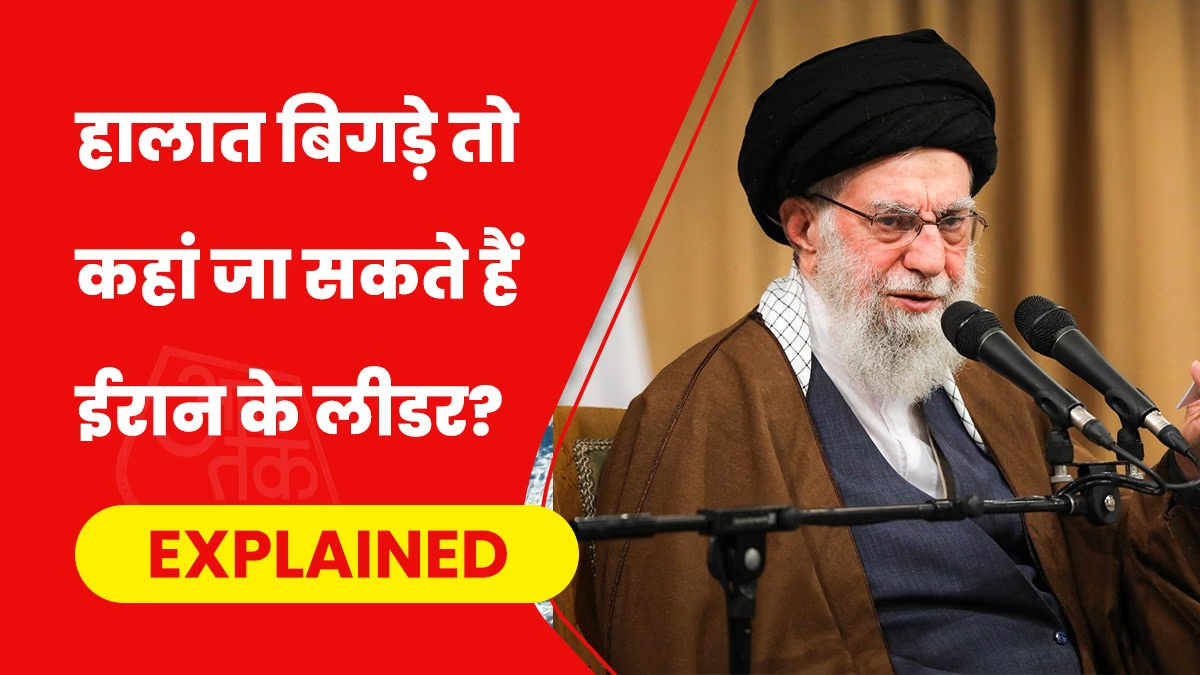
Iran is making headlines as public dissent against the decades-old rule of religious leader Ali Khamenei has erupted. Over 600 lives have been lost in clashes between military forces and civilians. Should the situation worsen, Iran's Supreme Leader might have to flee Tehran. With strained ties globally, Moscow stands out as a potential haven.
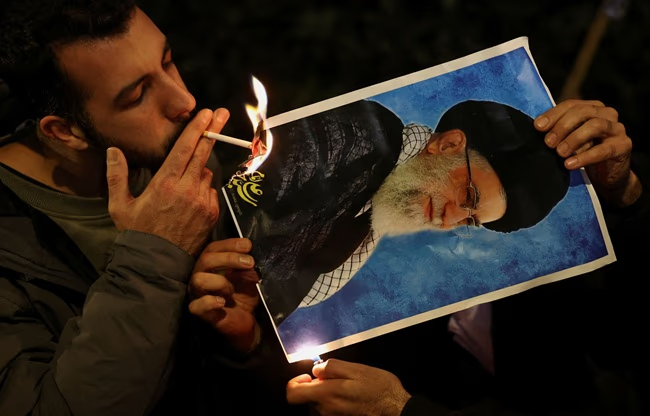
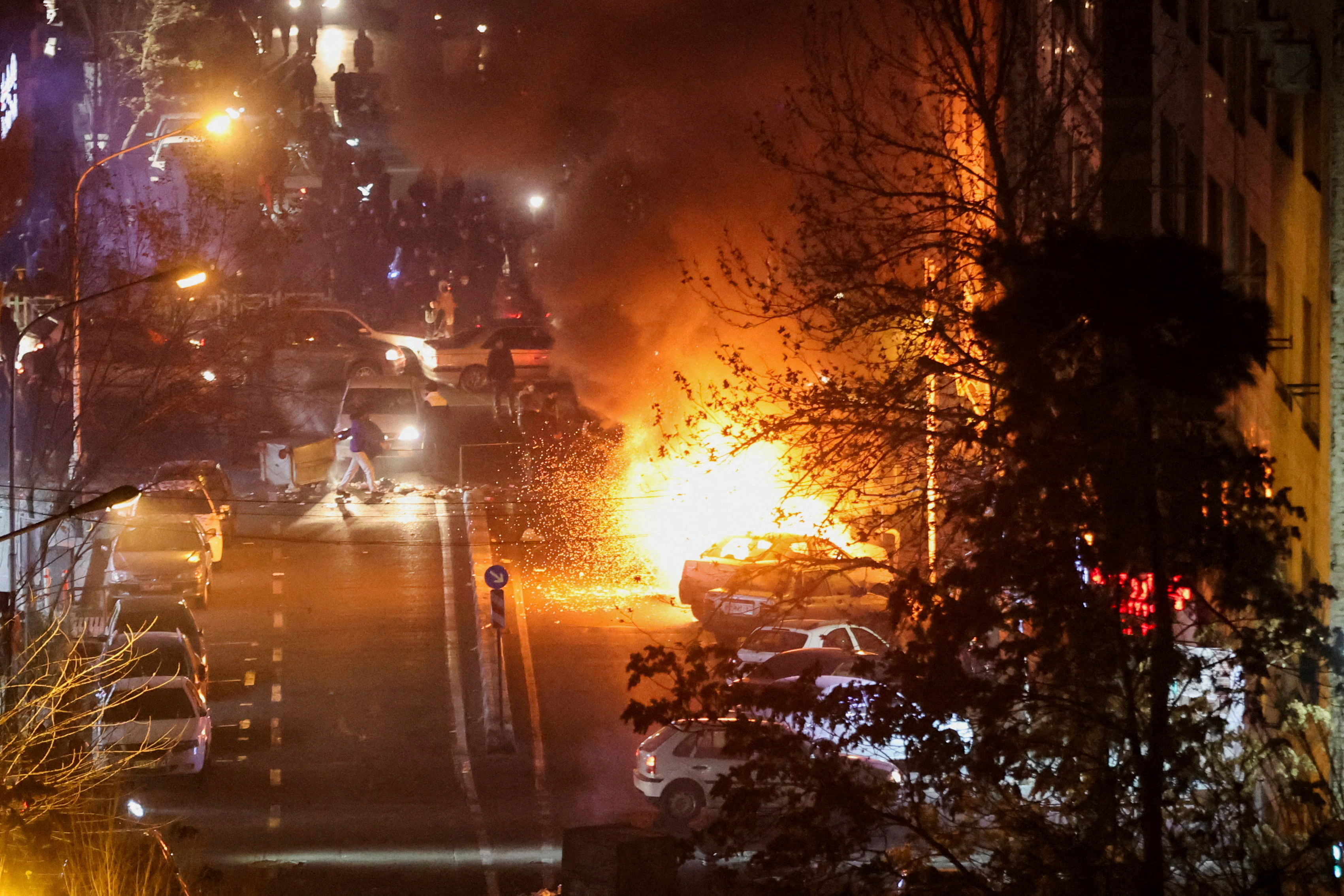
For the past two weeks, anti-government protests have engulfed Iran, spreading from Tehran to 180 cities. Citizens are frustrated with Leader Ali Khamenei as inflation remains unchecked and governance untouched. Reports of women facing oppression are widespread. Demonstrators chant for an end to dictatorship, their ire unmistakably directed at Khamenei.
The prospect of a coup raises concerns for Khamenei's safety. Speculation suggests he could already be taking refuge in Russia with close family members. This information was reportedly sourced from British media outlet The Times.
As Iran's top leader, Ali Khamenei's status transcends governmental power, complicating any potential asylum scenario for the host nation. In Tehran, robust security, including the police and the Iranian Revolutionary Guard, guarantees his protection, a standard of security that might not be easily replicable elsewhere.
Moreover, Iran's embattled relationships with various countries add another layer of complexity. Its nuclear program has long angered the U.S., and tension with Israel persists. Relations with many Muslim nations are tepid, marked by historical conflicts like those with Saudi Arabia and Bahrain. Many Arab League countries remain distant, and even Europe hesitates given Iran's hardline stance.
Source: aajtak
Encircled by adversaries, Iran requires a formidable and enduring ally. Moscow emerges as a logical choice, sharing a common adversary in the U.S., which has imposed strict sanctions on both countries. As Ukraine sanctions heighten, this alliance solidifies, providing mutual support.
The geopolitics of the Middle East further solidify this partnership. Syria serves as a testament to the strategic military cooperation between Russia and Iran to support Bashar al-Assad's regime. Russia provided air support, while Iran lent its ground presence, reinforcing mutual military and strategic trust.
Economic constraints link the two further. Sanction-induced isolation from Western markets prompts collaboration in oil, gas, arms, and technology trades.
Western tensions and sanctions pressure fortify a shared resolve to maintain global influence, drawing Putin and Khamenei closer diplomatically, if not personally. This alliance might enable Khamenei to secure shelter in Russia.
Khamenei might already have a comprehensive escape plan in place. Assets and properties abroad would be consolidated to facilitate his departure. He's believed to have a vast network of wealth, significantly managed under Setad, a powerful stretch within Iran's charity foundation framework, long tainted by corruption allegations.
Source: aajtak
A Reuters probe from a decade ago estimated Khamenei's wealth at approximately $95 billion, encompassing real estate, corporate holdings, and business shares, not directly under his name but operated under proxies within his control.
According to The Times, should Khamenei suspect non-compliance within his security agencies, his escape plan would activate immediately. Although not easy, Iran's military or security forces revolting isn't unheard of since Khamenei places loyalists in pivotal roles. Yet, should loyalty waver, the exit will be executed.
If compelled to flee, Khamenei won't leave alone. Close family, including his son and probable heir, Mojtaba Khamenei, alongside trusted political and security advisers implicated in his critical decisions, would accompany him. Select senior intelligence officials privy to state secrets might also be involved.
Despite Russia being considered a viable refuge, there's been no official indication. Russia's history of valuing ally protection over Western backlash is noteworthy; the Syrian scenario under Bashar al-Assad signifies this. However, handling a potential Iranian asylum is delicate, with heightened U.S. aggressiveness probable, especially considering deteriorating ties over the Ukraine conflict.