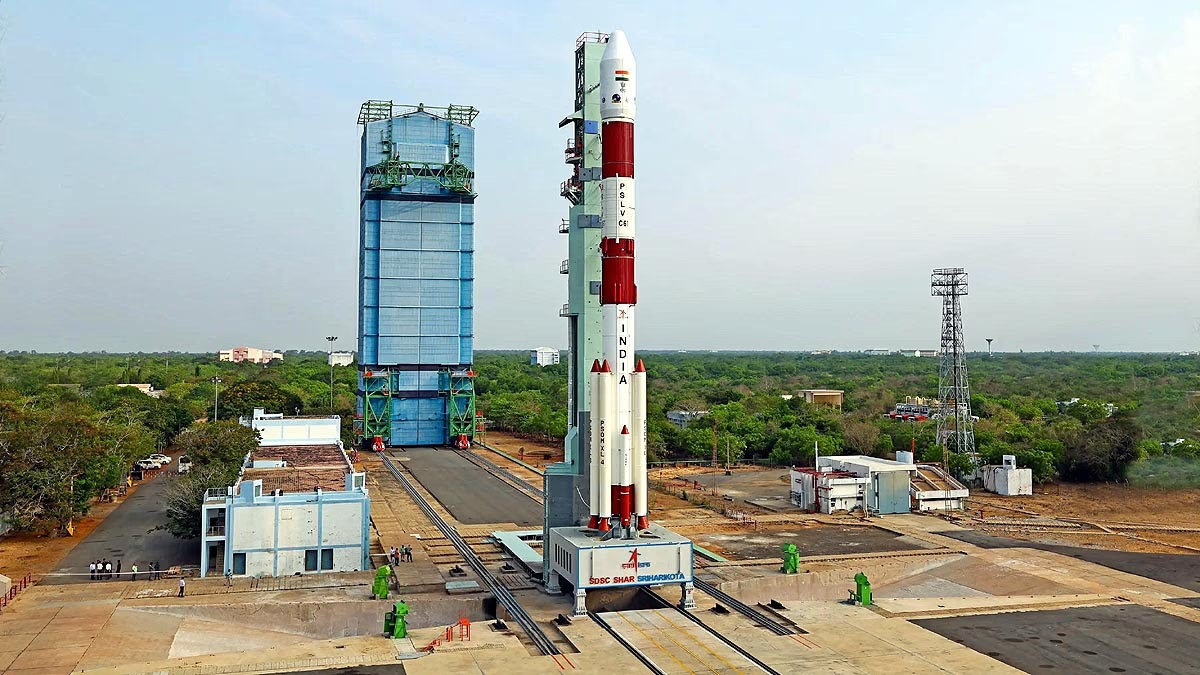
The past few years have been challenging for the Indian Space Research Organization (ISRO). Between 2017 and 2026, ISRO conducted a total of 44 missions, but 5 of them failed. All these failed missions were tied to national security. Among them, 3 failed satellites were launched between January 2025 and January 2026 alone. These repeated errors pose a major setback for India's space surveillance and defense sector.
Why is this concerning?
These missions were intended for espionage, navigation, and Earth observation. Millions of rupees worth of satellites were destroyed. Rebuilding them will require more funds and time. Without domestic satellites, India might need to seek help from foreign companies. This could slow down India's space program.
Even a minor flaw in the rocket can ruin an entire mission. Each failure had different causes, but they occurred with longstanding and reliable rockets. This raises questions about potential lapses in investigations.
The five failures in recent years
Below, we outline the five strategic missions that failed, explaining their reasons and impacts...
Source: aajtak
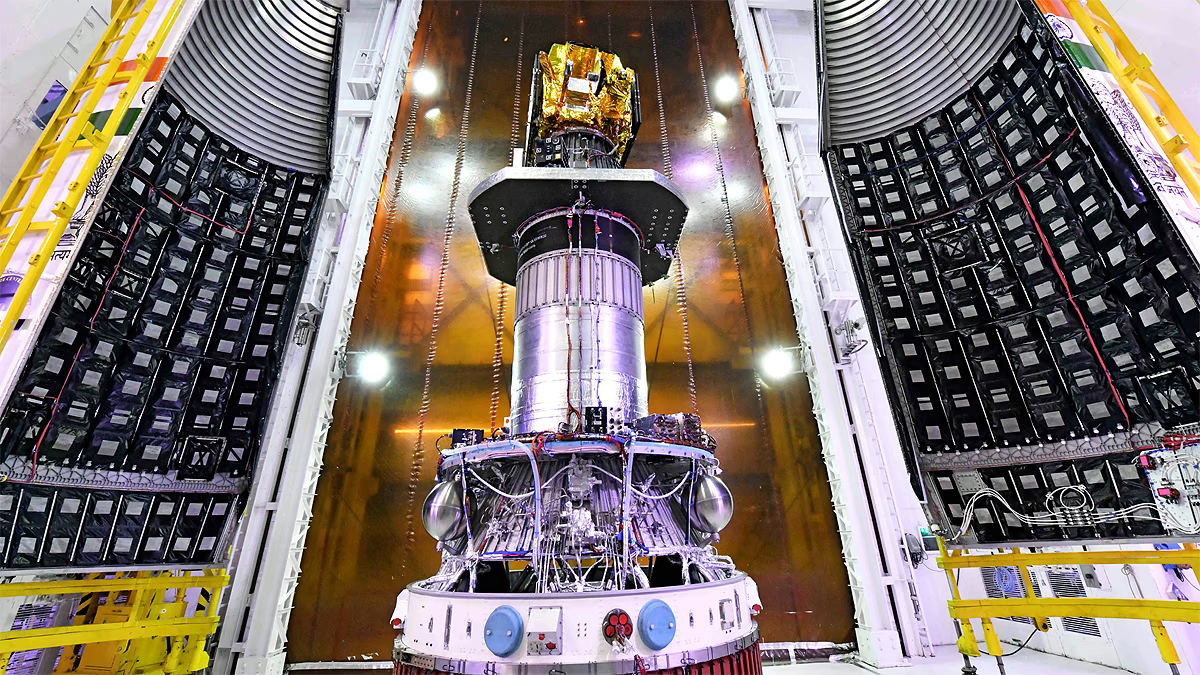
January 2026: PSLV-C62 / EOS-N1
This mission marked ISRO's first launch of 2026, held on January 12. The PSLV-C62 rocket carried the EOS-N1 (Anvesha) satellite, developed by the Defence Research and Development Organisation (DRDO). It was a hyperspectral imaging satellite capable of identifying various materials (like soil, water, metals, vegetation) on Earth's surface. By capturing sunlight reflected at different frequencies, it identified materials. It was to be placed at 511 kilometers altitude.
In addition, 15 other satellites were involved - 7 Indian, 2 European, 5 Brazilian, and 1 Nepali. These were mainly from universities or startups for experimental purposes in space. During launch, an issue occurred at the end of the rocket's third stage, veering it off its designated path.
ISRO Chief Dr. V. Narayanan stated they are analyzing the data. The rocket and all the satellites were destroyed. This marked the second consecutive failure after PSLV's May 2025 failure.
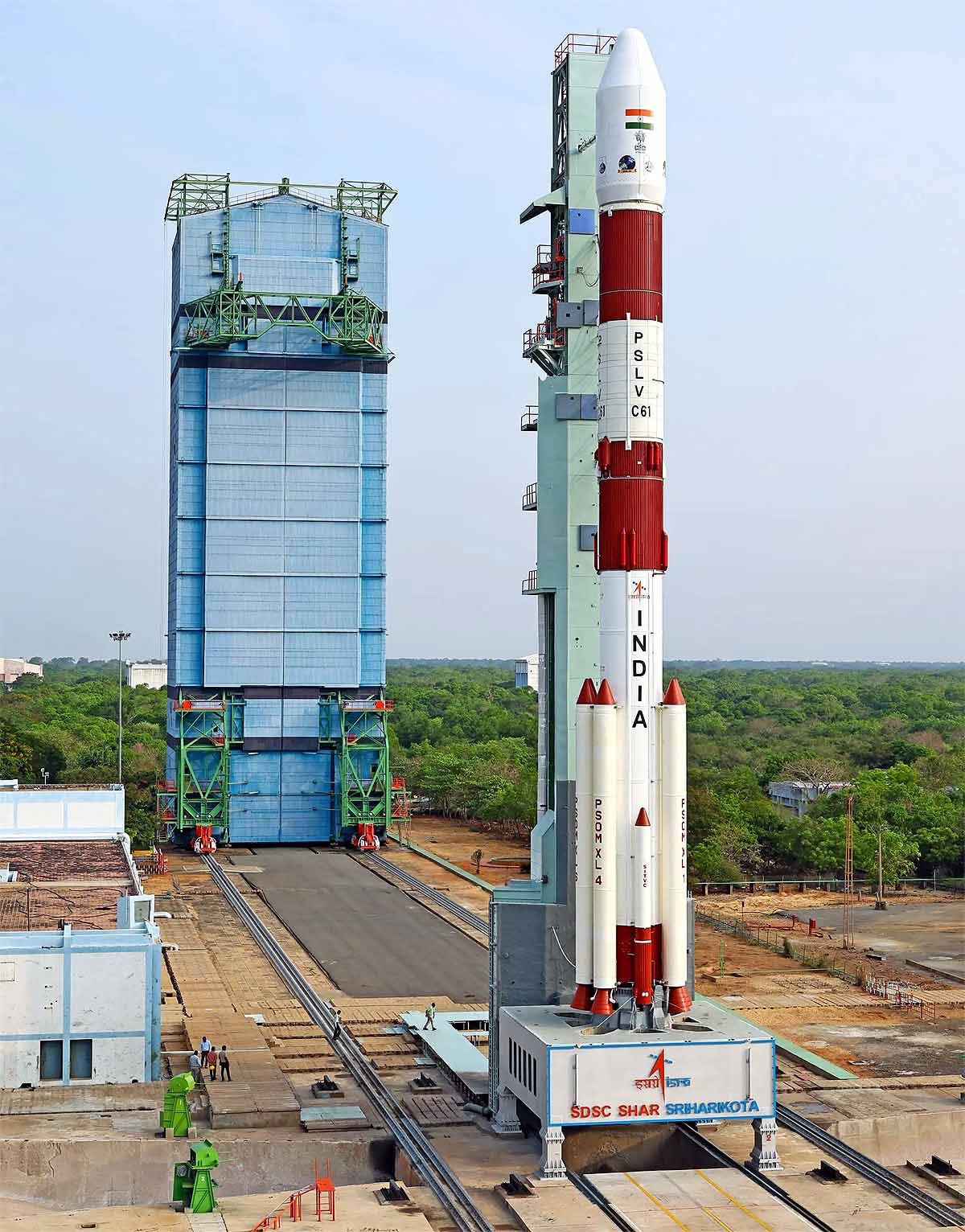
May 2025: PSLV-C61 / EOS-09
Launched on May 18, 2025, the PSLV-C61 rocket carried the EOS-09 satellite, previously known as RISAT. It was a radar imaging satellite capable of taking images day or night and in all weather conditions. Its ability to see through clouds made it strategically vital. Weighing 1700 kilograms, it was designed to function for a minimum of five years.
Six minutes post-liftoff, a problem arose in the third stage. A drop in chamber pressure of the solid fuel motor led to mission failure. This was a rare failure for PSLV, affecting India's Earth imaging capabilities.
January 2025: GSLV-F15 / NVS-02
The first generation of NAVIC satellites was becoming outdated, so ISRO planned to launch five new satellites in the NVS series. NVS-01 successfully launched in May 2023, but NVS-02 failed in January 2025. This marked the 100th rocket launch from Sriharikota.
The GSLV rocket placed the satellite in the initial orbit, but the satellite encountered issues. A problem in the oxidizer release valve prevented engine ignition. The satellite became stuck in the geostationary transfer orbit (GTO) - perigee at 170 km and apogee at 36,500 km.
It was supposed to enter a circular orbit (35,700 km), but didn't, rendering the satellite useless. NAVIC is India's own GPS-like system, used by the military.
Source: aajtak
August 2021: GSLV-F10 / EOS-03
Amidst the COVID-19 pandemic, the GSLV-F10 launched EOS-03 (GISAT-1) satellite in August 2021. This agile Earth observation satellite monitored areas continuously using various imaging techniques. It offered spectral signatures for natural disasters, weather, agriculture, forests, minerals, disaster warnings, clouds, ice, and oceanography.
It was to be placed 36,000 km above the Indian subcontinent. However, a malfunction in the cryogenic upper stage occurred - a valve leak in the liquid hydrogen tank caused mission failure. The mission was ready in 2020 but delayed due to technical reasons.
August 2017: PSLV-C39 / IRNSS-1H
IRNSS (later NAVIC) is India's regional navigation system, akin to GPS. The PSLV-C39 launched in August 2017. However, the heat shield didn't separate. Consequently, the satellite remained inside the heat shield and the mission failed. NAVIC provides positioning, navigation, and timing services for government ministries and military.
Lessons for India
These failures aren't just financial losses; they weaken India's space-based security. The lack of domestic satellites increases reliance on foreign services. Additionally, planning for new missions might be impacted. ISRO must learn from these incidents to improve quality.