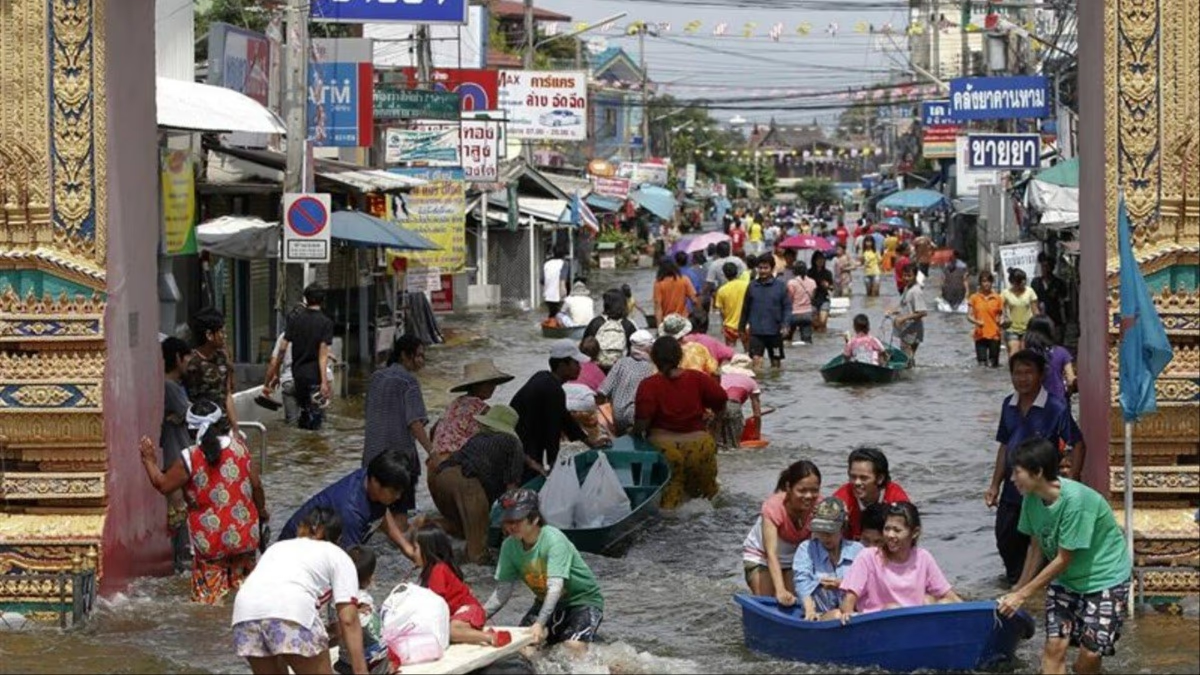
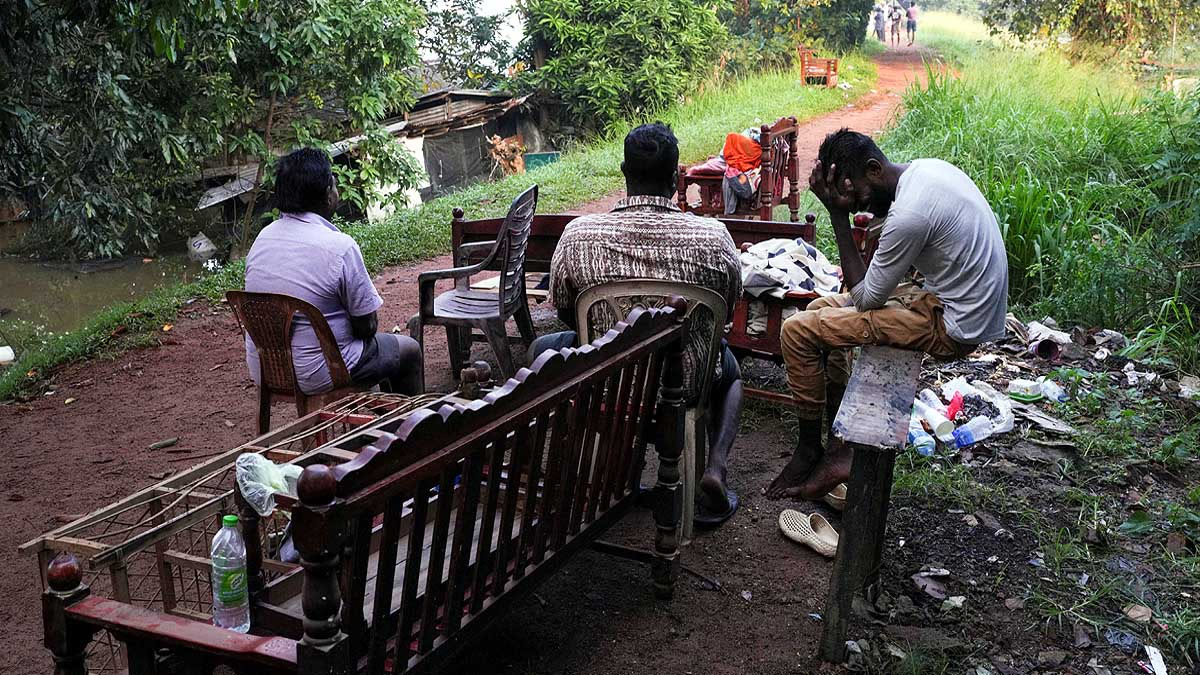
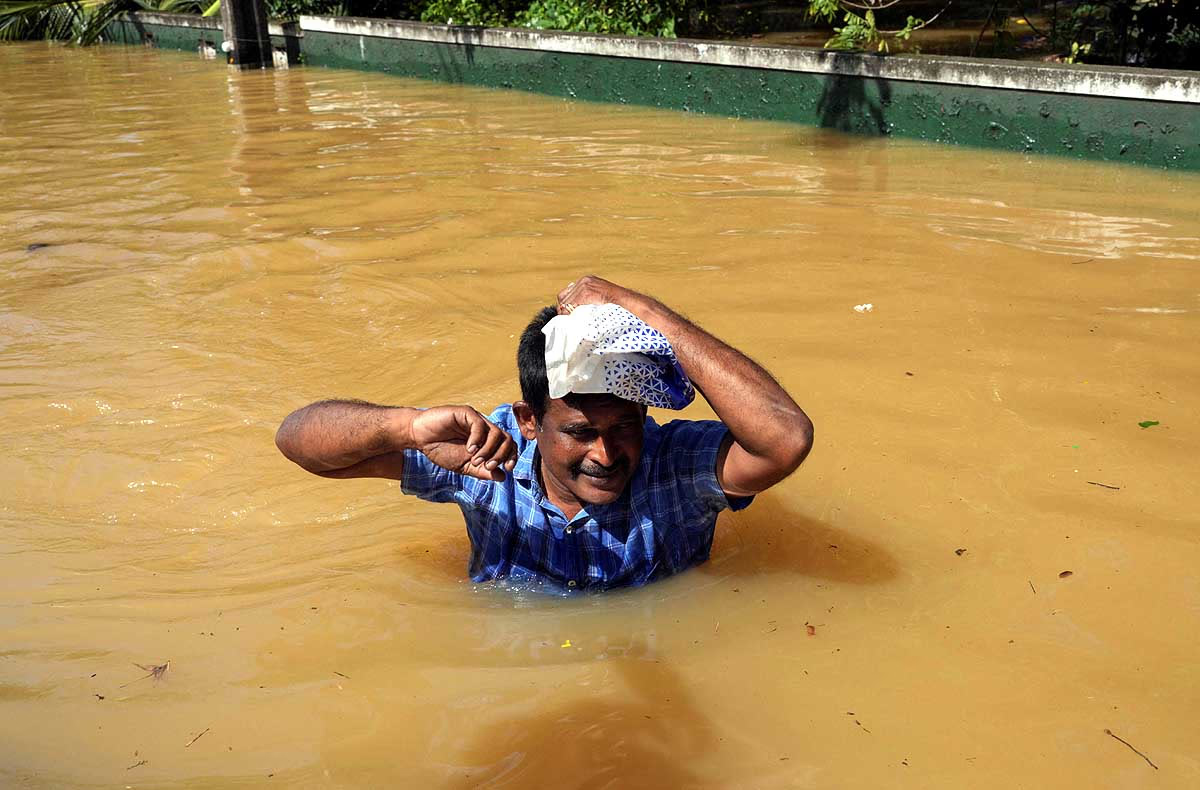
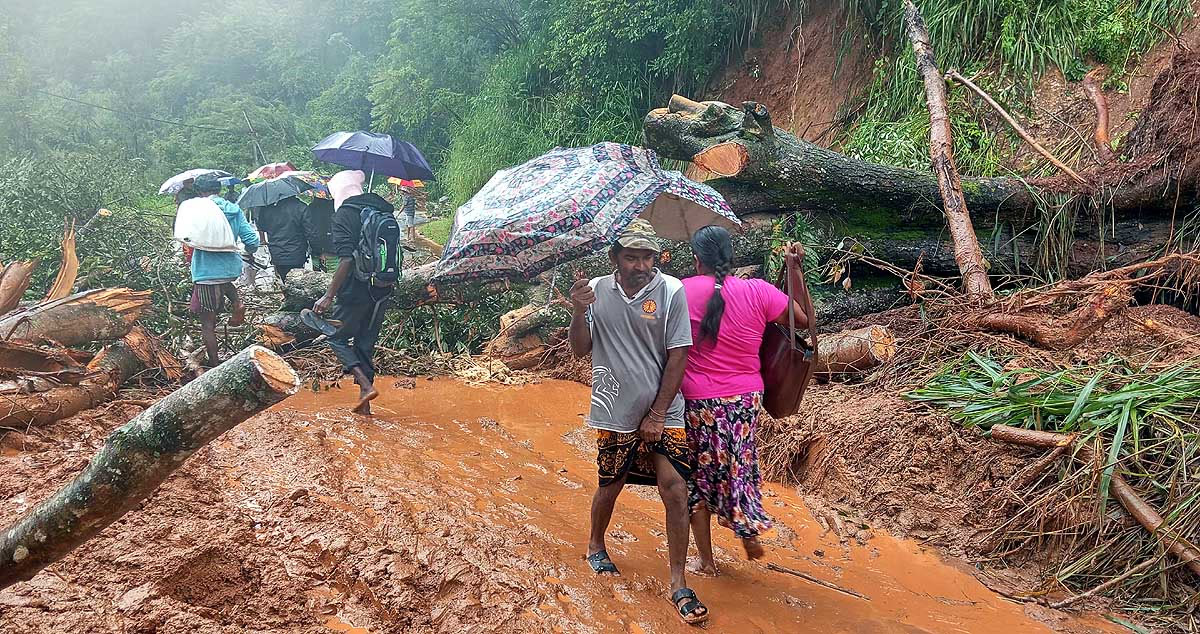
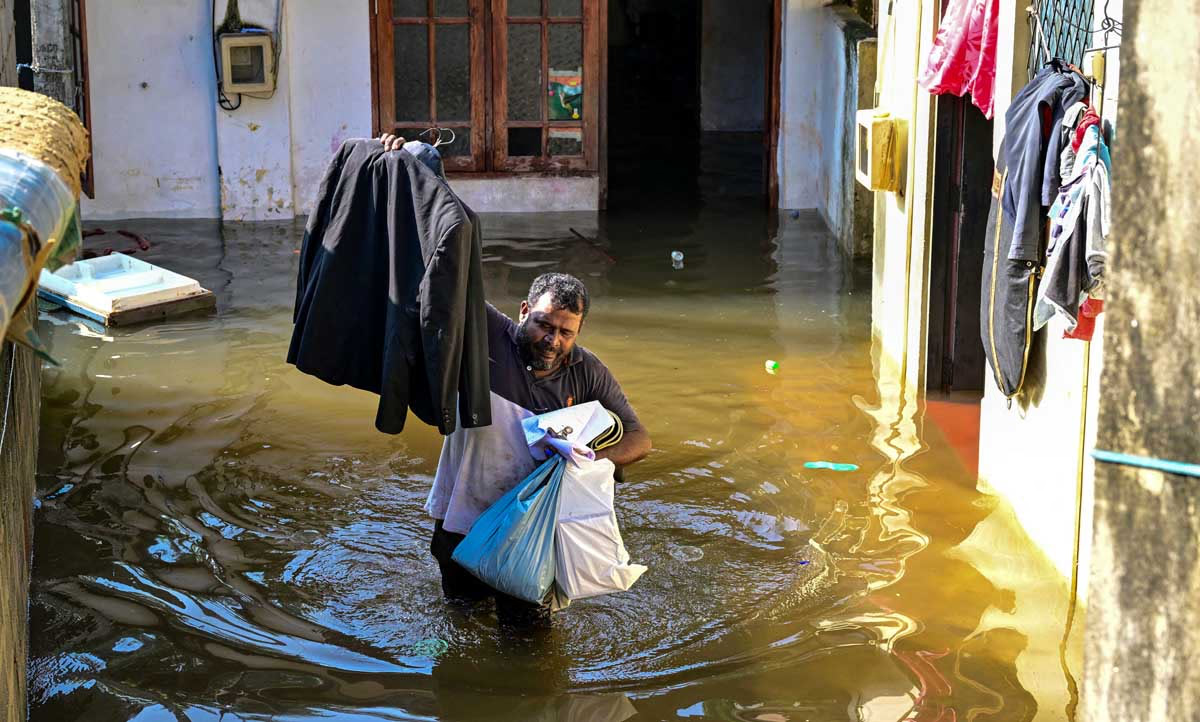
Cyclone Ditwah is the fourth cyclone of the 2025 North Indian Ocean cyclone season, forming near the southeastern coast of Sri Lanka on November 26. It is named after a suggestion from Yemen, inspired by the Ditwah Strait of Socotra Island. Ditwah has brought the worst floods in 20 years to Sri Lanka. Over a million people were affected, and more than 400 are reported missing.
More than 390 lives were lost. It then moved into the Bay of Bengal, weakening along the coast of Tamil Nadu, India. By December 2, 2025, it had become a deep depression but continued to bring heavy rain to areas like Chennai, Tiruvallur, and Kanchipuram. A red alert was issued, leading to the closure of schools and colleges, 83 flights canceled, and roads submerged. In Tamil Nadu, 3 people died, and 149 cattle were lost.
Read more:
Cyclones, typhoons, or hurricanes — these are essentially the same phenomenon, known as tropical cyclones. They form over the warm waters of the ocean, creating a massive rotating mass of clouds. The scientific reasons are simple...
Source: aajtak
Warm ocean waters: The temperature of the sea must be at least 26-27 degrees Celsius (80°F). This heat warms the air, causing it to rise. Just as tea evaporates when boiled, warm moist air rises to form clouds.
Moisture and low pressure: The rising air cools and condenses, leading to heavy rains. This creates a low-pressure area below, pulling in more air.
The Earth's rotation: The Earth's spinning makes the air rotate. In the Northern Hemisphere, it's clockwise, and in the Southern Hemisphere, counterclockwise.
Low wind resistance: Upper winds should not be chaotic, helping the storm grow stronger. High winds can weaken the storm.
Read more:
These storms form at least 5 degrees away from the equator. When wind speeds reach over 119 km/h, they are termed cyclones (Indian Ocean), typhoons (Western Pacific), or hurricanes (Atlantic). Climate change is heating the oceans, making these storms stronger, wetter, and longer-lasting.
Source: aajtak
Cyclones, typhoons, or hurricanes are not just strong winds, they bring multiple dangers and impact the world because...
Floods and Landslides: Heavy rains can cause rivers to overflow. Homes and roads are submerged. In Hurricane Katrina (2005), 75% of the deaths were due to flooding.
Storm Surges: Winds elevate the ocean, creating waves 5-10 meters high that devastate coastlines.
Strong Winds and Tornadoes: Winds up to 250 km/h can uproot homes, trees, and create small tornadoes.
Long-lasting Impact: These storms can travel hundreds of kilometers inland, causing floods in arid regions as well. Economic damages can run into billions of dollars, leaving millions homeless.
Impact of Climate Change: Global warming results in storms bringing 10% more rain. Category 4-5 storms have doubled. In Asia, 60% of the coastal population is affected, where poverty is rampant.
Every year, these storms form 85 times, with 45 becoming strong. In the last 50 years, they have caused 779,000 deaths and 1.4 trillion dollars in damages.
Source: aajtak
In the last two years, these storms have become more deadly. Some examples...
Hurricane Helen (2024, Atlantic): A Category 4 storm that hit the southeastern coast of the USA. It caused floods and winds over 1300 kilometers inward, resulting in 78.7 billion dollars in damages and over 200 deaths, mostly from flooding. It was the deadliest hurricane in the US after Katrina.
Hurricane Milton (2024, Atlantic): It became a Category 5 storm in a day, with winds of 290 km/h. In Florida, it caused 34.3 billion dollars in damage. Climate change doubled its rainfall.
Typhoon Yagi (2024, Pacific): The deadliest in Southeast Asia, with 844 deaths (Myanmar, Vietnam, Thailand, Philippines) and 28 billion dollars in damage in China.
Typhoon Kalmaegi (2025, Pacific): It caused 269 deaths in the Philippines, with severe flooding on Cebu and Negros islands, moving towards Vietnam.
Hurricane Melissa (2025, Atlantic): A Category 5 storm made landfall on Jamaica. It resulted in 102 deaths, mostly in Haiti-Jamaica, marking the third Category 5 storm of 2025.
These examples demonstrate that storms are becoming stronger quickly, with impacts reaching distant areas.
Source: aajtak
A cyclone like Ditwah might seem confined to Sri Lanka and India, but it is a global issue. 40% of the population lives along coasts. Climate change is making storms more intense, affecting impoverished countries in Asia and Africa the most, where rebuilding is difficult. Economic impacts also affect global trade – Ditwah caused flight cancellations. In the long term, these floods destroy crops, spread hunger, and force migrations.
Solutions:
Combat climate change – reduce carbon emissions. Implement strong warning systems, protect forests, and construct flood-resistant buildings. Ditwah proved that preparedness can save lives. The world must unite to fight these storms, or the future will be more perilous.