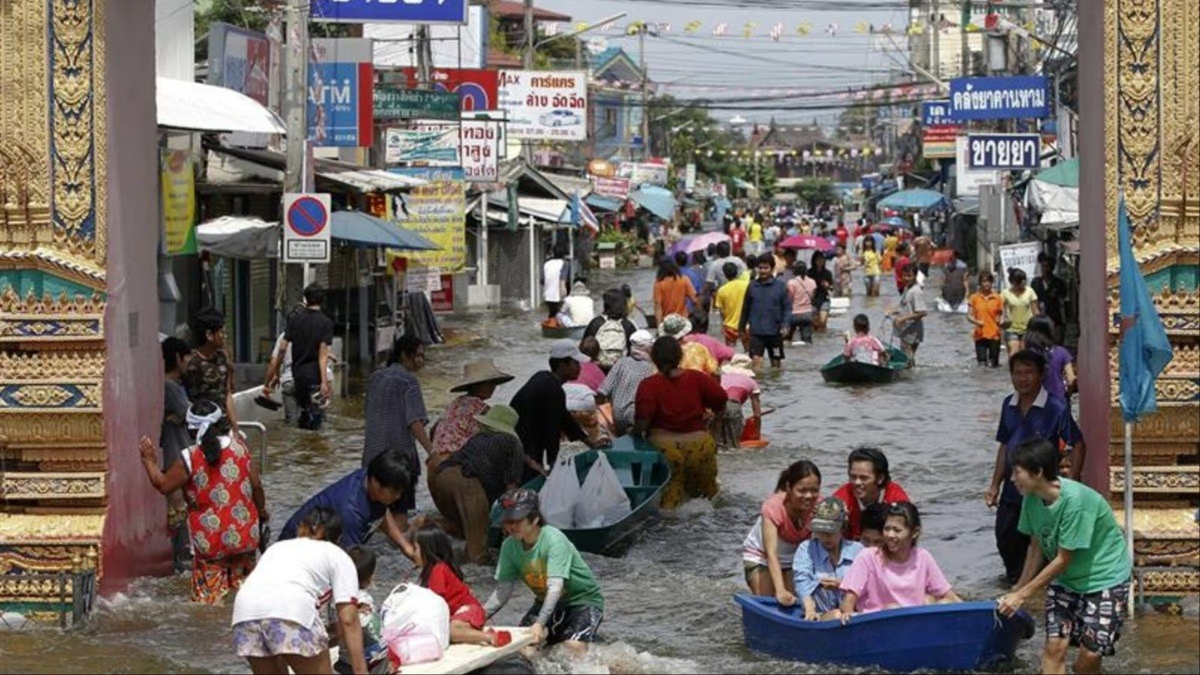
Cyclone Ditwah marked the fourth storm of the 2025 North Indian Ocean cyclone season, forming on November 26 near Sri Lanka's southeastern coast. Named by Yemen after the Deta Strait near Socotra Island, Ditwah has sparked the most severe flooding in Sri Lanka in two decades. The storm has impacted a million individuals, with over 400 reported missing.
The tragic toll includes over 390 lives lost. Ditwah then transitioned into the Bay of Bengal, weakening as it moved along India's Tamil Nadu coast, transforming into a deep depression by December 2, 2025. Nonetheless, heavy rains persisted in areas like Chennai, Tiruvallur, and Kanchipuram, prompting school closures, flight cancellations with 83 flights grounded, and submerged roads. In Tamil Nadu, three fatalities and the loss of 149 cattle were reported.
Related:
Cyclones, typhoons, or hurricanes—all different names for the same meteorological phenomena known as tropical cyclones—form over warm ocean waters, creating large rotating cloud systems. The scientific explanation is straightforward...

Source: aajtak
Warm Ocean Water: A sea surface temperature of at least 26-27°C (80°F) is crucial. This heat warms the air, which rises—similar to steam from boiling tea—subsequently forming clouds from the warm humid air.
Moisture and Low Pressure: Rising air cools and condenses, resulting in heavy rain and forming low-pressure zones below that draw in more air.
Earth's Rotation: The planet's spin imparts rotation to the air masses, clockwise in the Northern Hemisphere and counter-clockwise in the Southern Hemisphere.
Minimal Wind Shear: Lesser upper-level wind turbulence allows the storm to strengthen. Excessive wind weakens the system.
Related:
Such storms form at least 5 degrees away from the equator. When wind speeds exceed 119 km/h, they evolve into what we know as cyclones in the Indian Ocean, typhoons in the Western Pacific, or hurricanes in the Atlantic. Climate change is warming oceans, resulting in more intense, rain-laden, and prolonged storms.

Source: aajtak
Cyclones, typhoons, or hurricanes aren't just about ferocious winds; they herald multiple threats. These global phenomena...
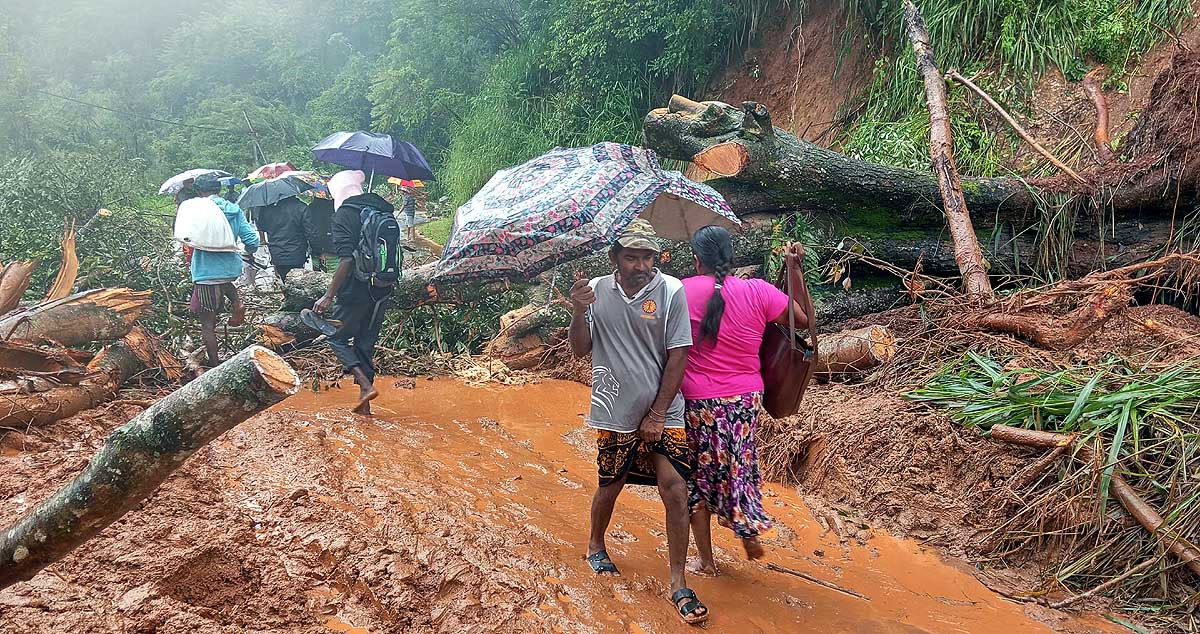
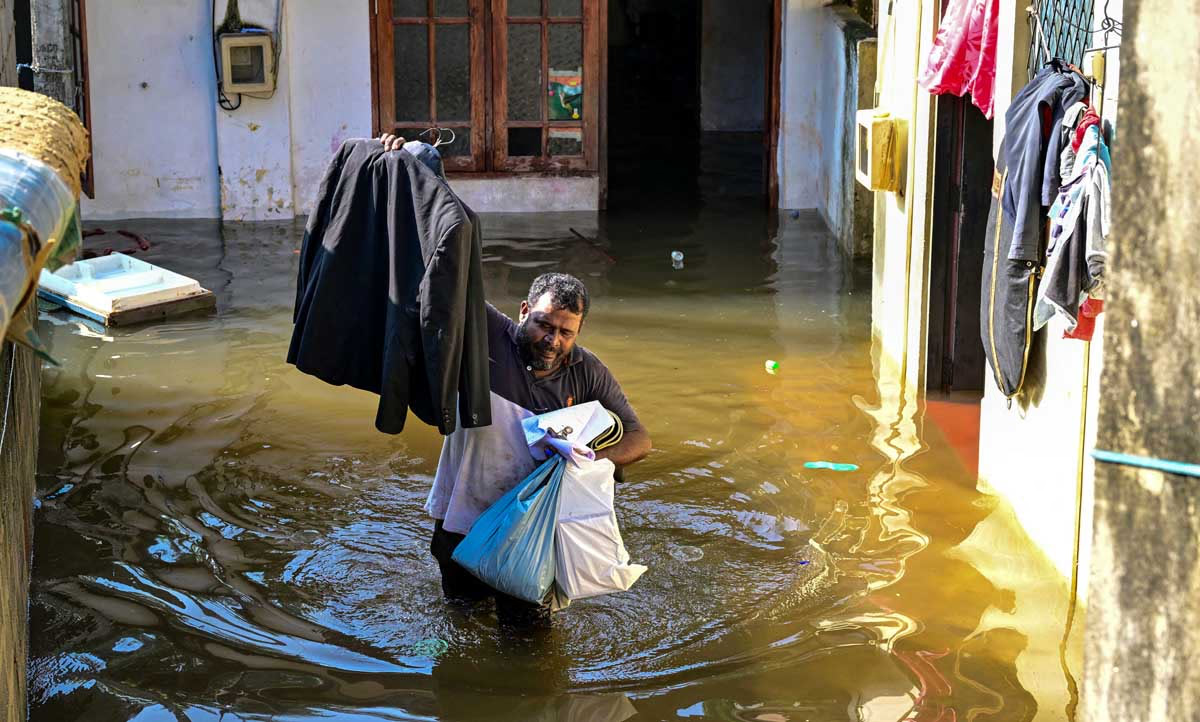
Flooding and Landslides: Heavy rains swell rivers, submerge roads and homes. During Hurricane Katrina in 2005, 75% of the fatalities were due to flooding.
Storm Surges: Winds lift seas, bringing 5-10 meter high waves to coastlines, devastating coastal areas.
Fierce Winds and Tornadoes: Winds reaching 250 km/h can destroy homes, uproot trees, and spawn mini-tornadoes.
Extended Impacts: These storms can penetrate hundreds of kilometers inland, causing floods in drought-prone areas and incurring billions in economic losses, leaving millions homeless.
Climatic Change Effects: Global warming contributes to a 10% increase in rainfall from storms, with Category 4-5 events doubling. In Asia, 60% of the coastal population is affected, predominantly where poverty is widespread.
Annually, these storms form 85 times, with 45 developing into severe systems. Over the past 50 years, they have resulted in 779,000 casualties and inflicted $1.4 trillion in damage.
Source: aajtak
In recent years, these storms have become deadlier. Here are some instances...
Hurricane Helen (2024, Atlantic): A Category 4 hurricane struck the southeastern U.S. coast, causing floods and powerful winds that reached 1300 kilometers inland, dealing $78.7 billion in damages and resulting in over 200 deaths, mostly flood-related. It was the deadliest hurricane in the U.S. post-Katrina.
Hurricane Milton (2024, Atlantic): Climbed to Category 5 in a day, with 290 km/h winds, causing $34.3 billion in damages in Florida. Climate change had doubled its rainfall.
Typhoon Yagi (2024, Pacific): Southeast Asia's deadliest, with 844 fatalities across Myanmar, Vietnam, Thailand, and the Philippines. It inflicted $28 billion in damages in China.
Typhoon Kalmaegi (2025, Pacific): In the Philippines, it caused 269 deaths, severe flooding on Cebu and Negros islands, and then moved towards Vietnam.
Hurricane Melissa (2025, Atlantic): A Category 5 storm making landfall in Jamaica, causing 102 deaths, mostly in Haiti-Jamaica. It was the third Category 5 hurricane of 2025.
These examples illustrate the rapid intensification and far-reaching impacts of such storms.
Source: aajtak
While Cyclone Ditwah seems confined to Sri Lanka and India, it underscores a global issue. Forty percent of the world's population lives along coastlines. Due to climate change, storms are intensifying, and impoverished nations in Asia and Africa bear the brunt, where rebuilding is challenging. Such economic losses disrupt global trade as Ditwah led to flight cancellations. In the long term, these floods ruin crops, spread hunger, and force migration.
Solutions:
Combat climate change by reducing carbon emissions. Establish robust warning systems, protect forests, and build flood-resistant structures. Ditwah's impact underlines the need for preparedness to save lives. Global unity is essential to combat these storms, or the future will hold even greater peril.