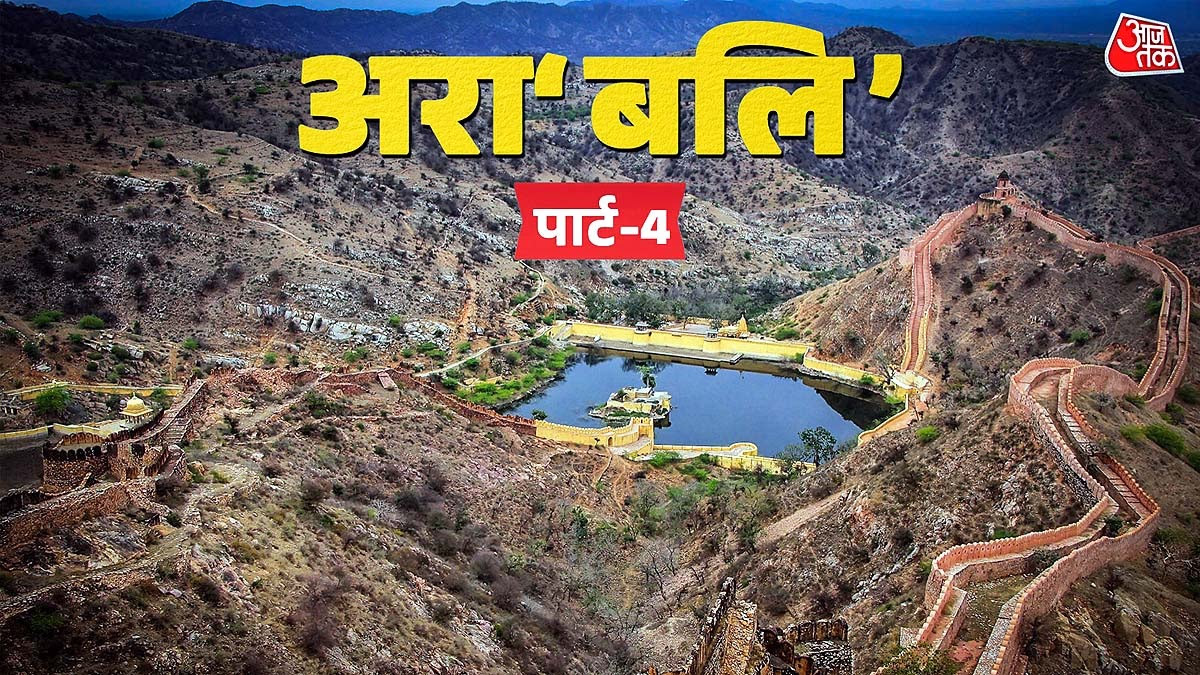
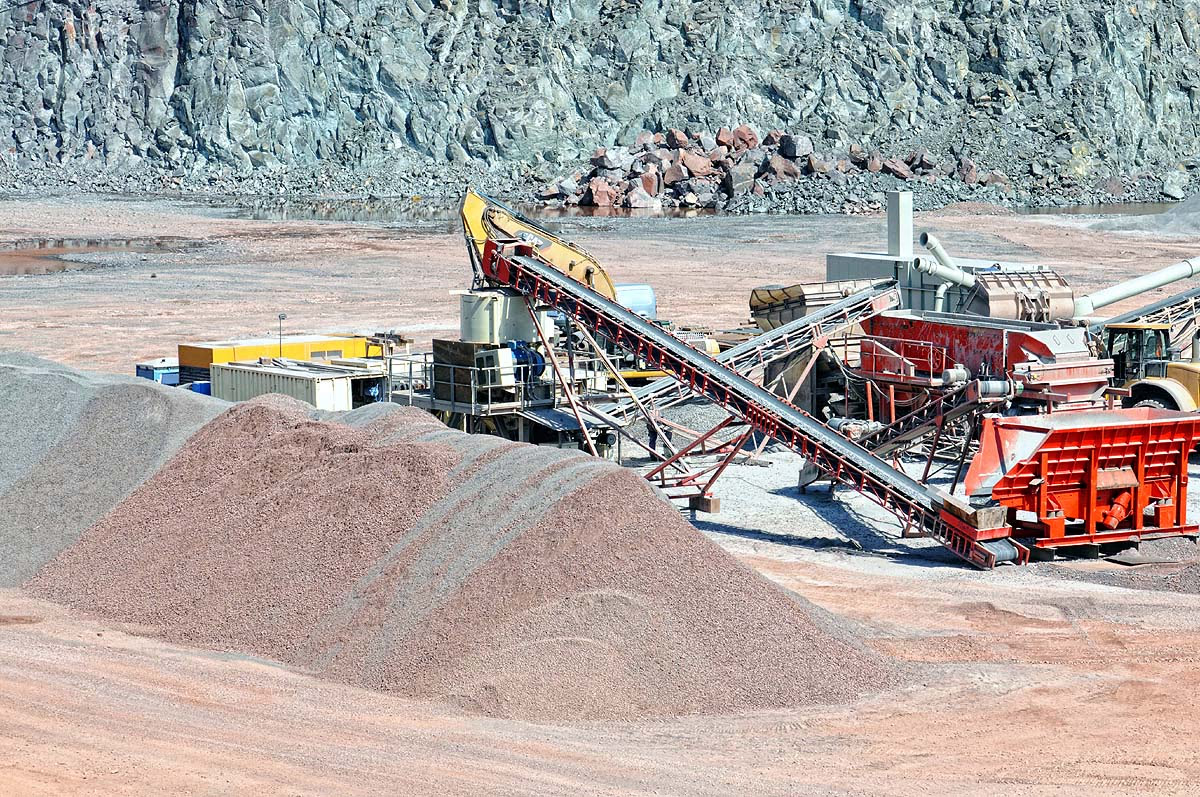
Over the past five years, the heart of Aravalli has been excavated so extensively that these hills are now almost flattened across Rajasthan. Astonishingly, from 2020 onward, the Aravalli region in Rajasthan has seen a total of 27,693 instances of illegal mining, transportation, and material accumulation. Still, FIRs were filed in just 3,199 cases, which is a mere 11 percent. This revelation was made by the central government in the Lok Sabha on 21st July 2025. It's startling to think that such a vast number of cases could remain concealed without support.
Report Presented in Lok Sabha...
Bhilwara: 4838
Jaipur: 4261
Tonk: 2783
Pali: 2244
Rajsamand: 1782
Alwar: 1480
Udaipur: 1479
Ajmer: 1408
Sirohi: 1047
Sikar: 855
Beawar: 851
Kotputli-Behror: 802
Jhunjhunu: 752
Daosa: 705
Dungarpur: 612
Banswara: 580
Salumber: 451
Didwana-Kuchaman: 366
Pratapgarh: 340
Kherthal-Tijara: 57
Read More:
Source: aajtak
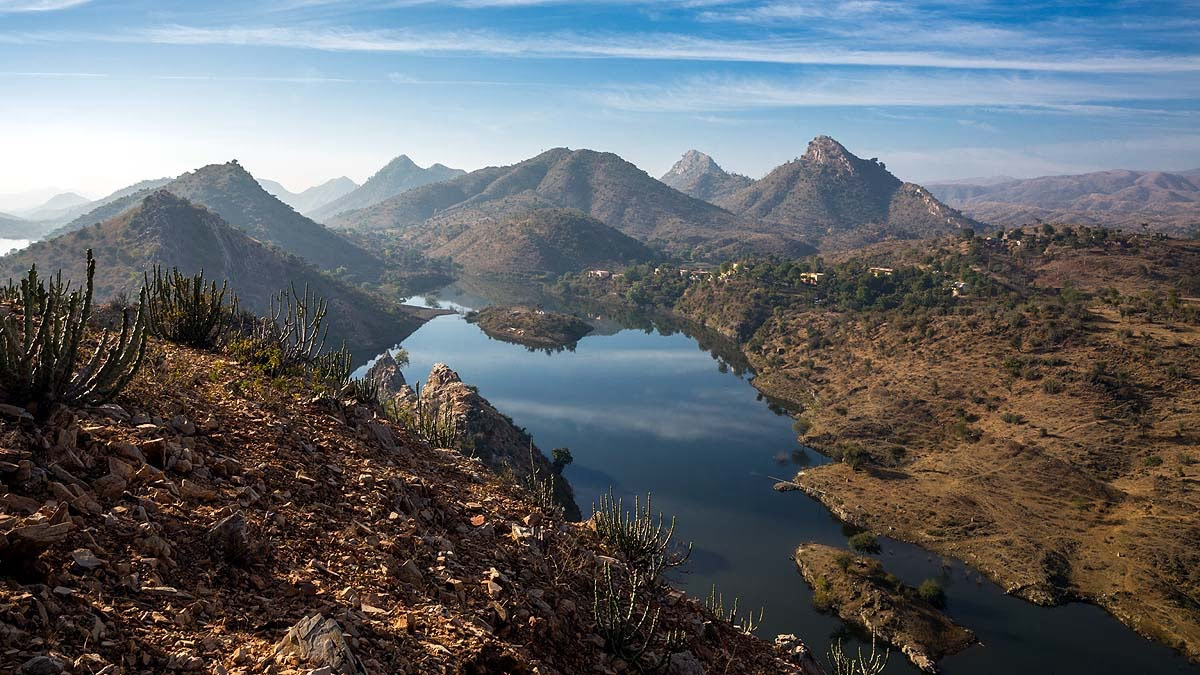
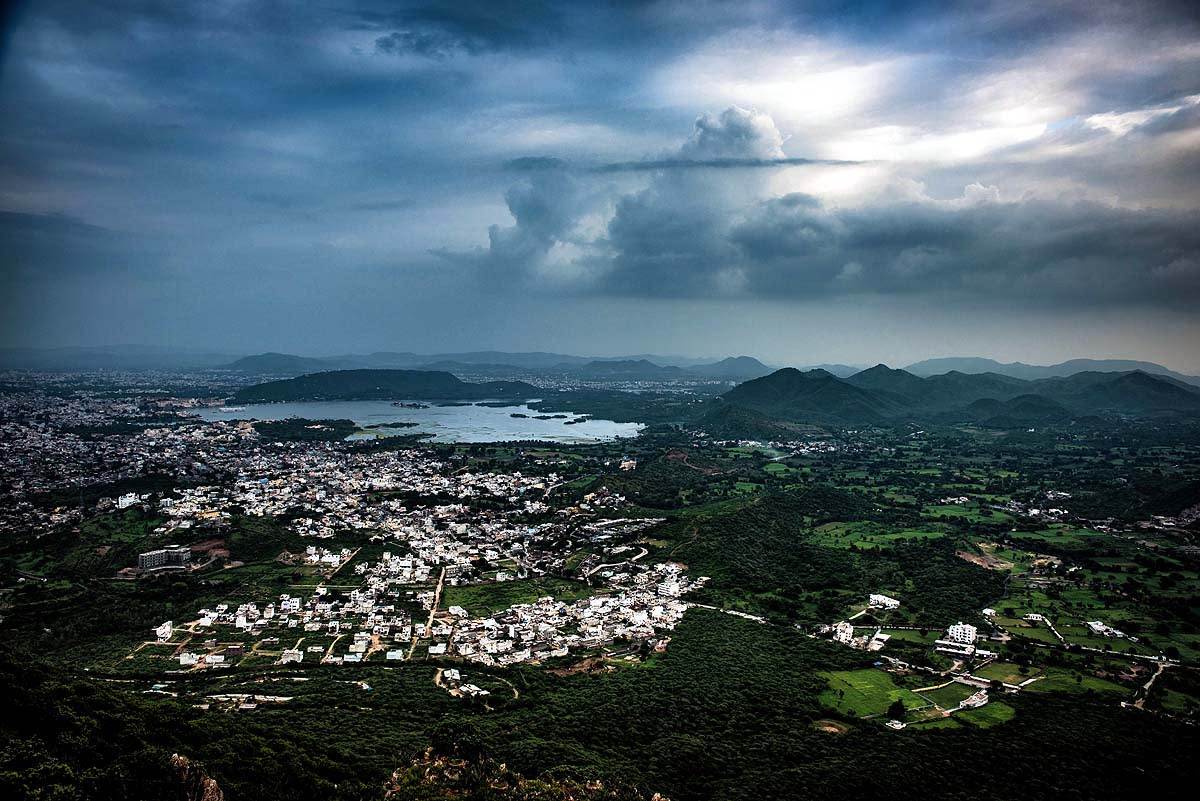
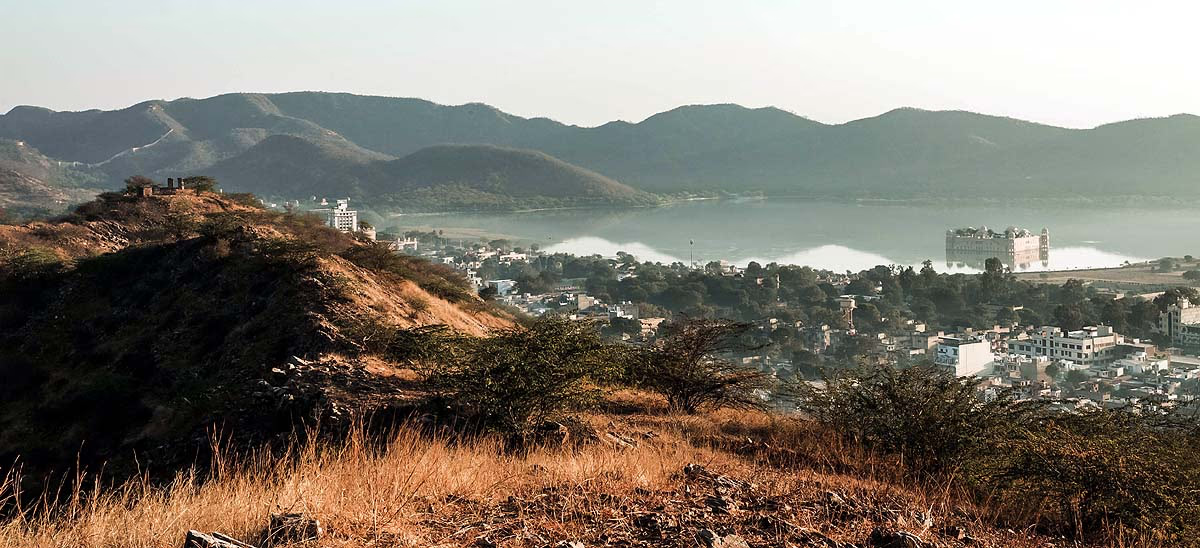
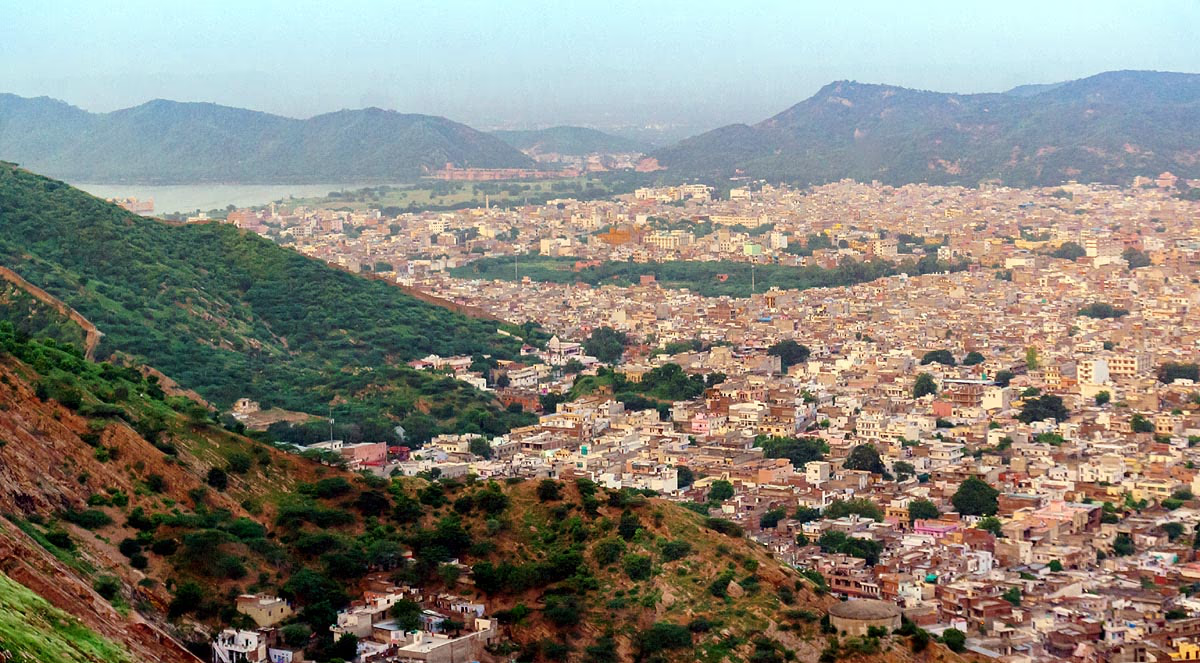
The Aravalli ranges pass through parts of Delhi, Haryana, Rajasthan, and Gujarat. It is an environmentally sensitive zone where mining activities cannot occur without state government permits.
Rajasthan's Aravalli belt spans 20 districts, including Ajmer, Jaipur, and Alwar. The ministry provided data on all these districts regarding illegal mining cases, FIRs, seized vehicles, and fines collected. Bhilwara witnessed the highest number of cases, with a total of 4,838 recorded from 2020 to 2025. Jaipur follows, with 4,261 cases documented. However, when focusing solely on illegal mining incidents, Bhilwara recorded 514, while Jaipur had just 184.
There's a marked discrepancy in the number of FIRs. In Bhilwara, 1,102 FIRs were filed over five years, while Jaipur saw only 68. In 2023-24, Jaipur recorded a total of 747 illegal mining-related cases, yet only 23 FIRs were filed.
The five districts with the most illegal mining activities are Bhilwara, Jaipur, Tonk, Pali, and Rajsamand.
Read More:
The government reported several measures undertaken to curb illegal mining in Rajasthan, including imposing fines, vehicle seizures, deploying border home guards at mines, implementing GPS on mining vehicles, and geofencing mining areas. Illegal mining can result in up to five years of incarceration and fines up to 500,000 rupees per hectare.
Source: aajtak
However, there's a significant gap between reported cases and FIRs filed. For instance, in Sikar district, during 2020-21, there were 207 mining-related cases and five illegal mining incidents, but no FIRs were lodged. In Tonk, 510 FIRs were filed with 460 occurring in 2021-22, although that year there were 716 cases. The subsequent year saw 734 cases but only one FIR was filed.
The government is running the Aravalli Green Wall Project to protect the Aravalli's environment by planting trees on degraded forest land across 29 districts, aiming to restore greenery. These figures indicate that illegal mining is a persistent issue, and there's a need for more stringent enforcement and oversight to safeguard Aravalli's fragile ecosystem.
Read More:
Central Environment Minister Bhupendra Yadav clarified that investigations at the district level in Rajasthan, Haryana, and Gujarat have shown that legally sanctioned mining covers a mere 0.19 percent of the geographical area of the 37 Aravalli districts.
In Delhi, where Aravalli spans five districts, mining is not permitted. The most significant threat to Aravalli is illegal and unregulated mining. The government's Empowered Committee suggests bolstering surveillance and law enforcement, including increased use of drone and surveillance technologies.
Source: aajtak
This controversy dates back to April 2002 when the Central Empowered Committee (CEC) was alerted to extensive illegal mining in Aravalli's Kot and Alampur areas in Haryana. In October 2002, the CEC ordered an immediate cessation of mining. The case reached the Supreme Court, which expressed concern that such mining activities could permanently destroy Aravalli. On October 30, 2002, the Supreme Court imposed a complete ban on all types of mining in the entire Aravalli region.
This decision caused an uproar in Rajasthan, severely impacting the marble, granite, and other mineral industries, leading to unemployment for millions. The then Ashok Gehlot government appealed to the court, stating that shutting down ongoing mining operations would take away people's livelihoods. In December 2002, the Supreme Court allowed existing mines to resume operations but maintained the ban on new mines or units.
Read More:
For a sustainable solution, the Gehlot government formed a committee. A single regulatory framework was absent for Aravalli across the four states, leading each state to adopt its own rules. In May 2003, the committee based its findings on an American geologist Richard Murphy's principle—that only hills over 100 meters high qualify as mountains.
The committee overlooked Murphy's other crucial principles, such as structural features and erosion patterns. In August 2003, the state government instructed districts to explore mining prospects in areas less than 100 meters high. With the Vasundhara Raje government taking charge in 2003, this formula was extended, leading to more mining leases. Successive governments, irrespective of their political affiliations, continued to adapt rules to suit their purposes.
Source: aajtak
In April 2005, citing contempt of the 2002 court order, environmental group Bonded Labour Liberation Front filed a petition. The Supreme Court halted all new mining licenses. Mining resumed later, but accusations of malpractice in measuring hill heights surfaced.
In 2010, reports from the Forest Survey of India (FSI) and CEC revealed rampant illegal mining in Rajasthan. In Alwar, 25% of the 2,269 hills had vanished. Many hills crumbled away. The court asked the central government for a clear definition of Aravalli.
Read More:
In November 2025, the central government advanced Murphy's formula in the Supreme Court, suggesting that hills 100 meters high based on local relief will be regarded as Aravalli. The area from the lowest contour line, or the hill base, to the slope's total boundary will remain protected.
On November 20, 2025, the Supreme Court implemented this definition uniformly across Rajasthan, Haryana, Gujarat, and Delhi, prohibiting new mining licenses until a sustainable mining plan is developed for the entire Aravalli region.
The government claims that this formula has been in effect in Rajasthan since 2006, and uniformity across the area will preserve over 90% of it. However, environmentalists and opposition parties believe this decision endangers Aravalli, as most small hills (10-50 meters high) could fall outside the protected zone.
This may accelerate the Thar Desert's expansion, deplete groundwater levels, and escalate dust pollution in Delhi-NCR. This two-decade-long conflict of balancing livelihood and development against environmental conservation remains unresolved.