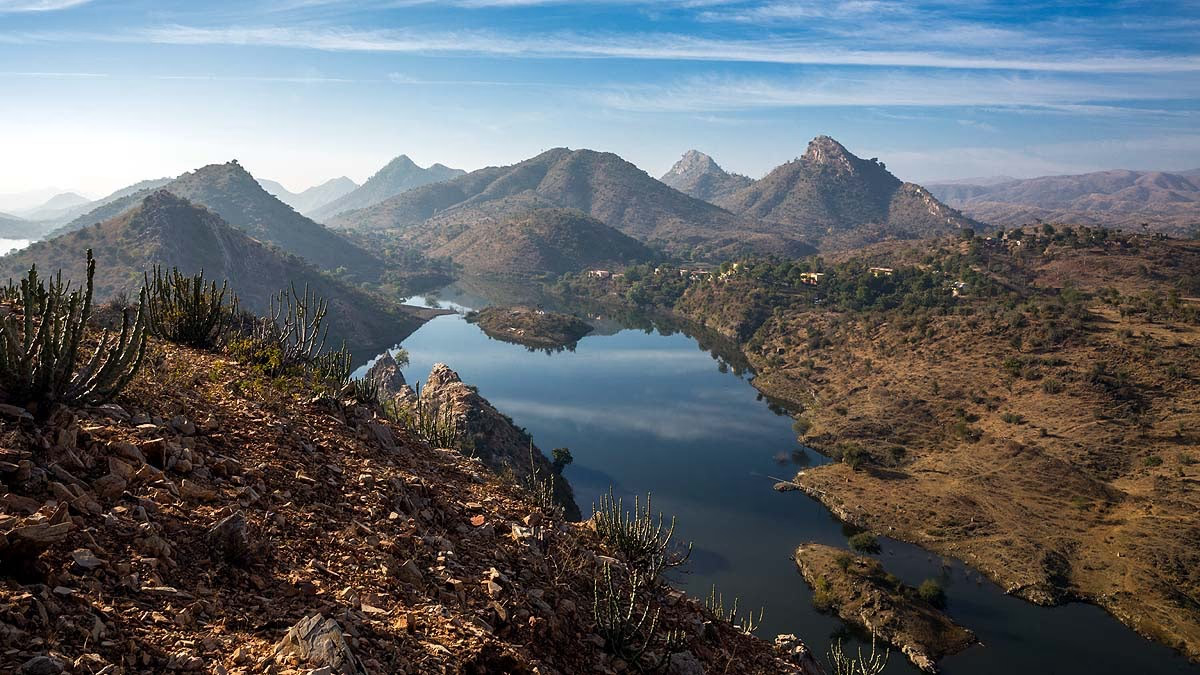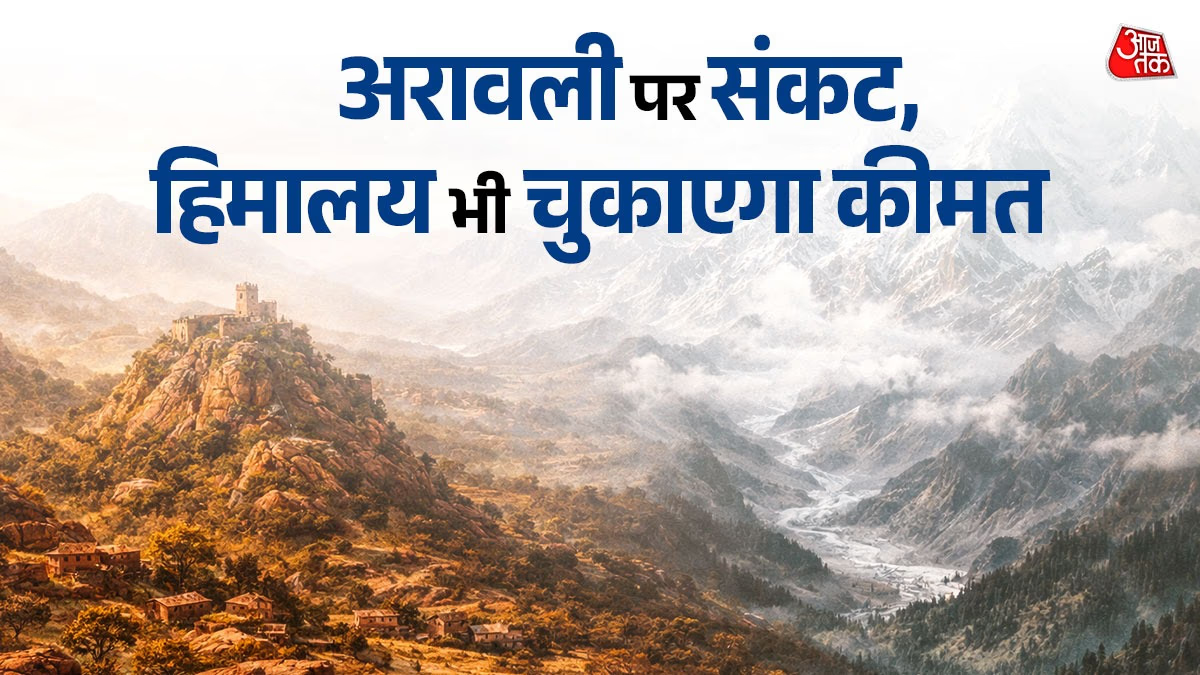
In November 2025, the Supreme Court approved a uniform definition of the Aravalli hills, according to which any geological form standing over 100 meters high from the surrounding terrain will be considered part of the Aravalli range. If two or more hills are within 500 meters of each other, they form the Aravalli Range. This definition, rooted in a committee recommendation by the central government, has sparked controversy.
Environmentalists argue that more than 90% of Aravalli might remain outside conservation oversight, while the government sees it as an expansion of the existing framework. This could potentially escalate the spread of the Thar desert, diminish groundwater levels, and surge pollution in Delhi-NCR. Aravalli, India's ancient mountain chain, plays a crucial role in halting the Thar's expansion and maintaining North India's climate balance.
Source: aajtak
The recent Supreme Court verdict has intensified the
#SaveAravalli
campaign. Concerns about Aravalli's preservation now suggest impacts beyond Rajasthan, Gujarat, Haryana, and Delhi-NCR. Possible threats loom over the Himalayan Range and the mountainous state of Uttarakhand too. Such as:
Could the absence of Aravalli result in dust settling on the Himalayas?
If the Aravalli crisis deepens, will it affect monsoons in Uttarakhand?
How might an Aravalli crisis impact the Himalayas?
In response, Professor Dr. Sudesh Yadav indicates that increased mining activities on the Aravalli hills could lead to a significant rise in dust particles. He elaborated on the reasons behind this outcome.
1. Why is the role of Aravalli crucial in desert dust movement?
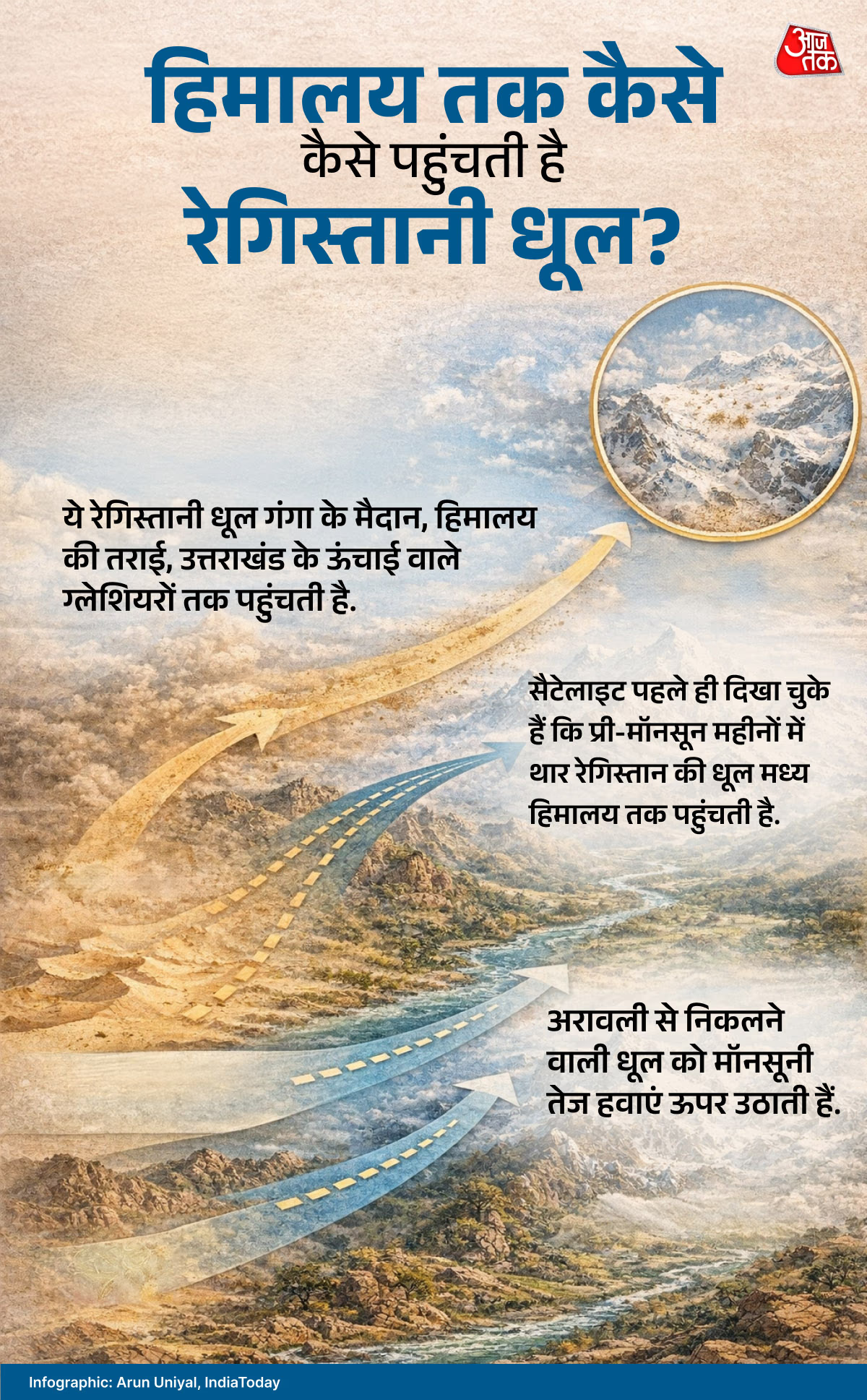
The Aravalli range acts as a natural dust barrier between the Thar desert and the Indo-Gangetic–Himalayan region. Its rocky structure and elevation slow down air currents, depositing particles in the Indo-Gangetic plain, thus minimally reaching the Himalayan region.
Should mining, deforestation, and land-use alterations threaten Aravalli, the desert will expand eastwards, escalating soil erosion by wind action, leading to increased dust production. Consequently, dust flow across North India and the Himalayas will intensify. Notably, these are not mere conjectures; studies have documented dust transport processes from Central Asia to the Tibetan Plateau and the Himalayas.
2. How does dust make its way to the Himalayan range?
During the summer, strong south-southwest winds lift fine particles from the desert regions. As these winds approach northern India, their speed and particle transport ability diminish, yet fine particles (PM1, PM 2.5) still reach the Himalayan area. These winds not only carry desert-derived particles but also transport industrial and vehicular emissions from Northern India.
Satellite data has already shown anthropogenic pollutants reaching the central Himalayas alongside desert dust during pre-monsoon months.
3. Dust accumulation on glaciers
When dust settles on snow and glacial surfaces, it impacts melting rates based on its chemical makeup. Black carbon becomes significant here, as it absorbs solar radiation, increasing glacial region temperatures and augmenting melt rates.
For instance, just a 2–5% reduction in albedo (the ability of a surface to reflect solar rays) can exponentially increase melting rates.
Changing snowfall and precipitation patterns
Dust deposition leads to abnormal temperature shifts, directly affecting snowfall processes and influencing factors like rain location, timing, and quantity, crucial for glaciers' existence.
The Aravalli crisis also raises concerns about its potential impact on monsoon patterns in Himalayan state Uttarakhand. A region already grappling with natural disasters fears that the Aravalli crisis could alter its rainfall patterns.
Does the Aravalli Range indeed influence rainfall and monsoons in Uttarakhand?
Professor Dr. Pradeep Srivastava clarifies that the Aravalli Range does not directly affect rainfall in Uttarakhand. Uttarakhand's rain primarily results from the Himalayan relief and monsoon system, not the Aravalli Range. So, the question arises—why doesn't the Aravalli Range impact Uttarakhand's rainfall?
Source: aajtak
Numerous geographical and scientific reasons underpin this.
1. Geographic distance and position
The primary reason is that the Aravalli Range, which extends from the Gujarat-Rajasthan-Haryana-Delhi region, is situated significantly southwest to northeast. Meanwhile, Uttarakhand lies far east and north of the Aravalli Range, separated by the Ganga plains, which break any direct weather influence.
Additionally, monsoon systems bringing moisture to Uttarakhand originate mainly from the Bay of Bengal, not the Arabian Sea monsoon, which brings heavy rains to India's west coast (Kerala, Karnataka, Goa, Maharashtra), then moves through central India (Gujarat, Madhya Pradesh) and the Narmada-Tapi valleys, reaching Uttar Pradesh, Bihar, and Punjab across the Gangetic plains.
2. Aravalli's low altitude and worn structures
The Aravalli range is among the world's oldest and extensively eroded mountain ranges, with most peaks under 90 meters. Its fragmented and uneven structure denies it the ability to uplift moisture-laden winds. Consequently, it fails to act as an orographic barrier for Uttarakhand’s rainfall. As a result, rainfall patterns in Uttarakhand remain unaffected by the Aravalli Range.
3. The decisive role of the Himalayas in Uttarakhand
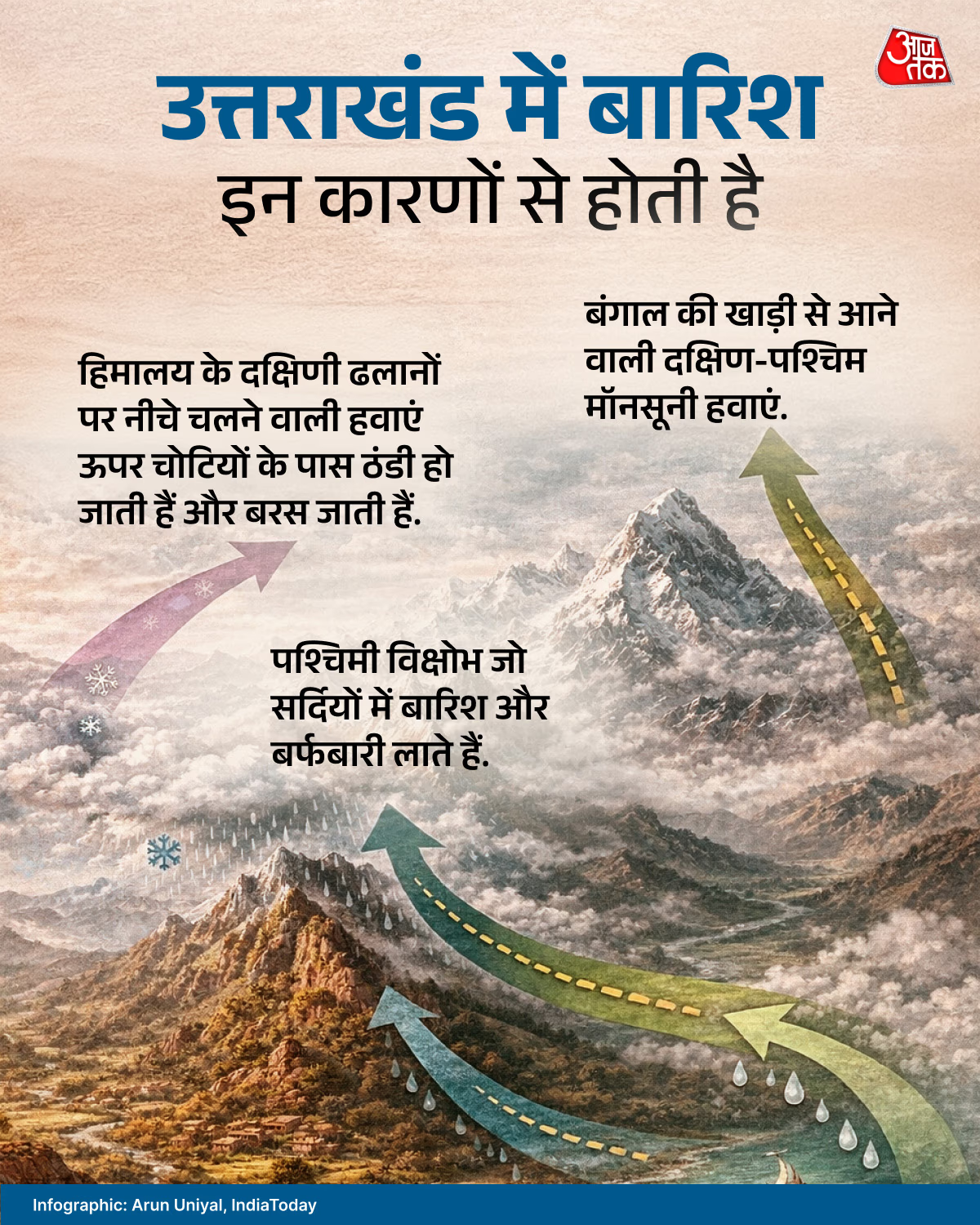
Rainfall in Uttarakhand primarily arises from:
Southwest monsoon winds from the Bay of Bengal.
Steep orographic uplift on the southern slopes of the Himalayas, where ascending monsoon winds are forced to cool, causing rain.
Western disturbances bring rain and snowfall in winter.
The Himalayas, being a high, continuous, and formidable mountain system, directly intercept moisture and cause heavy rainfall, a role Aravalli isn't capable of fulfilling. Despite experts generally agreeing that Aravalli does not significantly impact Uttarakhand's monsoon system, its future effects on the 'Crown of the Earth' and 'India's backbone'—the Himalayas—remain to be seen.
Professor Yadav suggests that the integration of environmental sustainability with development can be greatly simplified by effectively implementing existing governmental rules and policies at the grassroots level.