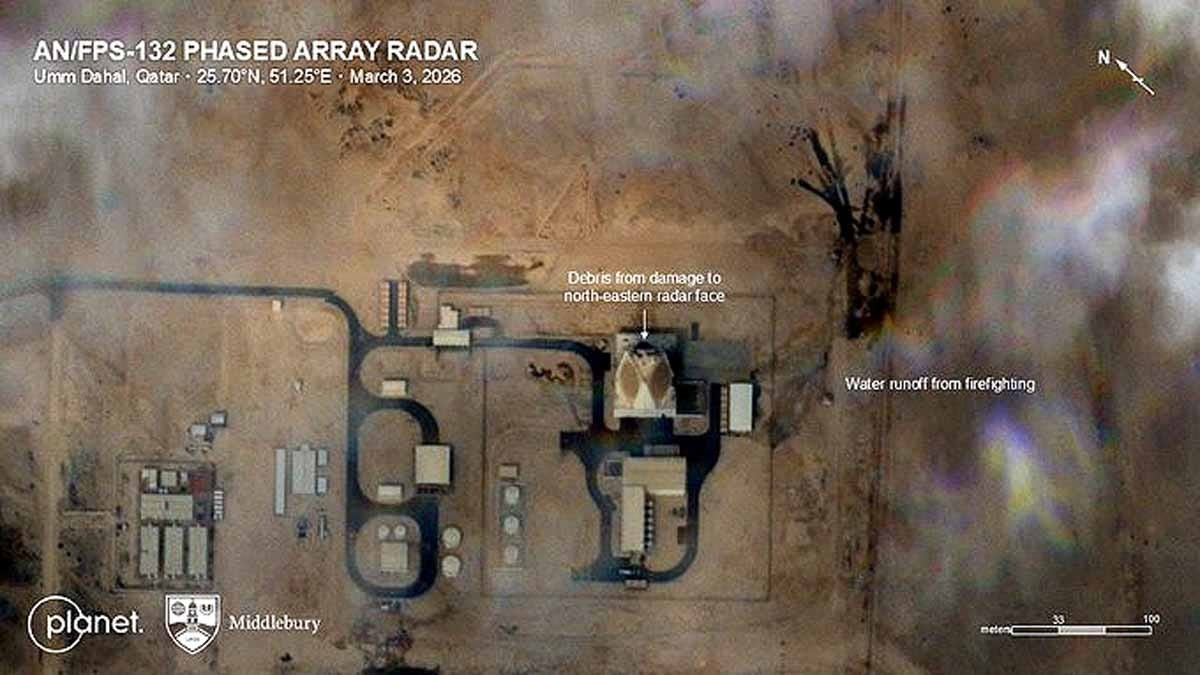
At the close of February 2026, the United States and Israel launched significant aerial and missile strikes on Iran, dubbed Operation Epic Fury by the US and Roaring Lion by Israel.
The operation aims to dismantle Iran’s nuclear program, ballistic missiles, naval capabilities, and security apparatus. President Donald Trump declared that Iran would never develop nuclear weapons, as their strength is to be dismantled.
Read more: Can Iran build a 'dirty bomb'? An easy-to-understand explanation of the whole issue.
America's Vast Military Presence and Strength
The US amassed a formidable military presence in the Middle East, marking the region’s largest American military congregation in years. Over 50,000 troops, more than 200 fighter jets, two aircraft carriers, and powerful bombers like the B-1, B-2, and B-52 are involved.
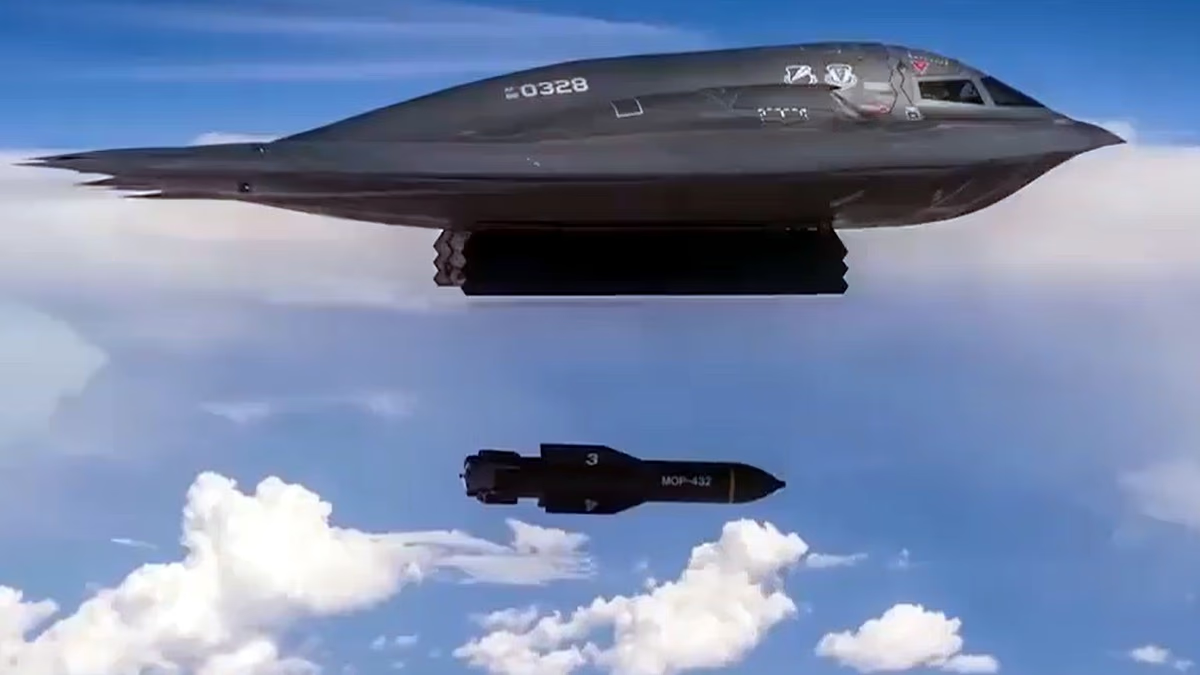
The stealthy B-2 bombers execute precise strikes deep within enemy territory, while the B-52s conduct extensive bombings across large areas. The US confirmed the use of B-52 bombers against Iran, with additional weapons and ships on their way. The military indicates this preparation is to nullify Iran’s threats.
Massive Initial Strikes and Damage
Within less than 100 hours of operation commencement, the US and its allies executed significant offensives. Approximately 2,000 targets were hit with over 2,000 missiles and bombs deployed, exceeding the impact noted from the Shock and Awe Campaign of the 2003 Iraq war in just the first 24 hours.
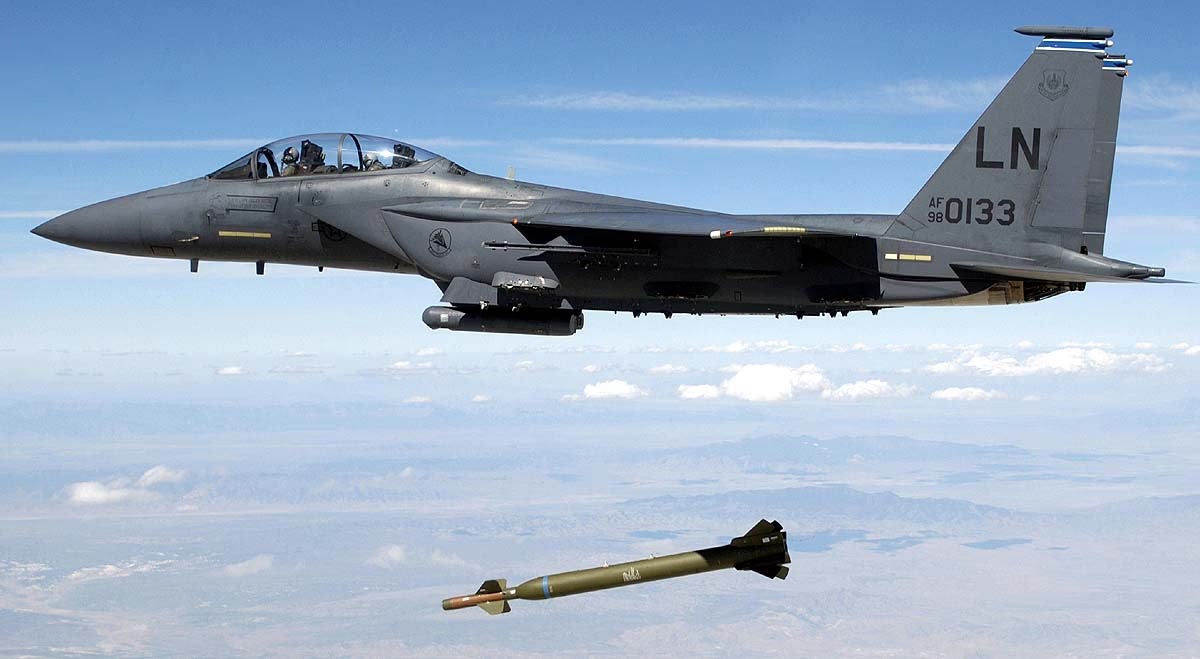
Source: aajtak
Iran’s air defense systems have been significantly weakened. Hundreds of ballistic missiles, their launchers, and drones were destroyed on the ground. The US Navy sank 17 Iranian ships, including their most modern submarine. Now, no Iranian ships are operational in the Arabian Gulf, the Strait of Hormuz, or the Gulf of Oman. The US and Israel have completely secured aerial dominance over Iran.
Introduction of New Weaponry
The operation witnessed America deploying several new weapons for the first time. The Precision Strike Missile (PrSM), a long-range, highly accurate missile, was used. Task Force Scorpion Strike introduced one-way attack drones (kamikaze drones) that self-destruct on impact. B-2 bombers carried out uninterrupted surgical strikes in deep and fortified areas within Iran. B-52s targeted command centers and missile posts, while B-1 bombers also conducted missions within Iran.
Iran's Counteroffensive and US Allegations
In response, Iran launched significant counteroffensives, firing over 500 ballistic missiles and more than 2000 drones. The US accused Iran of deliberately targeting civilian areas and infrastructure in the Gulf. Although American and Israeli defense systems intercepted a large portion of these attacks, some US soldiers were killed, and others injured. Iran’s assaults targeted several US bases in the region.
Update from CENTCOM Commander Admiral Brad Cooper
Admiral Brad Cooper, commander of the US Central Command (CENTCOM), provided updates via video. He stated that the US military is ahead of its game plan, employing over 50,000 soldiers, 200 fighter jets, two carrier groups, and bombers. Admiral Cooper reported real-time tracking and destruction of Iran’s remaining mobile missile launchers, asserting the mission is just beginning.
America is resolute in achieving all its objectives, focusing on completely eliminating Iran’s missile, naval, and nuclear capacities. The conflict remains intense and driven toward neutralizing Iran’s perceived threats, while Iran frames its actions as defensive.