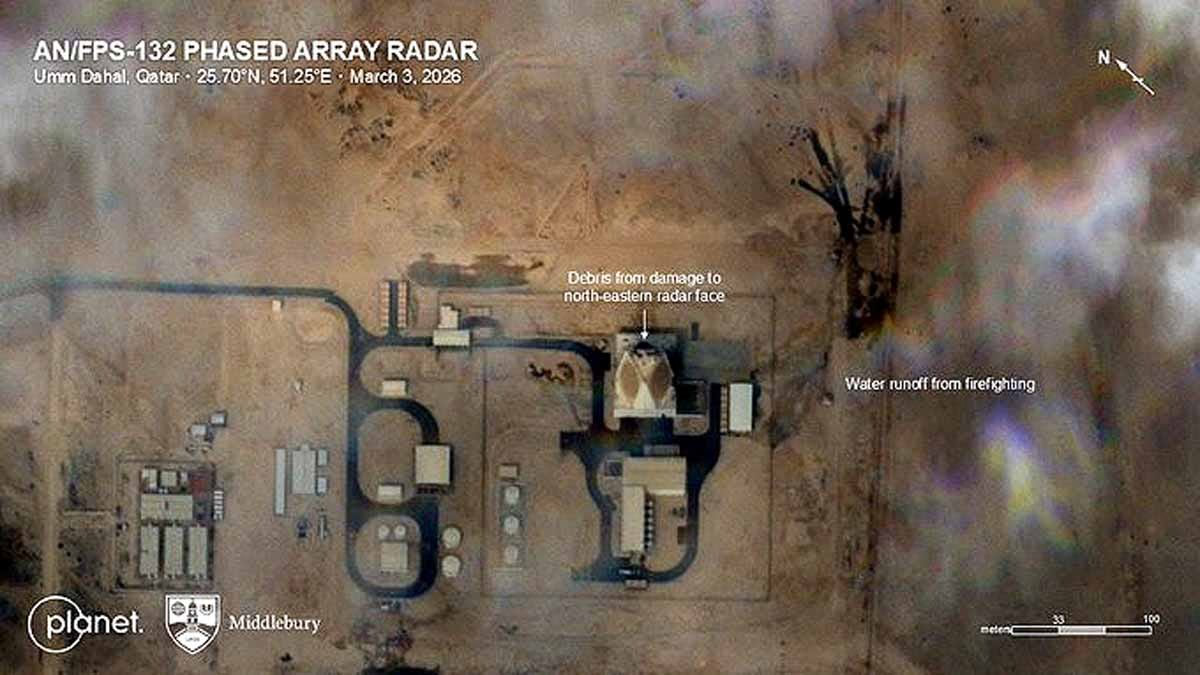
In a bold retaliation against the United States, Iran launched an attack on a critical radar system located in Qatar. This radar, a part of the U.S. Space Force, is the AN/FPS-132 ballistic missile early warning radar.
Satellite imagery now confirms the attack’s success, with the radar suffering significant damage. This system, valued at approximately $1.1 billion, ranks among America's most significant and crucial radars in the Middle East.
Its primary function is the early detection of incoming ballistic missiles, allowing timely warnings to the U.S. military and its allied nations. A cost-efficient Shahed drone—cheaper than a used car—was able to render this expensive and pivotal defense system ineffective, revealing vulnerabilities within the American defense architecture.
What is this Radar and Why is it Significant?
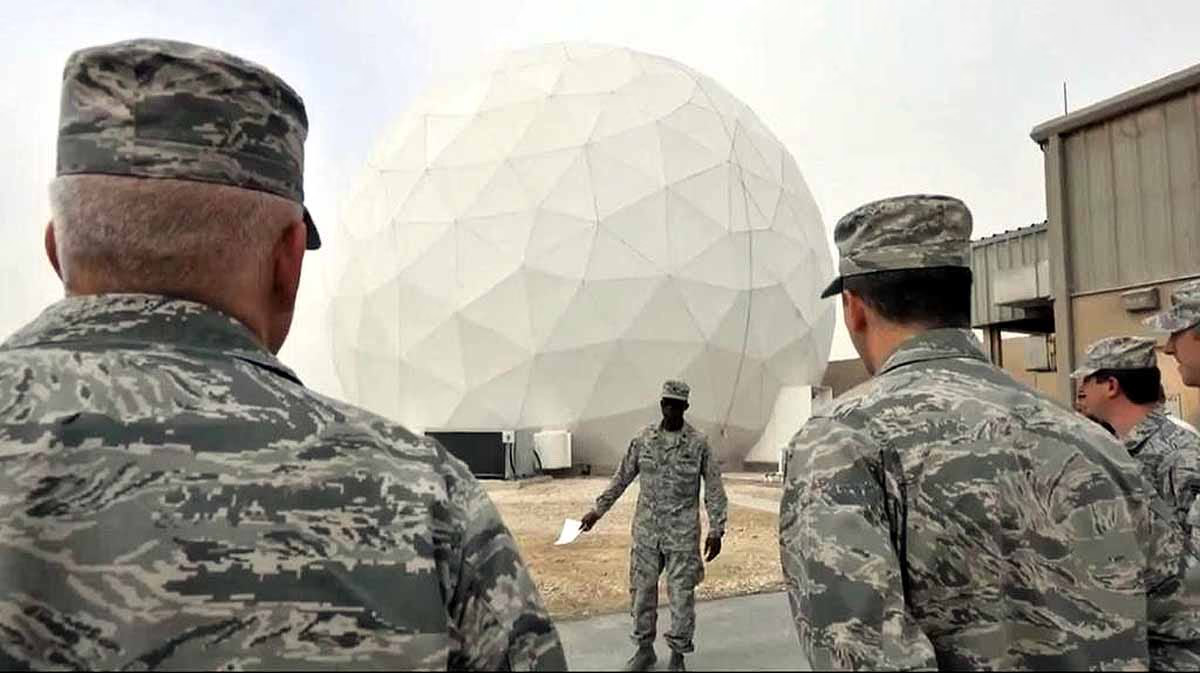
The AN/FPS-132 radar is part of the upgraded early warning radar (UEWR) systems. It constitutes a critical segment of the U.S.'s global missile warning network and was established in Qatar in 2013. Boasting a detection range of 5000 kilometers, it can track ballistic missiles launched from Iran and other nations from a considerable distance.
Source: aajtak
This radar is situated near the Al Udeid Air Base, the largest American airbase in the Middle East, supporting U.S. military operations across the region. Upon detecting a missile launch, it swiftly provides information on direction, speed, and target, crucial for activating systems like Patriot or THAAD for missile defense. Without this radar, defending against missile attacks would pose greater challenges for the U.S. and its allies, such as Saudi Arabia and the UAE. This system is rare globally, making its damage all the more significant.
The Story of Iran’s Attack and How it Unfolded
The Islamic Revolutionary Guard Corps (IRGC) of Iran described the operation as part of the 'True Promise 4'. It was a response to recent strikes by the U.S. and Israel on Iran. Iran utilized ballistic missiles and drones for the assault. While Qatar's defense ministry claimed to have intercepted most missiles and drones, some reached the Al Udeid base, with one UAV striking the radar site.
Iranian media asserted that the radar was entirely destroyed. Reports indicated the drone was a Shahed type, known for being inexpensive yet lethal. Qatar acknowledged some successful attacks, with eight individuals injured by shrapnel. Neither the U.S. nor Qatar has disclosed the full extent of the damage, but satellite photos visibly depict the radar's heavy damage. This is the first time such an expensive U.S. strategic system has been significantly impacted by an enemy strike.
The Repercussions of This Attack
This attack poses a substantial blow to the U.S. missile defense shield. America's eyes in the Gulf region have been weakened, potentially reducing the warning time for missile launches. This elevates threats to the safety of U.S. bases, Israel, and Gulf nations. Iran has demonstrated that even inexpensive drones can target costly systems, revealing a new dimension in drone warfare strategies.
The United States will need to bolster its defense approach innovatively. The presence of American bases in countries like Qatar might heighten regional tensions. This move by Iran signals its readiness to directly attack U.S. assets, with the possibility of more such assaults in the future.
Keywords: Iran, Qatar, US Radar, Ballistic Missile, AN/FPS-132, Satellite Imagery, Early Warning, Middle East, Shahed Drone, Al Udeid Air Base, US Defense System, Drone Warfare, Islamic Revolutionary Guard Corps