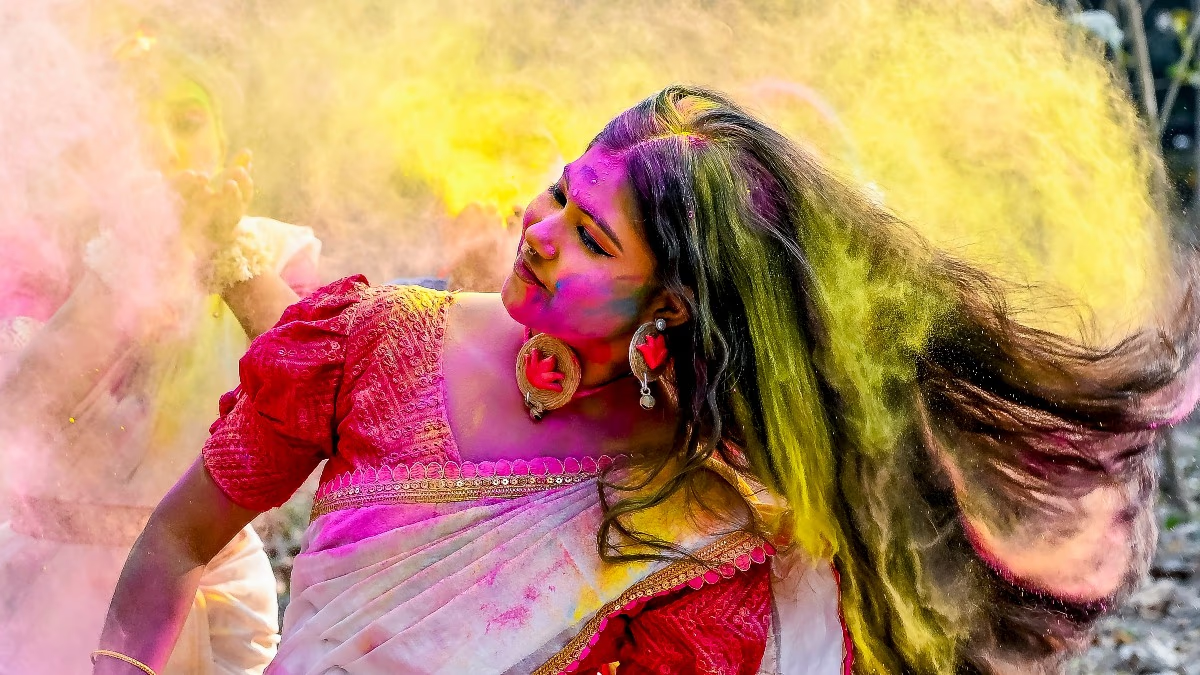
In India's festival traditions, Holi stands out as a festival not merely celebrated but played. How did this playful element come into being? The answer lies in the Adi Parva of Mahabharata. There was a king named Uparichara. King Uparichara received a staff as a symbol of friendship from Indra, the king of gods.
King Uparichara established that staff at a high place, and every year, during the spring season, he would hold a festival there in memory of his friendship with Indra. During this festival, no state affairs were conducted, no taxes were collected, and everyone indulged in merriment. Indra himself, in the form of a swan, would attend to enjoy the cultural festivities. Many games and feats occurred during this time. The staff given by Indra was called 'Samvat,' symbolizing the completion of an annual cycle, known as the Samvat Festival.
This Mahabharata story connects with Holi, mirroring the festive spirit of colors. From a historical perspective, Holi can be considered a festival over five thousand years old.
Vedic Era: From Navatraishti Yajna to Holikotsav
The Holi we celebrate today is a transformed version of its ancient traditions. Over time, various customs from different eras became part of the festival, enriching its historical tapestry. In the Vedic period, it was a lunar festival, known as Navatraishti Yajna. Newly grown grains were offered in sacrifice and then shared among families and clans. Half-roasted grains were called 'Hola', which is how the terms Holikotsav and Holi entered common usage.
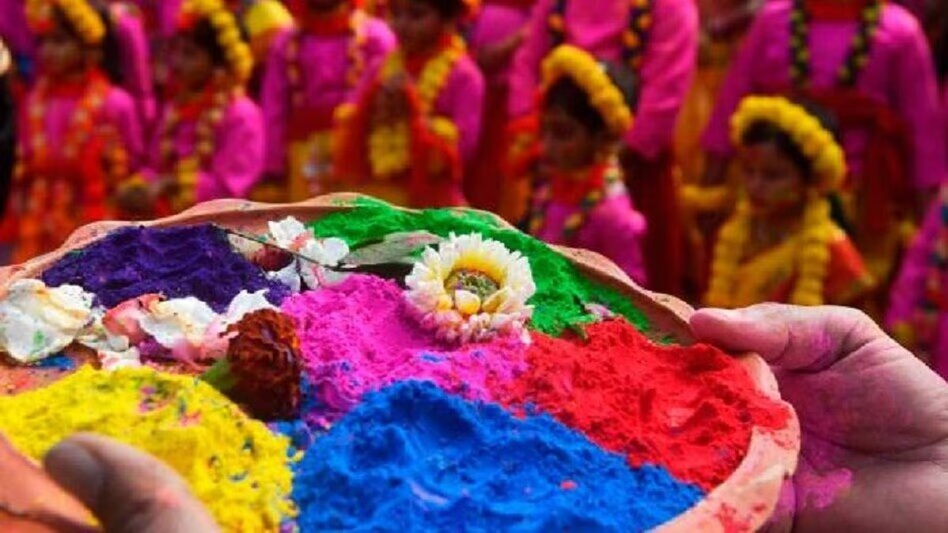
Source: aajtak
With time, the festival incorporated astrological traditions and customs related to completing the year’s cycle of the 12 months in the Panchang. The changing of seasons and the arrival of spring naturally led to a festive atmosphere. These elements combined to birth the Holi festival. Traditionally, the celebration also included playing with dirt as a skin remedy, with 'Dhulandi' marking the start, an earthy festivity for mass participation.
Tracing the history of Holi, evidence can be found in the caves of Bhimbetka, Jogimara, and Ajanta-Ellora. These areas showcase rock paintings proving that regions from the Himalayan foothills to sea-girt landscapes were not only versed in yoga and esotericism but also had merriment and a deep connection with colors, celebrating life’s carefree and jovial aspects. After all, humans seek not just liberation and knowledge but also to live life. Here, colors have always aided in manifesting unrestrained joy and zest for life.
Worship of Kamadeva and the Festival of Madanotsav
Spring, with its lively spirit, was ideal for reverence in tales of love. Rishis and poets imagined Kamadeva and Rati, celebrated as spiritual lovers. Madanotsav, spanning the whole spring month, concluded with the exuberance of Holi. Today, traces of this month-long celebration, including milestones like Mahashivaratri, Phulera Dooj, and Rangbharni Ekadashi, still linger in villages.
Mentioned in Kalidasa's 'Ritusamhara' and Bhavabhuti’s 'Malati Madhava,' tales of Madanotsav revolve around Kamadeva being worshipped. Processions adorned with fragrant flowers depict the awe of Kamadeva, showering blossoms along the way, drenching all in hues of red and orange.
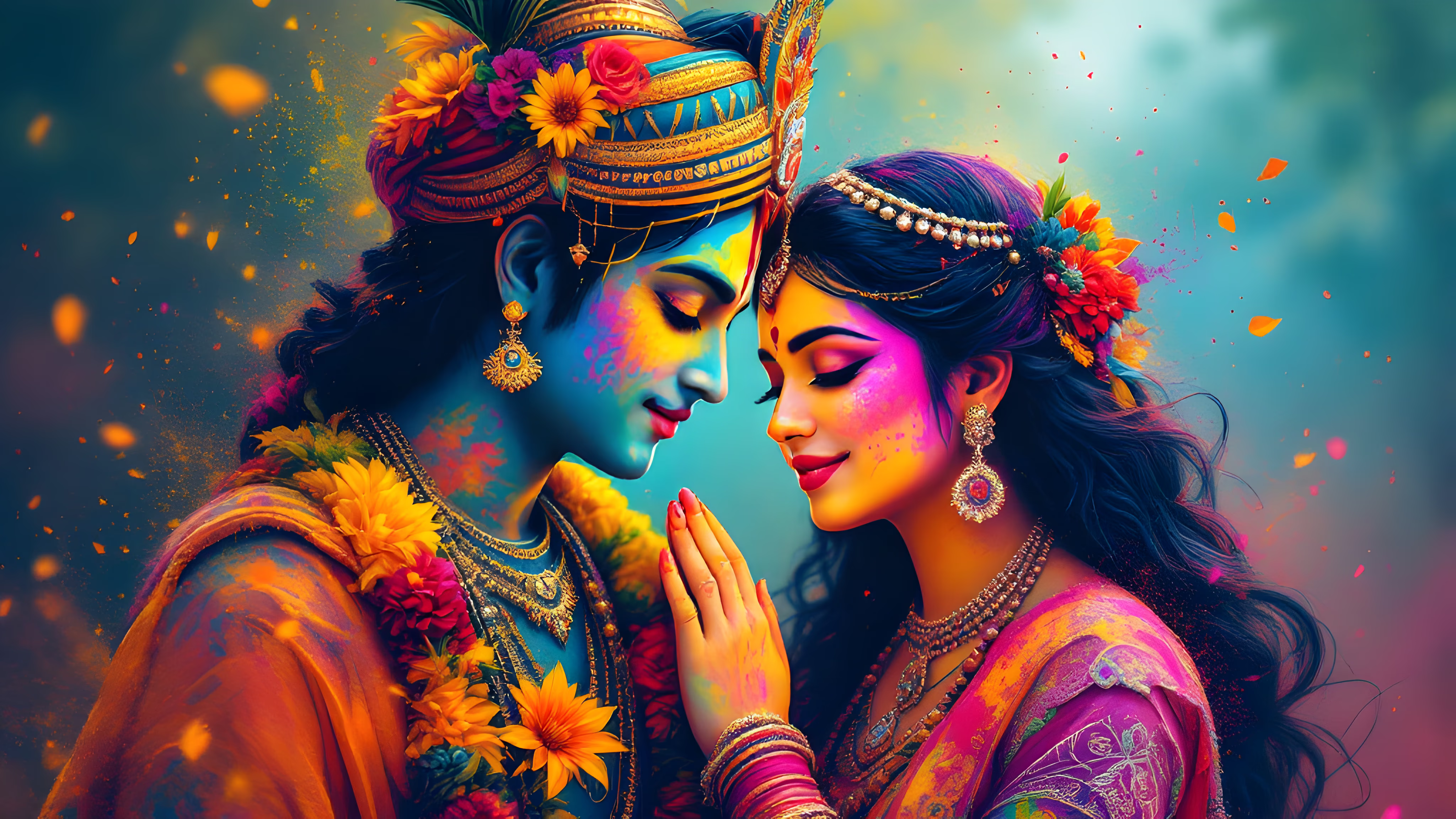
This tradition might have evolved into the Holi we know today, progressing from colorful floral showers to vibrant color play, enriched by mythological tales of Hiranyakashipu, Holika, and Prahlad, alongside the enchanting stories of Radha and Krishna, highlighting a rich cultural integration.
The mention of Holi within the tradition of Krishna devotion, beginning 600-700 years ago, adds further color. Paintings from the sixteenth century Hampi depict royal families partaking in Holi, a vision also captured in Ragamala paintings.
Sanskrit Literature's Depiction of Holi
Historians agree that Holi existed among Aryans. Ancient texts such as Jaimini’s Purva Mimamsa-Sutra and Katha Garhya-Sutra explicitly describe Madanotsav and Holikotsav. Thus, from religious scriptures to the Bhakti tradition, Holi, brimming with vibrancy, not only sustained but enriched its ‘Holi Khele’ tradition.
By the Sultanate period, Holi had gained widespread recognition. Al-Biruni recorded its customs in India. With time, Muslim poets embraced its charm. Amir Khusro penned Holi songs and verses, linking the Sufi tradition of Hazrat Nizamuddin Auliya to Holi, immortalized through a melody featured in a recent Sanjay Leela Bhansali web series.
Source: aajtak
Rich Tradition of Holi in the Mughal Era
During the medieval period, Holi emerged as a bridge between Hindu and Muslim communities. Muhammad bin Tughlaq was the first Sultan documented to have played Holi. Accounts of sultans and emperors enjoying Holi remain prominent in literature. Ras Khan, Nazir Akbarabadi, Mahjoor Lakhnavi, Shah Niaz among others celebrated Holi in their poetry. Mughal documentation tells fascinating stories of Akbar and Jahangir celebrating Holi with their queens, Jodhabai and Nur Jahan. An Alwar museum painting shows Jahangir engaging in Holi.
In Shah Jahan's era, Holi was dubbed Eed-e-Gulabi and Aab-e-Pashi (splash of colors). The final Mughal emperor Bahadur Shah Zafar cherished the fervor of spring and Holi. Nawabs of Awadh like Wajid Ali Shah eagerly awaited Holi, contributing notable compositions like 'Holi ki Thumri': ‘My Kanha when back, shall face holi intact, sneaking behind him gently, shall lavish colors closely.'
Holi, with its vivacity, is irresistibly engaging. It’s not merely a memory of Hiranyakashipu-Prahlad or Radha-Krishna's dance.
Holi offers a pause, a time to live deeply, laugh openly, and embrace new beginnings. It's a narrative of civilization, grasping both the earnestness of life and its playful essence.
Thus, Holi is played because it reminds us that we are not just puppets tied to rules. We are beings of emotions and vivid experiences, carrying a heart that blooms when colors fly.