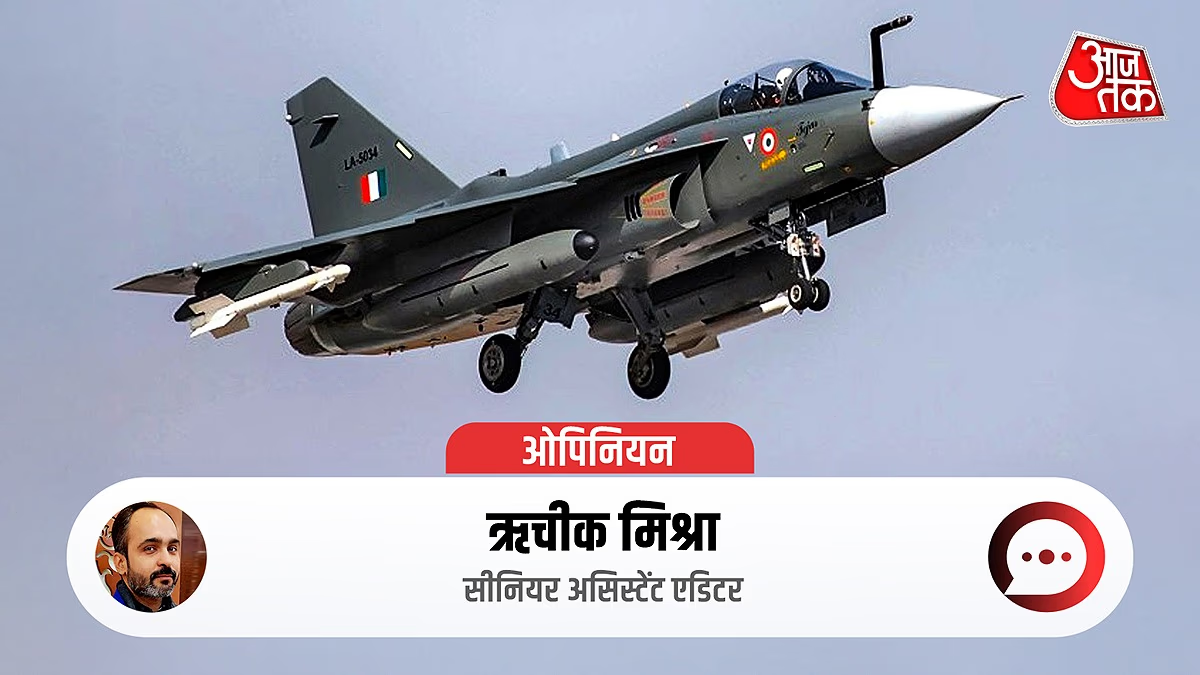
Pilots of the Indian Air Force are taught: prioritize saving the aircraft, rescue people if that's not possible, and lastly, save yourself. Wing Commander Namansh Syal exemplified this mantra. At the 2025 Dubai Air Show, everyone gathered to witness India’s Tejas perform. With just 2 seconds left, Namansh straightened the wings, steered the jet away from the audience, and made every effort to protect those on the ground... sacrificing himself but saving countless lives.
This wasn’t merely an aircraft crash; it was the sacrifice of a brave soldier. Tejas is India’s first indigenously developed modern fighter jet—40 years of effort, a thousand engineers' sweat, and the dream of an independent India encapsulated within it. This aircraft was at the Dubai Air Show to showcase its capabilities to potential international buyers like Egypt, Argentina, the Philippines, and Nigeria. Today, one haunting question persists: if it crashes at an exhibition, what about in warfare?
Read Also: The Heartfelt Video of Wing Commander Namansh Syal's Last Salute by His Wife Will Move You
The setback is undeniable. Nations contemplating the purchase of 10-20 units are now hesitant. No military wants to risk money and pilot lives. If asked today, “Would you buy Tejas?”, the likely response would be, “Clear the Dubai case first, then we’ll see.”
But is this the first time a new aircraft crashed during a demonstration halting its sales? Certainly not. According to Aviation Safety Network, Russia's Su-30 crashed at the 1999 Paris Air Show, sparking doubts about its future. Yet, just two years later, India purchased 270 Su-30s—vital components of our Air Force today.
According to Aerospace Global News, America’s F-35, the most expensive project worldwide at $1.7 trillion, has experienced 11 accidents between 2018 and 2025. Nevertheless, over 20 countries are in line to procure it. Despite over 650 F-16 crashes, 25 countries continue to operate them.
MiG-21: 1200+ crashesF-16: 650+MiG-29: 206F-15: 175F/A-18: 143Su-30: 23Rafale: 4Tejas: 2
(Source: Army Recognition, Global Security, USF, ASN Database, Eurasian Times, Newsweek)
Crashes occur, followed by improvements, restoring confidence. Delays should be avoided because it's humans who create machines, and errors are human, while every machine has its limitations.
Read Also: Wing Commander Namansh Tried to Save Tejas Until the Very Last Moment; Watch the Video
The crash in Dubai occurred during a negative-G maneuver. Tejas’ fly-by-wire system isn’t quad-redundant yet, meaning it lacks four separate channels for emergency backup if one fails. Such redundancy allows pilots an opportunity to save both themselves and the aircraft. Rafale, Typhoon, F-16 Block 60, and even JF-17 Block-3 boast quad-redundant systems. Currently, Tejas has triple redundancy.
If one channel fails or suffers a glitch, the pilot has hardly any time to recover. Another key weakness is the throttle response of the GE F404 engine, which struggles to gather enough power for flight in adverse conditions. Negative-G situations lower air intake, increasing flame-out risks, and potentially causing engine failure—an issue America resolved for the F-16 back in the 1980s but still unresolved for Tejas.
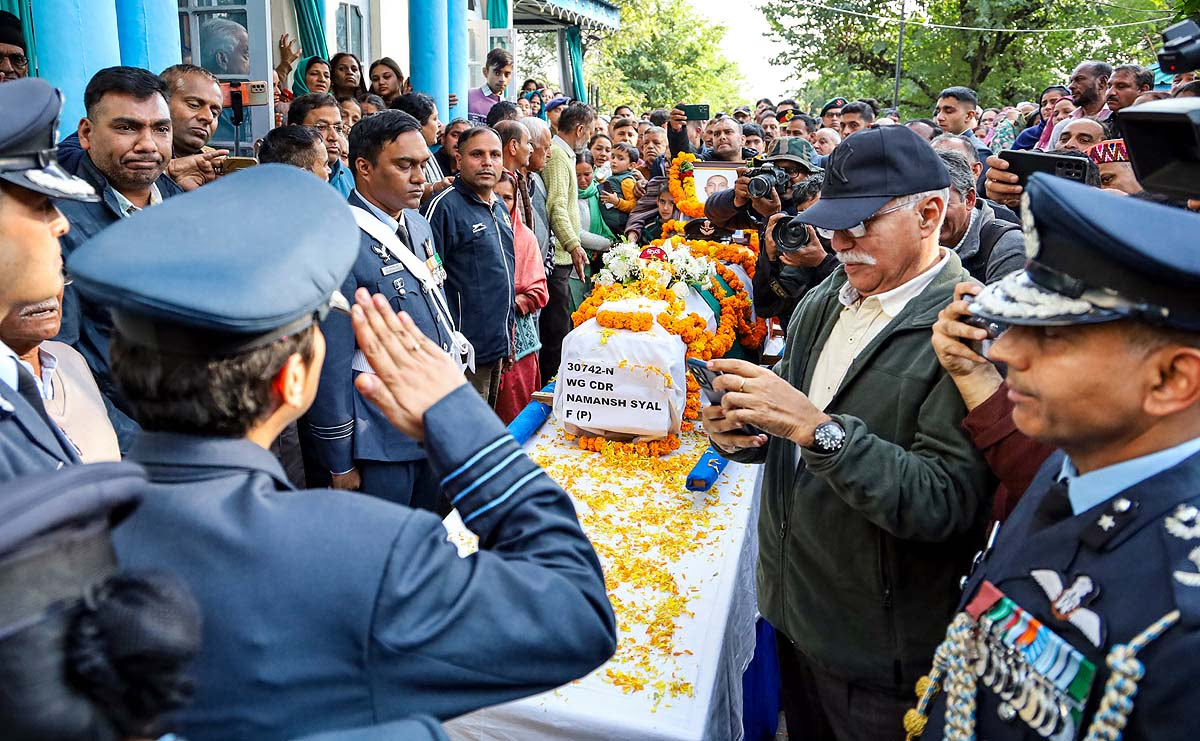
Source: aajtak
Release a comprehensive report within two months. If engine trouble or fly-by-wire software issues were to blame, be transparent. The world fears delays in addressing technical weaknesses more than the flaws themselves.
Conduct the Next Demonstration Within 6 Months
Prepare Tejas Mk-1A and invite the world—whether at Bengaluru's Aero India or Pokhran. Show them another safe, exceptional display. Let Aero India 2027 erase memories of Dubai with a stunning flypast of four Tejas jets and unveil the Mk-2’s maiden flight.
Develop Your Own Engine Sooner
Currently, Tejas operates on America’s GE-F404 engine. Finish new projects for a 110 kN indigenous Kaveri engine or collaborate with Safran. Foreign buyers often ask—will the engine be domestic, or will America restrict us? Ensure a domestic 110-120 kN engine is ready by 2030.
Read Also: The Final Video of the Martyred Pilot in Dubai Air Show Tejas Crash
Make Pricing and Maintenance More Attractive
Tejas’ strength lies in its cost-effectiveness—affordable operations across various environments, from hot deserts to cold mountains. Flaunt this aspect with vigor.
The crash might stem from a critical moment's technical failure, but until then, Namansh executed extraordinary maneuvers showcasing pilot confidence in this plane—previously enacted successfully in Guwahati. At the crash’s end, he proved a better pilot than the plane, averting greater damage. Now our mission is to quickly demonstrate our plane can match our pilots’ valor.
Accidents bring sorrow but don't halt progress. Japan built the Zero Fighter, fell, and rose again. America made thousands of F-35 errors, and continues improving, unfazed. Russia’s Su-27 repeatedly crashed, yet the world buys it. Tejas is still in its budding stage compared to these seasoned fighters. Over a 40-year journey, only 40-50 units have been built. The U.S., Russia, and France made thousands before achieving perfection. Our aim is to produce 500-1000 Tejas aircraft, eventually affirming it as the world’s most reliable small fighter jet.