
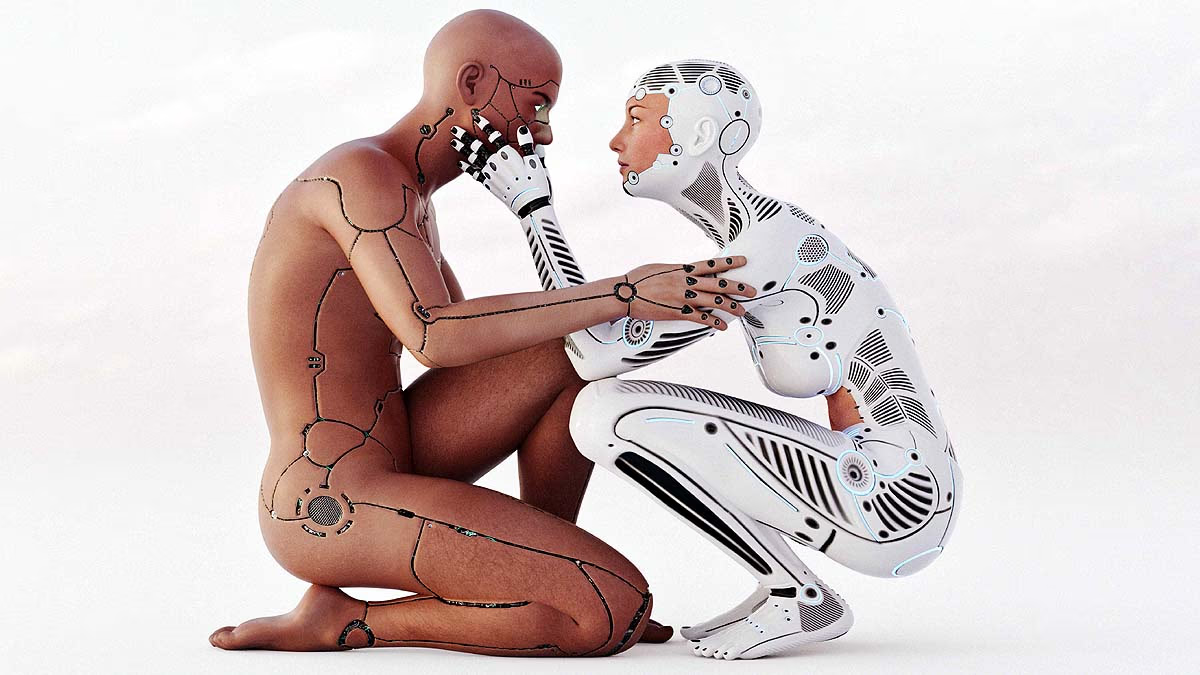
Are our bones set to mirror the flexibility of sharks, and could our brains ultimately link with machines to achieve immortality? Will humans adapt to survival in high heat and low-oxygen environments? These questions, though seemingly futuristic, are grounded in current research that suggests the human of tomorrow might be more robust, intelligent, and environmentally adaptive. Yet, these advancements are not without challenges. Let's explore ten transformative shifts that could occur in the human body over the next century.
Source: aajtak
Evolving to endure falls and accidents, our bodies are advancing. Neuroscientist Dean Burnett proposes bones might become more agile and durable, similar to how cartilage grows in sharks, reducing injury risk and enhancing daily safety. Two studies in 2023 delved into this: ‘The genetic architecture and evolution of the human skeletal form’ identified genes affecting skeletal flexibility through AI analysis of 31,000 X-rays. The 2025 study ‘Genes that shape bones identified’ suggests gene variants could impact shoulder width and leg length, potentially increasing flexibility.
According to Gareth Fraser from Sheffield University, human teeth may evolve to resemble the beak-like structures of pufferfish, potentially revolutionizing dental health but likely altering dietary habits. A 2023 study ‘Mammalian dental diversity: an evolutionary template for regenerative dentistry’ explored the potential for beak-like dental structures. Another 2023 report on fossil teeth size predictions supports evolutionary changes, indicating continual adaptation.
Source: aajtak
A century ago, the average height increased from 5.7 to 5.10 feet in the U.S., and this trend might persist, with future humans resembling basketball players. Height empowers strength but brings nutritional demands. 2023's ‘Scientists narrow down pool of potential height genes’ identified CRISPR as a tool for pinpointing genes impacting height. A 2025 study, ‘Beyond Hormones: Researchers Define X and Y Chromosome Contributions to Height,’ revealed the Y chromosome significantly impacts height, suggesting these chromosomes will play a more active role in the future.
Harvard's Juan Enriquez predicts lungs may evolve, drawing more oxygen even in low-oxygen locales like Mars, thanks to genetic engineering. This would ease space travel. The 2023 study ‘Human Health during Space Travel: State-of-the-Art Review’ examined microgravity's effect on lung volume. A 2024 study, ‘The Lungs in Space: A Review of Current Knowledge and Methodologies,’ focused on pulmonary adaptation in space, with cells potentially modifying to support life on Mars.

Source: aajtak
As height increases, so will finger length, aiding in touchscreen technology use, offering tech users an edge. The 2024 report ‘Evolution, biomechanics, and neurobiology converge to explain selective finger motor control’ outlines the evolutionary origins of finger dexterity, suggesting our digits will grow and adapt in function.
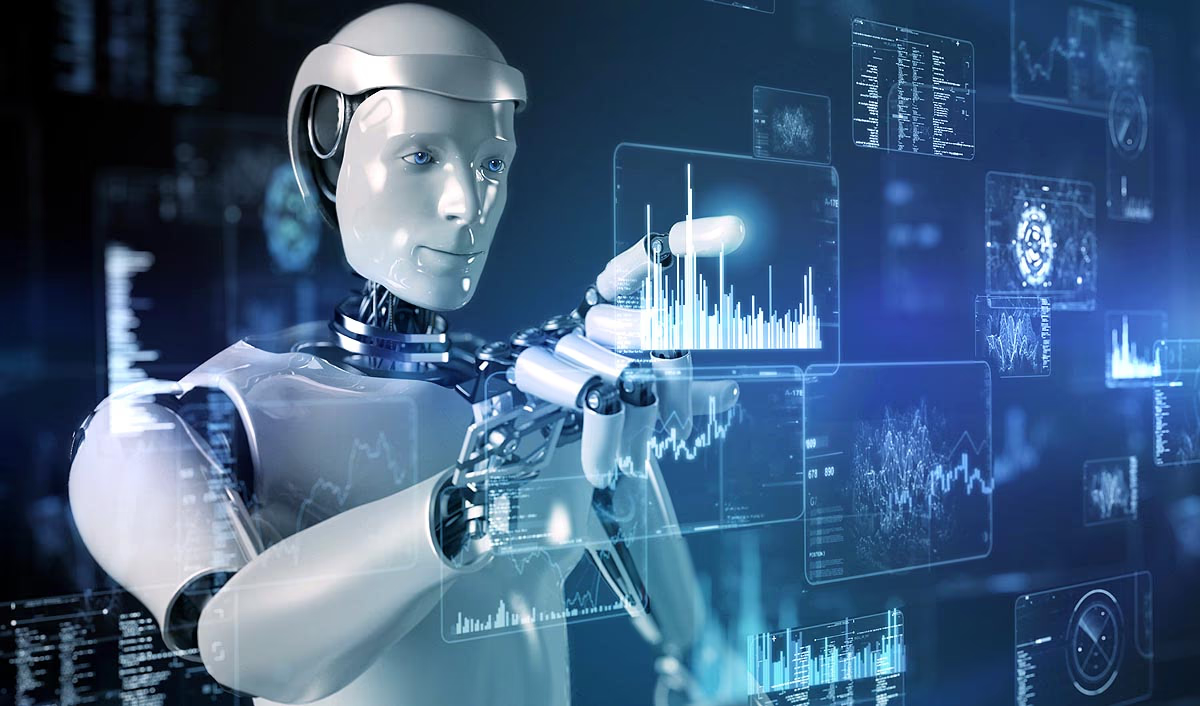
Data deluge will be dissected more efficiently by the brain, resulting in psychological adaptations and enhanced intelligence. Yet, with improved analytical skills, stress management becomes crucial. The 2023 study ‘Evolution wired human brains to act like supercomputers’ explores future 'computer-like' human brains. Futurist Ian Pearson suggests brain-computer interfaces could liken brains to machines by 2050, potentially initiating the rise of superhumans.
Source: aajtak
Genetic illnesses will diminish. Bionic eyes enabling UV ray vision are under German development, revolutionizing life for those with disabilities. A 2024 Bionics Institute report demonstrated vision improvement after 2.5 years of trials.
Environmental allergies might increase as genetic engineering progresses, possibly weakening immunity, necessitating balanced lifestyles. The 2024 study ‘Genetically modified foods and food allergy’ deeply investigates allergy risks associated with GMOs.
Global Brain Institute’s Cadell Last foresees delayed sexual maturity as lifespan extension leads to slower living benefits. A 2024 Journal of Clinical Research in Pediatric Endocrinology report discusses gonadotropin therapy's maturation changes, hypothesizing a shift in reproductive relationships when children are possibly birthed via pods, removing the need for traditional reproduction.
Source: aajtak
Lancet's report indicates global obesity will rise, potentially manageable by diet control. However, achieving this universally poses challenges. The 2025 study ‘Global, regional, and national prevalence of adult overweight and obesity, 1990–2021, with forecasts to 2050’ projects 4 billion overweight people by 2050. The ‘World Obesity Atlas 2025’ predicts a 115% increase in obese people by 2030.
CRISPR may cure conditions like cystic fibrosis and Huntington’s, heralding a healthcare revolution. The 2025 study ‘World’s First Patient Treated with Personalized CRISPR Gene Editing Therapy’ discusses advances in treating rare diseases.
At MIT, memory download research with mice promises breakthroughs in mental health. A 2024 study suggests non-neural cells may store memory. A 2025 Brown University study discusses optimizing working memory, indicating human memories could someday be stored.
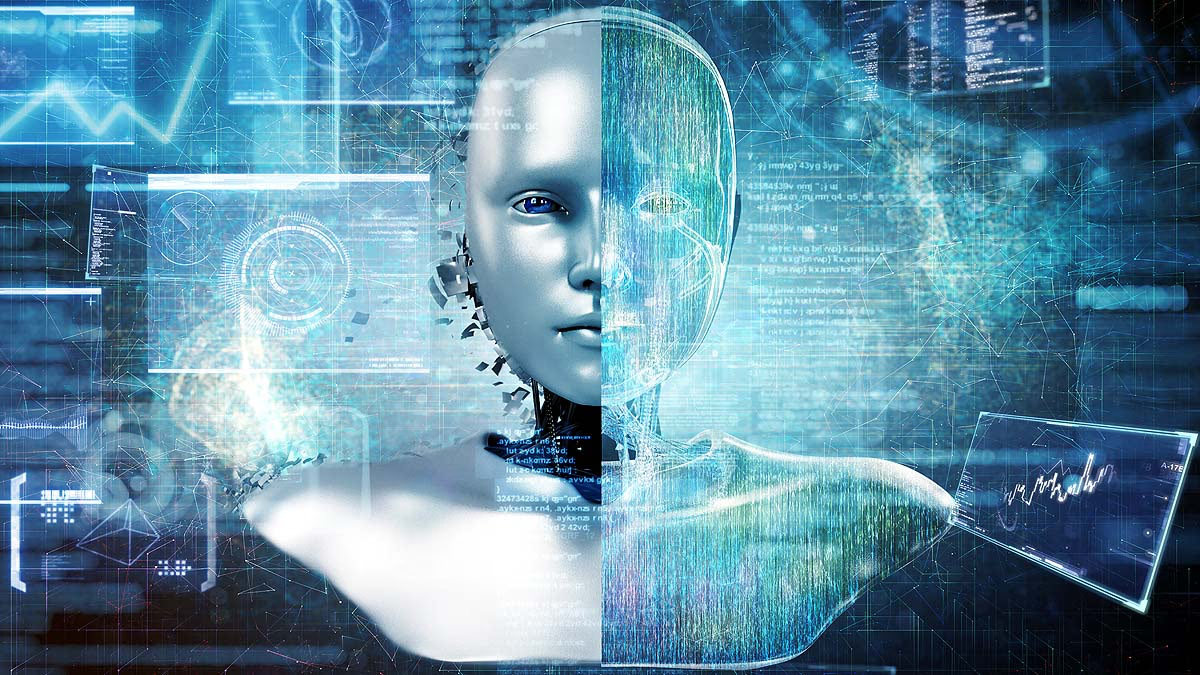
Source: aajtak
If our mood dips, skin might blush red, heralding skin that changes color like a chameleon, easing emotional expression. The 2025 Advanced Materials report on structural color fabrics offers defense sector advantages, enabling temperature resilience. Climate change will provoke the body to push back, and anti-aging could render a person in their 50s looking 30.
Genetic changes promise increased lifespan, enhancing life quality. A 2023 research paper indicates the KLF1 gene could extend life by 20%.
Synthetic telepathy might allow mental message exchange, revolutionizing communication. With mobile devices potentially integrated into our bodies, this 2025 “Neuralink Seeks ‘Telepathy’ And ‘Telekinesis’’ report highlighted BCI's telepathy potential, proving such advancements could soon be reality. These changes suggest future humans will blend technology and biology harmoniously. Recent research confirms the potential for these advancements, underscoring the need to maintain humanity's core essence.