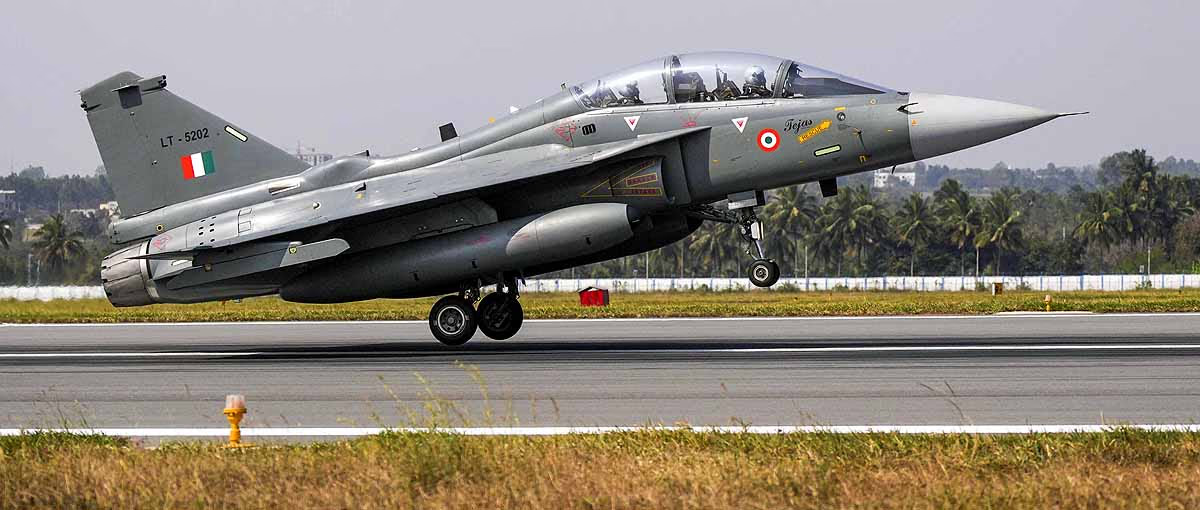
India's indigenous fighter jet, the Tejas Mk1A, continues to face delays. General Electric (GE) has finally handed over the fifth F-404 engine to Hindustan Aeronautics Limited (HAL). The engine, which left the U.S. for India last week, is expected to reach HAL in a few days. Despite having these engines, the Indian Air Force (IAF) will now only receive its first Tejas Mk1A in 2026 due to GE's supply chain issues.
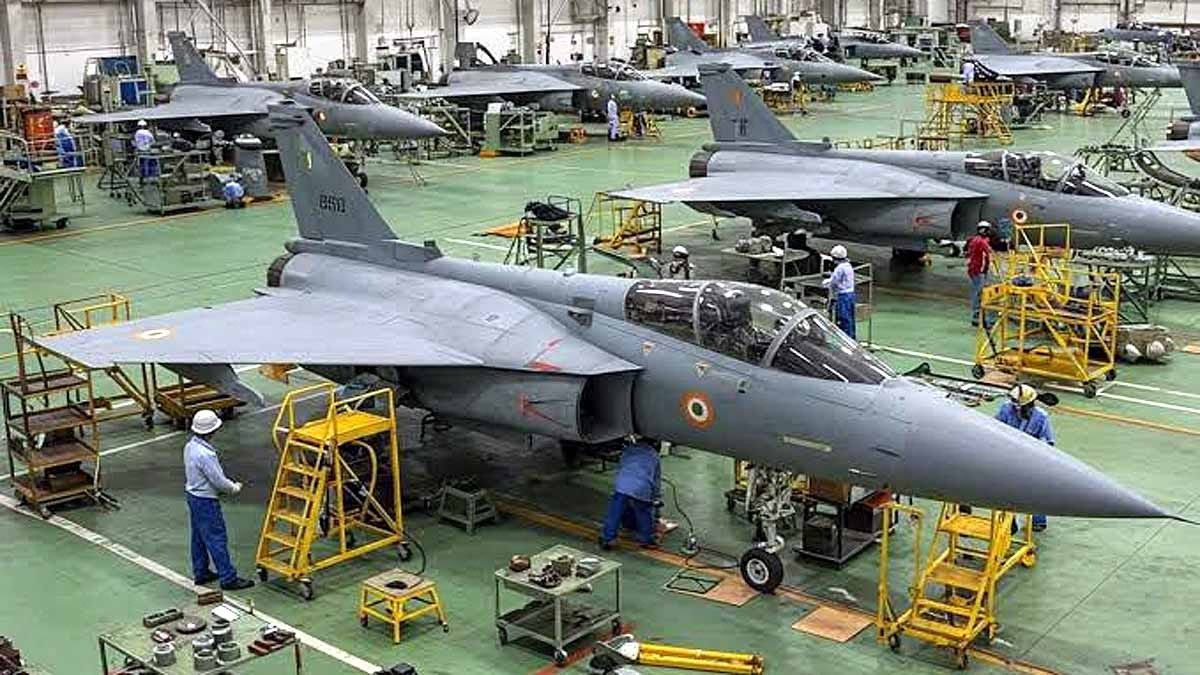
HAL achieved a significant milestone on October 17, 2025, when the first Tejas Mk1A took its flight from the Nasik facility. The ceremony, presided over by Defence Minister Rajnath Singh, also saw the launching of LCA Mk1A's third production line and the second line for HTT-40. The first flight, as reported by HAL, was a success, yet flight trials, weapon integration, and testing are still pending.
HAL has already built and tested 10 aircraft; however, the first delivery is stalled due to the delay in engine arrivals. On October 3rd, IAF Chief Air Marshal AP Singh expressed an eagerness for the Tejas Mk1A, equating it to sustenance for the force.
Source: aajtak
The Tejas Mk1A requires GE's F-404-IN20 engines. HAL had ordered 99 engines in 2021, slated for delivery by 2029. However, GE's production line was shuttered for five years, disrupting supply chains. The first engine arrived in March 2025, followed by the second in July, the third in September, the fourth in October, and the fifth in December. HAL was expected to have received 12 engines by this month, yet only 5 have arrived.
GE acknowledged the supply chain challenges but assured cooperation with HAL to resolve them. The Indian Government has also imposed a fine on GE. The new plan aims for the delivery of 2 engines per month until 2026. Additionally, 10 F-414 engines for Mk2 have already arrived. In November 2025, HAL entered into a $1 billion deal for 113 engines for 97 additional Tejas, projected for delivery starting 2027.
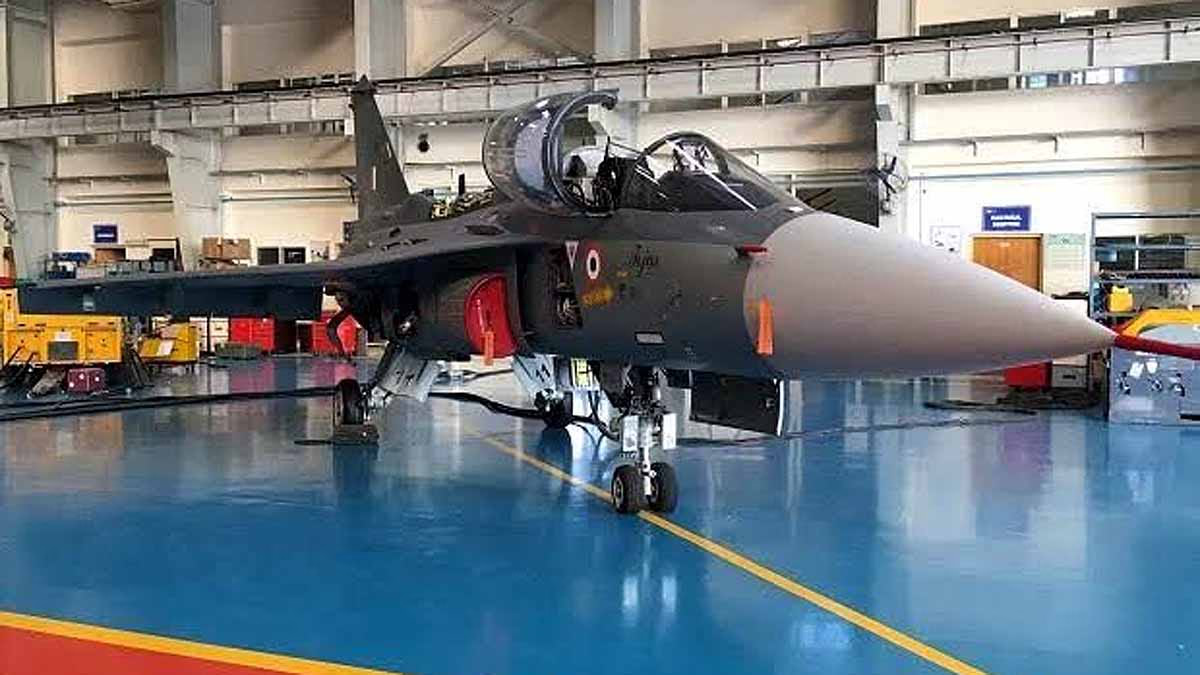
Source: aajtak
There is a pressing need for the Tejas Mk1A in the IAF. Equipped with AESA radar, an EW suit, digital maps, and advanced weaponry, successful trials of Astra and ASRAAM missiles have been conducted. However, delays mean older aircraft like the MiG-21 will have to remain operational longer. Orders for 83 Mk1A are four quarters behind schedule, extending to completion by 2029. Deliveries for 97 additional units begin in 2027-28, expected to conclude by 2033-34.
HAL's chairman stated that once the engine supply improves, delivery rates will accelerate. Nasik's line will produce 8 aircraft annually, while Bangalore will contribute 16, collectively achieving a production rate of 24 aircraft per year.
The Tejas Mk2 is set for rollout in 2027, boasting more advanced capabilities. In the long term, India is working on the Kaveri engine to reduce foreign dependency, yet for now, reliance is on GE. Experts express disappointment over the delay but acknowledge HAL's efforts in getting the program back on track. The IAF is expected to receive its first batch by 2026, setting a landmark for 'Atmanirbhar Bharat' or self-reliant India.