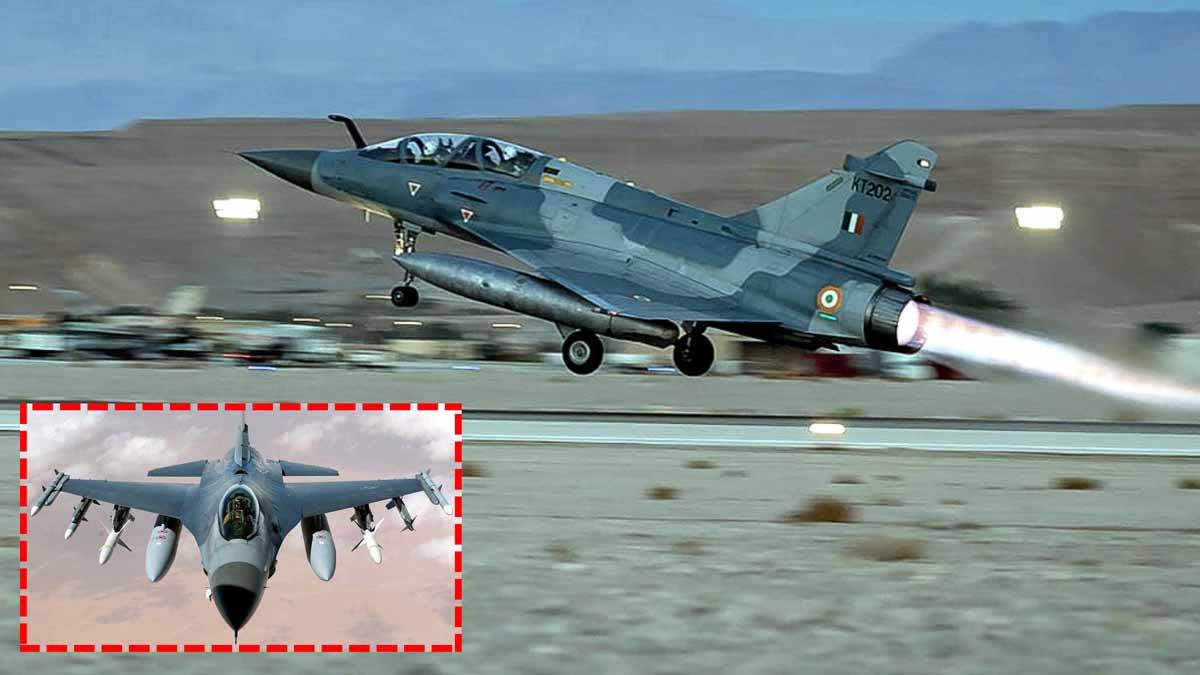
Once again, US President Donald Trump has reversed his long-standing policy. In February 2025, he extended financial assistance of approximately 33 billion INR to Pakistan for the maintenance of F-16 fighter jets. Now, in December, a new package of nearly 58 billion INR has been approved, which includes jet upgrades, radar systems, and missile launchers.
Trump asserts that this is to empower Pakistan in its fight against terrorism. Yet, questions arise—is Trump misleading Pakistan? Despite any polish, these 40-year-old F-16s still fall short against India's Rafale, Sukhoi-30 MKI, and Mirage-2000 jets.
Read More:
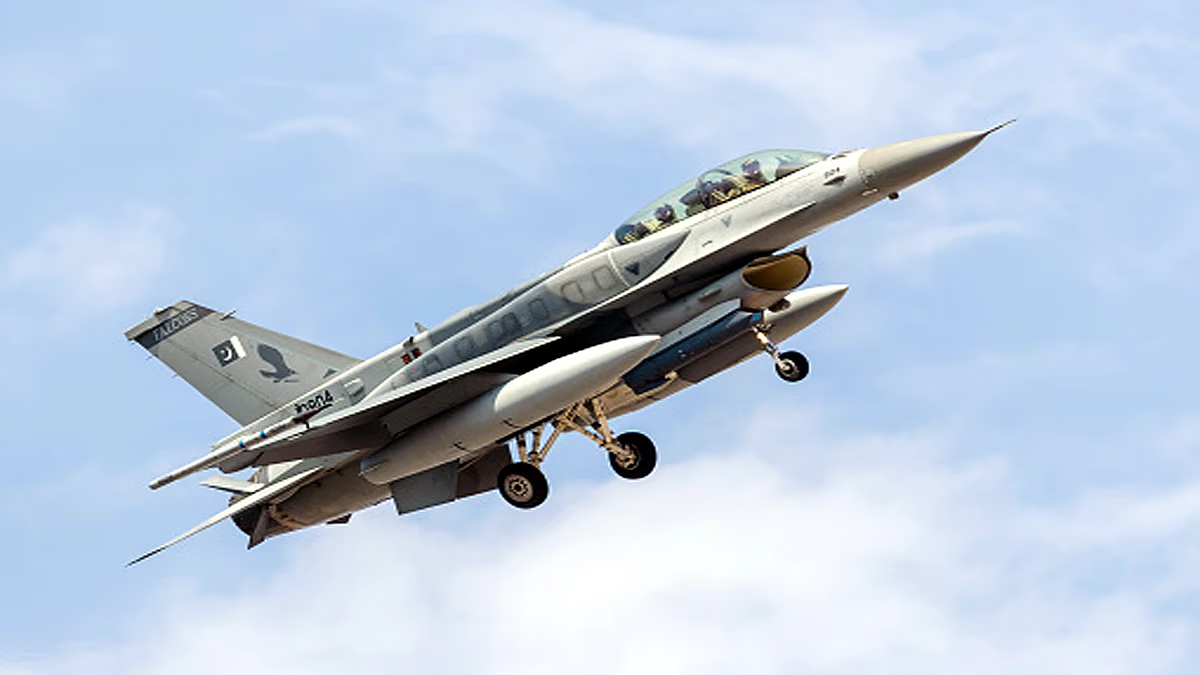
Trump froze foreign aid for 90 days at the start of his second term in January 2025 but exempted Pakistan by February. The stated reason—the F-16s are to be used exclusively against terrorism. American contractors in Pakistan are tasked with ensuring these jets are not used against India.
Source: aajtak
December's new deal is even more substantial, incorporating advanced tactical data links, secure communication, and IFF upgrades. The US Defense Agency claims this will strengthen Pakistan’s links with US and allied forces.
However, Trump has flip-flopped on this policy before. In 2018, he called Pakistan deceitful and halted $2 billion aid, only to recommence in 2025. Experts suggest this is America's 'divide and rule' strategy—keeping India satisfied by offering F-35 stealth jets while controlling Pakistan with polished F-16s. But for Pakistan, this deal is a fool’s bargain, as the F-16s remain outdated despite upgrades.
Read More:
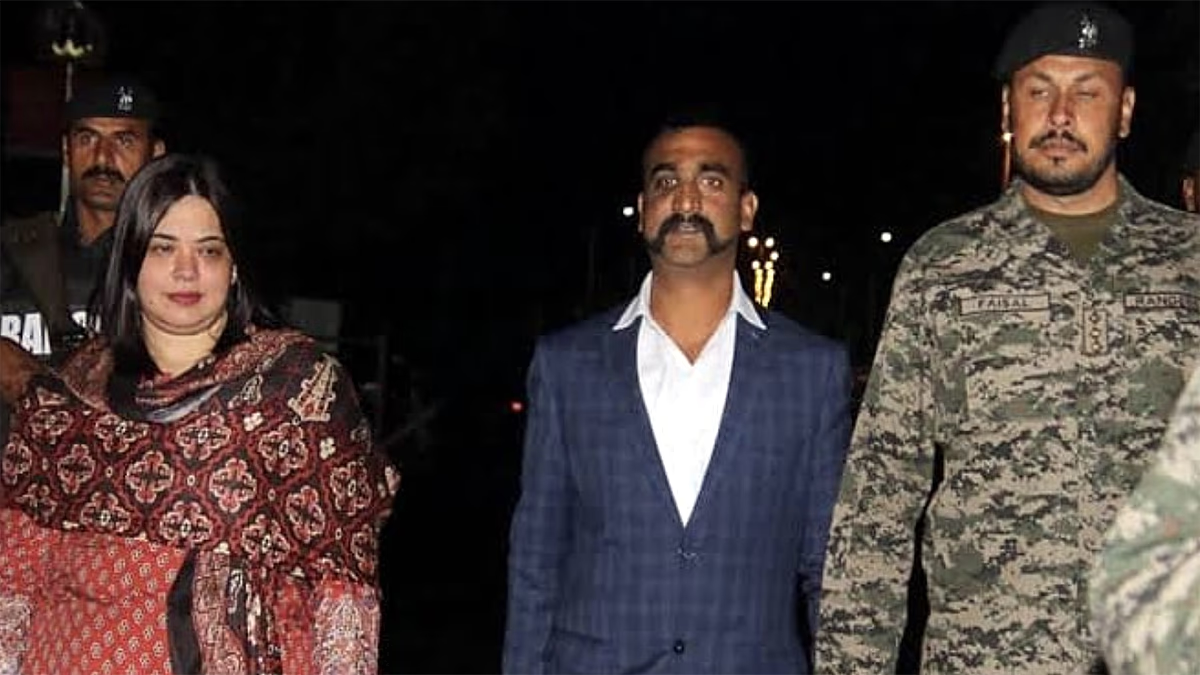
The morning of February 27, 2019, is unforgettable. Wing Commander Abhinandan Varthaman famously downed Pakistan's then-modern F-16 fighter jet with his vintage MiG-21 Bison. Even though Pakistan never acknowledged this defeat, it is now attempting to revive the same 39-40-year-old F-16 fleet with US aid.
Source: aajtak
The US has approved a package of nearly 58 billion INR, including spare parts, maintenance, and some upgrades. Pakistan currently holds 75 F-16s, primarily acquired between 1983 and 1990. Without this support, these jets would soon be grounded.
Pakistan's predicament is understandable. It lacks the funds to purchase new F-16s, and America isn’t willing to sell them. Consequently, there was no choice but to keep the old jets operational through some means. The US maintained its business by offering maintenance contracts on its old weapons while appeasing Pakistan slightly.
The Indian Air Force boasts 1,926 fighter jets, while the Pakistani Air Force has around 970. India has over 1,300 ready-to-fly aircraft compared to Pakistan's 450-500. This means India can deploy over twice as many aircraft at any given time.
Pakistan's best jet remains the F-16 Block-15 or Block-52, designed in the 1980s. In contrast, India possesses some of the world's most advanced fighter jets...
Source: aajtak
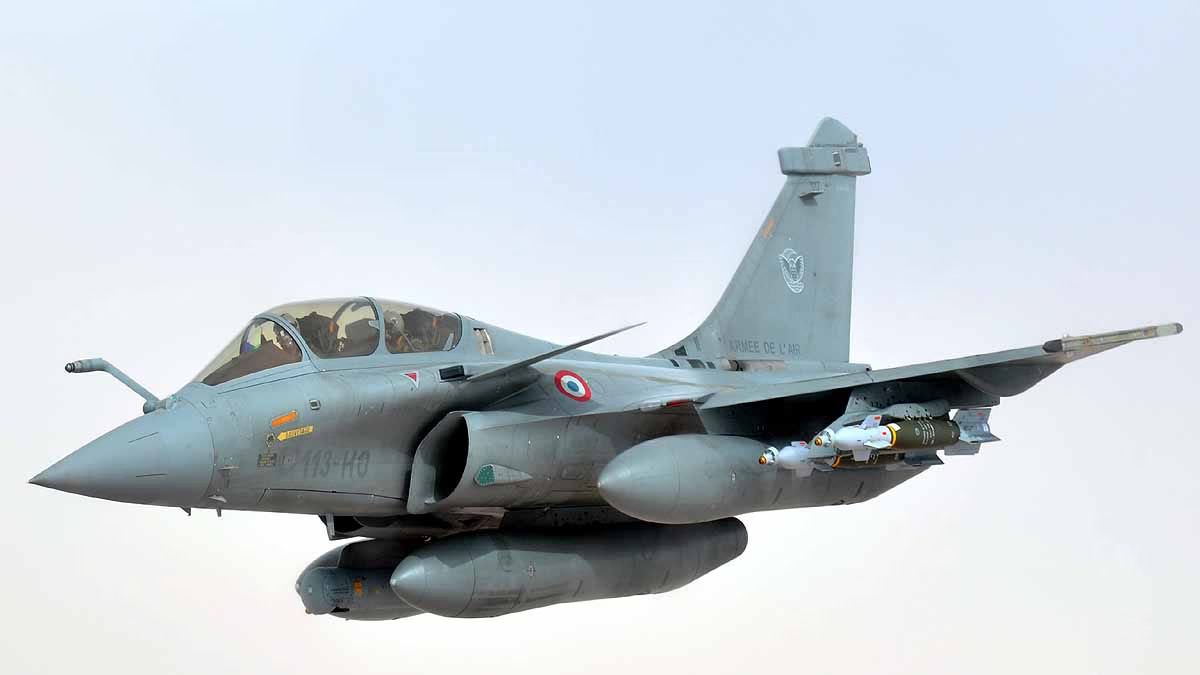
Rafale (36 in service, 26 more coming)...
Armed with Meteor missiles, it can engage targets over 150 km away, twice the AMRAAM missile range of an F-16. Rafale's radar and electronic warfare systems outpace the F-16.
Sukhoi-30 MKI (272 in number)...
Boasts a 3000 km combat range, can carry the BrahMos supersonic cruise missile, and attack 12 targets simultaneously. Pakistan has no equivalent to this bomber.
Tejas Mark-1A (83 ordered, deliveries from 2026)...
Entirely new, lightweight, and agile with cost-effective maintenance. It surpasses the F-16 in maneuverability and features modern avionics.
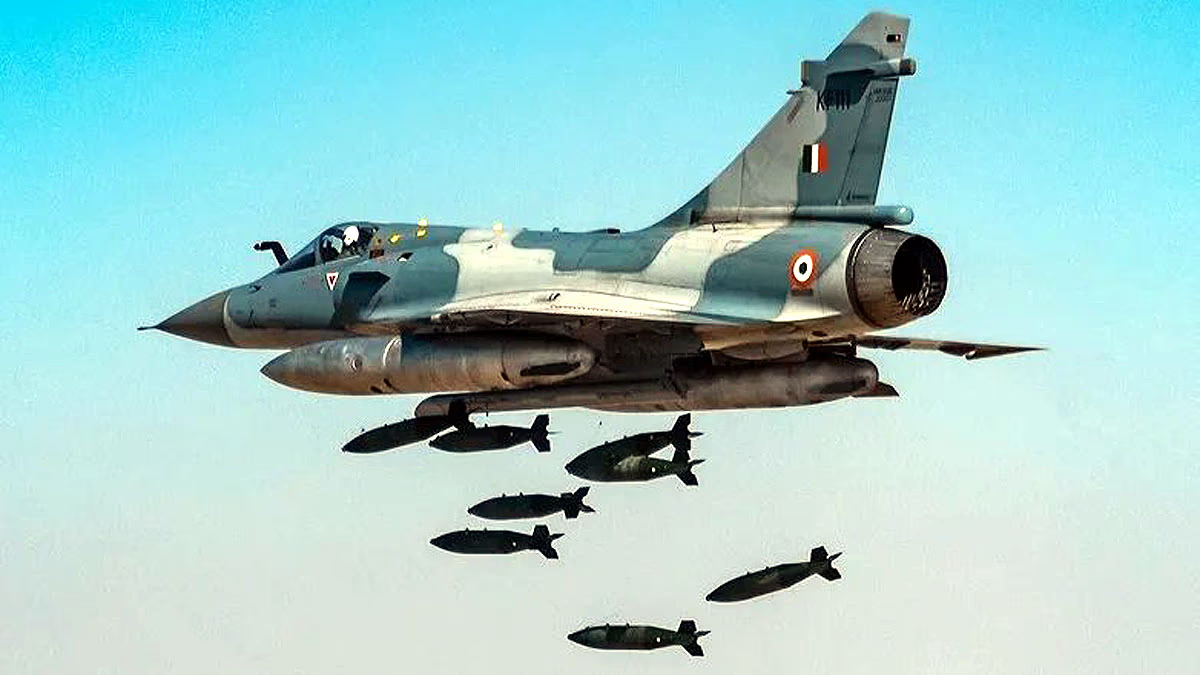
Mirage-2000...
France’s multirole jet, over 50 in service. Played significant roles in Kargil and Balakot operations against Pakistan. It offers better maneuverability than an F-16, especially at high altitudes.
Source: aajtak
Russia has proposed to supply India with fifth-generation stealth fighter Su-57E starting from 2026-27. This jet is virtually invisible on the radar and can maintain supersonic speed without afterburners, outperforming the F-16. Should this deal materialize, Pakistan's F-16 fleet will become obsolete.
Read More:
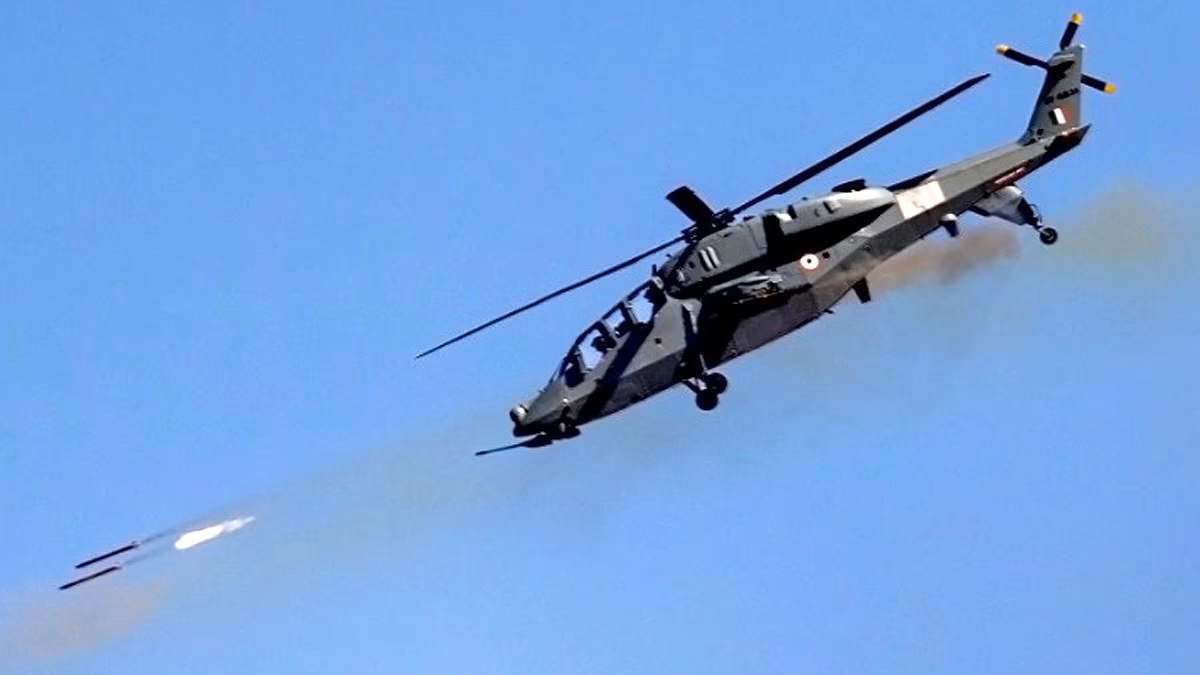
India also possesses 22 Apache attack helicopters, 68 Prachand light combat helicopters, and 15 Chinook heavy lift helicopters, significantly superior as Pakistan lacks dedicated attack helicopters.
Indian pilots receive some of the toughest training worldwide, handling operations across various terrains—from the Himalayan heights to deserts and seas. In 2019, Abhinandan's achievement proved that with the right skill, even an old MiG-21 can triumph over an F-16.
Source: aajtak
Trump may offer India F-35s while balancing by upgrading Pakistan's F-16s, yet for Pakistan, it's a 'fool's deal'. The F-16 comes with strict conditions, only for counter-terrorism measures. During 2019's Balakot strike, US discontent was notable. Even with upgrades, these jets cannot compete with fifth-generation Rafale or the upcoming Tejas Mk-2. India has AWACS, S-400 air defenses, and ISR satellites—resources Pakistan lacks.
No matter how much America polishes Pakistan’s F-16, it remains a 40-year-old design. In the next 5-7 years, India will advance with Tejas Mark-2, AMCA (indigenous stealth jets), and potentially Su-57s. By then, Pakistan's F-16s will seem like museum artifacts. Abiding the legacy of courage and clever tactics, as Abhinandan demonstrated in 2019—victory hinges not on the age of the jet, but on valor and intellect. India is endowed with both—superior jets and unparalleled spirit.