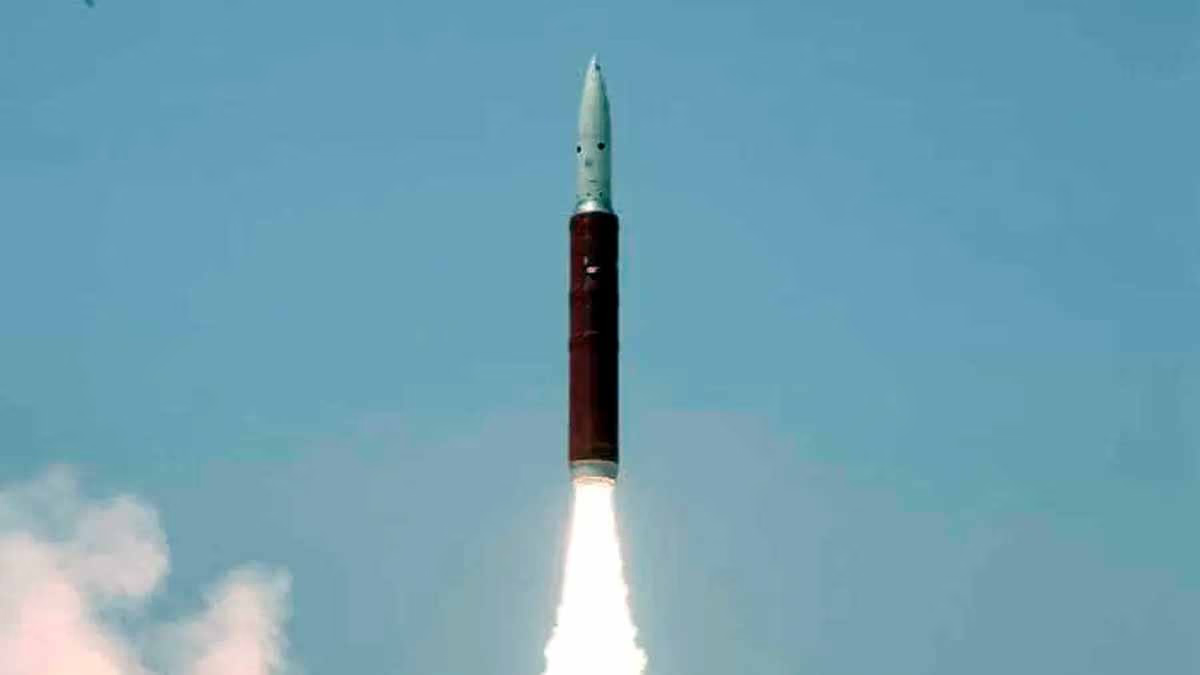
The Government of India has issued a warning for a potential missile test in the Bay of Bengal, designating a danger zone with a Notice to Airmen (NOTAM) spanning an impressive 2520 kilometers. This temporary restriction impacts air and sea traffic.
The anticipated test dates are set from December 17 to 20, 2025. Organized by the Defense Research and Development Organization (DRDO), this strategic exercise is part of India’s effort to bolster its defense capabilities. The likely candidate for this test is the K-4 Submarine-Launched Ballistic Missile (SLBM), a nuclear-capable missile with a striking range of up to 3500 KM.
Related read:
The designated area, close to the Vizag coast in the Bay of Bengal, hosts India's nuclear submarines, including INS Arihant and its successors. The enlarged zone indicates advanced missile range and accuracy.
Dates: Active from December 17 to 20, 2025, 6 AM to 6 PM.
Area: Encompasses a 2520 KM stretch in the Bay of Bengal, extending towards the Indian Ocean, doubling October's 1480 KM test zone.
Impact: Civil aircraft and ships are advised to avoid the area. Watch will be conducted by the Indian Navy and Air Force.
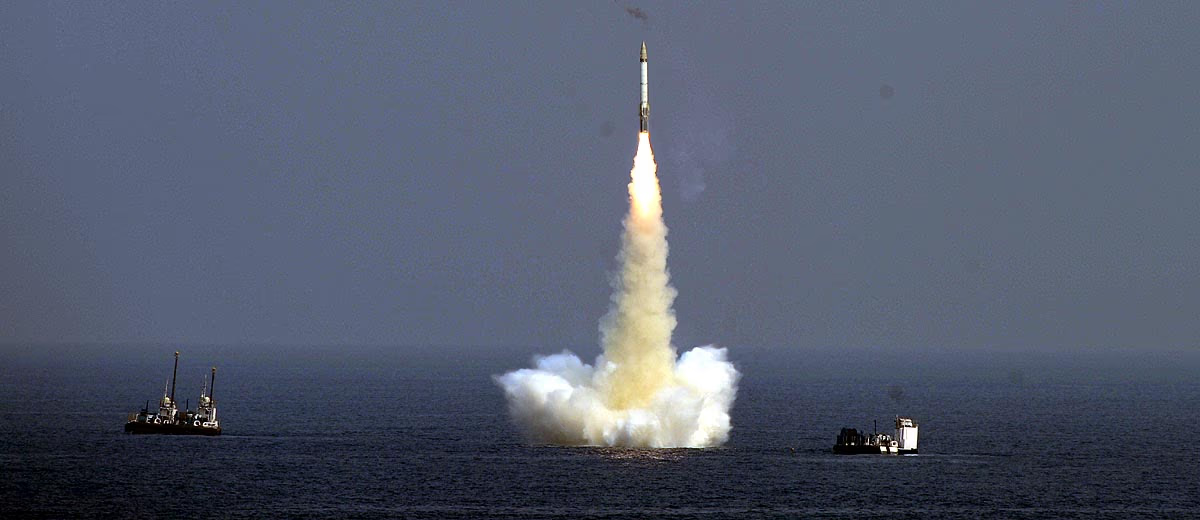
Scientifically, a large zone is crucial to manage debris and impact area extension. With a range of 3000-3500 KM, the K-4 missile serves as a formidable deterrent against naval threats. It operates on solid fuel and can be launched from submarines 20-30 meters underwater.
Related read:
While officials did not disclose specifics, satellite expert Damien Simon and defense analysts suggest the K-4 SLBM is the likely subject of this test.
Source: aajtak
What is the K-4? It’s India’s second-generation submarine-launched ballistic missile, based on the Agni series. Weighing 17 tons and 12 meters long, it possibly features Multiple Independently targetable Re-entry Vehicle (MIRV) technology, hitting multiple targets with one missile.
Capability: With a 3500 KM range and nuclear warhead capability, it launches from submarines like INS Arihant.
Significance: This test underscores India’s 'no-first-use' policy, enhancing second-strike capability amidst recent Chinese naval activities.
Past Tests: October 2025 saw the 2520 KM Agni Prime zone, while November planned a 3485 KM K-4 zone (later canceled). A minor test on December 11 extended just 1190 KM, with the upcoming zone spotlighting SLBM capabilities.
Related read:
The heightened activity of Chinese ‘research vessels’ in the Indian Ocean, like Shen Hai Yi Hao, suspected of espionage, makes this test crucial for regional balance. Allies such as the USA and France are informed.
Safety: The pre-announced NOTAM minimizes accident risks.
Environment: While missile tests involve chemical fuels, DRDO enforces strict environmental protocols.
Advantages: Successful tests boost India’s defense independence and export prospects.
This test secures India’s standing in the global missile echelon. K-5 with a 5,000 KM range awaits next year’s trials.