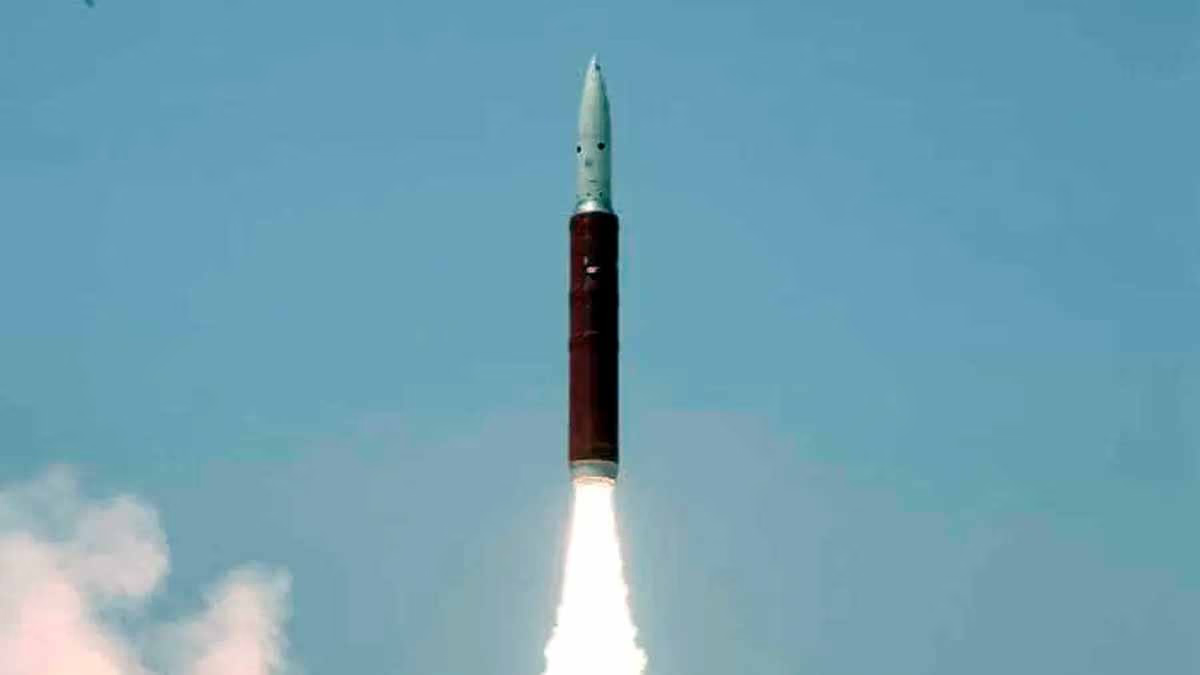
The United States has approved the sale of advanced technology and support for Pakistan's F-16 fighter jets, valued at $686 million (approximately 5,800 crore rupees). According to the Pakistani newspaper
, the U.S. Defense Security Cooperation Agency (DSCA) informed Congress of this on December 8. Experts believe such deals usually proceed smoothly.
The most significant component is the Link-16 data link system—a highly secure communication network used by the U.S. and NATO countries for identifying friend or foe, coordinating weapon deployment, and sharing real-time data during combat. It also protects against jamming.
Includes cryptographic tools and new avionics systems (aircraft electronics).
Provides pilot training, simulators, spare parts, and software updates.
Supplies 92 Link-16 systems and 6 inert (unarmed) Mk-82 bombs for testing purposes.
The lifespan of these aircraft will extend until 2040, with improved flight safety.
Read More:
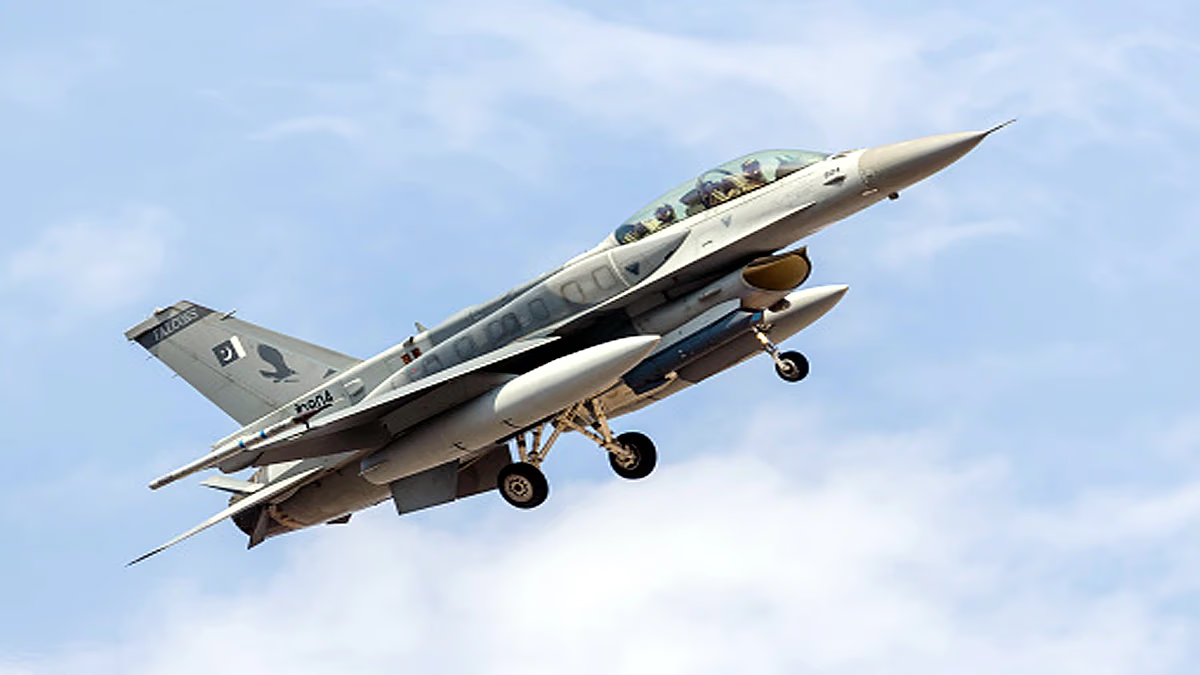
The letter to the DSCA clearly states—Pakistan will continue to collaborate with the U.S. and its allies against terrorism. Pakistani and U.S. Air Forces will coordinate seamlessly in any future large-scale conflict. This sale will not disrupt military balance in South Asia. Pakistan already operates F-16s, making it easier to integrate new technology.
Source: aajtak
Pakistan currently has about 75 F-16 aircraft (Block-52 and upgraded older models). In the May 2025 India-Pakistan air conflict, Pakistan mainly used newer jets like the J-10C and JF-17, but the F-16 remains vital. This upgrade will extend the life of the older F-16s by 15 years. With Link-16, Pakistani pilots can directly connect with U.S. AWACS and fighter jets, offering significant advantages in combat.
Experts state this is concerning for India. As Link-16 technology allows Pakistan to share information and command at U.S.-NATO levels, India lacks Link-16 and currently uses Russian and Israeli systems. Following the 2019 Balakot strike, the U.S. had halted spare parts for Pakistan's F-16s. The sudden approval of such a big package raises many questions.
Read More:
The U.S. asserts that the sale is solely for combatting terrorism and ensuring aircraft safety, with no new weapons or missiles included. Additionally, this deal does not affect U.S. defense readiness.
Congress has 30 days to oppose the approval, but such deals typically pass. The contract will be awarded to the American company Lockheed Martin, with deliveries expected to start in 2026. The Pakistani Air Force is pleased that its old F-16s will get a new lease of life. Meanwhile, India remains alert, accelerating work on its Rafale, Sukhoi-30, and upcoming AMCA projects.