In the northeastern corner of Madhya Pradesh lies the district of Panna! So deep in history, it has yet to see a railway line. Yet, amid the abundance of Sal and Teak fences, numerous diamond mines reside here. Unlike other places, these mines are prominently attended by women. They sift through soil for stones and, if none shine, even make 'compromises.' These particular charms are only for diamonds.
‘It must have been the beginning of winter when I received 'that' offer. In the dim light of dawn, I was told to engage with a woman working in the mines, completely undressed. When all other methods fail, this is the ultimate charm. The old people believe that within two to three days, the earth will begin to spew diamonds.'
In Gandhi Gram’s garden, during an exchange, someone from behind tells me. This is the settlement of the Pardhi tribe, traditionally hunters, settled here, encouraged to find new employment methods. Anmol, a young man from this village (name changed), insists that among all these tales, this truth should also be counted, albeit cautiously.
He says softly, 'If names or faces are revealed, fear arises. People are more afraid of exposure than the wrong itself.' Having lost his father in the mines, Anmol also began visiting these mines. There, he was prompted to partake in the infallible charm.
What happened then?
The girl wasn't comfortable. I refused. But those who wanted to, went ahead.
The diamond was found! It was bound to be.
Read the first installment here:
Panna, one of Madhya Pradesh's 55 districts. Home to around 1.25 million people, yet untouched by a railway line. The closest station is Khajuraho. Panna houses no large factories, nor renowned universities. But it’s a treasure chest of diamonds! Operating mines like Sarkoha, Sirsawaha, Sakariya, Chopra, Patti, and Krishna Kalyanpur. Around 10 kilometers from the city, shallow mines exist in Sarkoha. Here, with a permit, digging shallow pits is allowed.
Source: aajtak
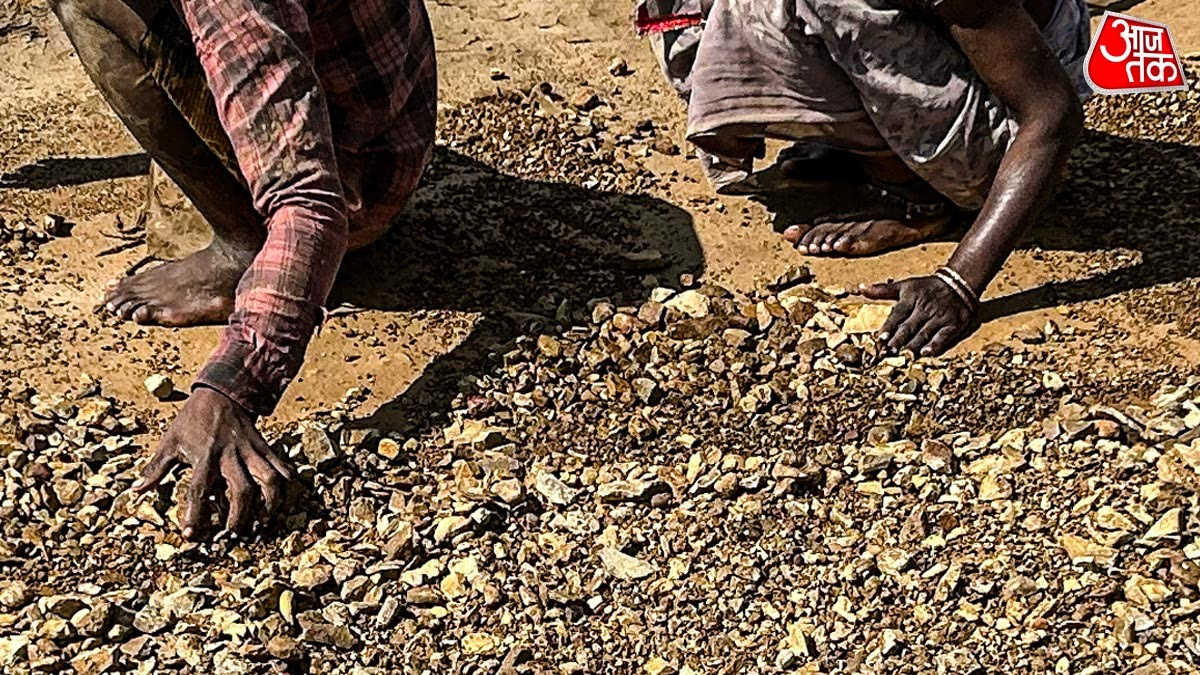
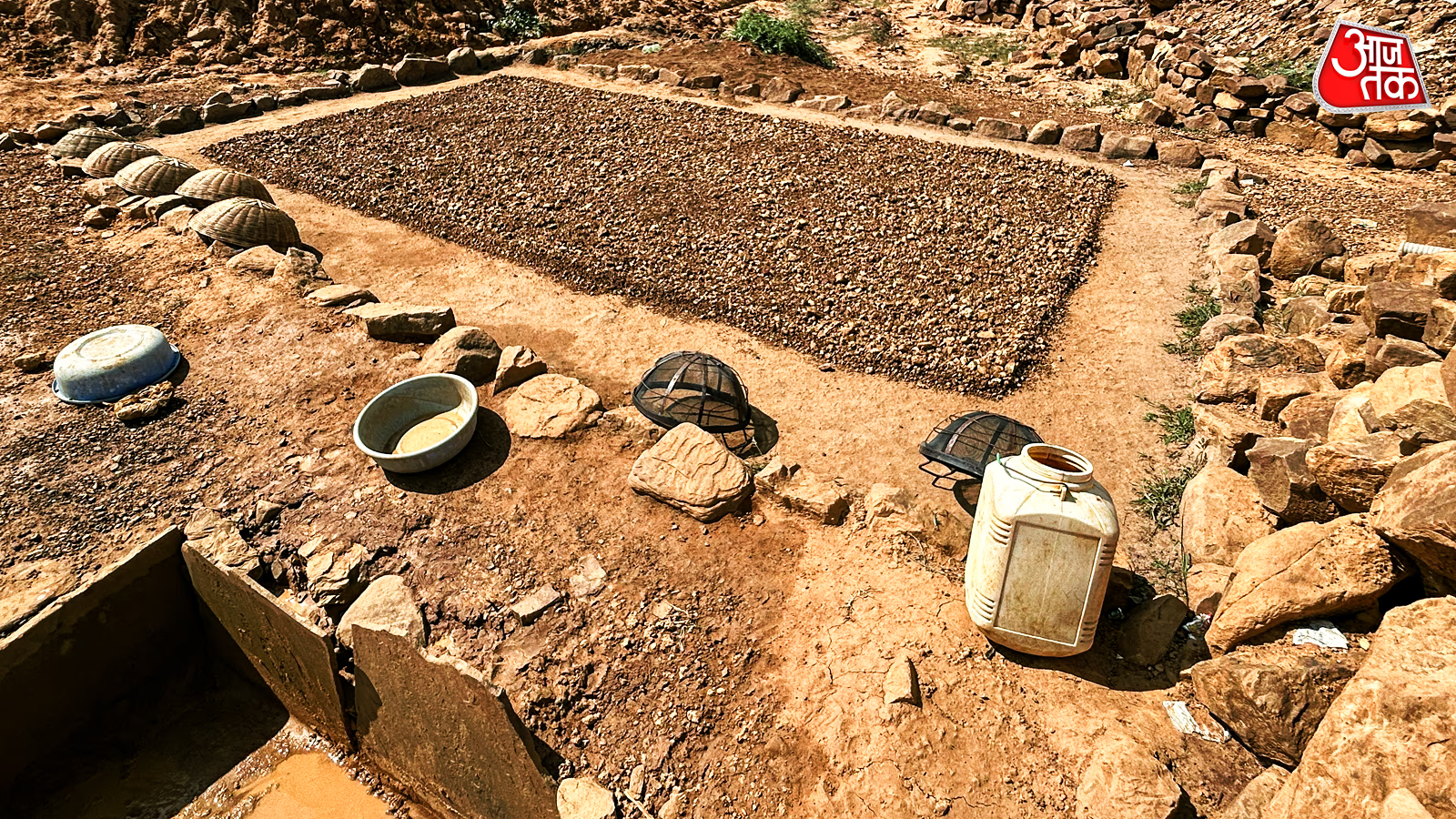
In the mining sector, numerous contractors and hundreds of workers toil simultaneously. Everyone works for different owners. In the mud and dirt-laden terrain, the sun and heat feel fiercer than in the city. Many workers take brief rests. Some have bandaged feet, others their hands. Yet, work continues. In some places, dung is spread on leveled ground, onto which stones are scattered. Much like sorting stones from rice, workers carefully examine and separate these tiny bits. I was about to set foot on such ground when a voice said, 'Remove your shoes there, lady. We worship that!'
Before picking diamonds, laborers sit here uttering the Above's name. There are many charms, including tried and tested male-female unions, the last resort. Anmol narrates this charm in hushed tones.
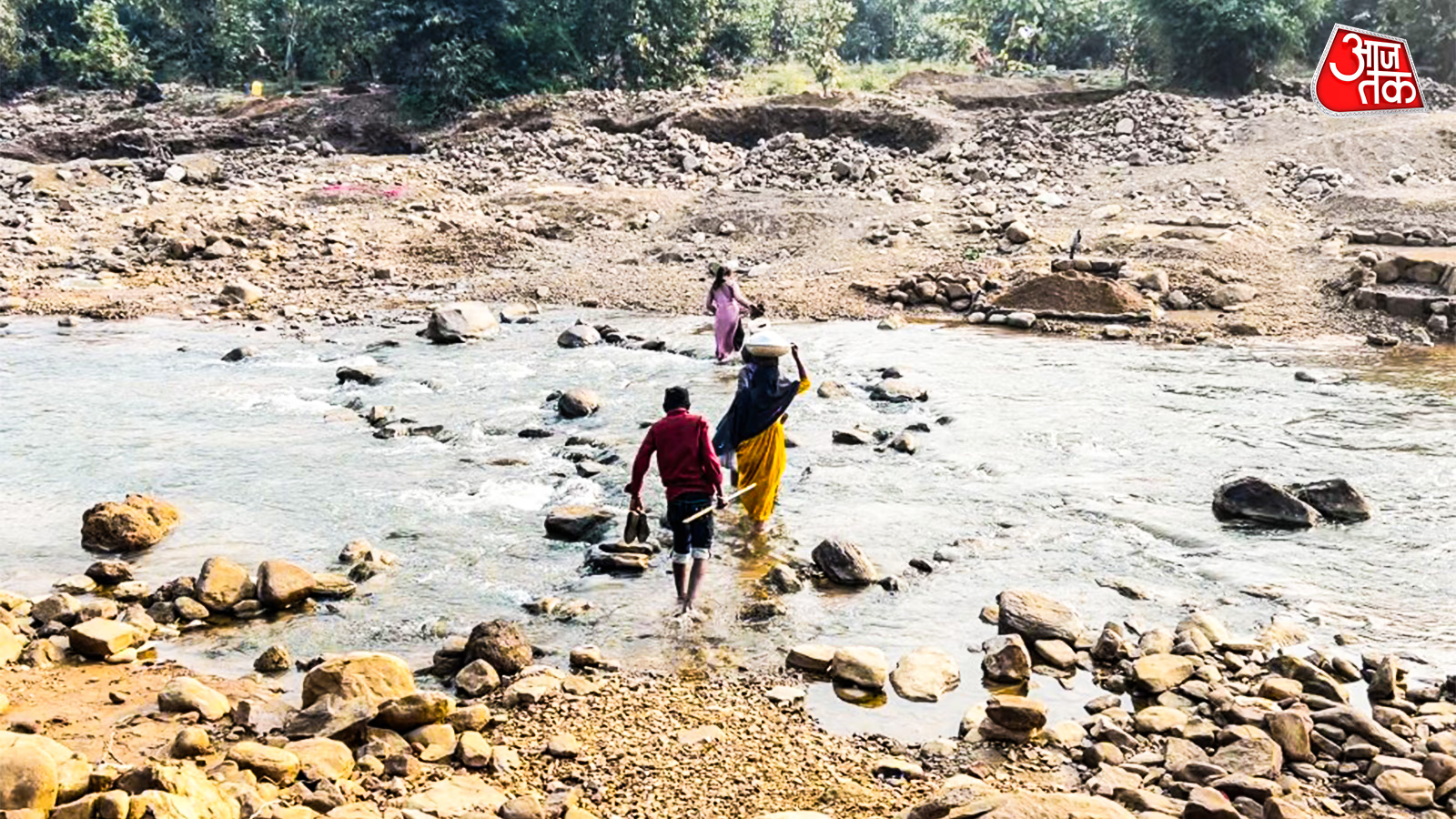
The Rujan River flows in the Vishramganj region. It's said that diamonds float in its waters. Believing this, thousands have camped by the river. Some even take up part-time jobs, like running tea stalls. The owner of one such shop remarks off-camera, 'The ritual occurs on Wednesdays and Sundays.' What happens?
First, loban is burned, and the chal (pile from which diamonds are sorted) is scattered. Then, in the muddy pit beside the machai, the husband and wife step in and 'that' happens. Clothing is donned afterward. Words and apologies are exchanged, and work resumes before anyone else awakens, long before God does. Who does this? The contractor tells the husband and wife working under contracts to do it. They receive 500 to 1000 rupees in return. If they refuse, another method is sought.
Source: aajtak
What's the alternative? The tea shop owner avoids discussion openly. Whispering, she shares discreetly. For reel-loving young Anmol, our camera is a harbor, offloading burdens of his experiences.
He explains each step of extracting diamonds. If no diamond is found! The same is tried the next day. If even after several days a small diamond piece isn't discovered, the owners, anxious, begin resorting to older methods. Burning loban is the most innocent charm. Sometimes, effigies are also burnt to ward off evil eyes. Another method involves placing a laborer in the center, where stones are kept, and dragged in circles seven times. The person cries out, 'It will be found...it will be found!' Dragged over rocks, the person becomes bloodied. Sometimes, deep wounds occur. But it matters not. Everyone, from laborer to contractor, desires only that a diamond is found. What's in it for the laborers? They gain a reputation for being lucky. Such laborers are summoned repeatedly. For a small diamond, they’re treated to refreshments. A larger find may earn them a handsome reward from generous owners.
Source: aajtak
The ultimate charm follows… I once received an offer. I agreed, but the woman wasn't comfortable. Thus, I declined. Anmol admits candidly. Women can’t refuse!
They won't. Speaking up results in job loss. At machai, more women are employed, believed to unlock fate.
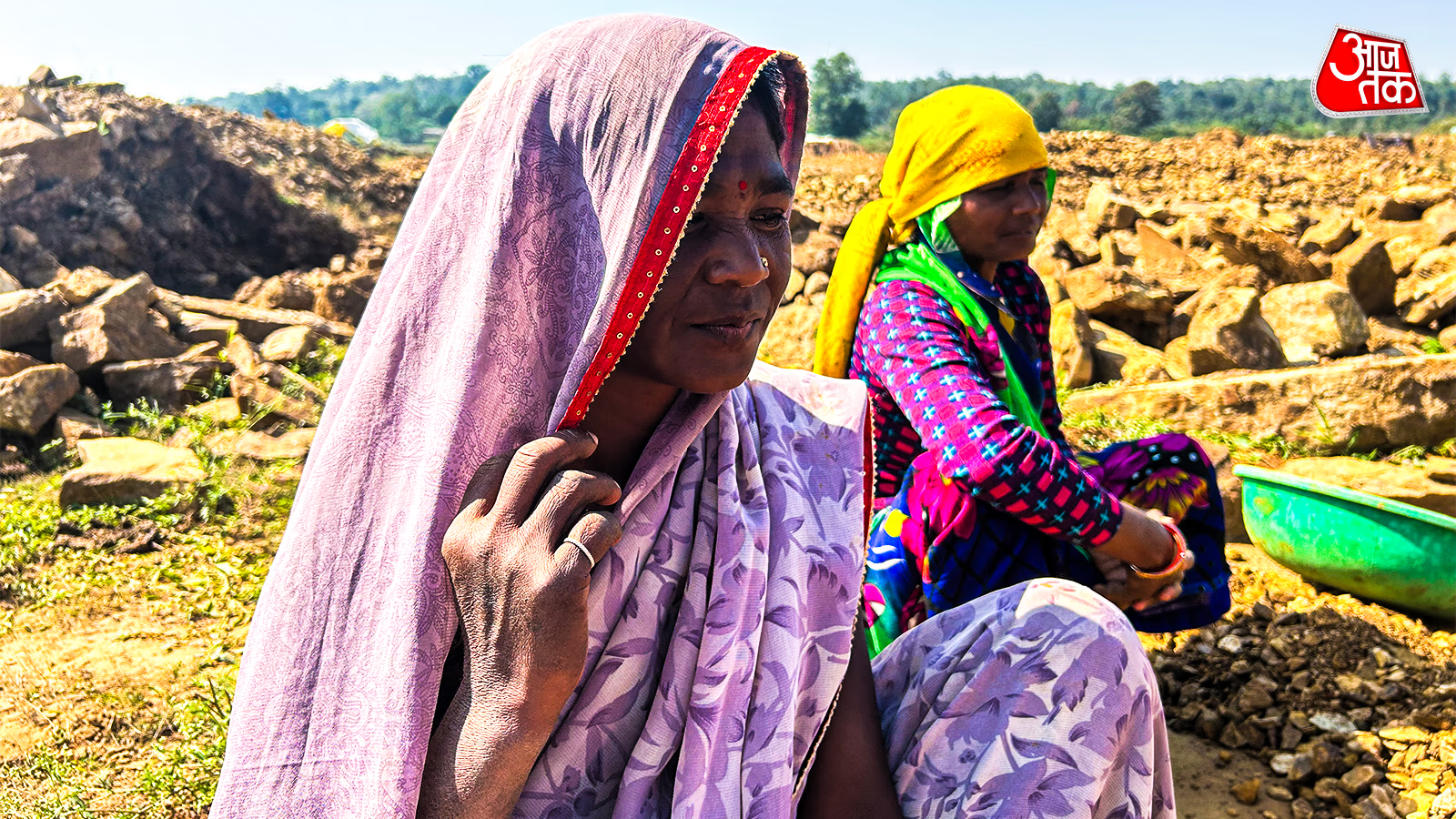
At just 21, Anmol has already been toughened by the challenges of the mining life. After his father succumbed to mining-related illness, he took up the cause. Fond of reel-making, Anmol, eager for revolution, insists, 'Years are passing. The world must progress too. That's why I'm sharing this with you.' In the city, we meet Asha (name changed). Having worked in mines for twenty years, she is dressed up even in the comfort of her home. Her red sari coordinates with her makeup and bangles, much like other women laborers engaged in mining work. After the topic arises, she laughs - what else to do. There’s hardly time for grooming. Bodies become caked with dust while extracting soil. After returning, why not dress nicely and clean up?
This woman, wielding humor as a whip, keeps exploitation veiled.
Yes. It happens. We've heard as much. But it hasn't happened to us. Sometimes it's consensual. Sometimes, they're pressured. When it's inevitable, why not endure silently. Why? We women endure, don't we! Her penetrating eyes never stray from my face throughout the exchange.
On leaving, she shows her wounded foot. Bloodless yet deeply cracked. That's what the mines do to us - regardless of being man or woman.
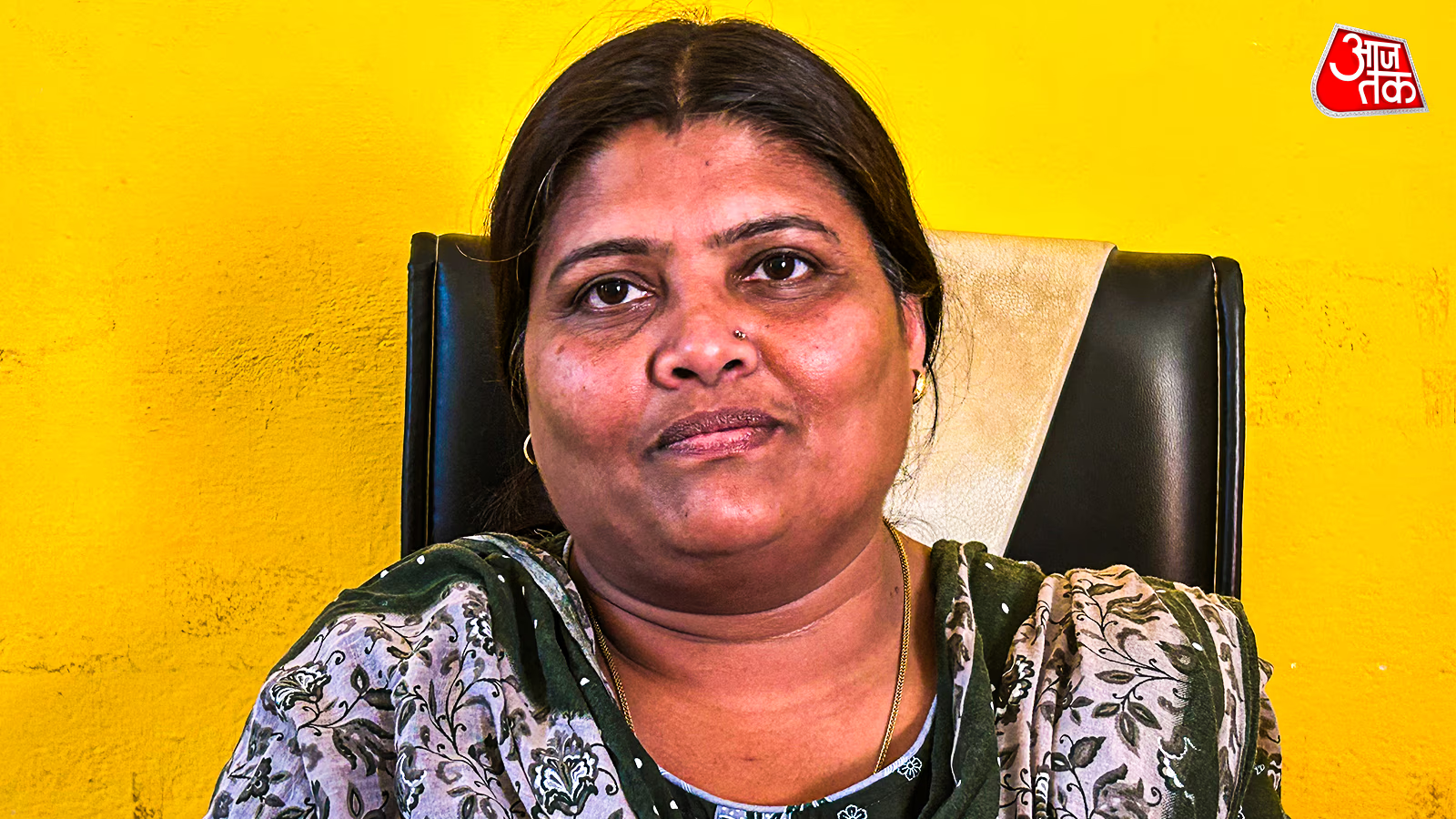
The director of Prithvi Trust, Samina Yusuf, concurs on the exploitation in the mines.
Samina states - Exploitation of women at the workplace is not uncommon, but those working in diamond mines are particularly vulnerable. Financial exploitation, like lower wages for women than men, occurs. Additionally, physical abuse is also prevalent. Working long hours endangers not only security but privacy too. Yet, no one speaks out openly. Some wounds are best left covered.
Source: aajtak
There are two, rather three, methods of diamond mining in Panna. For 200 rupees, with a government permit, mining can occur. These are 8x8 meter lease segments, shallow in depth, permissible only to a set depth. The National Mineral Development Corporation (MMDC) is a governmental company conducting mechanized mining, i.e., via machines. Its operations are widespread. The third category, discussed yet undiscussed, is illegal mining. In Panna, through perilous paths, people reach the Jupiter Well, doing sporadic mining. Beyond that, near the banks of the Rujan River, almost the entire city has settled, dedicated to finding diamonds in flowing patches or soil. Seeing these mines is akin to witnessing nature's seasonal shift or the arrival, or devastation, of harvests. Here, the aroma of soil and clashing pickaxes resonates loudly. The ground appears excavated - interspersed with pits or stones. Unfamiliar faces warn to tread cautiously.
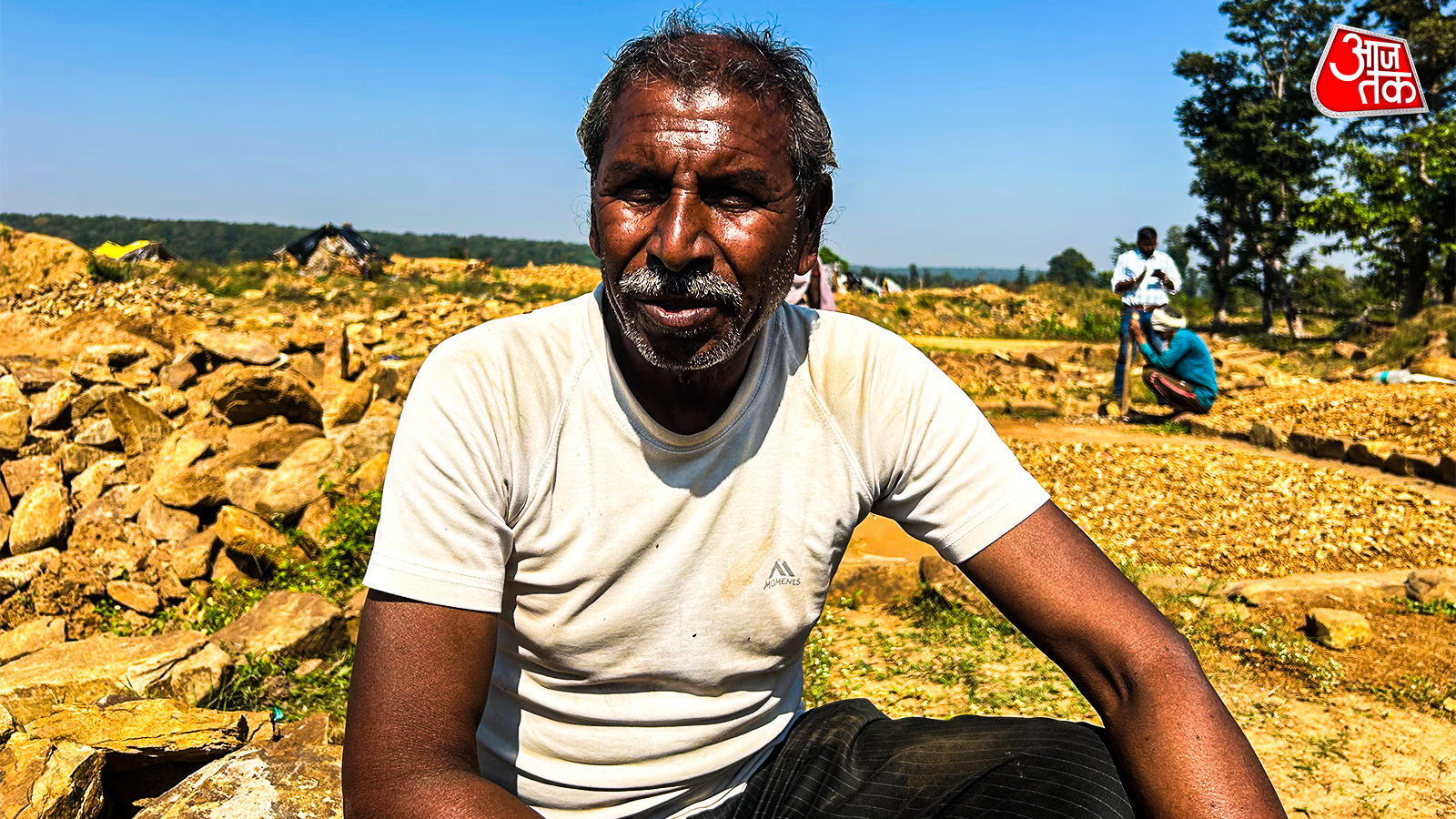
Here, we encounter Swamideen Pal. Recently, a diamond worth over two crores was discovered by this worker.
Source: aajtak
The senior, in an old T-shirt, is diligently working. The task involves searching for diamonds amidst rubble. This wealthy man oversees the process, occasionally joining in. Meeting us, he appeared at ease - as if millions, cameras, or unfamiliar people were but parts of everyday life. Our chat begins straightforwardly. What changed after finding the diamond?
What can I say, when God grants such a time, some changes occur. Yet, nothing drastic that we'd buy cars or indulge in extravagance. No. Life's staple like it was, continues.
Did you make any arrangements or allocations for the money? Indeed. We ordered some new machines. Purchased new mining leases. More digging will ensue. We arranged some weddings at home. The remaining funds are in the bank. Did you buy any diamond jewelry for the women at home? This time, a laughing response returns - my wife's dream was big. We got her and the daughters-in-law nose pins with embedded diamonds. Family and relatives tend to visit when money arrives. They came to us too. But we plainly said - whatever arrangements you had will continue. Don't expect from us. Yes, if you're in dire straits, we’ll help. But for land or housing purposes, we can't offer money. Overall, we'll do charity, not loans.
Pal, amidst chatting, lackadaisically oversees the diamond seekers. Unconcerned. It seems he's learned that if diamonds are meant to be found, they’ll declare themselves. A similar incident led to his multi-million find. Those laborers! Did they receive anything? Yes. They must be rewarded. A large diamond means they all got ten thousand rupees. We also took them to tour Chitrakoot and provided one pair of clothing. For a laborer's daughter's wedding, I’ve promised a free tent. Seeing him blend with the laborers, one wouldn't guess he recently encountered a large diamond. Pointing at his sparse hair, he says - five years in mining now. I, too, was a laborer first. These hair sizzled while burdened for others. Having labored from Jammu to Haryana to Punjab, I finally returned home. Despite acquiring a diamond, no such exuberance seized me. For Pal, alongside diamond seekers, every day is a continuation of the past. Nothing anew. Merely awakening and digging for shiny stones. After finding one, the quest continues. The diamond tales bind Panna like wealth with vaults.
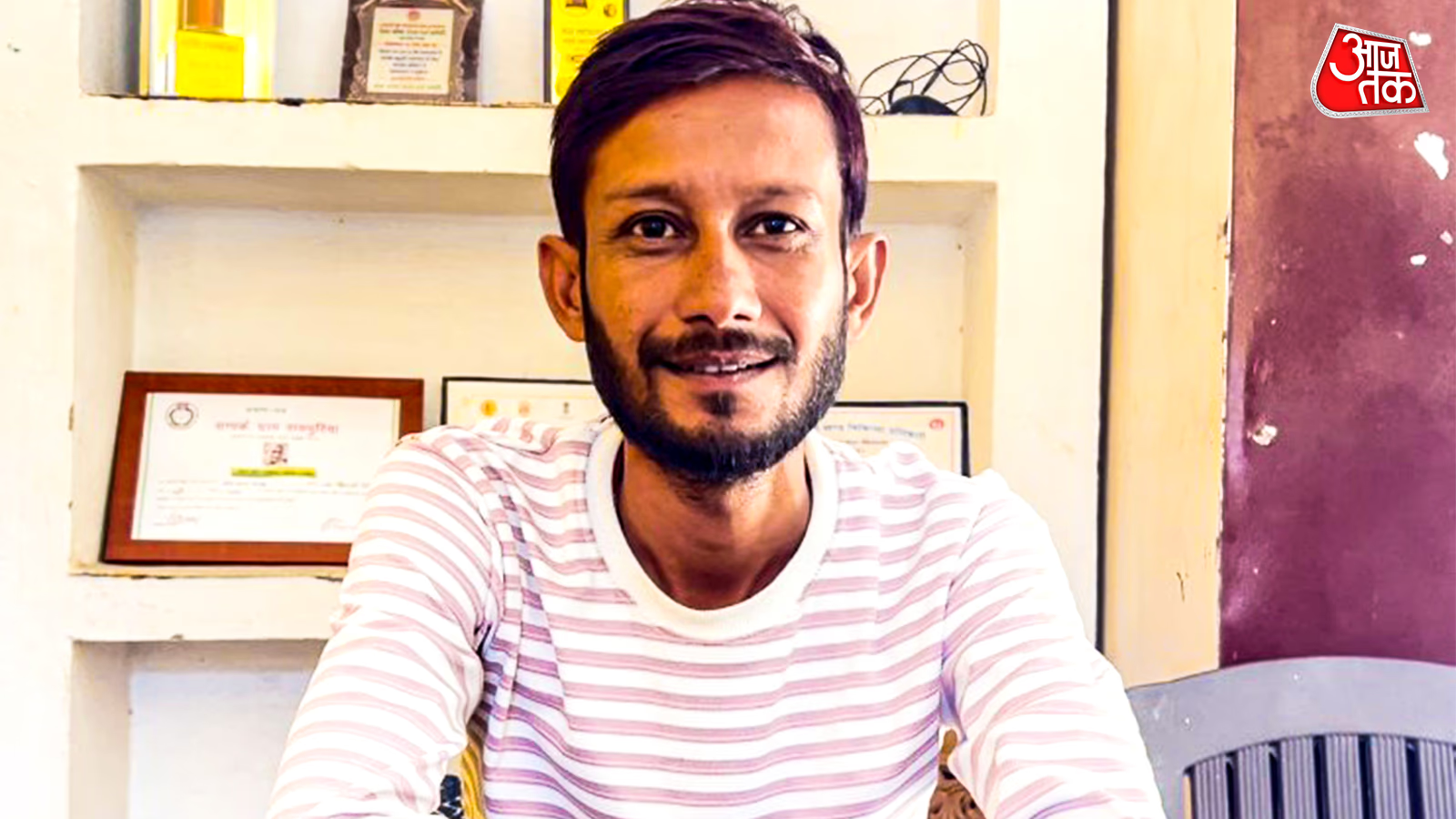
Chhatrasal, a social worker for a decade with mining laborers, narrates such a tale.
Source: aajtak
Once, Panna’s king, Chhatrasal, was blessed that wherever his horse galloped one night, diamonds would arise beneath. To date, the elders sing, 'Chhatta in your reign the earth throbbed... wherever a hoof landed, diamonds followed!' Diamonds began surfacing, yet the fortunes, meant to mend lives, began fraying. Wealthy outsiders began monopolizing mining, leaving locals as laborers. Illegal mining surged around rivers three years ago. Its dangers are unique. In this district, employment stands on two pillars - diamonds and stone mines.
The condition of stone mines is grimmer. Within just a few years, most laborers contract silicosis. In this illness, stone dust solidifies in the lungs. Despite long-standing efforts, deceased families receive no more than three lakh rupees in compensation. They live whilst anticipating death. I recall Sheila’s daughter-in-law by the riverbank, known only as Sheila's daughter-in-law. Without a rolling pin, she shapes rotis with her hands. A silicosis widow with glassy eyes, cracked yet intact, allowing sadness but not air inside.