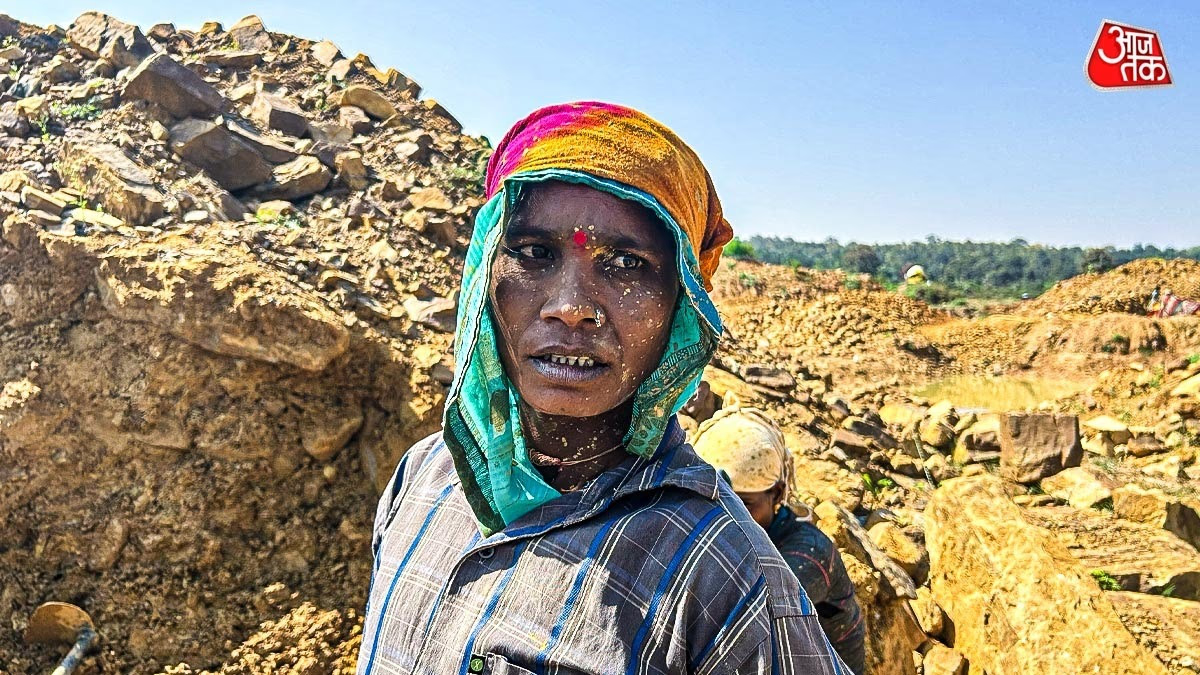
The excavation, sorting, and sieving! These laborious tasks can stretch for days and sometimes years, just to find a single diamond. Luck may let the first strike reveal a blinding gleam, or it may stay hidden, spanning generations. 'Have you ever found a diamond?'
Yes... so many times I've stopped counting. As a laborer, my heart raced as I handed over a diamond to the contractor. The value it holds for us is equivalent to a meal by the evening stove.
Panna! Known for its diamond mines in central India. Stories abound about King Chhatrasal, blessed with the boon that diamonds would rise wherever his horse trod. Residents harbor countless tales, coming alive as you enter the city — stories whispered in mines, tea stalls, and amongst laborers trudging back home.
As you make your way into the district tucked in Madhya Pradesh's northern edge, you're met by dense forests. The area spans over 550 square kilometers and includes a tiger reserve attracting visitors globally. Beyond lies Panna's mining territory, nationally famed for its diamond extraction, housing the sole diamond office in the country.
Common sights in the mining expanse include sweat and sun-soaked miners relentlessly swinging their tools. Stopping only to quench thirst by licking parched lips and resuming their hunt for diamonds without rest.
Today's reportage by our team captures countless similar faces.
Generations reduced to dust in search of diamonds...
Despite findings, they fervently toil away...
Living in the hope of diamonds...
Dreaming of diamonds, as they become one with the soil...
Journeying seven kilometers beyond NH 39 from headquarters leads to Manaur village. Though barely touching the city, its character remains untainted.
Murmurs about Manaur resonate in Panna's tales. Many widows are found here due to stone mines consuming the life force of working men.
Source: aajtak
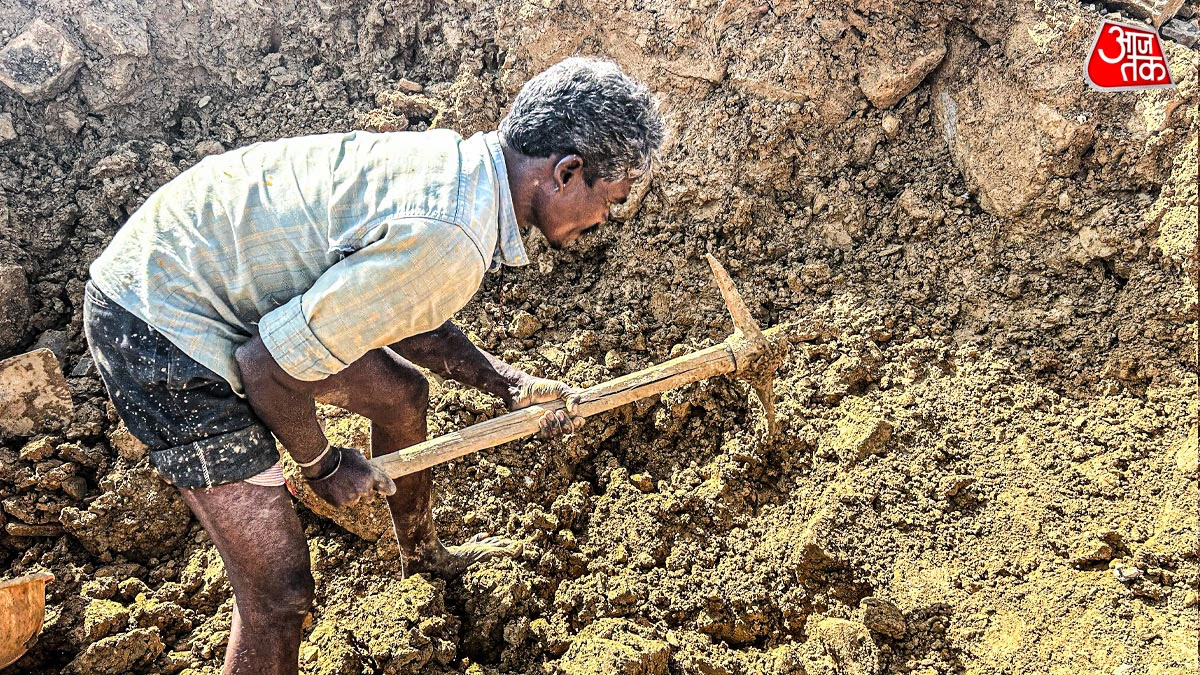
‘I can breathe but I feel suffocated,’ voices a man struggling with hardened lungs.
His story will follow, but first, meet Gendabai, also known as Phool.
This middle-aged woman bears little of her delicate name in expression or demeanor. Such gentleness vanished in the mines. Without a camera, she converses like an old friend but retracts when screens appear.
Started mining at 12, earning 210 rupees a week back then. After breaking the ground, we’d sift the earth, looking for diamonds. Often, I found them — sometimes small ones, sometimes substantial.
All the effort was for diamonds, yet when found, the heart filled with sorrow, dear.
Darkness engulfed us, and hearts pounded as if to burst. Handing a diamond to the contractor felt like an outpour of tears. Our hearts dulled to the pain eventually.
Ever thought of keeping a diamond secretly? I probe. ‘Never. They can't be concealed amongst other stones. They seem to cry out upon discovery — 'look, I've been found!' Can't be stolen or sold, lest they dim and bring forth darkness,’ she recalls gently, touching her forehead.
The saga Gendabai recounts echoes in nearly every face in the mines.
Even without overseers, in silence, diamonds resist concealment. An attempt to hide them would render them cursed.
‘Exhausted, we began our own undertaking.’ Gendabai shares, an evident secret unveiled. Serving the King often called forth desires of self-indulgence, much like the laborers of Panna who gaze upon diamonds they can’t possess.
These laborers often turn to illegal mining when they hit a brick wall. Sakarra, Ajaigarh, Vishramganj — all host illicit operations. No one ventures into these peril-strewn, wildlife-surrounded areas but the impoverished laborers.
Gendabai explains that whilst permits are inexpensive, instead of buying one and testing luck in a spot for months, I started venturing to hill slopes, digging holes everywhere to improve my odds.
We reach by God’s awakening, before sunrise, grappling with dangers traversing hill paths to return by seven, then to the mines. Roads offer serpentine traffic, akin to bypassing city traffic. The hazards multiply tenfold when forest officials appear, compelling us to flee.
What now? We gather and sell wood in Panna. That takes two days — one to gather and another to sell. This keeps us afloat. Our men now toil away in the city as laborers.
Things ok now?
You might say so. Returning from wood chopping aches the body, but it's preferable to brutal mining labor. We weren’t destined to attain kingship by extracting diamonds. Born here, we’ll end here.
Panna's shallow mines yield between five to seven hundred carats of diamonds annually, approximately worth 700 million rupees. The NDMC’s governmental mines procure up to 100,000 carats, an estimated value of 10 billion rupees, officials in the diamond department reveal.
Clad in a yellow-orange sari, Gendabai stands at the opposite end of an immense industry where diamond gleam dims by the time they reach her.
Next, we venture to Kalyanpur.
Home to less than a thousand, with 37% literacy, nearly all residents have seen their ancestors diminish whilst searching for diamonds.
Here, we meet Pushpendra, an adivasi freshly returning from work, hurriedly welcome us, moving a solitary plastic chair repeatedly to ensure comfort.
Once settled, he admits — My grandfather, father, and now I are into this trade. Even my fourteen-year-old son comes along.
You must have found many diamonds then! -> If we had found them, things wouldn’t be as they are now! Look around! No bread, no water. Yet we persist, hoping fortune's favor someday embraces us.
Lime and dung-smeared pale blue walls, presenting a silent finale early on. Enter cautiously, ceilings sometimes impeding heads. Within, there's a barren space with tattered blankets. A bitter cold meets bare, cracked feet, indicating scarce stitching was applied. Small to large children await either mining trips or the chance to join one.
Small kids working? Not us, Madam... Poverty drives them to it.’ Spoken easily as if dipping a biscuit in tea wasn’t discussed.
After three generations, no luck with diamonds, why not quit then? We do find them, small ones worth thousands every few months or a year. It fuels hope, perhaps a bigger one appears tomorrow. So we continue.
Both diamond hunting and other tasks? Yes, laboring. We earn 300 each per day, father-son tandem in mines. If ever not, earning trips to Panna are made, a voice emerges.
Source: aajtak
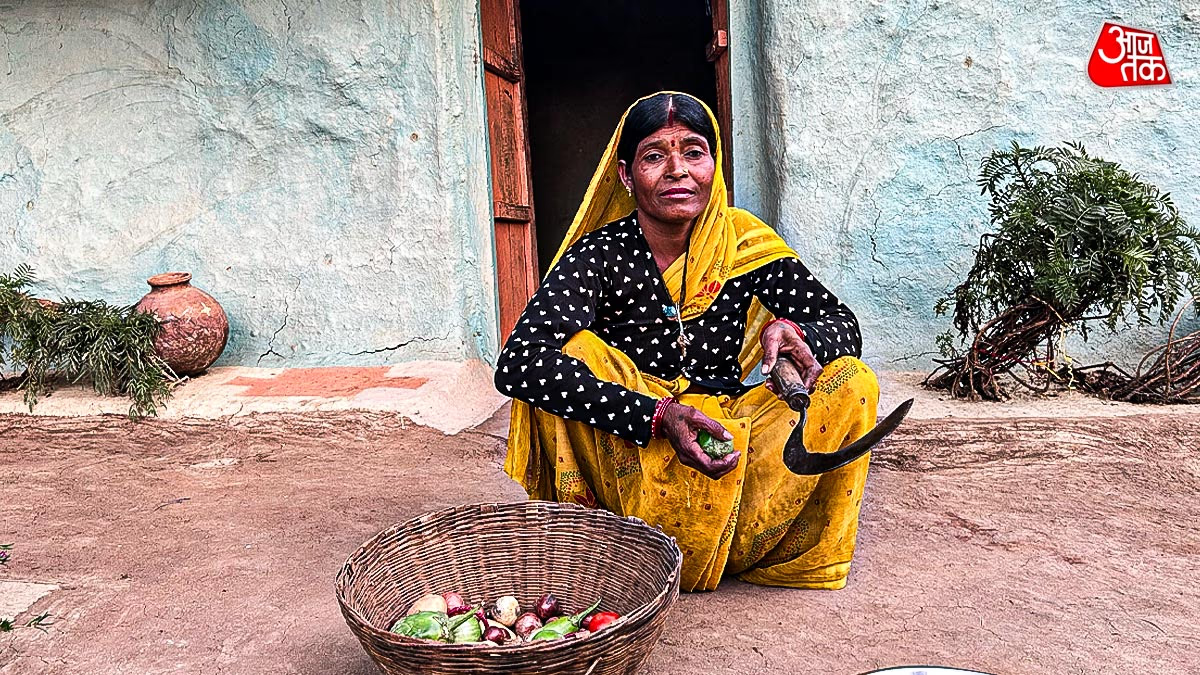
In Kalyanpur, we meet Gulab Bai, dreams weathered.
Her tales of jungles are plentiful. Injured shoulders rendered weak forever. The reason? Encountering a bear en route to mining - falling in an escape, her shoulder gave way.
No more illegal paths. Now labor for mine owners. Yet struggles persist. Sorting mud while feet numb in water, bends bring pangs of pain.
Even during 'those' days? No, can't endure such strenuous work then. Housebound during those days of sorrow.
Mines: safe for women? Not just mines, women find safety nowhere. Be it a plant or a factory. Yet, often they opt-in willingly. Never endure force. When complaints arise, they collectively desert pursuits. Meet the cheeky ones who dared.
Unconsciously, she caresses her perpetually ailing shoulder — ‘If my son stays away, rarely does he invite me. Preferring self-cooked meals. Where will we go! The mines aged me. The stones turned strangers upon finding.
The lively sari fades against Gulab Bai's melancholy, like a graveyard sprouting.
Despite aversion, the presence of cameras is nothing novel for them. Questions like ‘no diamonds found, why persist?’ which easily provoke outsiders, leave them unfazed. Even strangers acquainted with town life breeze past them. With cities remaining overnight aliens, their sunrise hunt for diamonds recommences.
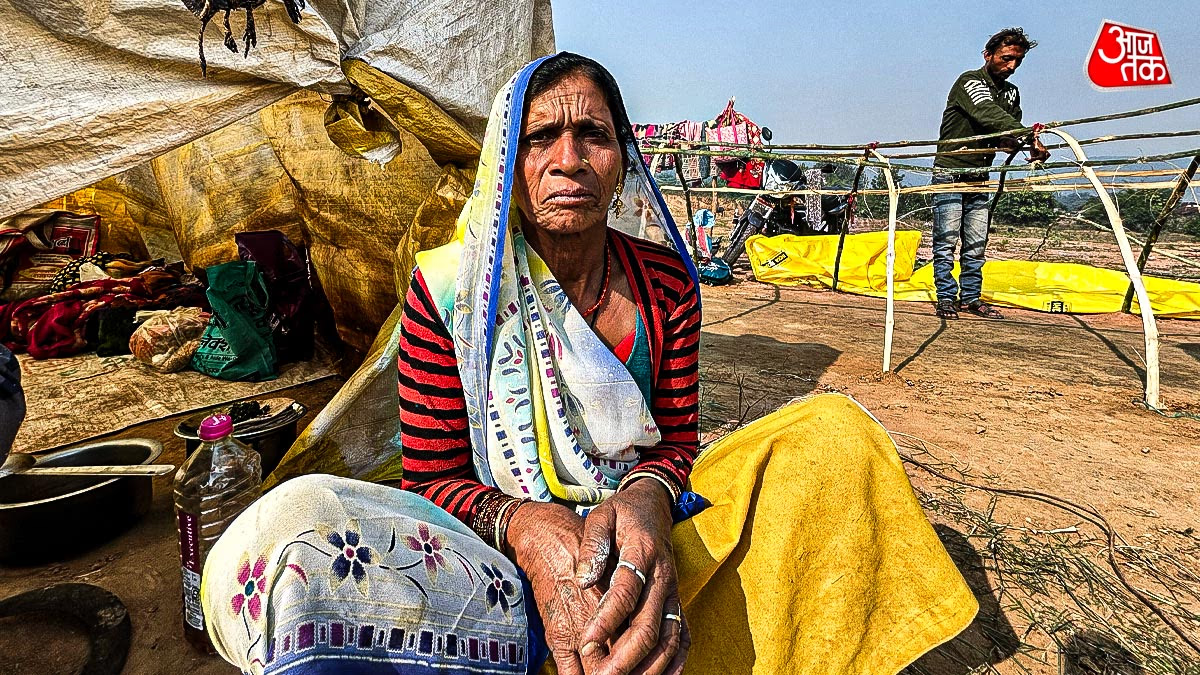
Beyond the city, towards Vishrampur, flows the Runjh नदी, another element in Panna's rocky terrain. Fish unheard of within the river's stone-laden bed. In 2022, riverbank diamond discoveries surged. Temporary dwellings mushroomed. Hasty shelters belonging to temporary inhabitants, all driven by acquiring a diamond before rivals catch wind. Early mornings see us arrive via Gandhigram, near Vishrampur. Local tips suggest, “Let’s alight here—people flee at the sight of forest folks, mistaken for authorities.”
Source: aajtak
Wavering between hope and despair, this is a separate world.
Here, every dawn sees the same ritual — sip tea, cloak shelters with crossed sticks, and descend with tools in rivers. Some plunge pans into flowing sands; others target river banks as shovels make contact.
Many appear as units — families unified under deadlines attached to the provisions and cash at hand. ‘We’ll return home when supplies exhaust…If unsweetened luck by Solstice, I’m leaving…’ these uttered phrases are common.
A river bartering diamonds turns into Delhi Central's platform — ever-changing faces, a static abode.
Nearby, nimble work constructs a makeshift abode. Skilled hands arrange sticks, bamboo splints cover, topped with a thick blue tarp. In minutes, witnessed a dwelling's half-hour inception. ‘Chappatis cook upon neighbouring flames, a communal pot dues boiling.’
‘Panna kin,’ residing within simplicities our family met last evening. For a month, Sheila leads a party of about 15.
We heard whispers of diamonds surfacing; decided to see for ourselves. Everyone's obtaining, why not us,’
confidently states Sheila.
And if not? It’s the first days here. Together, we'll scour diamonds. Once rations dwindle, urban odd jobs will occupy a few, others endure. Else, off to Delhi for work.Sheila has ventured Delhi’s terrain before but is a debutant in diamond chases. Length of her stint parallels their rations — search concludes when sustenance ceases.
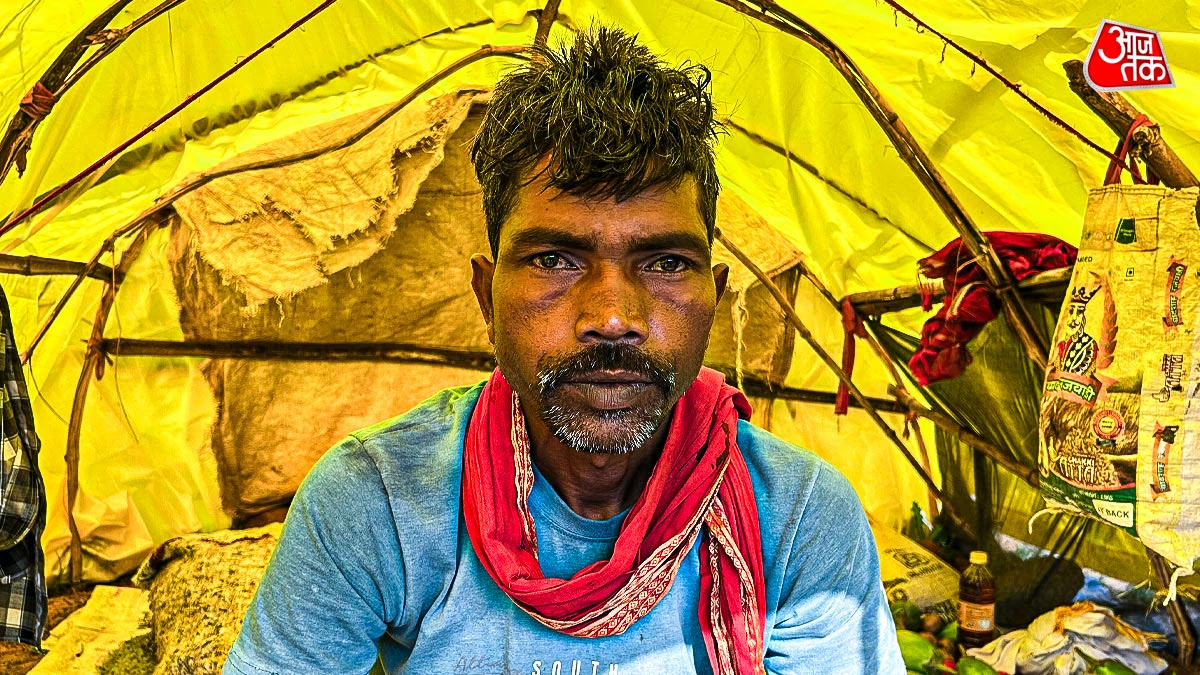
Beside, Sheila’s daughter-in-law takes her place, likely a cousin hands busy rolling chapatis for fire-bake. Relentless prodding reveals four orphan years result from quarrying indeed. They remained at home while her spouse was around. Now, laboring supports the children alone. Seen elsewhere, this woman contrasts with Panna’s diamond-mining women. Appearance simple, matching their earthy venture; upon asking: Once resplendent, all vibrancy eroded alongside spouse.Departing the chapati-baking handmaid signals shifting amidst coal-tar kaleidoscope tents. Midst bright yellow shanties is an adventurer rapidly pacing.
Source: aajtak
‘Ever behold a diamond?’ amid his pace. No. Yet recognition plays? Think a scorpion’s sting. When first pricked, an uncontrollable shriek erupts, ‘stung by a scorpion!’ Recognizing, same with diamonds. He retorts, eyeing the gold tent as he splashes into the river.
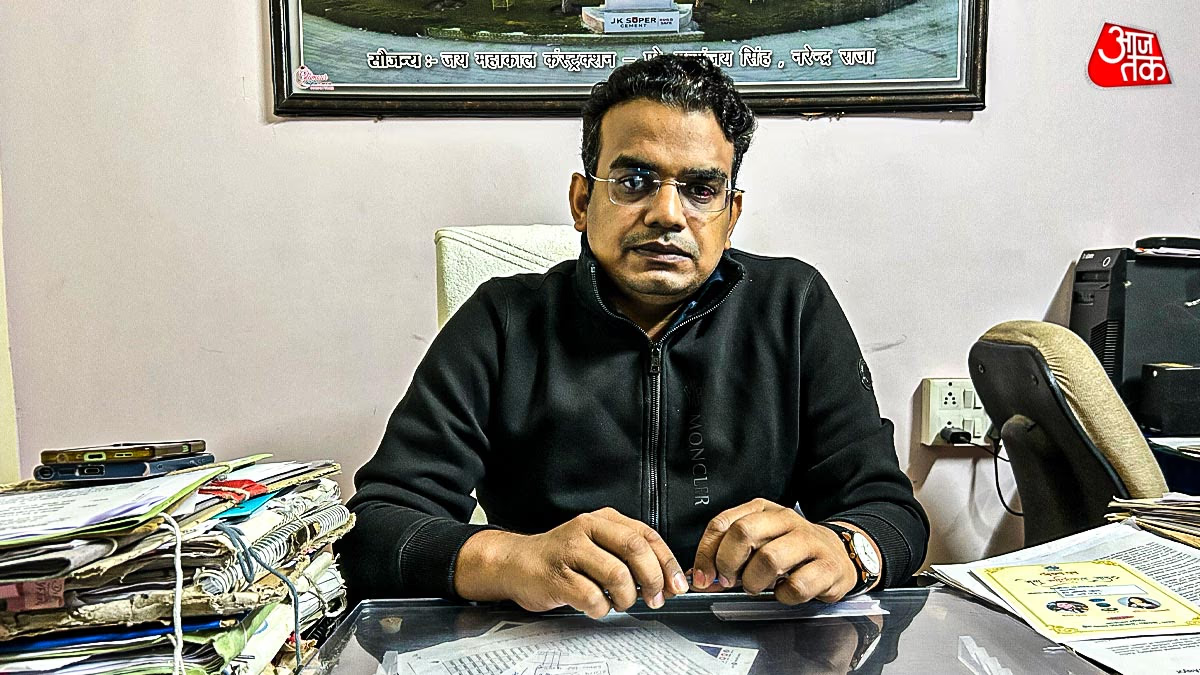
This lone diamond office nationwide operates on scales unseen. Government issues licenses for shallow diamond pits. Known locally as ‘Tuaadar,’ they insert forced mines, depositing them once found. Sales occur every 5-6 months, with diamond merchants involved. Should surplus over 200 carats arise prematurely, sales are done then live-streamed for transparency. The highest bidder secures the deal, post which, 11.5% royalty subtracts, remaining money goes to ‘Tuaadar.’
This year saw 390 licenses issued till October, yet fields convey larger crowds. As prior years’ data shows reductions, 2020 witnessed 633 licenses, halved since. Illegal mining persists, alongside black marketing, unhidden from official purview.
Source: aajtak
“Desperation drives people to stake everything, sometimes lending debts for mining ventures. With a diamond, immediate funds are vital, tempting traffickers. Though monetary allure exists, these profits aren’t clean and hold peril,” Dr. Patel explains. Responses include schemes ensuring 50% value at discovery or instant grants of up to Rs 1 lakh. Remaining sum follows auction completion.