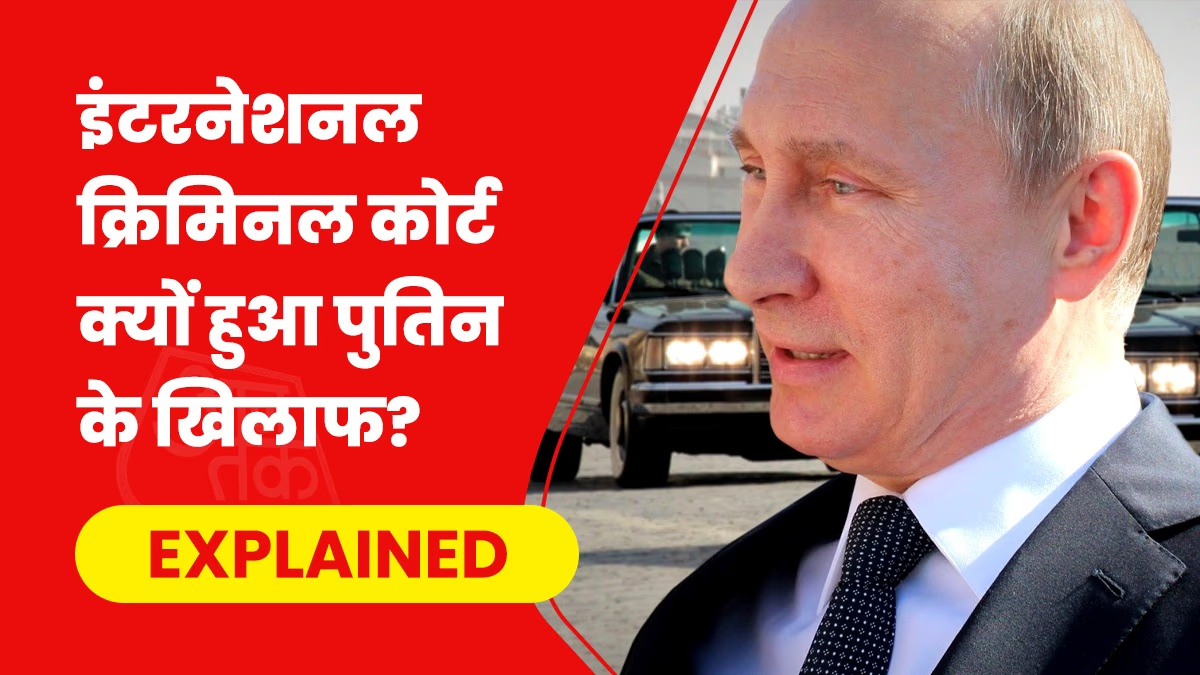
A year after war broke out between Ukraine and Russia, the International Criminal Court (ICC) accused Russian President Vladimir Putin of war crimes. To investigate these allegations, the court issued an arrest warrant, meaning he could be detained in any ICC member country once he leaves Russia. This raises the question: where does India fit into this scenario? Is it not bound to heed the court's demand, and if not, why?
War erupted in February 2022 between Russia and Ukraine. Exactly one year later, in March 2023, the ICC's Pre-Trial Chamber issued a warrant against Putin. He's accused of ordering the forced detention of Ukrainian children in Russian territories during the war, where they were reportedly relocated and put up for adoption. According to international laws, forcibly displacing children in times of war is a serious crime.
While the arrest warrant exists, enforcing it has proved almost impossible. The main reason is that Russia is not an ICC member and doesn't acknowledge the court's jurisdiction. Thus, no Russian agency is legally compelled to arrest Putin. International law is only effective when the relevant country accepts it.
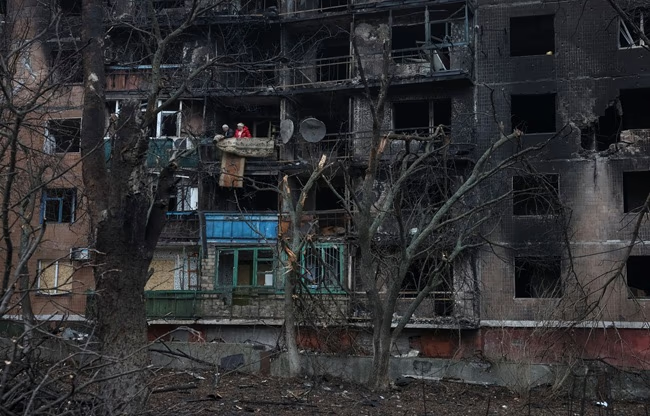
Source: aajtak
Another reason is Putin's security measures and controlled pattern of international travel. Following the warrant, he has only visited countries that are not ICC members or are considered close allies of Russia. These countries face no legal pressure to arrest Putin, thus minimizing risk.
Moreover, the ICC lacks an enforcement police force and depends on member nations to deliver accused persons to the court. When it comes to powerful leaders, countries often hesitate to act promptly. Consequently, while the warrant stands, it's been ineffective.
How safe is his visit to India?
India itself is not an ICC member. When a country hasn't signed the Rome Statute, the ICC's orders don't legally apply. Therefore, India bears no legal obligation to detain Putin. Additionally, India traditionally provides immunity to leaders, and arresting one would be contrary to its foreign policy.
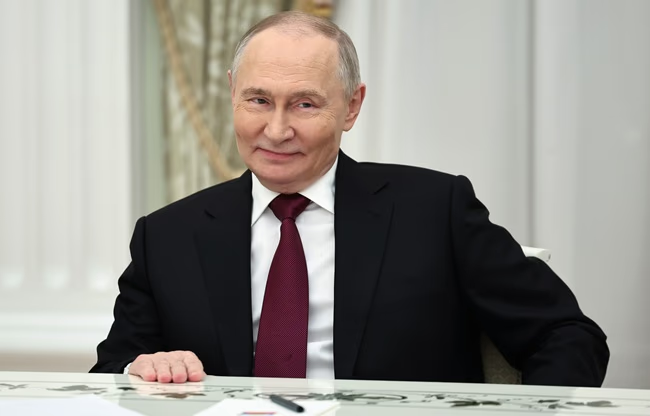
Source: aajtak
India and Russia share deep political, commercial, and military ties, which is another reason there is no confusion regarding Putin's visit.
What's the ICC's track record with arrest warrants?
- The ICC has issued warrants against various high-profile leaders and militia commanders, but arrests have often been difficult. The lack of an enforcement arm leaves the court reliant on its members.- The court has previously issued warrants against sitting leaders, like Sudan's Omar al-Bashir, yet faced criticism for allegedly targeting poorer nations.- Non-member countries often see the court's decisions as political. Arrests become challenging when leaders avoid visiting member nations.
Current Status of the Russia-Ukraine Conflict
Amid several failed mediations from multiple countries, Donald Trump recently took the lead by proposing a peace plan with 28 points, including a conditional ceasefire. Ukraine claims the proposal favors Russia, even suggesting that Ukraine should reduce its military force—a term Ukraine currently seems unwilling to accept.