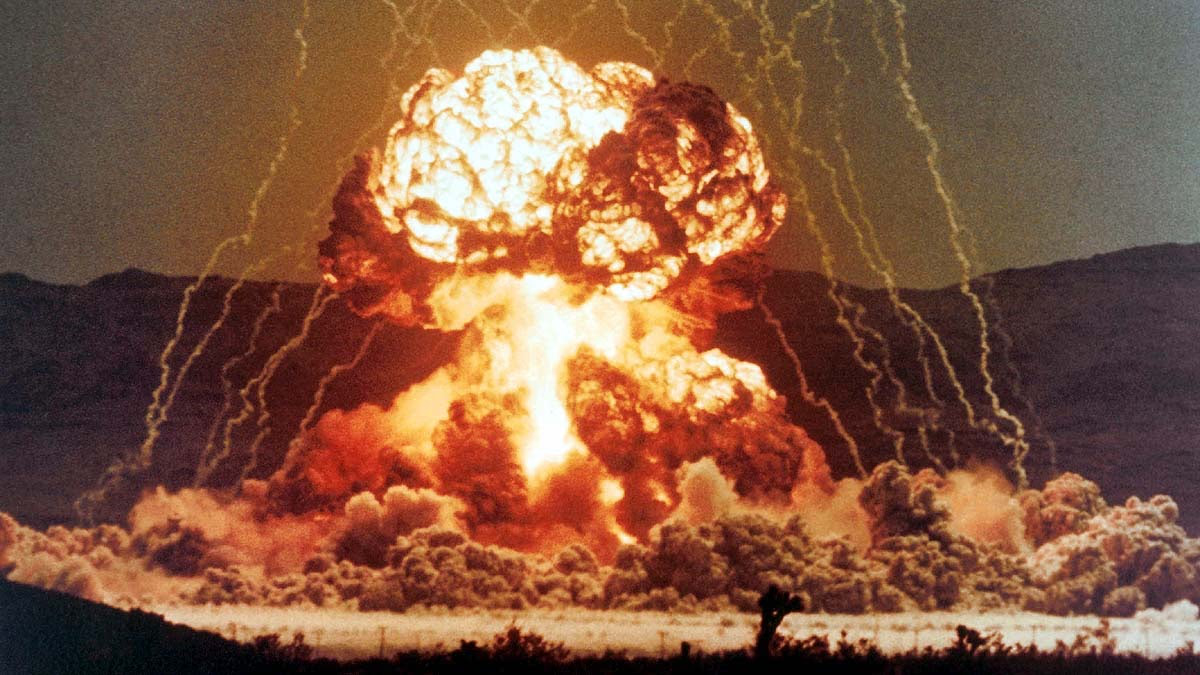
Conversations around nuclear radiation in Iran are escalating. On March 2, 2026, the Director General of the International Atomic Energy Agency (IAEA), Rafael Grossi, warned at a Board of Governors meeting that ongoing military attacks in West Asia have significantly increased the threat to nuclear safety. The possibility of a radiological release (radiation leak) cannot be dismissed, potentially requiring evacuation areas the size of entire cities.
However, the IAEA has clearly stated that there has been no radiation leak or increase at any of Iran's nuclear sites so far. Neighboring countries have also reported only background radiation levels. There has been no damage or attack on Iran's nuclear plants, like the Bushehr Nuclear Power Plant or the Tehran Research Reactor. The IAEA is trying to establish contact with Iranian authorities but has not yet received a response.
Where is the Radiation Threat in Iran?
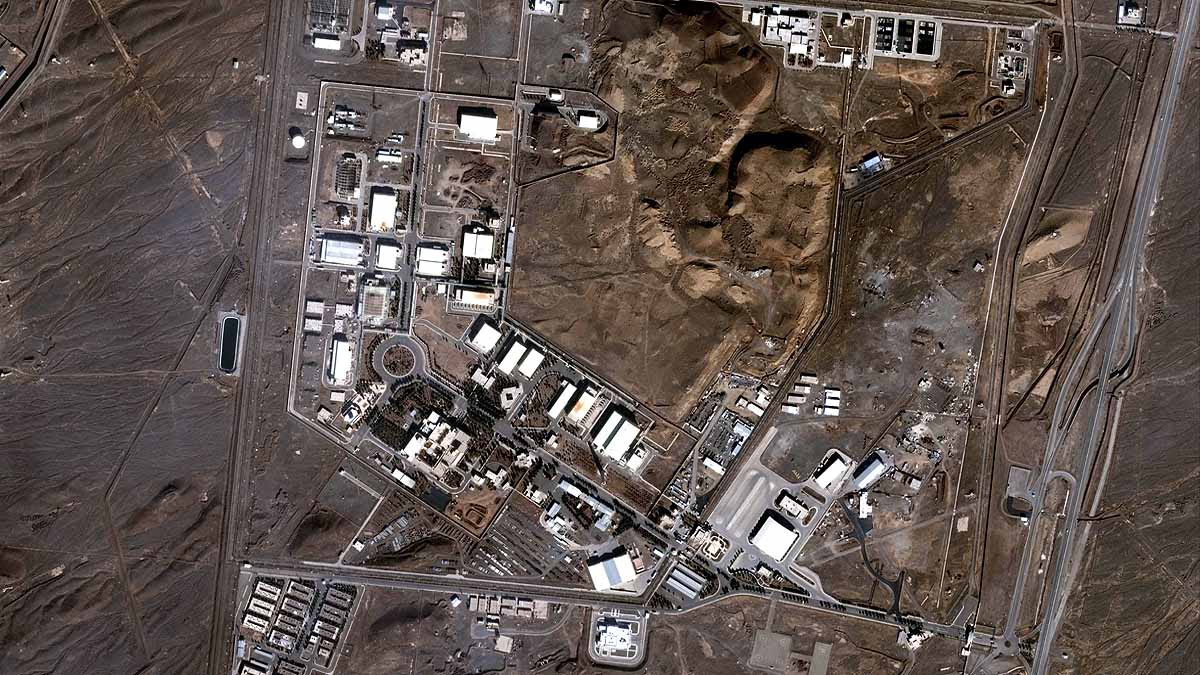
According to IAEA reports and statements, no radiation leaks have occurred as of now. The threat is only potential. The main nuclear sites in Iran, where radiation risks could arise, include...
Source: aajtak
Natanz: The largest uranium enrichment plant, where centrifuge machines are located. An attack could release UF6 gas (uranium hexafluoride), which is toxic and slightly radioactive.
Fordow: A deep bunker within a mountain storing highly enriched uranium.
Isfahan: A site for uranium conversion and fuel fabrication, with underground tunnels storing highly enriched uranium. The IAEA has requested an inspection here.
Arak: A heavy water reactor site.
Parchin: A military research site suspected of conducting nuclear-related tests.
Bushehr: The only operational nuclear power plant.
To date, no attacks or damage have been confirmed on these sites. The IAEA has reported no radiological impacts. However, large-scale attacks could potentially damage these sites, leading to radiation.
Is this Due to US-Israel Attacks?
The US and Israel have conducted attacks under Operation Epic Fury, starting February 28, 2026, targeting military targets, missile sites, command centers, and some nuclear-related areas in Iran. However, according to the IAEA, there has been no direct attack or damage to any nuclear installations like Bushehr, Natanz, Fordow, or Isfahan. Iran claims an attack occurred at Natanz, but the IAEA has not confirmed this.
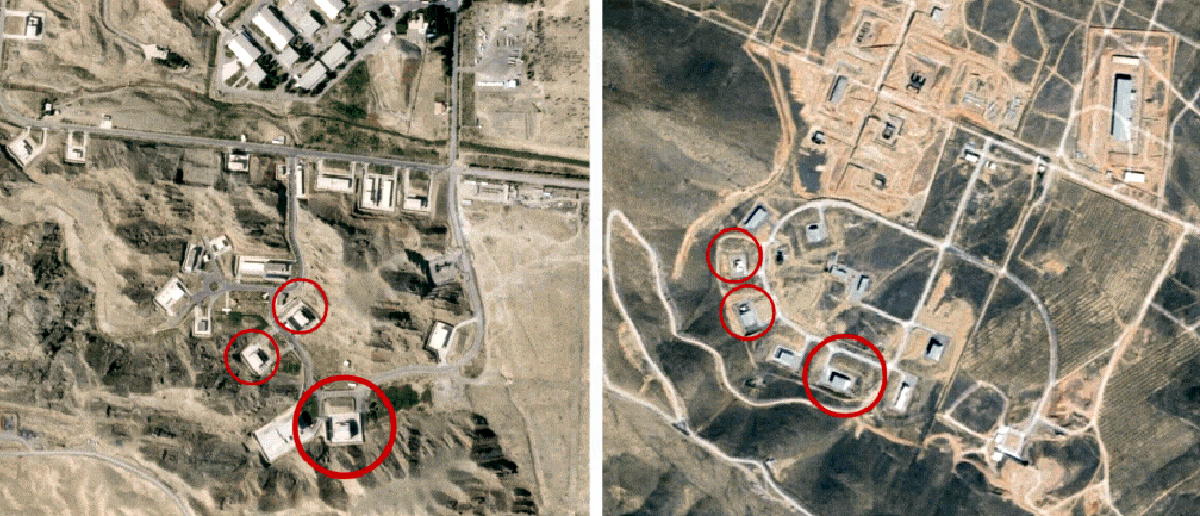
Source: aajtak
In prior attacks in 2025, Natanz and Isfahan suffered damage, yet no radiation leaks occurred. The IAEA stresses that attacks increase the threat to nuclear safety as these sites could be targeted.
Why Might Radiation Occur and How Severe is the Threat?
The radiation threat exists because centrifuges and uranium are stored at Iran’s nuclear sites. Should bombs strike...
Centrifuges could break, potentially leaking UF6 gas, which is toxic and harmful if inhaled or ingested.
Highly enriched uranium might spread, but it would not cause a Chernobyl-like meltdown since Iran operates no large reactors.
If the Bushehr power plant were attacked, the reactor could suffer damage, but the IAEA indicates this hasn't happened.
How Significant is the Threat?
The IAEA states that if a radiological release occurs, large areas may need evacuation. However, there are currently no leaks, and radiation in neighboring countries remains normal. The threat is localized, likely confined to the vicinity of the sites, with little chance of spreading across the country or region. The IAEA has called for restraint from all parties and urges diplomacy. The situation is concerning but not yet panic-inducing.