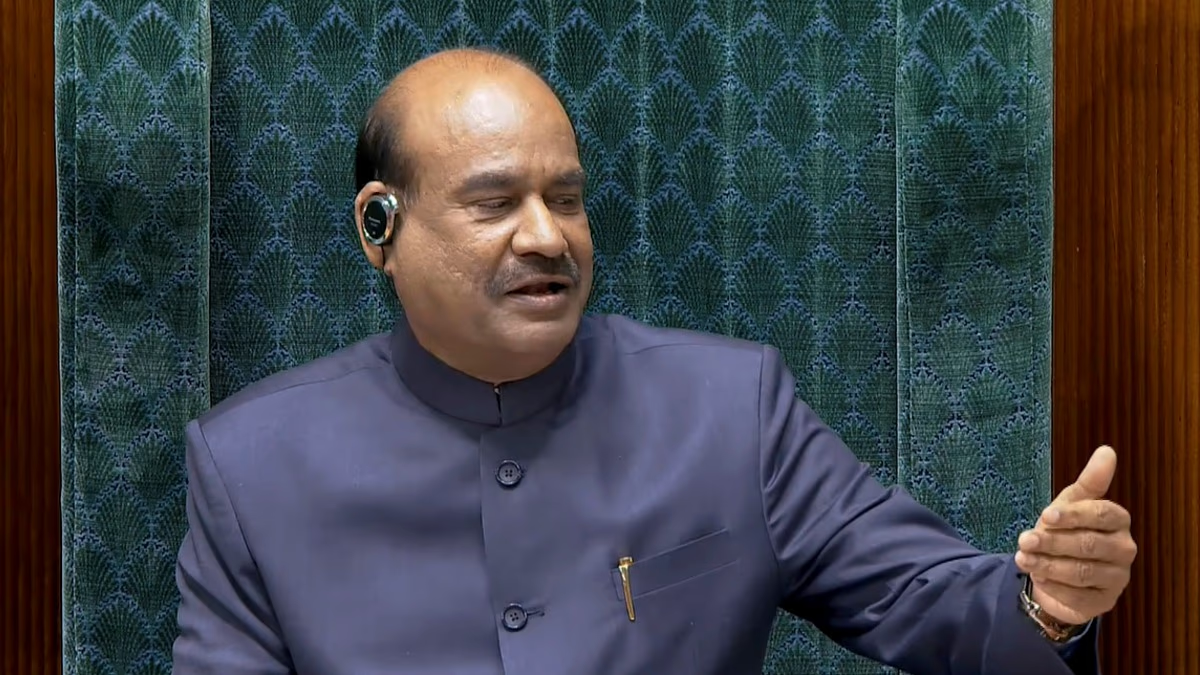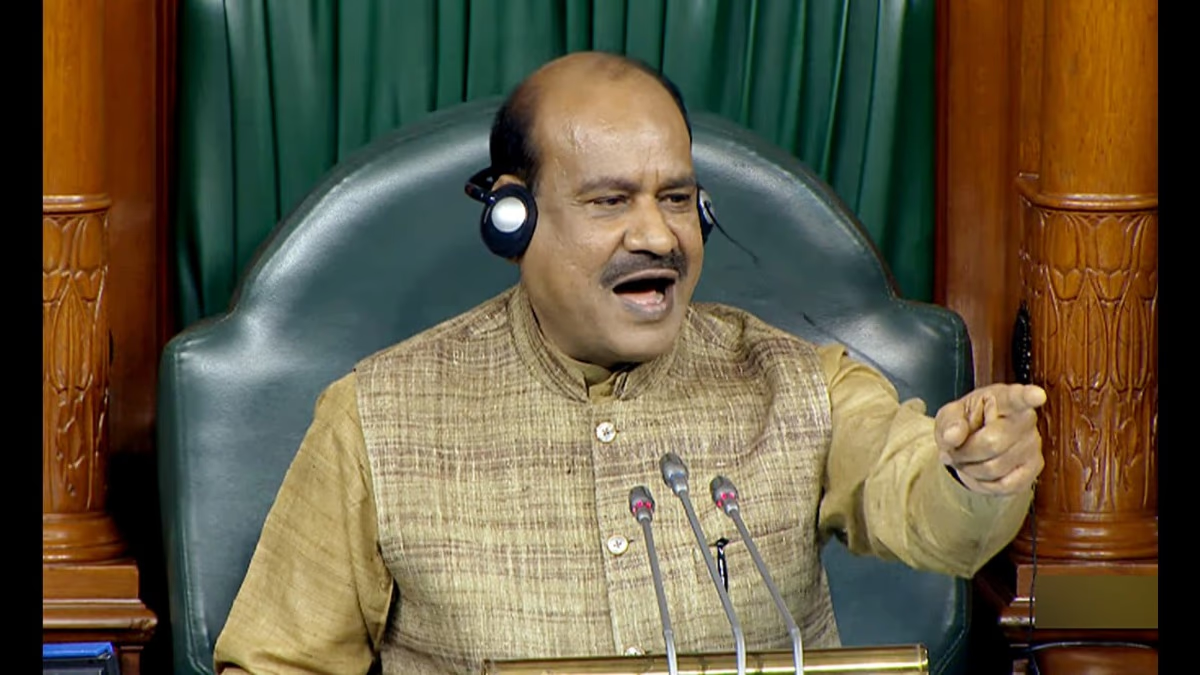
The political standoff between the government and the opposition continues in Parliament. Congress has taken an aggressive stance against Lok Sabha Speaker Om Birla and has made a significant move to unseat him. A notice of no-confidence against the Speaker has been submitted to the Lok Sabha Secretary-General by Congress.
Following the notice by the main opposition party, Congress, Speaker Om Birla will no longer be able to preside over Lok Sabha proceedings. This is not the first instance where the opposition has sought to remove a Speaker through a no-confidence motion.
Since the country's independence, this marks the fourth notice of no-confidence against a Lok Sabha Speaker. Historically, no Speaker has been removed following such a motion, although similar notices have been previously issued against three other Speakers.
When Did the First No-Confidence Motion Occur?
In examining India's parliamentary history, four no-confidence motions against the Speaker have been tabled in the Lok Sabha. The first instance was on December 15, 1954, when socialist leader Vigneshwar Mishra moved a motion against the nation's first Lok Sabha Speaker, GV Mavalankar. The motion was rejected, allowing Mavalankar to retain his position.
The Motions of 1966 and 1987
The second attempt to remove a Speaker came during the 1960s, specifically on November 24, 1966. Socialist leader Madhu Limaye brought the motion against Speaker Sardar Hukam Singh, which also failed to result in his removal.
The third attempt was on April 15, 1987, targeting then Speaker Balram Jakhar. The motion was introduced by CPM MP Somnath Chatterjee, yet the opposition did not succeed. The current motion filed by Congress against Om Birla is now set for consideration 14 days post-notification.
How Can a Speaker Be Removed?
The position of the Lok Sabha Speaker is considered a symbol of impartiality, constitutional propriety, and democratic balance. However, when questions arise regarding the Speaker's role, there exists a constitutional procedure for their removal. According to the Constitution, if a no-confidence motion is introduced and accepted against any presiding officer or deputy within Parliament, they are required to step aside from presiding duties.
The process to remove a Speaker is outlined in Article 94(e) of the Constitution and detailed in the Lok Sabha rules. Any Lok Sabha member can issue a notice in writing to the Secretary-General of the Lok Sabha to initiate proceedings against the Speaker. Generally, this notice is jointly submitted by two Lok Sabha MPs.
The no-confidence notice must include clear and precise allegations against the Speaker as solid charges. Upon the issuance of such a notice, the Lok Sabha Speaker refrains from conducting parliamentary proceedings.
The notice is scheduled for a parliamentary agenda at least 14 days after its receipt. For the motion to be considered, support from a minimum of 50 MPs is essential. Should sufficient backing be obtained, the proposal is debated in Parliament before a vote is conducted. Removal of the Speaker requires the majority vote to pass the motion successfully.