VLDL Cholesterol Level:
Heart attacks claim countless lives globally every year, and the disease is rapidly spreading in India. Once considered a disease of the elderly, heart issues are now affecting young people too. According to the Sample Registration Survey (SRS) data under India's Registrar General, approximately 31% of deaths in the country result from heart diseases.
Cholesterol is often identified as the culprit behind heart attacks, and many people get it checked. However, people usually are unaware of the different types of cholesterol. Most focus on LDL or 'bad' cholesterol in reports, getting concerned if it's high, but very few give attention to VLDL. Knowing about this type of cholesterol is essential as it can impact heart-related diseases.
VLDL's full name is Very Low-Density Lipoprotein, which is among the five main types of lipoproteins that transport cholesterol and triglycerides in the blood. Crucially, our liver produces VLDL. You can think of it as a kind of fat-carrying truck in simple terms.
Yet, when the liver produces too much VLDL, it can lead to various problems, including an increased risk of heart diseases.
Besides VLDL, there are other cholesterol types - HDL (High-Density), LDL (Low-Density), IDL (Intermediate-Density), and Chylomicrons.
VLDL’s role is to transport fat (triglycerides) through blood to different parts of the body, providing energy.
According to Dr. Gregory Katz, a heart disease expert at NYU Langone Heart in New York, as VLDL sheds triglycerides and becomes smaller, its shape changes and it turns into LDL, which has less triglyceride and more cholesterol.
Bad Cholesterol is Dangerous:
LDL is deemed 'bad' cholesterol because excess levels can lead to plaque buildup in arteries. Plaque increases the risk of severe heart diseases; high levels double the danger of heart attacks and strokes.
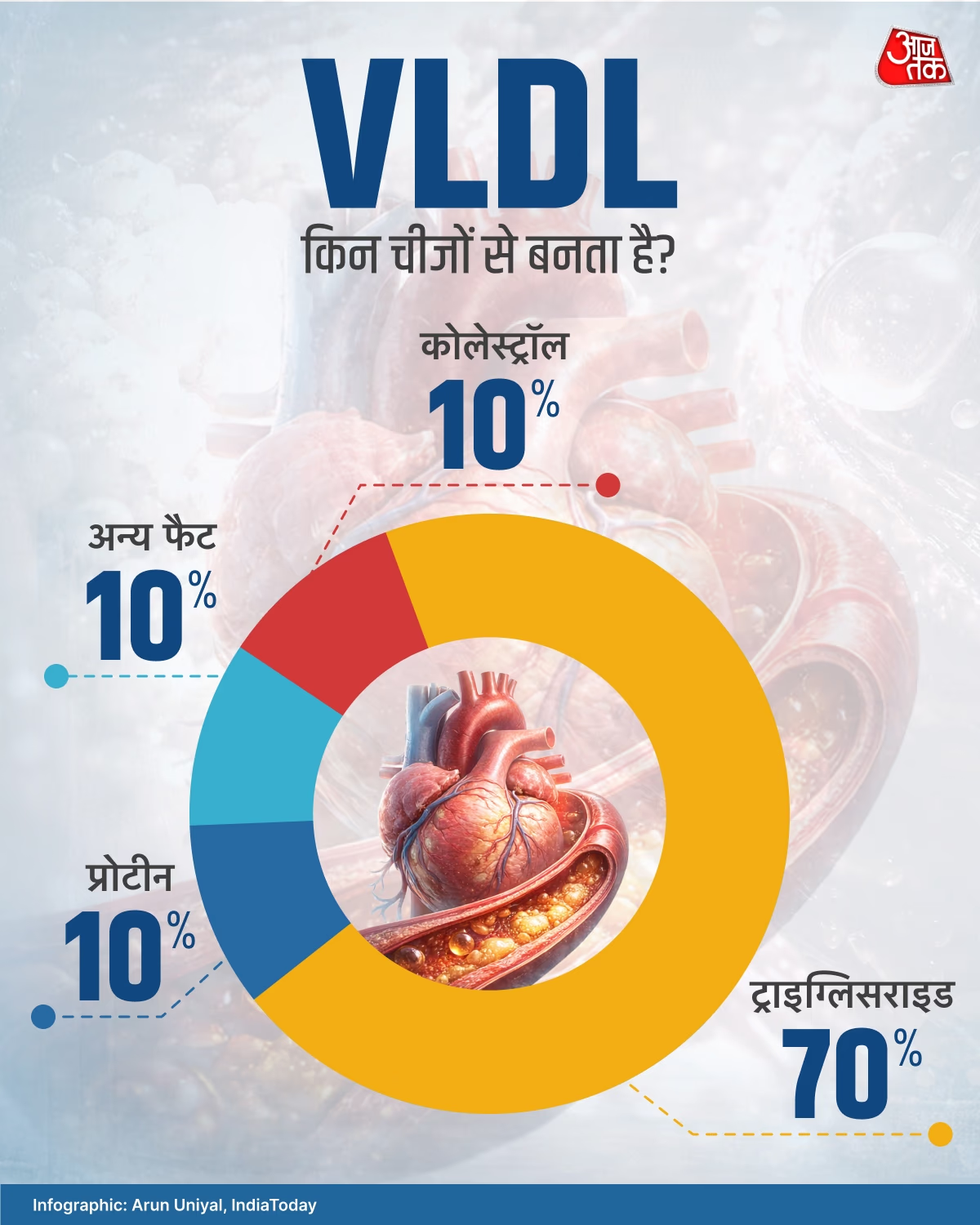
VLDL comprises about 70% triglycerides, 10% cholesterol, 10% proteins, and 10% other fats. Consuming too much sugar or carbohydrates without burning them increases triglycerides. Consequently, VLDL levels rise, depositing fat in arteries, which heightens the risk of heart disease and strokes.
Source: aajtak
LDL or bad cholesterol is derived from VLDL. As VLDL releases triglycerides, it converts to LDL, which has higher cholesterol content and is responsible for delivering cholesterol to body cells. If LDL levels become high, it starts depositing in arteries, forming plaque, causing arteries to become narrow and hard. This condition is called atherosclerosis, substantially increasing heart attack and stroke risk.
According to the National Heart, Lung, and Blood Institute, patients with metabolic syndrome commonly exhibit higher VLDL levels. This syndrome comprises a group of conditions that increase the risk of heart disease, heart attack, stroke, and other ailments.
As per the Cleveland Clinic, triglyceride levels are related to high VLDL levels.
Dr. Katz notes that patients with insulin resistance and metabolic syndrome show elevated triglyceride levels, implying the person isn't entirely healthy. High triglycerides indicate an increased risk of heart disease.
Most people's LDL cholesterol is checked during routine health check-ups. The test, usually part of a lipid profile, examines total cholesterol, LDL, HDL, and triglycerides.
No specific test exists for VLDL. It's typically speculated from triglyceride levels. Doctors only inspect VLDL when there's a significant need.
The American Heart Association suggests that everyone above 20 years should test their cholesterol every 4–6 years. Individuals at higher heart disease risk or undergoing treatment may require more frequent testing.
According to Cleveland, in most cases, triglyceride levels are about five times higher than your VLDL levels. VLDL can also be determined from LDL, as VLDL ultimately converts into LDL.
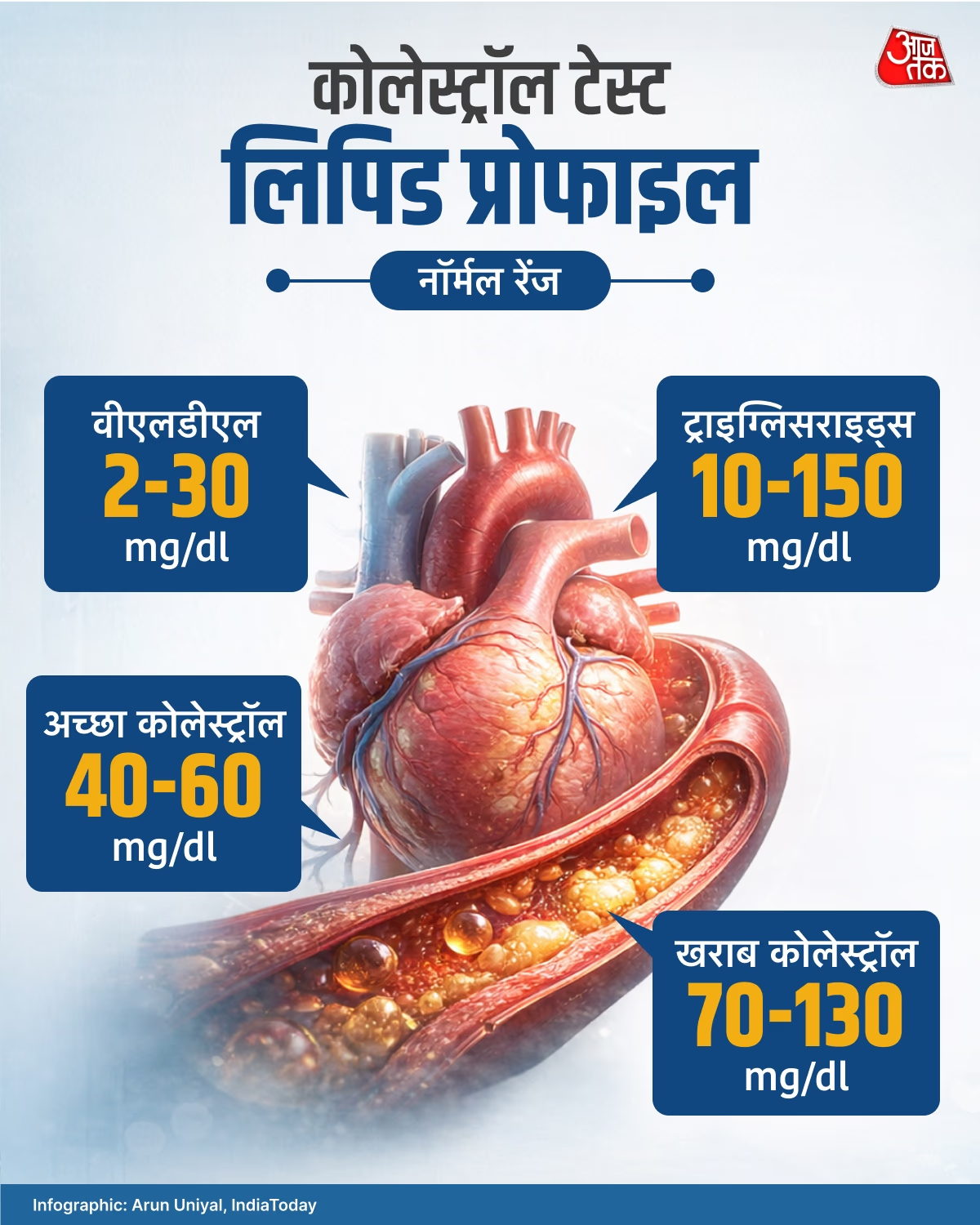
Dr. Katz advises that a detailed VLDL cholesterol examination considers levels below 30 mg/dL as normal and levels below 15 mg/dL as ideal. It signifies that VLDL levels exceeding 30 mg/dL could be alarming.
Source: aajtak
To reduce VLDL (Very Low-Density Lipoprotein) cholesterol, primarily focus on lowering triglycerides, as reduced triglycerides will naturally lower your VLDL. Taking the following vital steps is necessary:
Avoid consuming sugar and refined carbohydrates.
If not exercising daily, start today.
Eliminate junk food and maintain a healthy, balanced diet.
Engage in at least 30 minutes of exercise daily.
Weight loss is crucial.
Quit alcohol consumption.
Stop smoking.
Almonds
Walnuts
Soy chunks
Avocados
Olive oil
Salmon, mackerel fish
Flax seeds
If none of these measures show results, only then consider medication for lowering triglycerides, though starting with dietary and lifestyle changes to manage it should always be the priority.