In the ancient tradition, Lord Shiva is regarded as the most accessible and simple deity. It is said that Shiva is pleased neither by pomp nor elaborate rituals. A simple offering of water and sincere devotion are all that are required. This simplicity makes the daily worship of Lord Shiva in one’s home both easy and accessible. However, within this simplicity lie certain guidelines that, if followed, make the worship more pious and rewarding.
Attempt to Worship During Brahma Muhurta
Performing daily worship of Lord Shiva at home is considered most auspicious in the early morning. Worship during the Brahma Muhurta is said to yield special benefits, though it may not be feasible for everyone. In such cases, conducting the worship post-sunrise after a bath is also appropriate. Evening worship is also permissible, but it is important to remember that water should not be offered to Shiva in the evening.
Internal Purity is Crucial
In Shiva worship, internal purity is deemed as important as external cleanliness. Begin with a bath and don clean clothes. Ensure the worship space is clean and your mind is calm. Conducting worship with anger, stress, or unrestful thoughts is not recommended by the scriptures. Shiva represents a deity of emotions; hence, the state of mind is more important than the act of worship.
Source: aajtak
What Should the Shiva Lingam's Size Be?
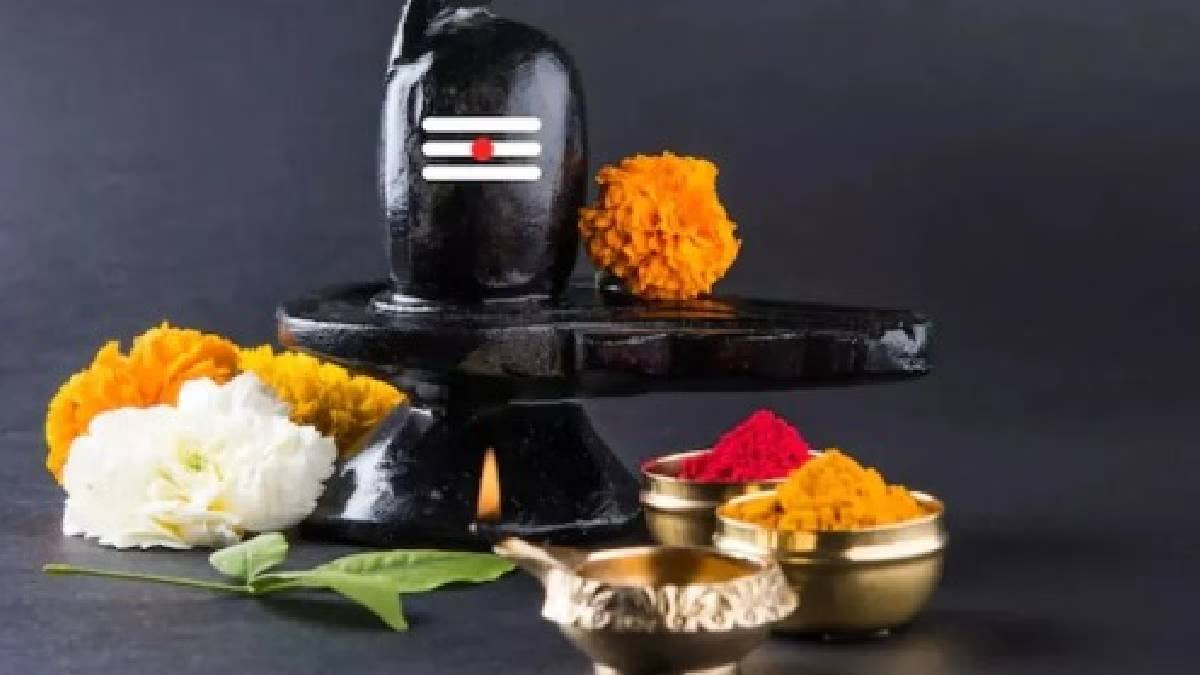
For home worship, a small and stable Shiva Lingam is ideal. It should be made of materials like Narmada stone, metal, or stone, and should be placed in a platter or receptacle to collect the offerings properly. Installing a large Shiva Lingam at home is not recommended.
Scriptures suggest that the Shiva Lingam in a home should be no taller than a thumb. Water is a fundamental element of Shiva worship. Pure water, Ganges water, should be used for the ablution of Shiva Lingam. During ablution, it's ensured that the water flows from the top downwards from the Shiva Lingam. Use milk, yogurt, or Panchamrit for ablution during special occasions like Mondays, Pradosh, or Mahashivaratri. In the daily worship routine, using only water for ablution is considered complete.
Essential Use of Bilva Leaves
Using Bilva leaves in Shiva worship is considered extremely sacred. Fresh, unbroken leaves with three leaflets are offered to the Lingam. The stalk of the Bilva leaf should face the Lingam. The scriptures say that even if one Bilva leaf is offered with devotion, it is as fruitful as performing a hundred sacrifices.
Use of White Flowers in Worship
White flowers, Ak, and Datura are specially offered in Shiva worship. Ketki flowers are not used in Shiva worship. For lamps, use clarified butter (ghee) or sesame oil. Heavy scented incense or dhoop should be avoided during worship as simplicity and restraint are prioritized in Shiva worship.
The simplest and most effective mantra for home worship is 'Om Namah Shivaya.' Chant this mantra 11, 21, or 108 times. After the chant, offer fruits, milk, sugar crystals, or any sweet as Prasad to Lord Shiva.
Note in your home worship practices, refrain from offering Tulsi leaves on the Shiva Lingam. Avoid using dry or broken Bilva leaves. Worshiping with feelings of anger, envy, jealousy, or malice is also discouraged. Scriptures declare that Shiva is pleased not by formality, but by sincere emotions. Thus, you can engage in the worship of Shiva not only on Mahashivaratri but daily. Even if all rules are hard to follow, offering a single lota of water to the Shivlingam with true devotion is sufficient. For Shiva's worship, this alone is enough.