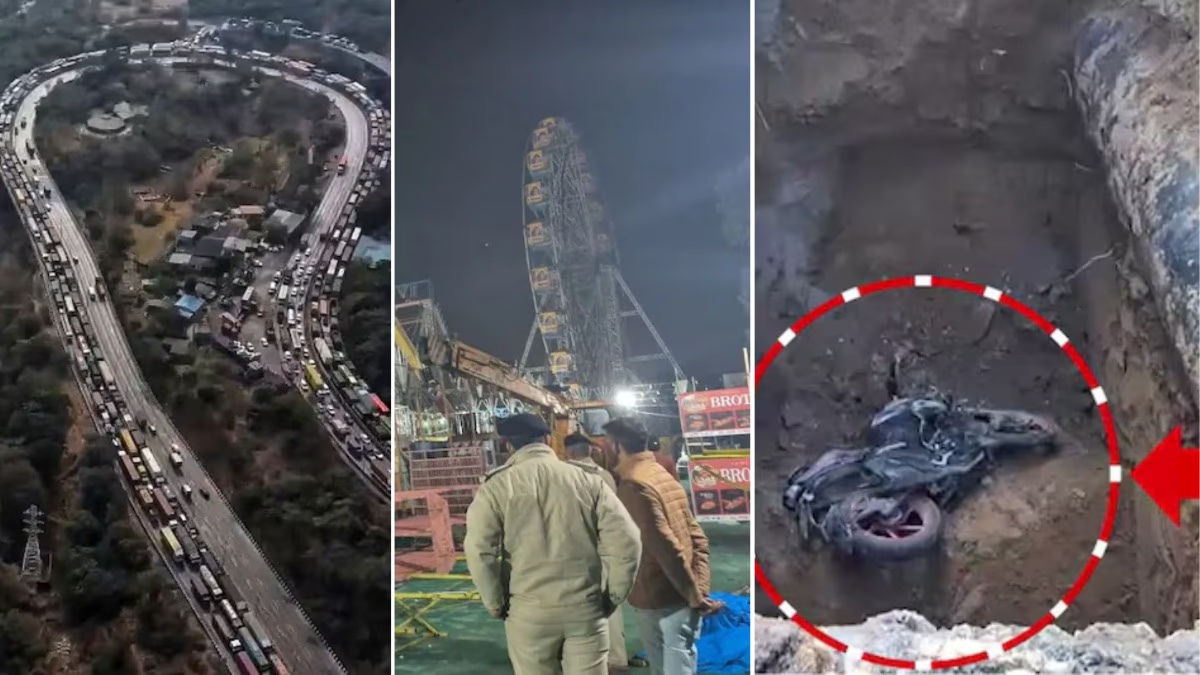
Recently, three major incidents occurred in the heart of the nation's capital and economic hub. A 32-hour jam ensued after an incident on the Mumbai-Pune Expressway, a tragic accident in Delhi's Janakpuri where a young man fell into a dug-up road pit and died, and a ride collapsed at the Surajkund fair in Faridabad, Haryana. These events endangered ordinary lives. The actual impact of these events in terms of lives lost and tragedies barely comes to light.
The issue isn't just about accidents happening. It's about understanding the causes behind these incidents and the actions taken afterwards. Amidst the noise, political statements, and blame games, often the true culprits are overlooked, leading to a narrative twist where a 'scapegoat' emerges.
The recent triad of disasters mirrors a recurring pattern: instead of enforcing accountability, the system seems to deflect. Numerous questions arise about when genuine reforms will occur, and when system representatives will shoulder responsibility rather than designating scapegoats.
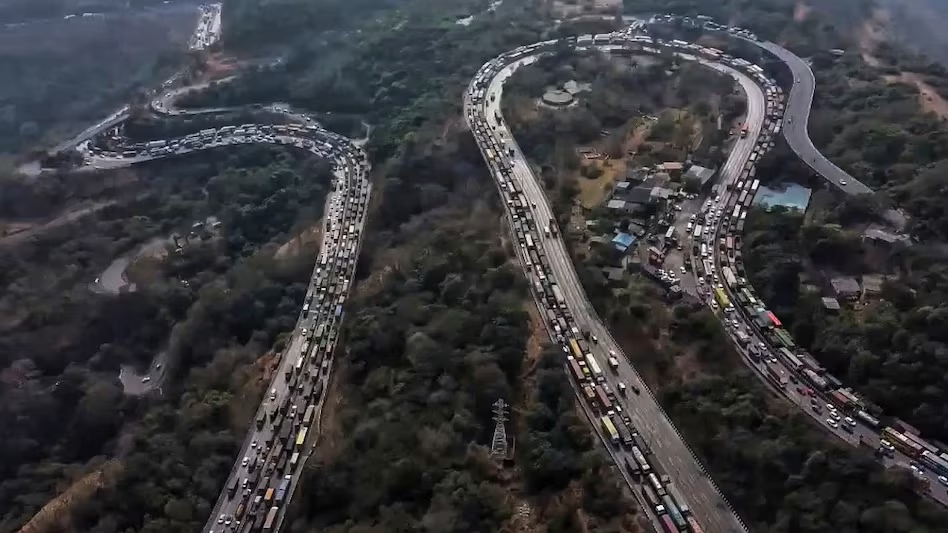
The Mumbai-Pune Expressway, a critical 13.3-kilometer bypass connecting two of India's largest urban centers, was designed to reduce congestion and enhance safety. Yet, a gas tanker accident near Khandala Ghat led to a 32-hour traffic snarl. Travelers had to sleep in their cars, facing a scarcity of food, water, and restroom facilities, with thousands of vehicles including ambulances, trucks, and private cars trapped.
Source: aajtak
The extensive traffic jam, lasting over thirty hours, can only be described as a failure of the system. The complete breakdown of traffic management went unattended for hours until action was finally taken against the tanker driver, blamed for speeding. Yet, was it not a systemic failure that left traffic halted for over 30 hours?
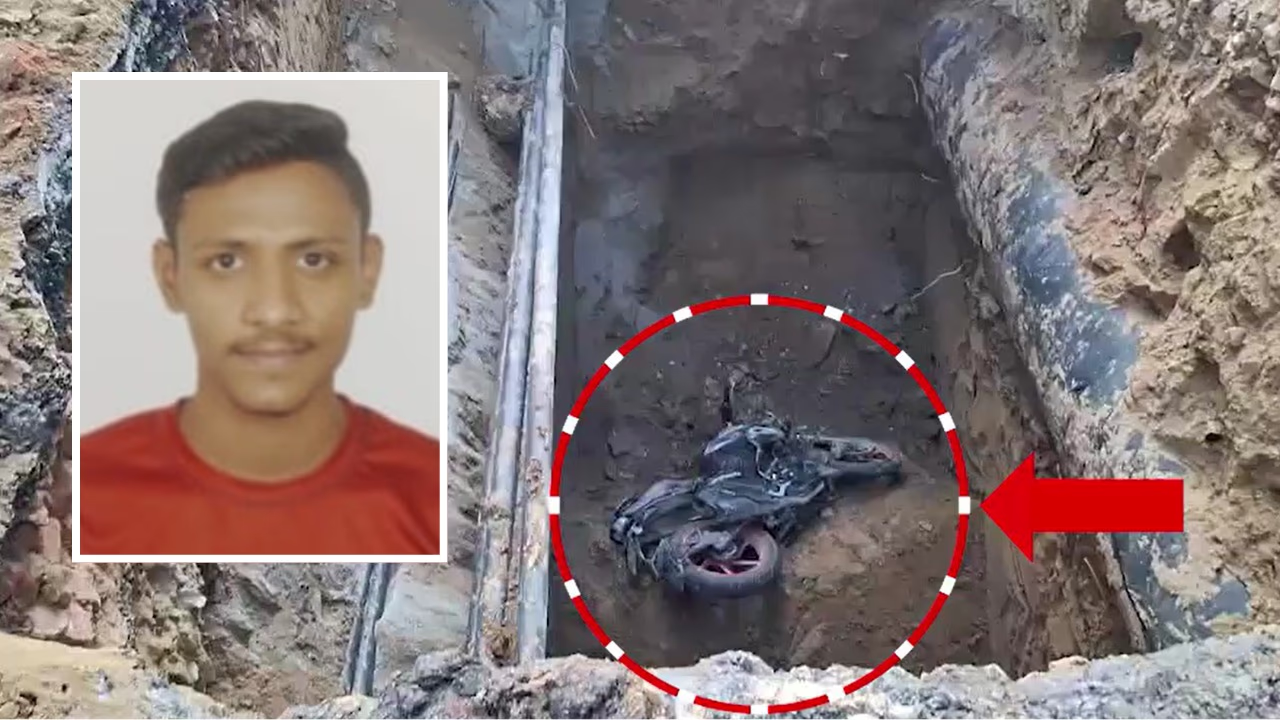
In Delhi's Janakpuri, Kamal Dhyani, 25, left his office at night but didn't reach home. His body was later found in a 15-foot-deep pit dug for Delhi Jal Board work. Investigations reveal his demise resulted from falling into the unprotected pit.
Source: aajtak
Kamal lay unmoved for nearly eight hours in the pit, receiving no aid and ultimately succumbing. Bystanders reported the incident to the contractor, yet no emergency measures were taken. The rescue was only initiated too late when his family reported him missing. The case led to the arrest of 23-year-old laborer Yogesh from UP's Firozabad, accused of being at the scene during the incident. His arrest, along with others, raises the question of accountability directed towards lower-level workers while broader systemic issues remain unaddressed. Is this not indicative of deeper systemic flaws?
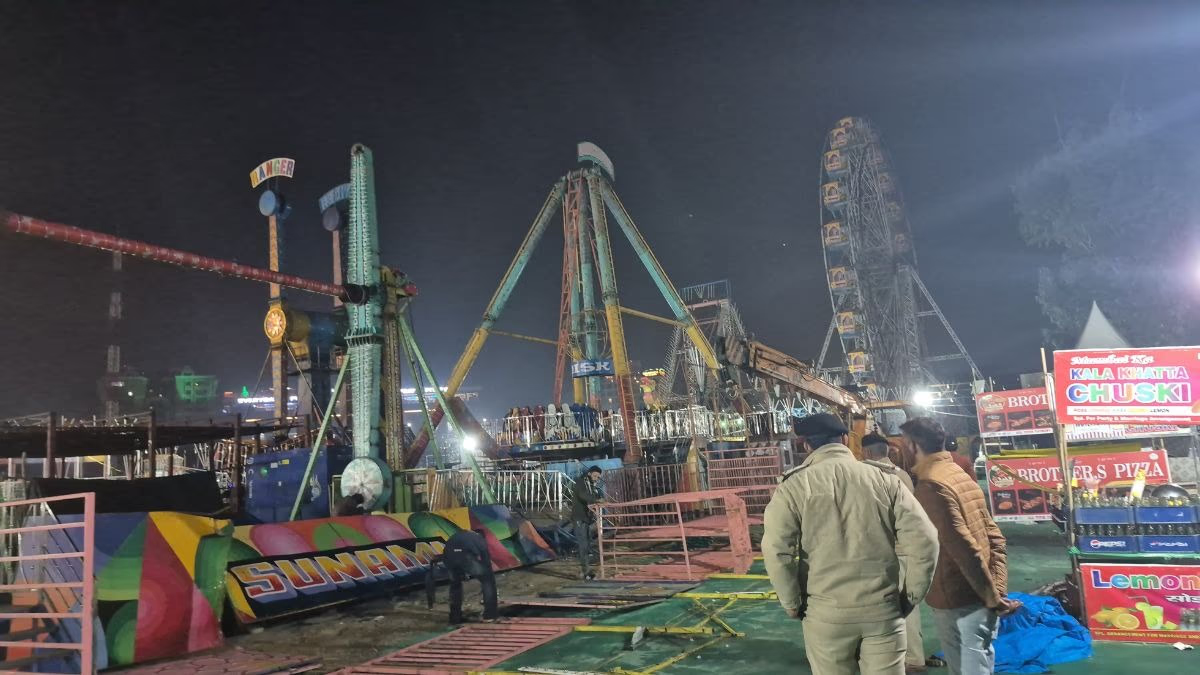
In Haryana's Faridabad, at the Surajkund Mela on February 7, a ride suddenly collapsed while in motion, resulting in one death and several injuries. Authorities arrested Mohammad Shakir, owner of 'Himachal Care Fun Care,' hailing from Himachal Pradesh's Sirmaur district. Another suspect, Nitesh from UP's Meerut Canton's Dharmapuri, was also taken into custody.
Source: aajtak
Shouldn't organizers also be held accountable for the Surajkund fair incident? Shouldn't permit grantors for the rides ensure thorough safety checks before installation? This negligence puts lives at risk, where fairgoers entrusted safety to a faulty system, unprepared to protect.