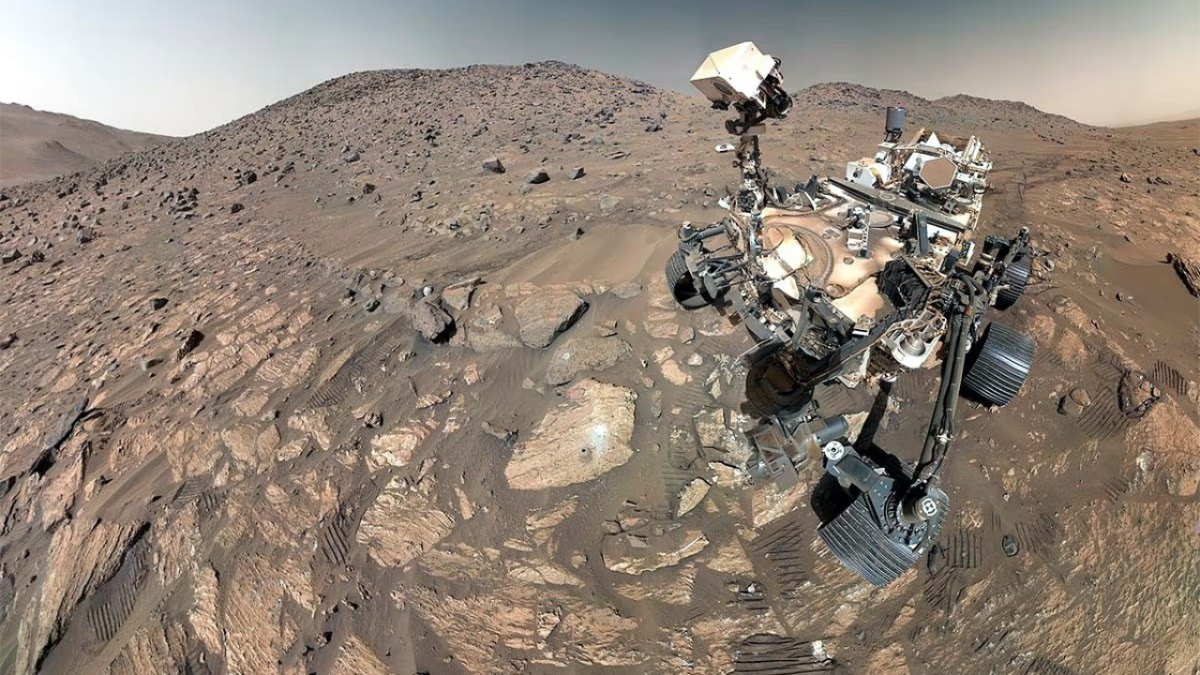
Is Earth truly forever? Can humans build new homes beyond our world? Is life on other planets possible? These enduring questions are finally leading to action. Leading nations, including India, are unraveling Mars' mysteries through ambitious missions. Enter SpaceX, driven by Elon Musk's vision to colonize the red planet. Just how advanced is this audacious plan, and could it redefine humankind’s reach into space?
Imagine an imminent catastrophe - a colossal asteroid collision, an incurable virus spread. What future awaits humanity?
A decade prior, in a packed hall in Mexico, Elon Musk challenged the world with this dilemma: 'History branches two ways. One way is to remain on Earth forever and face extinction. The other? To evolve into a multi-planetary species.' From that moment, Musk vowed to transform Mars into humanity's second home. The pressing question remains: is Musk truly prepared for our voyage to Mars? Who takes the first leap – flesh and bone or androids?
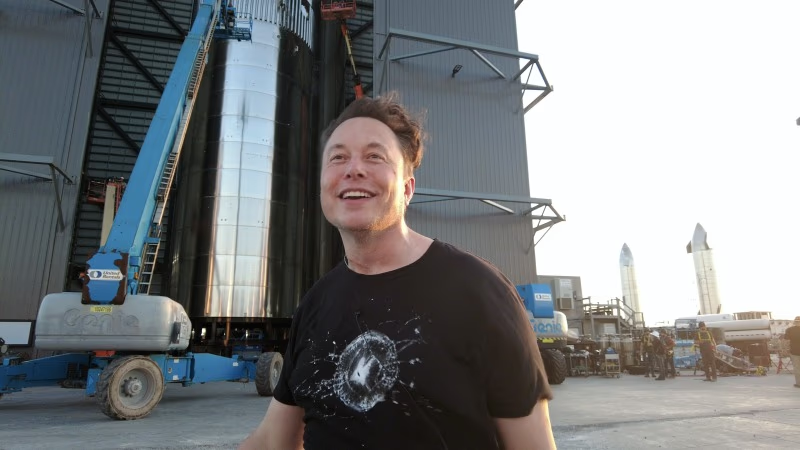
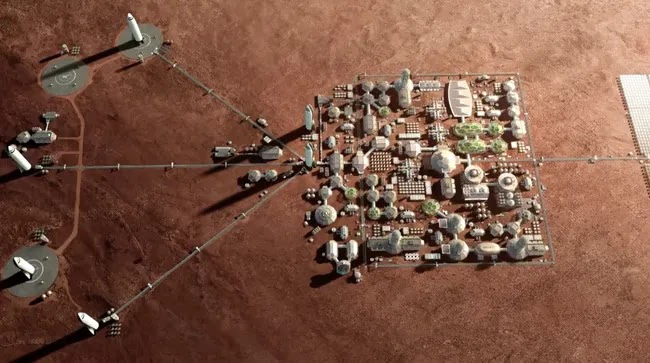
Musk envisions a self-sustaining Martian city of 1 million by 2050. Think Sci-Fi come true. Shielding humans from Mars’ lethal chill and toxic atmosphere, Musk plans to deploy Tesla-made Optimus humanoid robots first.
Source: aajtak
These advanced robots will act as a formidable vanguard, setting up habitats, solar panels, and vital oxygen-making machines. They'll unearth precious ice, convert it into drinking water, and rocket fuel. By the time humans land, essentials will be ready and waiting.
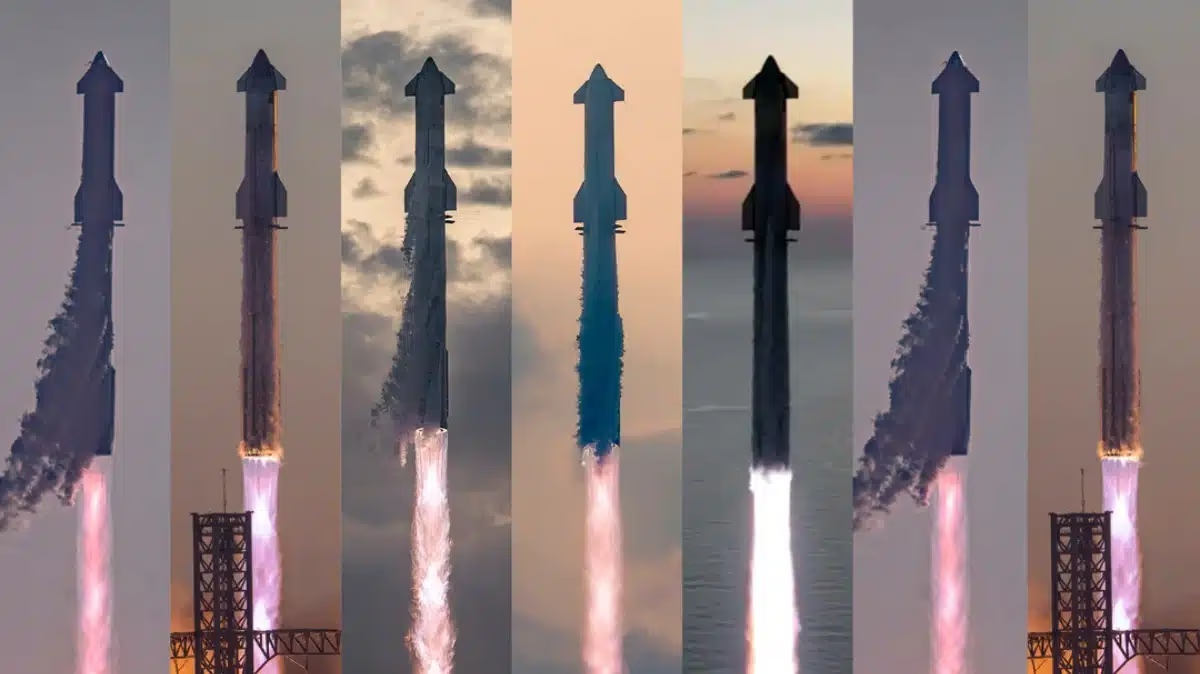
At the heart of this great endeavor is SpaceX's Starbase in Texas, which Musk calls the gateway to Mars. Here, the annual production of hundreds of Starship rockets is planned. Top-tier engineers worldwide, alongside NASA collaborations on space-refueling tech, are the mission's backbone. The crowning jewel is the colossal Starship V3, a 500-foot steel behemoth, historically powerful in its class. Its Raptor-3 engines can haul 100 tons of cargo to Mars in one trip.
Musk’s eye is on December 2026 – a pivotal window with Mars and Earth in close proximity. The strategy involves dispatching at least five uncrewed Starships. A successful landing spurs human flights within four years. Failure shifts plans back by two years.
Source: aajtak
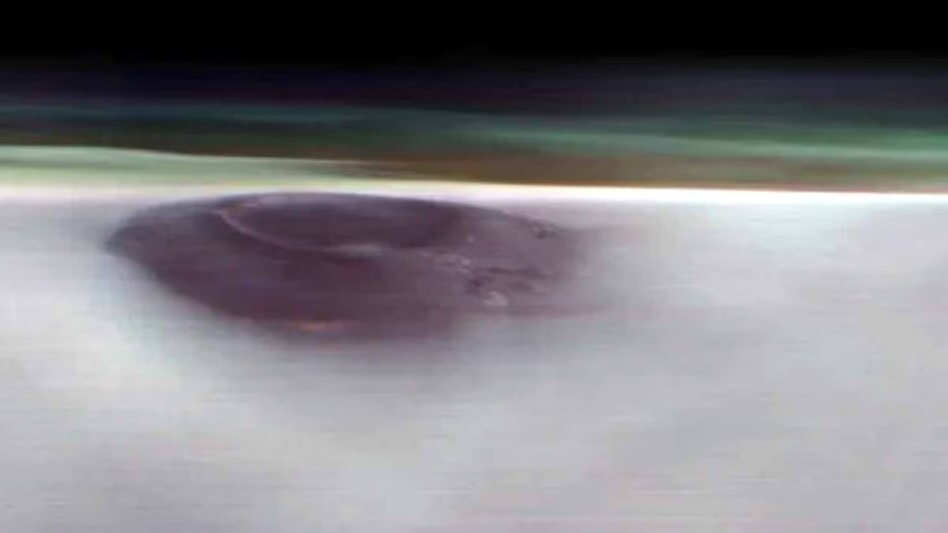
The challenges are daunting. Mistaking Mars for Earth is misleading. Mars is perilous. Average temperatures hover at -62°C. Air is 95% carbon dioxide with less than 1% oxygen. The thin atmosphere cannot shield against solar radiation, amplifying cancer risk. Mars' relentless dust storms can blot out sunlight for weeks.
Earth vs. Mars
Earth days last 24 hours, Mars days add 37 minutes. Mars’ gravity is meager, a mere 38% of Earth’s. Your 100 kg on Earth feels like 38 kg on Mars, enhancing leaps. While Mars is half Earth's size, a Martian year matches 687 Earth days. Sunsets differ starkly; Earth's appear red due to our thick atmosphere, while Mars showcases a blue sunset.
Source: aajtak
Mysteries abound on Mars, and India plays a significant role. India earned global acclaim by reaching Mars orbit on its first attempt in 2014. Now, ISRO is gearing up for Mangalyaan-2, not just orbiting but planning a rover and lander on Martian soil. ISRO’s incisive research could provide invaluable roadmaps for Musk-like missions.
Source: aajtak
The discourse about Musk’s vision – human colonies on Mars – is profound. Acknowledging monumental risks, Musk admits the first journeys will be perilous, with early success a mere 50/50 chance. Yet, history belongs to the brave. We stand on the cusp of extraordinary chronicles. Perhaps soon, we’ll have relatives living on Mars, or journey there ourselves!