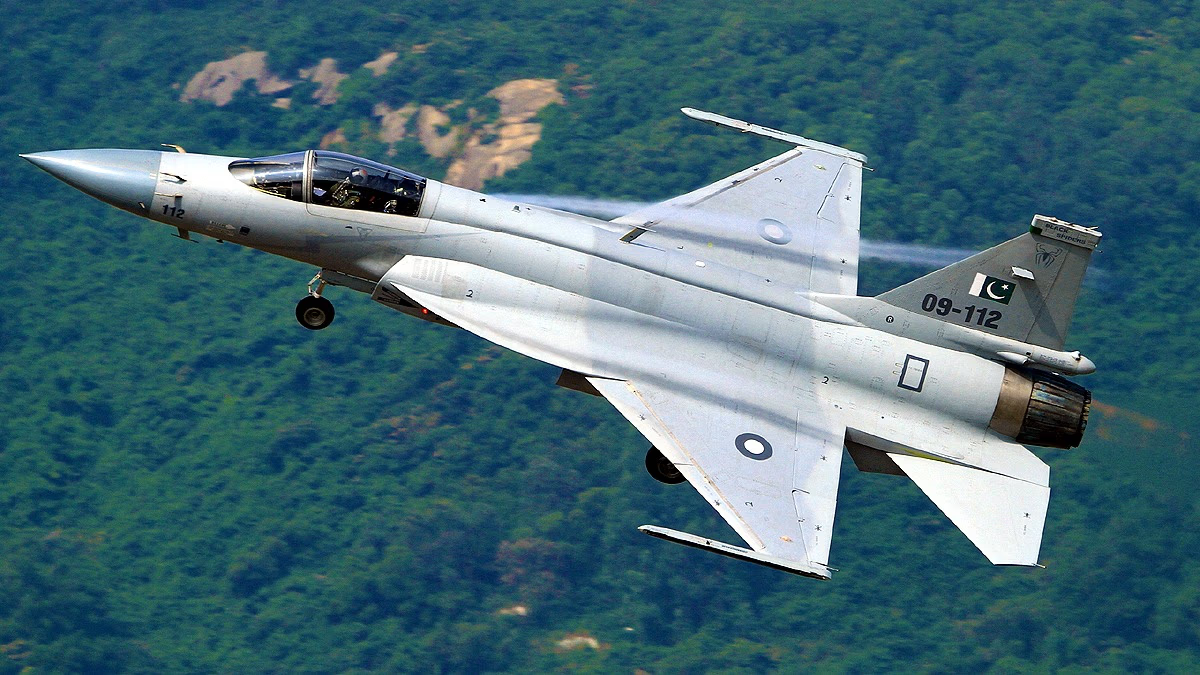
Recently, there's been a significant rise in the demand for Pakistan's JF-17 Thunder fighter jets among Muslim countries. Co-developed by Pakistan and China, these jets have sealed a $4 billion deal with Libya, completed a $1.5 billion agreement with Sudan, and are in a $4 billion negotiation with Saudi Arabia.
Furthermore, countries like Bangladesh, Azerbaijan, and Indonesia are expressing interest. But what's driving this sudden demand? Experts believe it's a ripple effect of America's declining influence.
Read More:
Why are JF-17 Jets Selling Fast?
The JF-17 Thunder is a multi-role fighter jet, developed by Pakistan Aeronautical Complex (PAC) and China's Chengdu Aircraft Industry Group. Known for being cost-effective, easy to maintain, and equipped with modern weaponry, Pakistan is targeting 'half of the Muslim world' for sales.

Source: aajtak
Libya Deal: Agreement to buy JF-17 jets for $4 billion.
Sudan Agreement: A deal worth $1.5 billion.
Saudi Discussions: A potential $4 billion deal under negotiation.
Other Interested Nations: Bangladesh, Azerbaijan, and Indonesia consider purchasing JF-17s.
These deals are beneficial for Pakistan's economy and bolster China's arms export strategy.
Why is America's Influence Waning?
According to experts, these transactions highlight the diminishing influence of the US. Previously reliant on US defense systems, Saudi Arabia and other Gulf nations are now exploring alternatives. Chinese jets, Pakistani production lines, and alternative weapon supply chains reduce America's pressure points.
Read More:
If the US enacts strict measures, these countries might lean more towards China and Pakistan. Consequently, the US is exercising restraint, emphasizing diplomacy. The Trump administration's decision to refrain from attacking Iran, influenced by Gulf countries' pressure, is one example of this geopolitical tug-of-war.
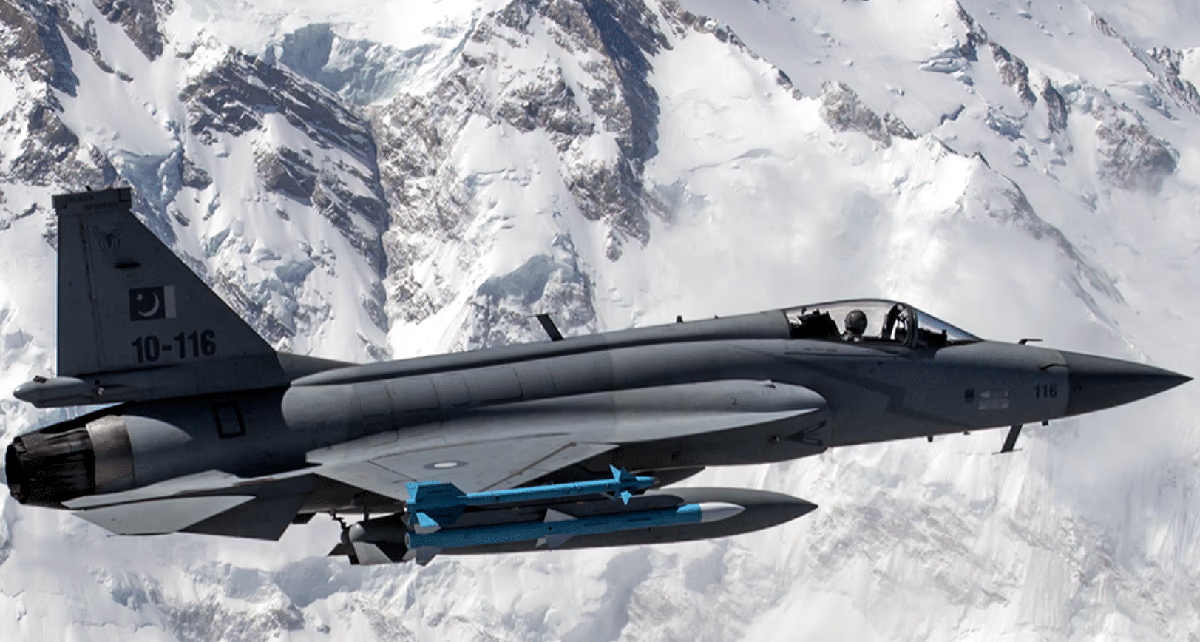
Source: aajtak
Indonesia's Case: Interest in JF-17 and BrahMos Deal
For India, Indonesia is a major concern. Indonesia is finalizing a $450 million BrahMos missile deal with India, but is also considering buying JF-17 jets from Pakistan.
Last week, Indonesian Defense Minister Sjafrie Sjamsoeddin met with Pakistan's Air Force Chief Zaheer Ahmad Babar Sidhu in Islamabad. Pakistan offered 40 JF-17 jets, while Indonesia is also considering purchasing Pakistani combat drones.
Read More: The World's First Icy Vault Safeguarding Earth's Climate History
India views Indonesia as a crucial ally in countering China's growing influence in the South China Sea. Thus, Indonesia's purchase of platforms tied to Pakistan and China is unsettling for India, possibly undermining bilateral trust and complicating regional security.
Bangladesh is also in discussions with Pakistan regarding JF-17s, showcasing Pakistan's expanding reach in the region.
Why is BrahMos Missile Important?
The BrahMos is a supersonic cruise missile, co-developed by India and Russia. It has a range of 300 km and travels at speeds over Mach 3, powered by a ramjet engine with a fire-and-forget system, ensuring it hits the target after launch.
In May last year, during heightened India-Pakistan tensions, BrahMos played a pivotal role. In Operation Sindhur, Indian Air Force's Su-30MKI jets launched 15 BrahMos missiles, damaging 11 out of 12 major Pakistani airbases, destroying radars, command centers, ammunition depots, and runways. Pakistani Prime Minister Shahbaz Sharif admitted the attack was unforeseen.
This missile is a game-changer in India's aggressive military strategy. Indonesia aims to reinforce its maritime defense, particularly in the Natuna Sea, with a BrahMos purchase. In 2022, the Philippines acquired BrahMos for $375 million, strengthening its position in the South China Sea.
Read More:
India's Concern and the Road Ahead
India's defense experts feel that Indonesia's consideration of JF-17 amidst the BrahMos deal sends mixed signals, potentially impacting the partnership. Significant progress was made on the BrahMos deal during a November 2023 India-Indonesia defense ministers' meeting, awaiting Russia's approval (Russia holds a 49.5% stake).
Indonesian President Prabowo Subianto discussed BrahMos when he visited India on Republic Day 2025, highlighting its arsenal modernization potential.
However, the potential acquisition of JF-17s is making India wary. Will Indonesia backtrack on the BrahMos deal, or will both proceed simultaneously? Only time will tell. Overall, this situation reflects a shifting balance in the global arms market, with China and Pakistan opening new avenues. America's monopoly is being challenged.