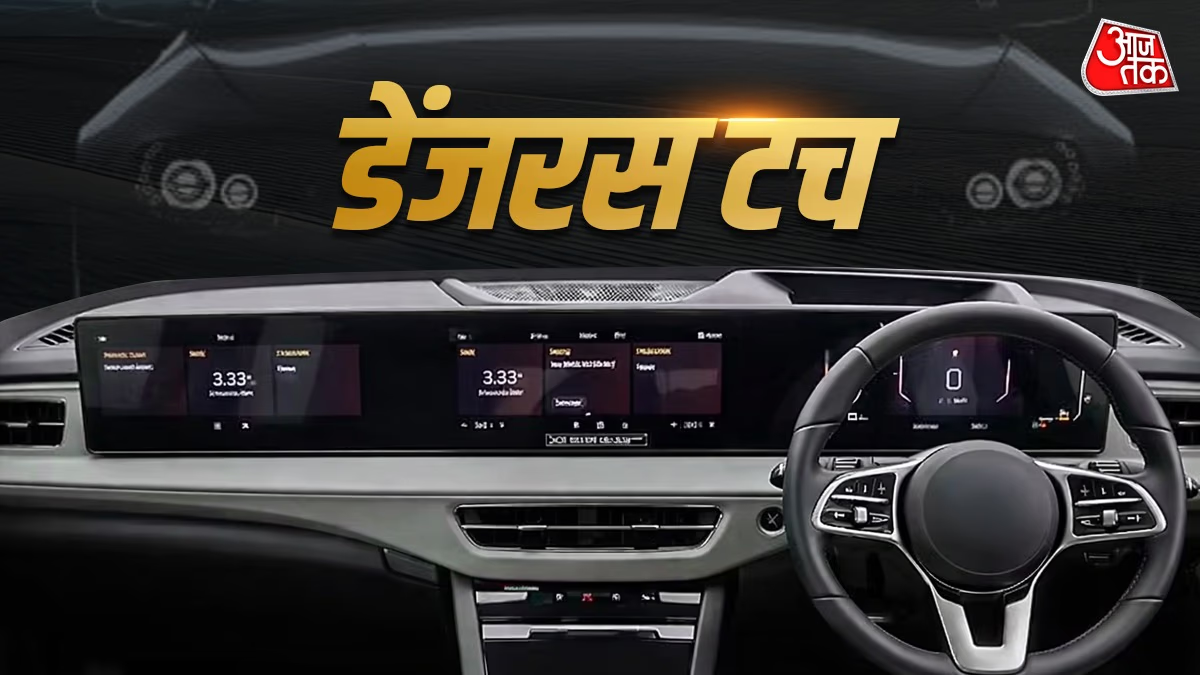
Enormous Touchscreens in Cars:
Amidst the morning rush, everyone is in a hurry. Kids are heading to school, an elderly gentleman is cycling to get groceries, and the signal suddenly turns red. But the driver's eyes aren't on the road; they're glued to the car's large touchscreen, adjusting the AC or music. Just a few distracted seconds can change a life. A crash, blood on the streets, ambulance sirens, and a family’s silence forever.
This isn't just about technology; it’s about wisdom—and understanding why we require such risky tech in our cars. Are stereo equipment buttons really so inconvenient that they need to be replaced with smooth, fancy touchscreens? Despite their flashy appearance, their functionality remains essentially the same. Are we unwittingly endangering ourselves in the pursuit of making cars smarter?
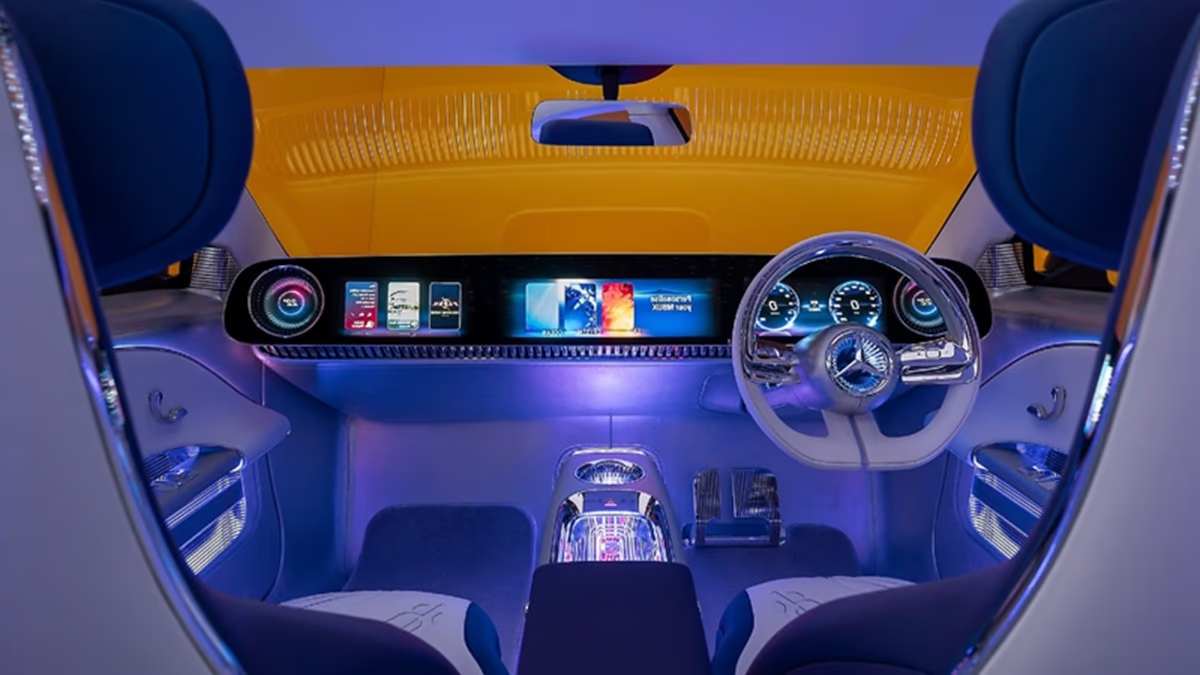
New cars brim with expansive touchscreens, exuding modernity and high-tech allure. But does this technology compromise safety while driving? Numerous studies and data suggest that though touchscreens are visually striking, they significantly distract drivers, thus heightening crash risks.
According to research, nearly 97% of new cars launched post-2023 feature touchscreens on their central dashboards, especially large 10-inch displays. While said to deliver a modern premium experience, these touch interfaces often disregard the critical aspect of passenger safety.
Source: aajtak
A Swedish car magazine, Vi Bilagare, highlighted the dangers of touchscreens in a study comparing usability in 11 modern touchscreen cars to a 2005 Volvo V70, equipped with physical buttons. Drivers on a track were tasked with routine operations like changing the AC temperature or adjusting the radio at 110 km/h. The simplest tasks took over 20 seconds in touchscreen-equipped cars.
The same tasks took less than 10 seconds in cars with traditional knobs and buttons. The reason is clear: physical controls can be operated without taking eyes off the road, whereas touchscreens require visual engagement every time. This few-second delay can be catastrophic.
A 20-second distraction from the road is perilous at any speed. A vehicle could travel hundreds of meters, increasing the risk of accidents if unexpected obstacles arise. Quietly behind its alluring facade, the touchscreen escalates this danger. Yet, they are prominently marketed in fancy, high-tech cars.
Euro NCAP, Europe's leading vehicle safety agency, known for crash testing cars, has voiced opposition against touchscreens. Their findings support that physical buttons and dial knobs are less distracting, usable without averting gaze from driving. Contrastly, touchscreens necessitate continuous attention for menu navigation and operations.
Experts suggest a blend of touchscreen, physical buttons, and voice command options to maintain road focus. Institutions like Euro NCAP prepare to set standards for car manufacturers to design safer interfaces.
Research from the Transport Research Lab (TRL) reveals that touchscreen reliance can delay driver reaction times by 57%, paralleling the effects of alcohol or drug impairment. This delay escalates the likelihood of accidents.
Source: aajtak
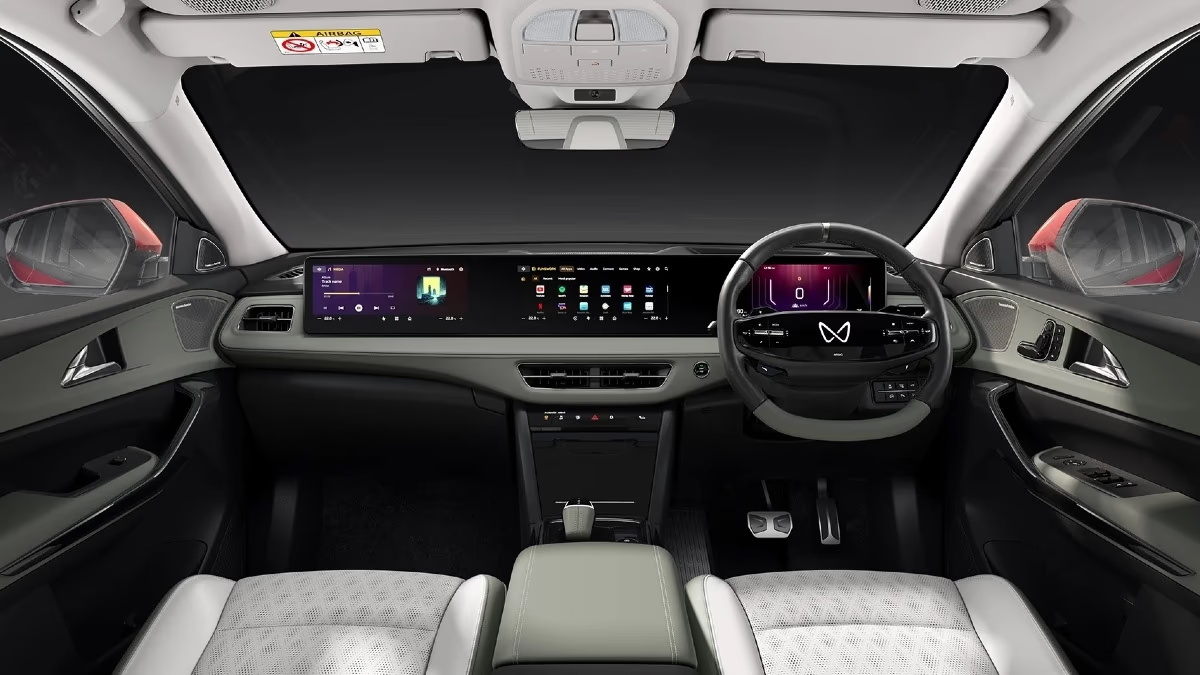
While recent advancements have significantly improved car safety features, including in India where safety-rated cars have become a priority, touchscreens’ impact demands scrutiny as safety ratings evolve.
Euro NCAP recently declared that future five-star safety ratings may become elusive for vehicles solely reliant on touchscreens for essential functions. The necessity of physical buttons for critical controls like horns, windshield wipers, and emergency lights remains paramount.
The Indian market is swiftly adopting large touchscreen-equipped cars. Recently unveiled models like the Mahindra XUV 7XO, BE 6, XEV 9E, Tata Sierra, Kia Carnes, Kia Seltos, Kia Siro, and Hyundai Creta feature extensive touchscreens, with some offering innovative features like car payments and gesture-controlled doors. Luxury brands like Mercedes Benz now embed touchscreens across entire dashboards in select models.
It's not all doom and gloom with touchscreens. They bring conveniences that enhance daily driving, offering navigation, connectivity, entertainment, and multiple features from a single interface that traditional systems lack. While modern driving experiences are elevated, safety must remain a critical consideration.