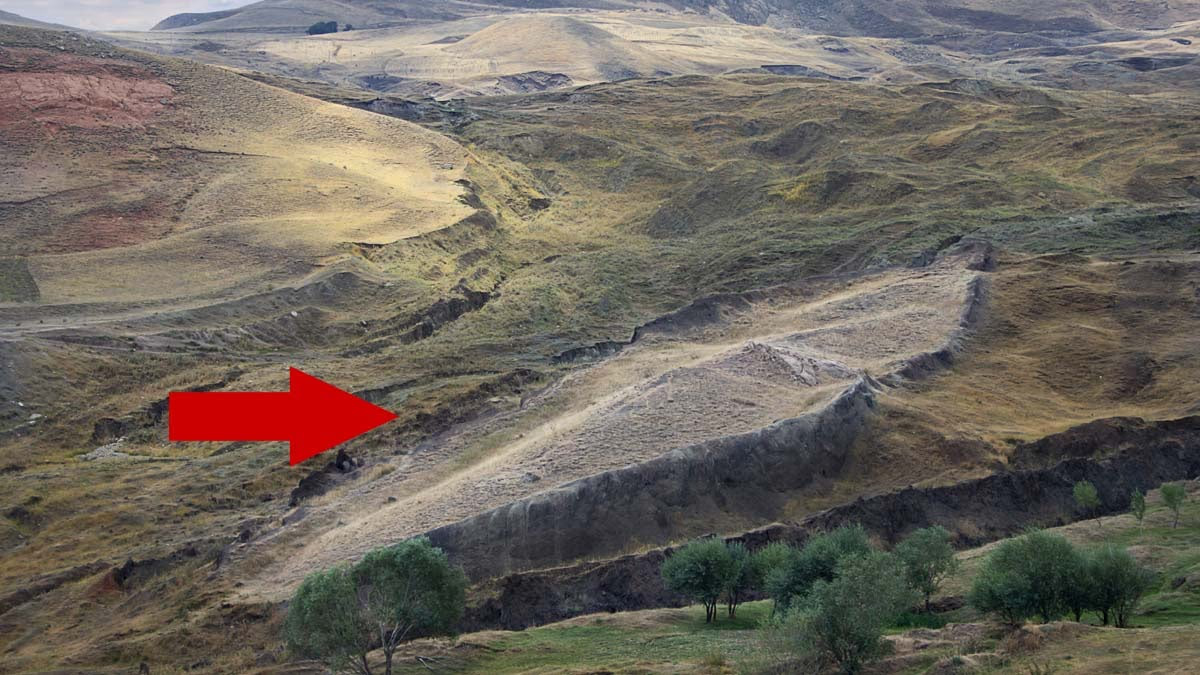
Recently, in Turkey's Durupinar Formation, a ground-penetrating radar (GPR) survey uncovered an underground structure strikingly similar to Noah's Ark as detailed in the Bible. This location is just 29 kilometers south of Mount Ararat, long believed to be the Ark's resting place for centuries.
What Was Discovered?
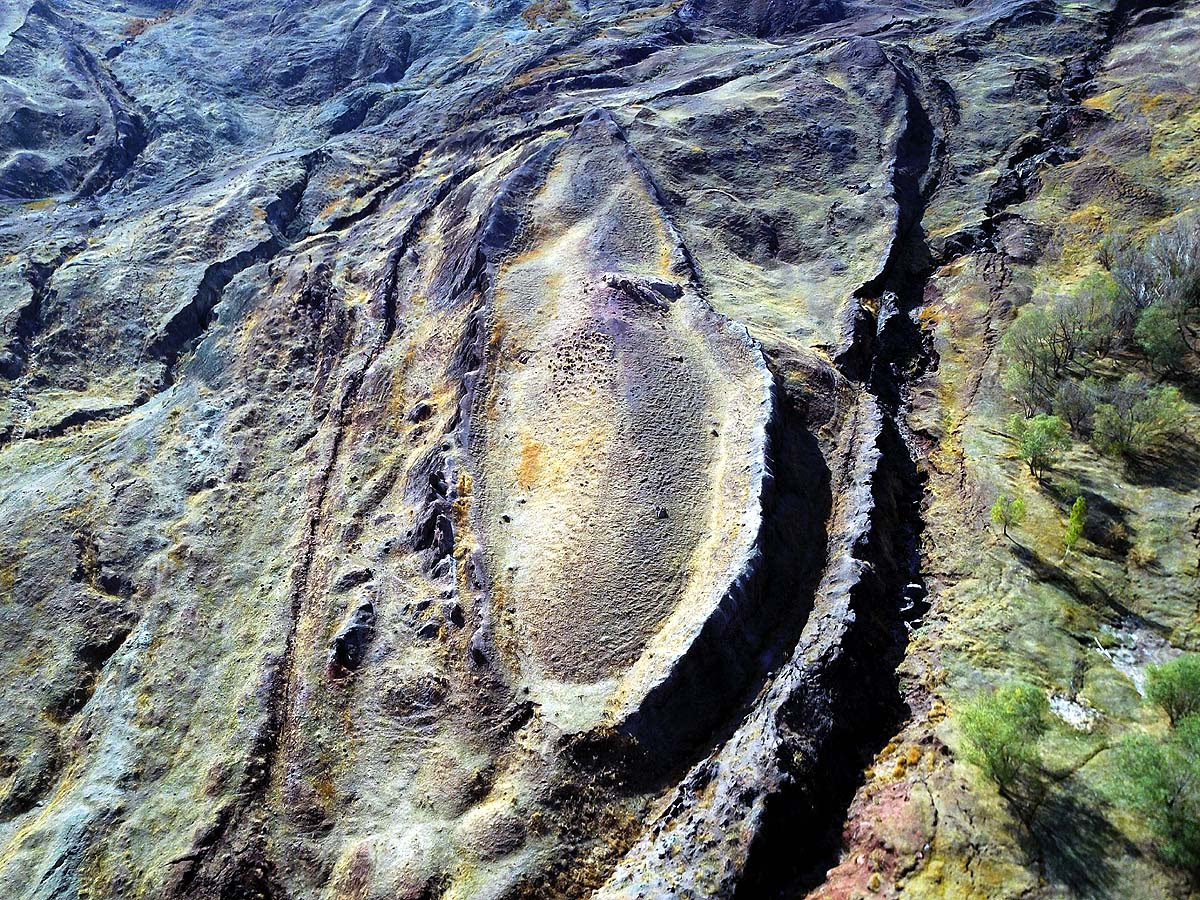
The GPR scan revealed sharp-angled walls, a 13-foot-wide central corridor, and a layered internal structure, reminiscent of the three-story ship described in both the Bible (Genesis) and the Quran.
The site measures 515 feet in length, 86 feet in width, and 52 feet in height—dimensions that closely align with the biblical specifications (300x50x30 cubits). Soil samples showed high levels of potassium and decayed organic matter (traces of rotted wood). The grass above this area displays an unusual color, hinting at something anomalous beneath.
Source: aajtak
What Was Previously Thought?
For decades, geologists considered it a natural rock or soil formation created by volcanic activity or earthquakes. However, new data suggest geometry, internal voids, and angled structures that do not seem natural.
Current Status
No wood fragments or archaeological artifacts have yet been found. Researchers argue they are searching for remnants (chemical imprints, decayed wood) rather than an intact ship. The team, Noah’s Ark Scans, alongside Turkish-American scientists, plans further drilling, sampling, and testing. More surveys are anticipated between 2025 and 2026.
This story has been covered in places like Popular Mechanics, CBN News, and the Jerusalem Post in 2025. Many find it exciting, yet the scientific community remains divided—could it truly be Noah's Ark or simply a coincidental natural structure? It breathes new life into the biblical deluge story, though definitive proof requires further investigation.