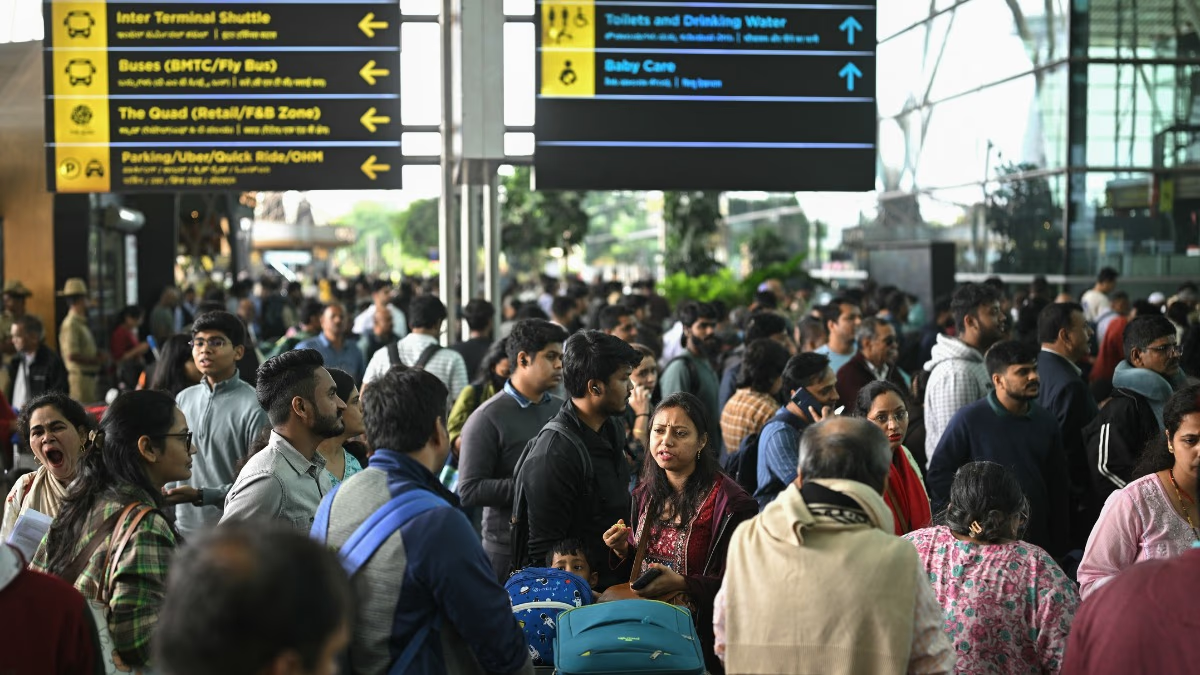
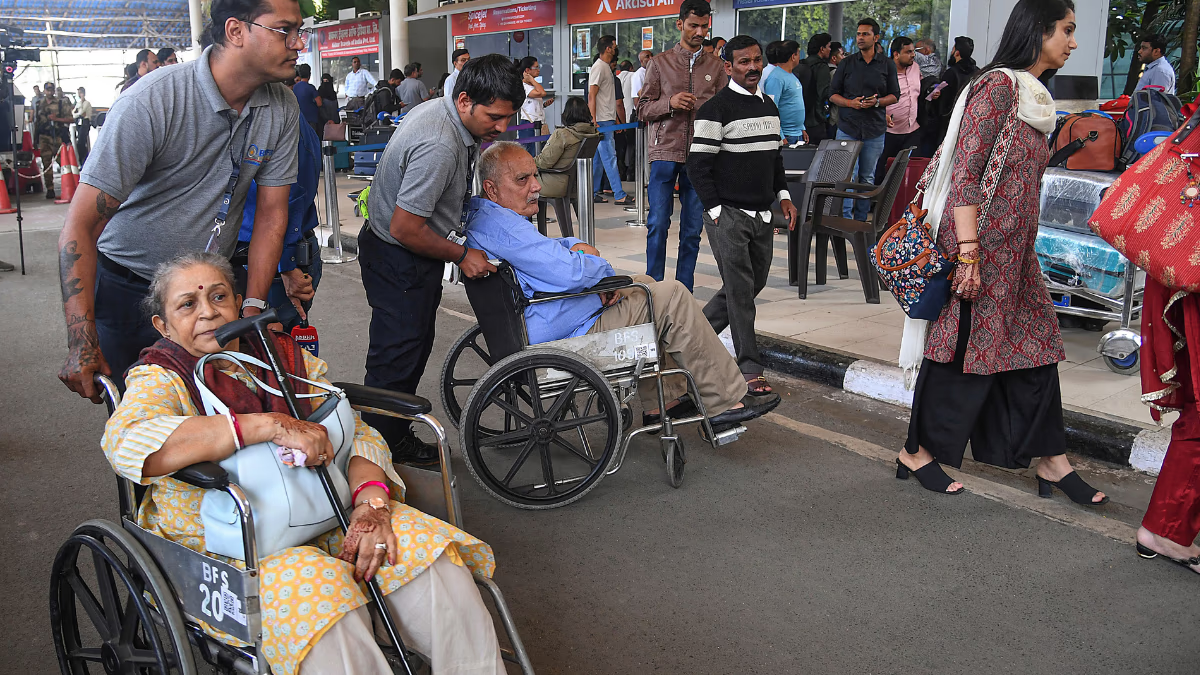
The five-day-long IndiGo flight crisis has now taken a significant turn. On Saturday, India's largest domestic airline canceled 850 flights. Just the day before, on Friday, over a thousand flights had been canceled.
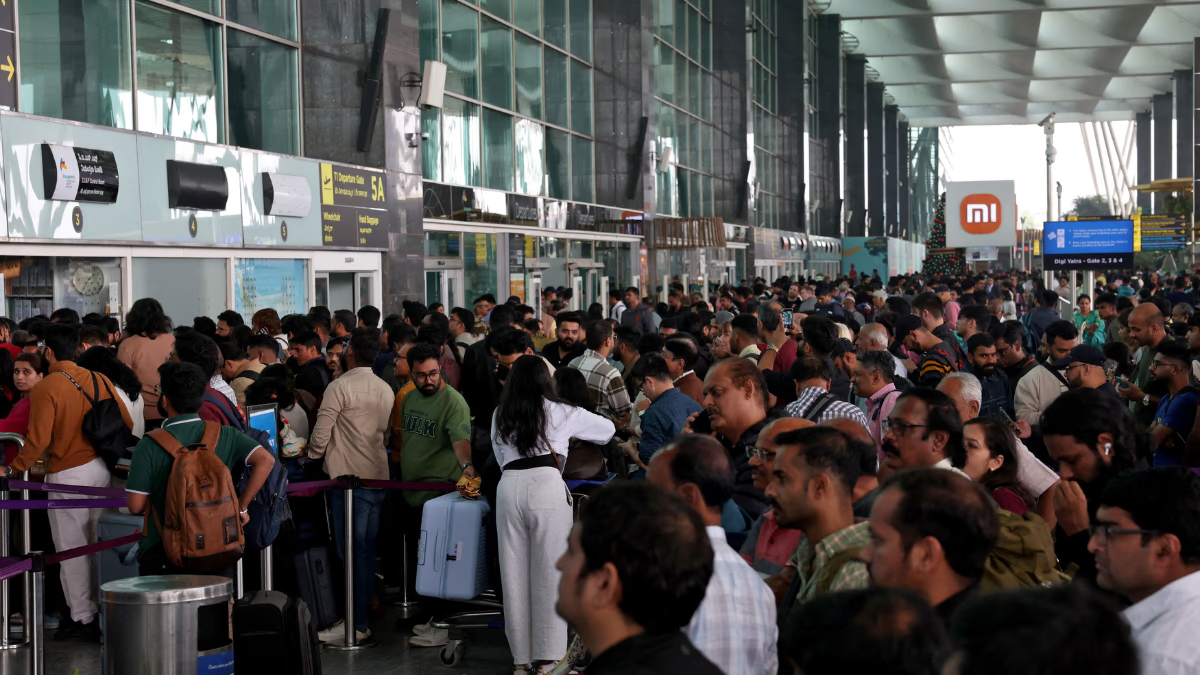
This massive cancellation has created chaos across the country. The biggest issues for travelers are ticket refunds and arranging alternative travel options. Considering the seriousness of the situation, the Civil Aviation Ministry has intervened firmly.
The government has ordered IndiGo to complete all refunds for canceled or disrupted flights by 8 PM on Sunday. No rescheduling charges will be levied on any passengers. Those whose baggage was lost or separated due to flight cancellations should receive their belongings within the next 48 hours.
Moreover, the airline has to set up a special cell that directly contacts passengers to manage their refunds and travel alternatives without requiring constant follow-ups.
The DGCA has issued a show-cause notice to IndiGo's CEO. This notice pertains to continuous delays, cancellations, and other operational disruptions. The regulator requires an explanation from IndiGo within 24 hours. If the response is not provided within the stipulated time, the DGCA has made it clear that strict action will be taken against the airline.
Source: aajtak
Sky-high Ticket Prices, Government Caps Airfares
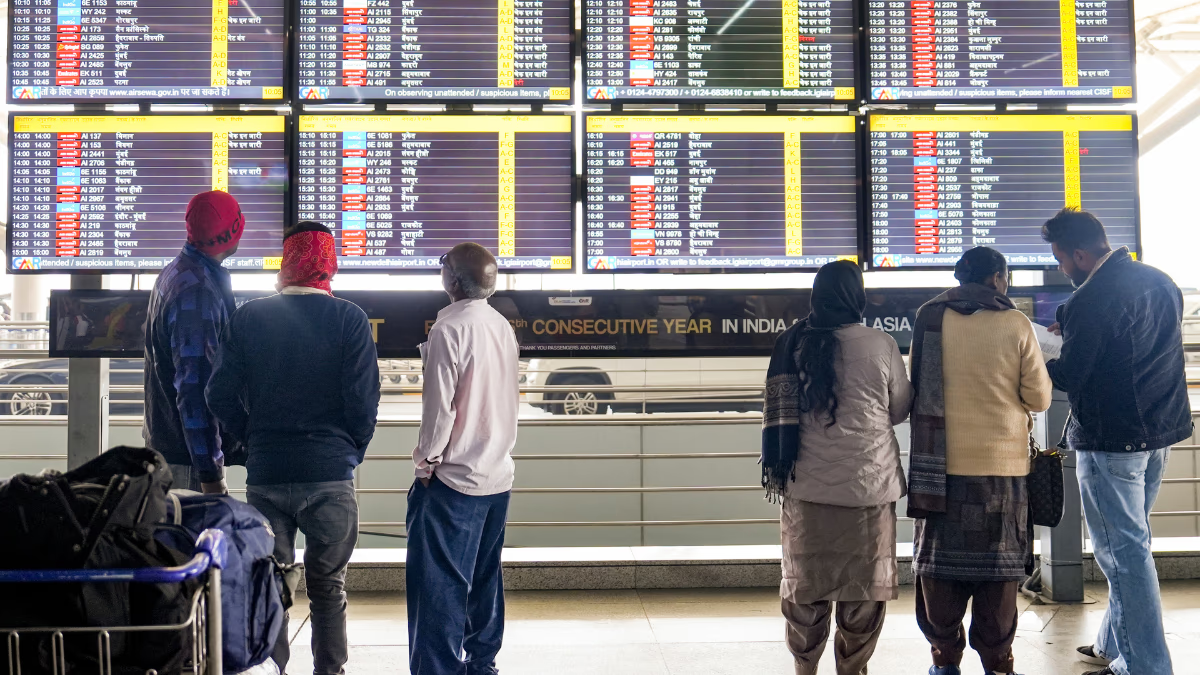
The government has also made a significant decision to regulate airfares. According to the Civil Aviation Ministry, with the continuous flight cancellations, not only has seat availability dropped, but ticket prices have also skyrocketed. On some routes, ticket prices surged to 80,000 to 90,000 rupees.
Now, the government has set the maximum fare limit according to the distance. For flights ranging from 0 to 500 kilometers, fares will not exceed 7,500 rupees. Fares for flights between 500 to 1,000 kilometers will be capped at 12,000 rupees. For 1,000 to 1,500 kilometers, the cap is set at 15,000 rupees, and for flights longer than 1,500 kilometers, the maximum fare is capped at 18,000 rupees.
Also Read:
This means, for a flight like Delhi-Mumbai, which is about 1,300 kilometers, the upper fare limit will be set at 18,000 rupees. This limit will remain in effect until flight operations return to normalcy. However, this rule does not apply to business class and premium flights.
Source: aajtak
The government stated that this fare limit will apply to all booking platforms, whether it's an airline's website or an online travel agent. If any airline violates this rule, immediate action will be taken against it.
Tourism Industry Welcomes the Move but Calls for Permanent Solutions
The Indian tourism industry has welcomed this step but insists that the real issue lies in the system's preparedness. According to Ravi Gosain, leader of the Indian Tour Operators Association, sudden fare hikes break the trust of passengers and harm tour operators.
He believes the government's move is appropriate, but the permanent solution lies in better preparedness, additional flights, and fare transparency. Meanwhile, FAITH board member Anil Kalsi stated that such a fair policy should be implemented permanently to protect passenger rights.
CEO Breaks Silence, Apologizes to Passengers
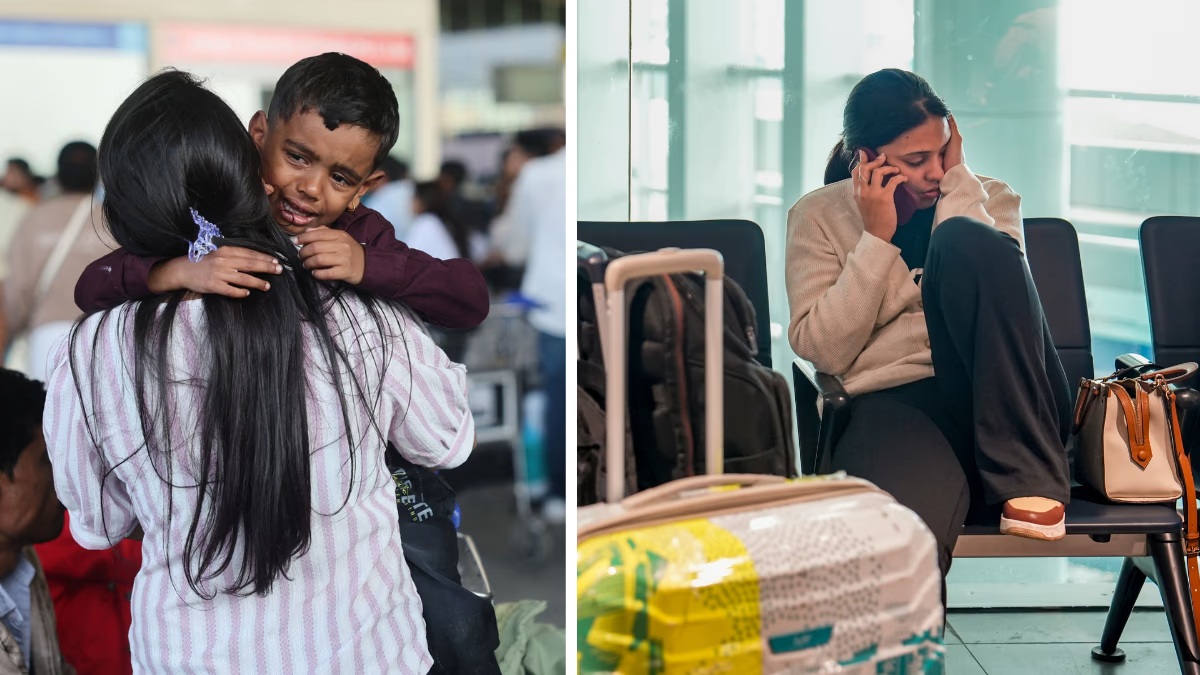
Under growing pressure, IndiGo's CEO, Pieter Elbers, broke his silence after three days and issued a video message apologizing to passengers. He stated that the airline is working towards stabilizing the schedule and minimizing delays. However, passengers continue to wonder if a company of such magnitude did not have a crisis management plan in place ahead of time, and why they weren't informed promptly.
Source: aajtak
DGCA's Relief and Pilots' Protest: New Controversy Unfolds
Addressing the new controversy that has further complicated the crisis, the DGCA, a civil aviation regulator, has granted temporary relief to IndiGo. The night duty timing has been shortened from 12 AM to 6 AM to 12 AM to 5 AM. Additionally, pilots are now allowed to perform six night landings instead of two.
This relief provides operational benefits to IndiGo, as more flights can be operated with fewer pilots. But the pilots' association ALPA India has strongly opposed this move. The association argues that the relief is 'selective and unsafe' and disrupts regulatory balance while impacting passenger safety. They stated that the relief contradicts the court-mandated scientific standards meant to reduce pilot fatigue.
FDTL Rule Controversy Resurfaces, Safety Standards Questioned
This controversy is more severe because, in January 2024, new FDTL (Flight Duty Time Limit) regulations were introduced. These regulations provided more rest, limited night landings, and better work balance for pilots. However, IndiGo was one of the first airlines to resist, claiming they needed more time and additional crew to implement these rules.
Source: aajtak
Now, these rules have been partially relaxed, raising new questions about aviation safety.
Crisis Unveils System Weaknesses, Government Offers First Major Response
Overall, the IndiGo crisis has highlighted several weaknesses within India's aviation industry. Passengers are distressed, the government is under pressure, and regulatory bodies are trying to maintain balance. The next few days will determine whether the airline can stabilize its schedule, whether the fare caps provide relief to passengers, and whether the debate over safety versus operation reaches a concrete conclusion.
Statement from the Civil Aviation Minister - High-Level Investigation Announced
In the midst of the uproar in the country's aviation industry, Civil Aviation Minister Ram Mohan Naidu has openly stated for the first time.
In an exclusive interview with India Today, he mentioned that the government has formed a high-level committee to investigate the entire matter. This committee will find out where and how such a large error occurred and who is responsible. Emphatically stating, “We are taking strict action against this. Anyone found guilty will face consequences.”
Also Read:
Minister Naidu also acknowledged that such an incident with a major airline like IndiGo is incredibly surprising and alarming. He stated, “Think about it, this is the same airline that has provided the best on-time performance in the industry for the past 20 years. They have consistently remained at the top of the on-time performance list. Now, suddenly, the same airline has fallen below its digits. This alone is very alarming.”
He pointed out that the issue at hand is not just an operational mistake but about defining accountability. The government wants to identify and correct any shortcomings revealed within the system, whether it's in scheduling, management, or regulation.