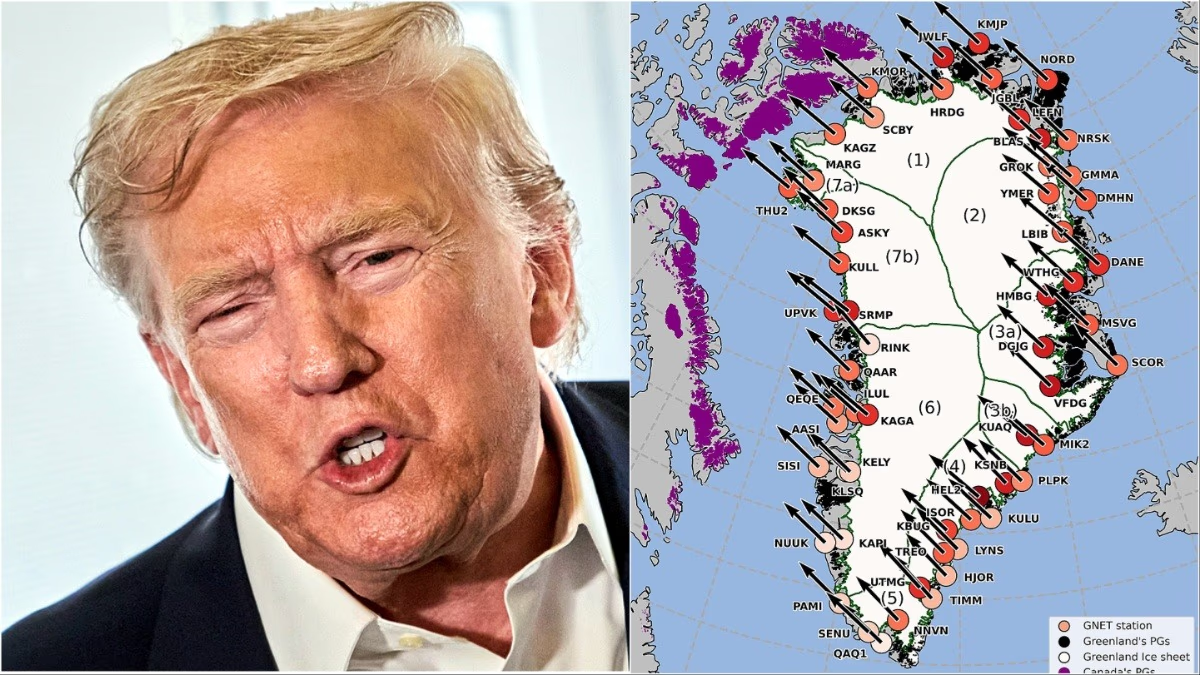
Donald Trump's plans for Greenland have sparked global debate. While time will tell how Trump approaches Greenland, geographically, Greenland is inching closer to the American continent, moving two centimeters annually toward the northwest, indicating its dynamic nature.
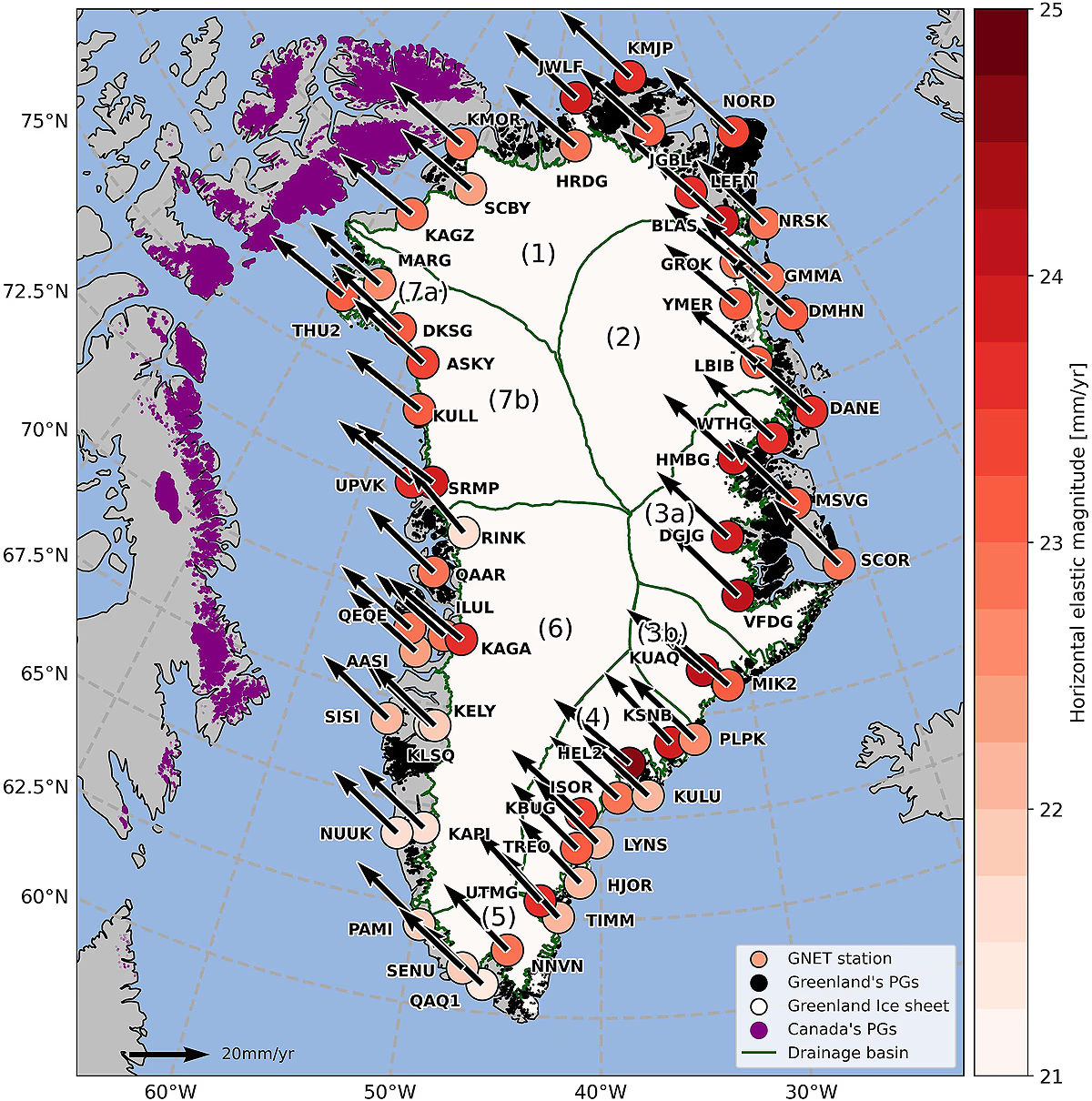
Recent research utilizing ultra-precise GPS data from 58 stations across Greenland reveals the island's yearly two-centimeter lateral shift, differing from typical tectonic movements, caused by melting ice sheets decreasing Earth's load.
Read More:
Due to climate change, reduced ice weight has initiated since the last Ice Age, causing bedrock rebound, expanding some coastal regions and contracting others, effectively reducing Greenland's overall area.
Source: aajtak
What's Happening in Greenland?
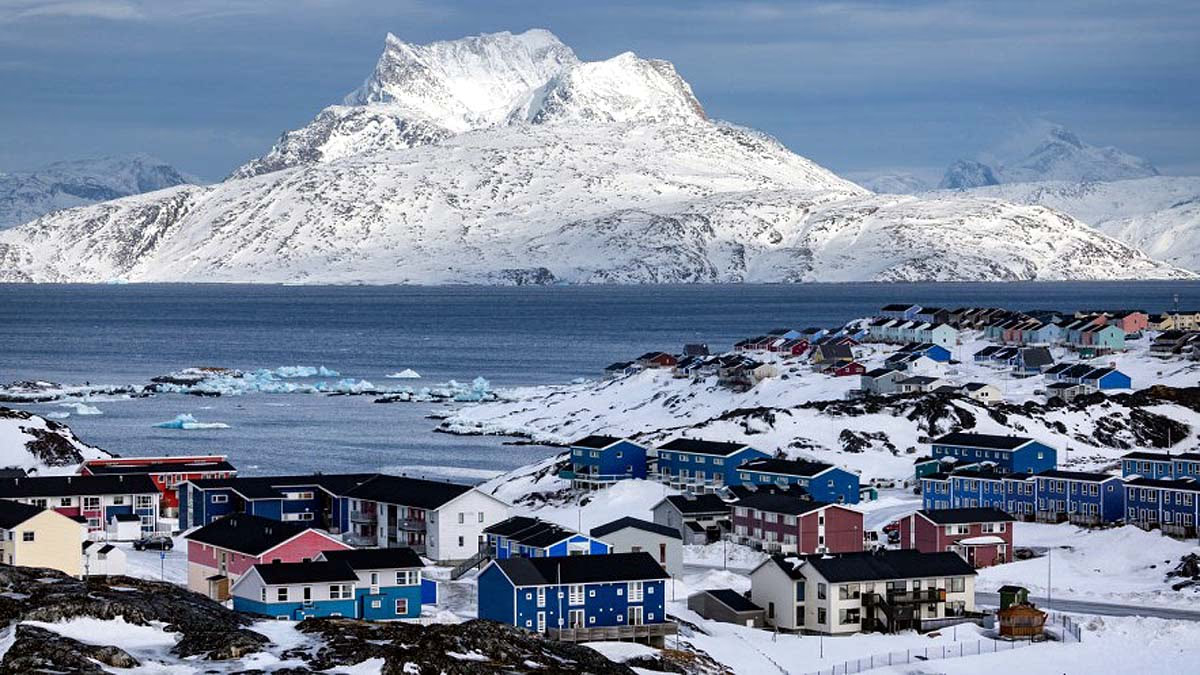
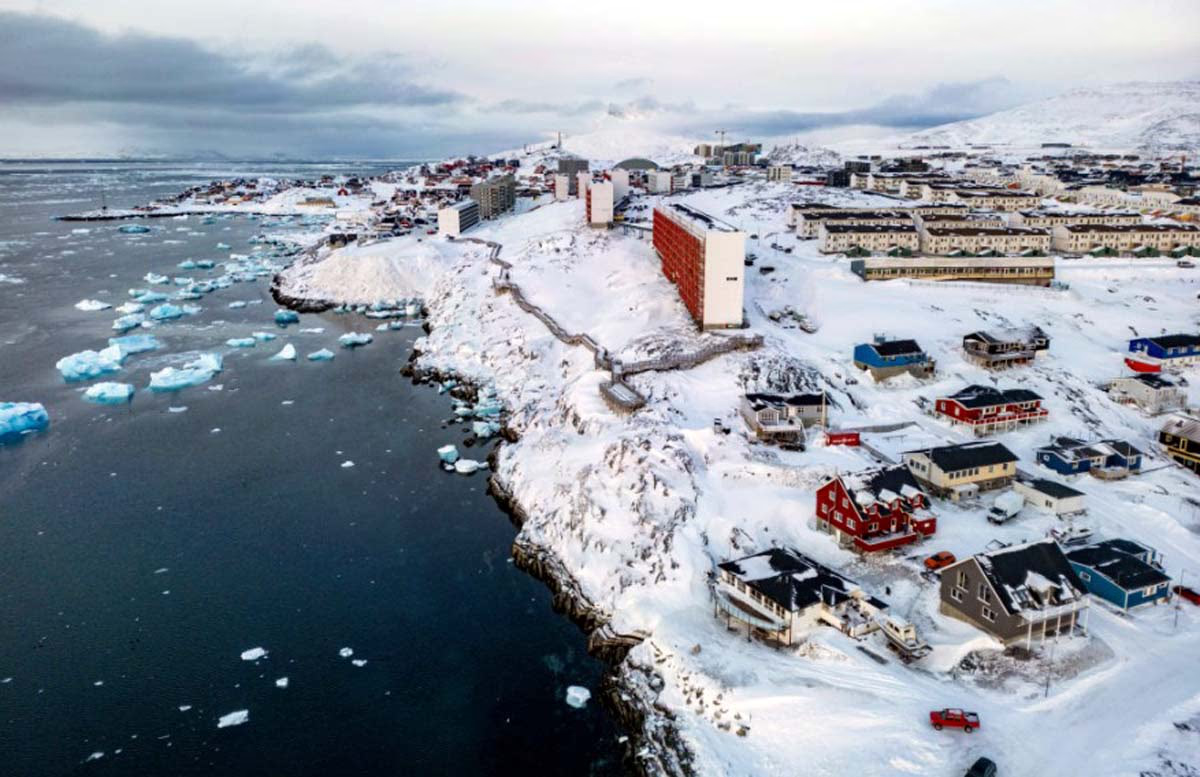
Greenland, the world's largest island in the Arctic, is experiencing rapid glacial melt from climate change. Melting ice decreases its weight, easing pressure below, causing rocks to rebound upward.
This rebound varies, causing expansion in some regions and contraction in others, resulting in a laterally moving island.
Read More:
Researchers have monitored this shift with GPS technology, using satellite assistance for precise positioning. These stations indicate Greenland’s 2cm annual geological movement.
This transformation began post-Ice Age, now accelerated by climate change. The weighty ice then compressed the ground, now releasing unevenly with melting.
Source: aajtak
Why Does This Matter?
These geological changes could significantly impact global infrastructure and climate models. Scientists must recalibrate navigation systems, satellite mapping, and sea-level rise projections due to shifting reference points. For example:
Mapping and Navigation: GPS-reliant maps and systems will adjust for Greenland's changing location, potentially rendering current maps inaccurate.
Sea Level Rise: The melting of ice, plus shifting land, necessitates refined sea-level estimates.
Climate Models: This exemplifies the interplay of ancient geological processes and modern environmental changes.
Lead researcher Dr. Danjal Longforce Berg highlights these measurable changes' indication of rapid Arctic warming, emphasizing that Earth's surface is not immune to a warming planet's impacts.
Source: aajtak
Scientific Foundation and Sources
This
published in 2025, titled Estimation and Attribution of Horizontal Land Motion Measured by the Greenland GNSS Network, appears in the Journal of Geophysical Research: Solid Earth.
Researchers utilized the Greenland GNSS Network, akin to GPS, demonstrating climate change's impact beyond weather, altering Earth's structure.
This revelation urges us to contemplate global ramifications as such vast regions undergo change. Scientists insist on immediate climate action to ward off further transformations.