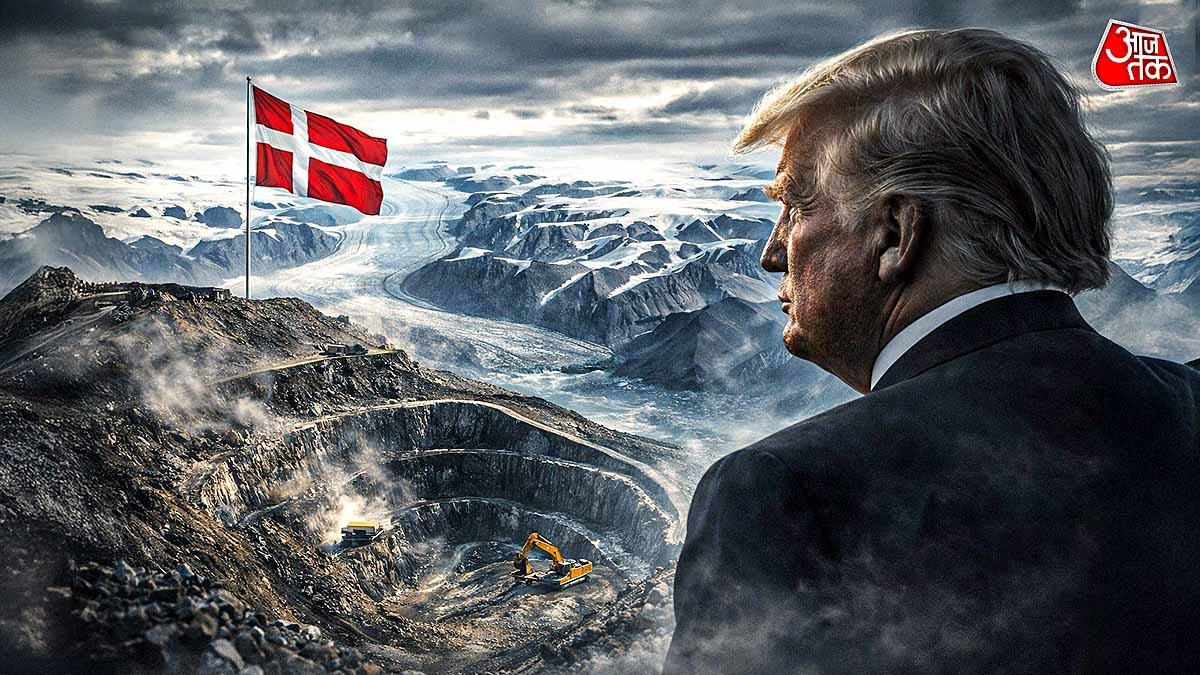
President Donald Trump’s declarations of buying or forcibly acquiring Greenland have once again cast a spotlight on this Arctic isle. Emphasizing its significance to U.S. national security and its mineral wealth, Trump aims to reduce dependency on China. However, experts caution that Greenland's mineral allure is more political rhetoric than reality, posing significant hurdles for mining enterprises.
Trump's Assertions and Greenland's Strategic Relevance
In Trump's narrative, Greenland holds an essential place for America. Why?
Russian and Chinese vessels are increasing in Arctic waters.
The presence of U.S. military base in Greenland (Thule Air Base).
The island, though under Denmark, enjoys autonomy.
Read Also: Can Denmark's 300 Soldiers Defend Greenland from Potential U.S. Aggression? Unveiling the Power Dynamics
Trump hinted at the willingness to use force if necessary, facing Denmark's defense ministry's stance that any foreign assault on Danish territory would permit soldiers to open fire without orders—an assertion highlighted by Berlingske newspaper.
Arguing that Greenland harbors treasures like rare earth elements, base metals, and hydrocarbons which could lessen reliance on China, Trump faces resistance from geological experts dismissing this as largely illusory.
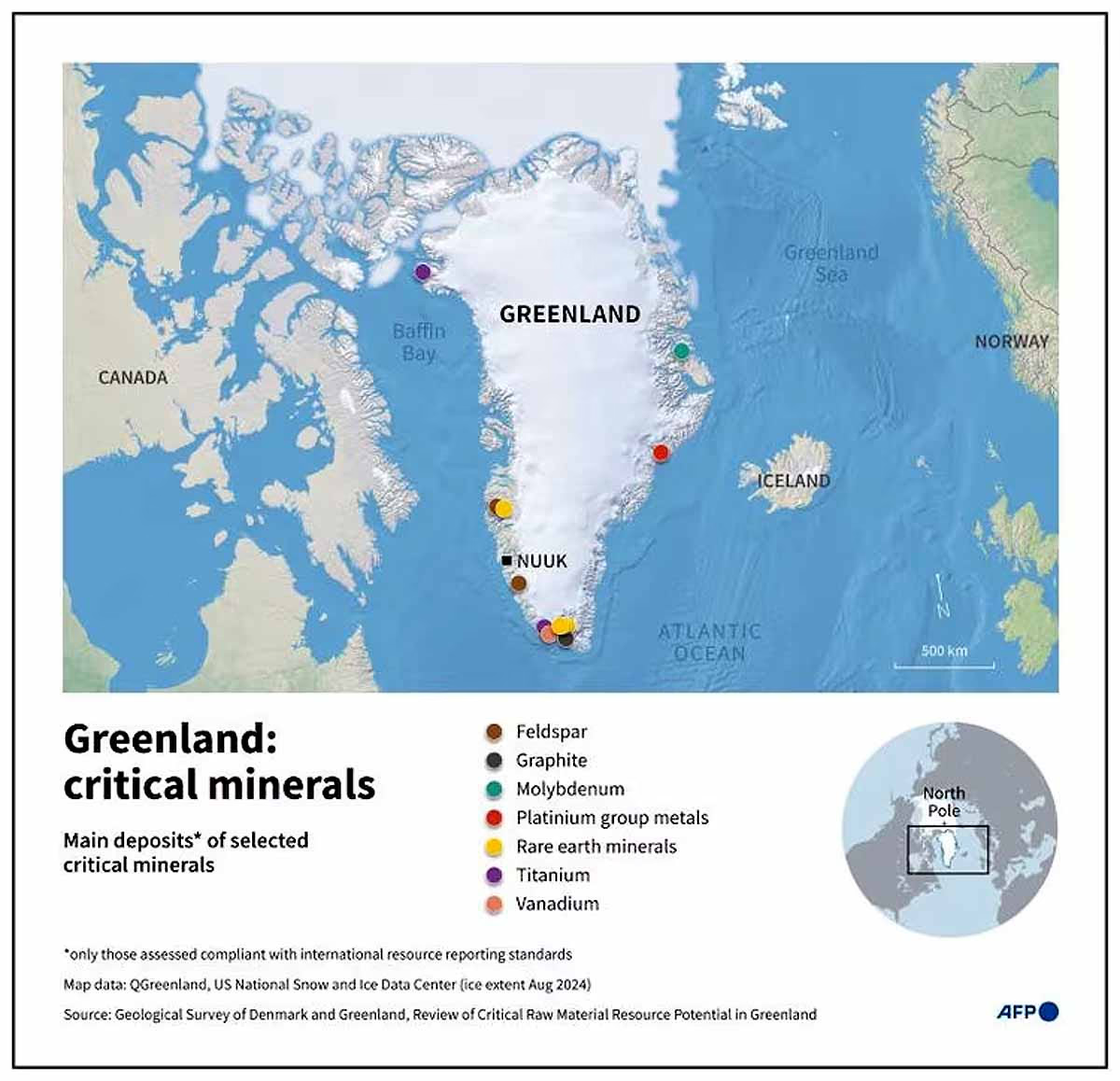
Source: aajtak
What Geological Experts Say
IIT Delhi’s Emeritus Professor and renowned geologist, Prof. K. Seshagiri Rao, contends there's considerable misconception about Greenland’s mineral wealth. Hosting 3.8 billion-year-old rocks akin to India's Dharwar craton, Aravalli Range, and Cuddapah Basin, Greenland indeed harbors potential. However, tangible mineral evidence remains scarce, necessitating 2-5 years of geophysical and technical assessments for validation.
Why Mining is a Miner’s Nightmare?
Despite mineral presence, Arctic conditions render mining nearly unfeasible.
Permafrost:
Predominantly frozen ground, drilling becomes arduously challenging, compromising foundations and escalating costs.
The Barbaric Cold:
With temperatures plunging to -40 to -50 degrees Celsius, metals weaken. Specialized alloys and heating are indispensable, causing fuel and lubricants to solidify.
Darkness and Extended Nights:
Winters experience months-long sunless spans, requiring round-the-clock floodlight operations, heightening accident risks and decelerating work pace.
Logistics Dilemma:
Absence of roads or rail necessitates helicopter, small aircraft, or seasonal vessel transportation.
Limited Shipping Window:
Only 2-3 months permit vessel access, a single storm jeopardizing an entire year’s output.
Post-extraction processing mandates exporting minerals due to Greenland’s lack of smelting facilities.
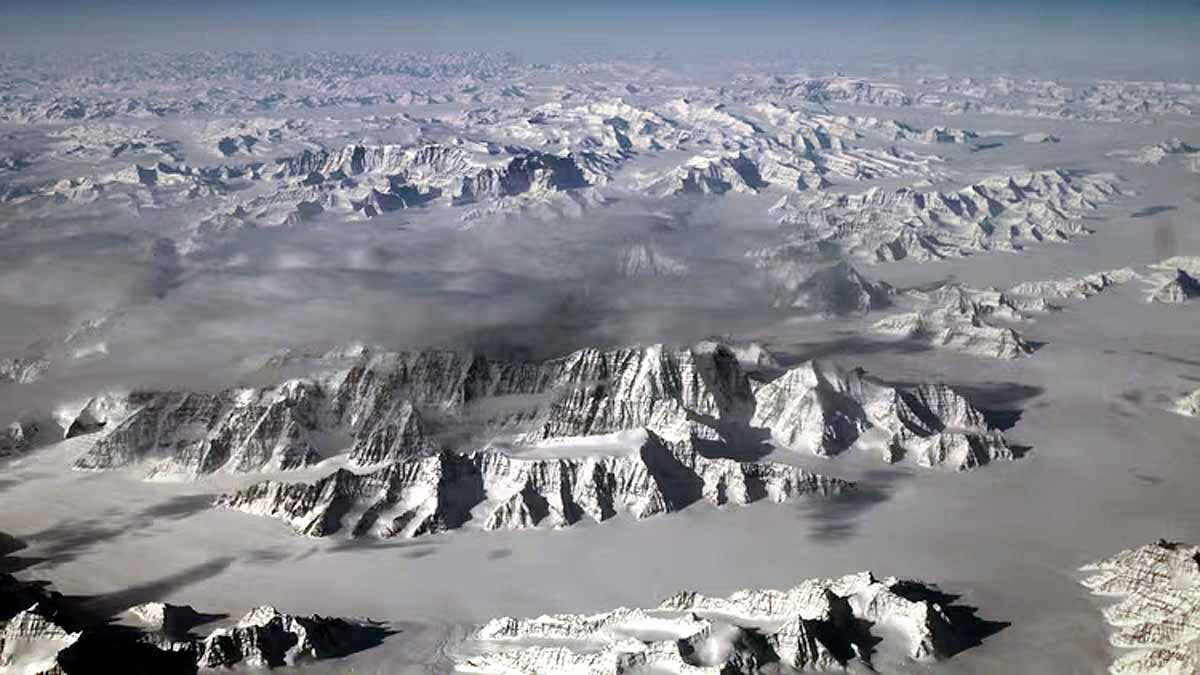
Source: aajtak
Time and Risk:
The journey from exploration to production spans 10-15 years, risking investor losses if prices drop during this period.
Case in Point:
The Citron Fjord Zinc-Lead Project—among the largest undeveloped zinc deposits sitting at 83° N and 2100 km from Nuuk. A single storm threatens the entire operations plan.
Climate Change Provides No Respite
Some posit global warming will thaw ice, facilitating mining. Yet, experts argue permafrost thawing damages infrastructure, worsening conditions and inflating expenses.
Dreams vs. Reality
Trump's vision of Greenland's mineral potential appears enticing, yet geological and mining specialists label it as miners' nightmare due to scant proven minerals. Arctic obstacles loom large, relegating large-scale mining to an enduring ambition. The true strength of Greenland lies in its strategic position amidst rising Arctic geopolitical tensions, not in readily extractable minerals.