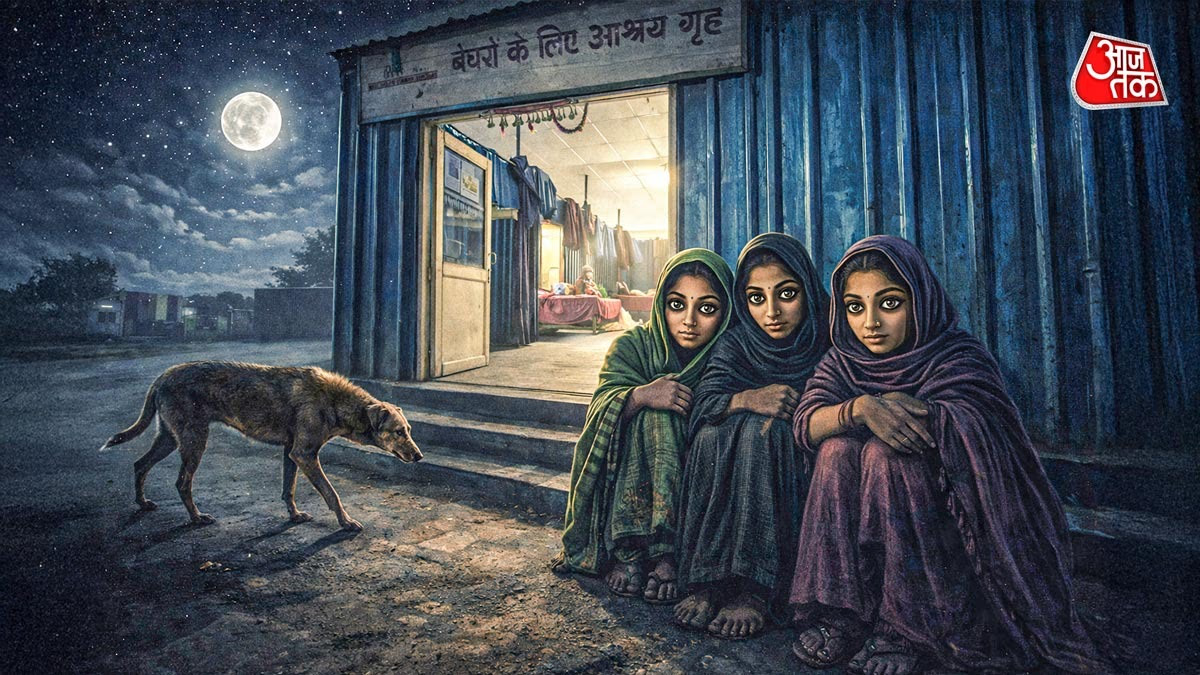
In winter, Delhi splits into two distinct worlds. One part is for whom the cold signifies a display of Kashmiri attire and Pashmina shawls, where debates on pollution happen amidst heaters and soft quilts. The other part is the complete opposite. Homeless. And worse, women. Their struggles are not to shield themselves from smoke but from assault. They don't flaunt pricey clothes in winter, their priority is just to barely cover themselves. Healthy soups are not their craving; a full meal is their primary goal.
aajtak.in spoke to these women who sleep near flyovers, temples, and mosques. Kumuda (identity concealed) is one such face.
She says, 'I once had a home. When seasons changed, I would sun-dry pickles and papad and struggle to keep them away from monkeys and crows. Time changed. Now, saving myself every night is a big deal.'
Sarai Kale Khan! Residents of South East Delhi often pass through here. From the Nizamuddin railway station to the metro's pink line are here. During the Mughal era, Sarai Kale Khan was a rest stop for royal caravans and faraway travelers.
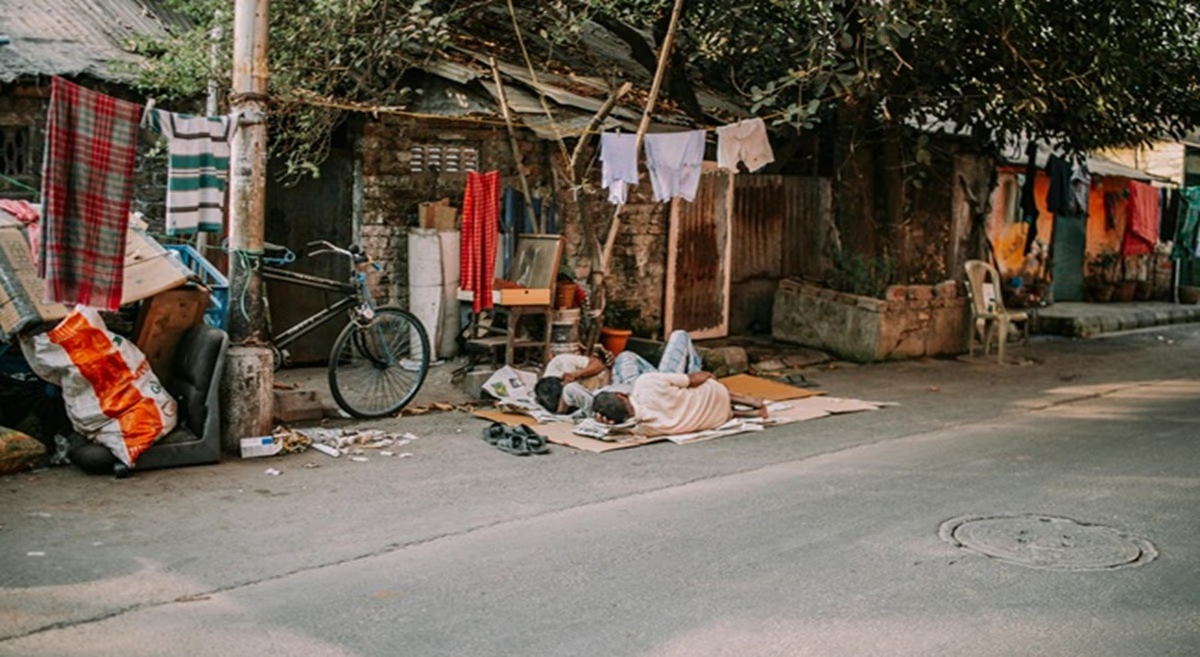
The empire vanished, but its essence remains. In 2024, this place was renamed to honor tribal leader Birsa Munda. Sarai Kale Khan still shelters hundreds, but now it's the homeless who replace travelers, for whom the roads are the inns.
When you meet these people, they are happy to talk. They even pose for photos. They just can’t invite you into their homes.
Having spent most of her life on cold, bare roads, Kumuda is among them. This woman from Mahoba spent her early days in Delhi living on the street.
Source: aajtak
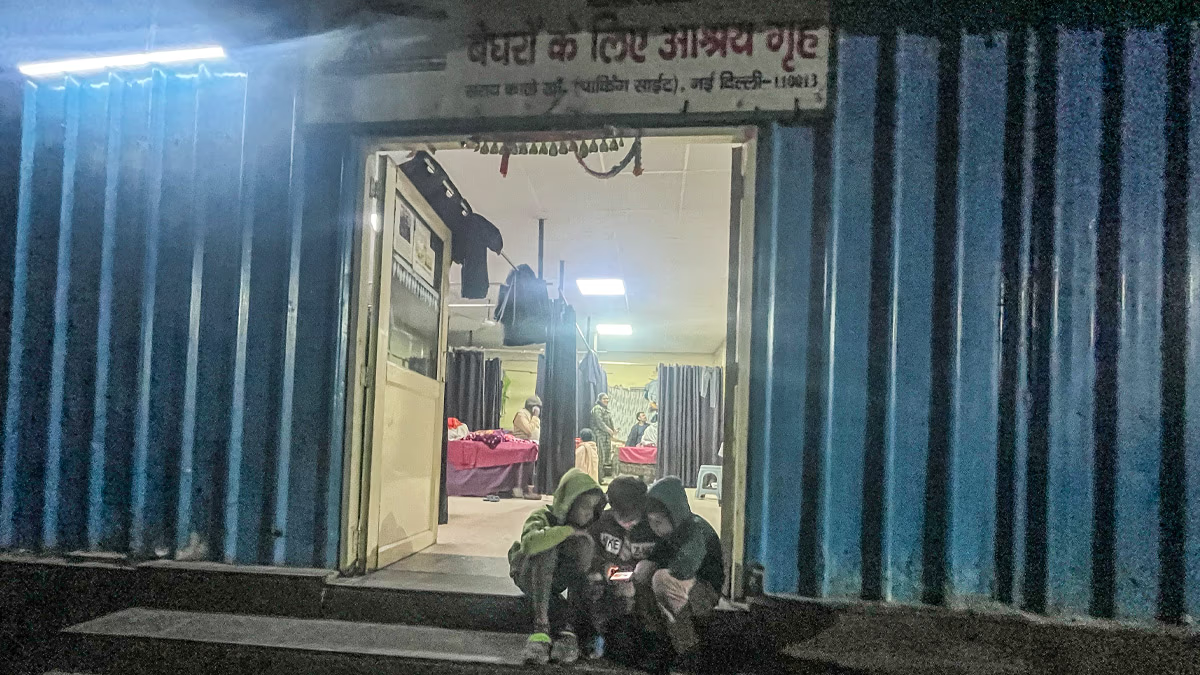
A Shelter for the Homeless! The entrance doesn't display a fancy nameplate like 'Kumuda Mansion' or 'Kumudini'. It's simply called a shelter on a grey-and-white board.
The large circular campus has several rectangular homes made of cement and asbestos. Some are for men, others for women and children. One section is reserved for families.
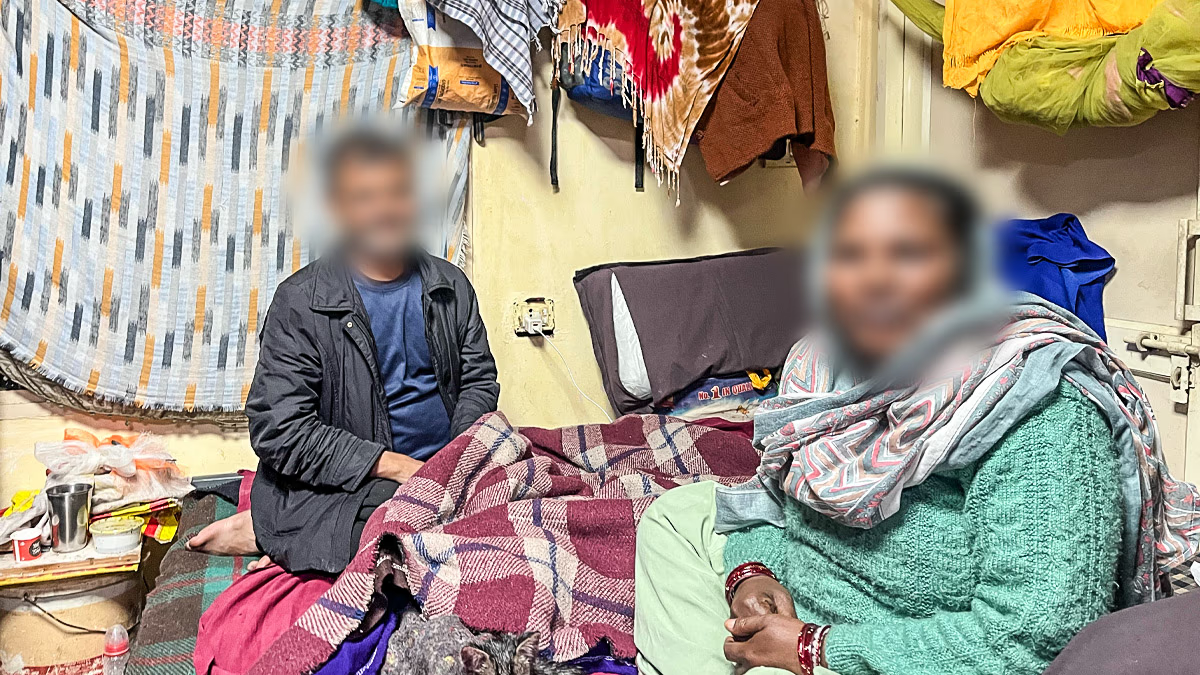
Kumuda lives here with her husband. With long and dark slate curtains, an eight-by-eight section is divided. Here, you can make a bed, decorate the remaining corner, or stack a bundle of clothes. This is both the drawing room and bedroom. There's no kitchen in this home. Cooking was banned after a fire incident at a shelter home sometime ago.
She whispers as she takes us outside. Her husband is ill, making it difficult to talk properly. We're seated in a locked computer room she unlocks for us.
This is where Kumuda from Mahoba reveals herself to us.
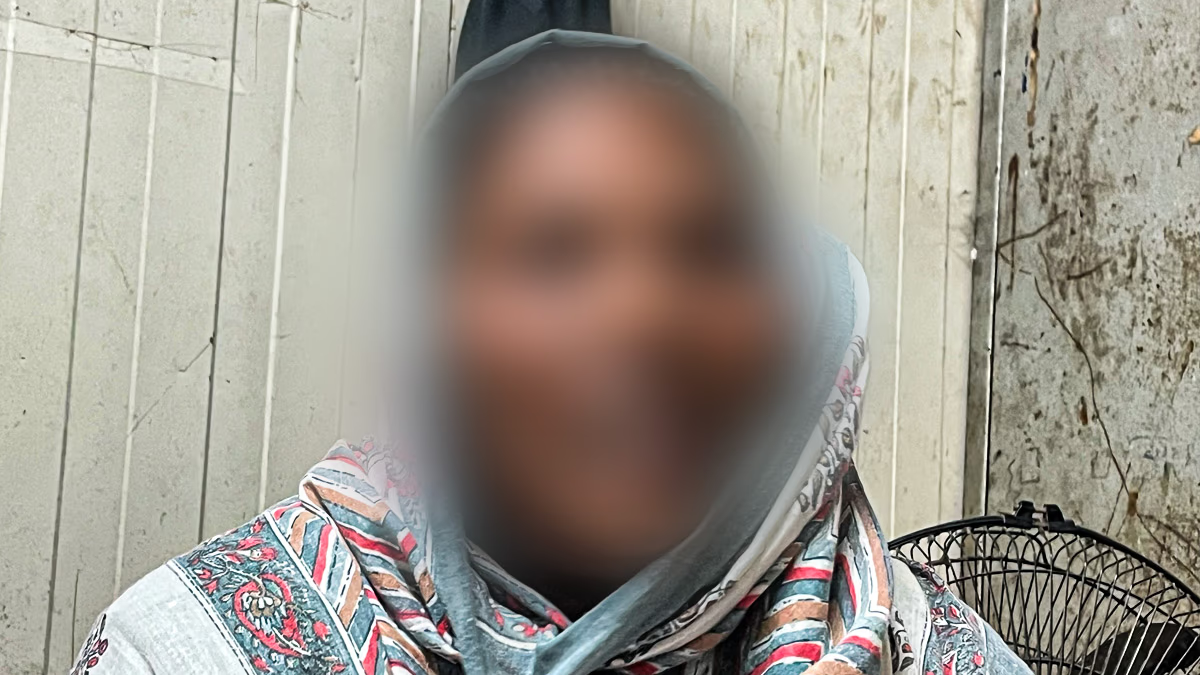
The woman who wore sarees in the village learned to wear salwar-kurti in the city, but not in the modern way; hers are stitched at the edges with wide hems. A dupatta on her head resembles a long-lost cousin of a saree’s end. Her toes bear worn-out rings. This is the only jewelry left with Kumuda, the housewife. The corners of her lips carry the faded tint of once-chewed expensive betel leaves.
She reminisces – We too had a home once. Celebrated festivals. Made seasonal treats. Did everything housewives do. My husband fell ill. He was treated in Mahoba first. As his health didn't improve, we visited many cities. Though he recovered, our home was sold in the process.
Many from our vicinity went to Delhi. Seeing them, we decided too. Thought we'd earn here and gradually save capital.
Did you ever work outside?
I told you. I was a homemaker. I knew all house chores. You name a dish, and I could cook it. Could stitch any clothing. We believed if we both tried, we’d make it. Didn't know we’d see such days.
We arrived with clothes in a bag. Had nothing to cover or spread. Once upon a time, I fed the whole locality my handmade food. Here, we ate hotel food by the roadside. There, we grew tomatoes and chilies. Even some fruits and flowers. Here, we live amidst vehicle smoke and noise. But real trouble began at night.
Source: aajtak
When the world goes to sleep, we take turns staying awake.
When he slept, I stayed awake. When I slept, he guarded. Had nothing precious, just dignity. Though the home was gone, I was still a respectful homemaker. One day, we both dozed off. That night haunts me every night.
Having made Nizamuddin Shelter Home her abode, Kumuda whispers – We both were sleeping. Others were around, all laborers. Suddenly, a bus driver came, lifted me – Come, come, all laborers left. Get up, board the bus. He held my hand. Groggy, I blindly followed. My husband lay beside, deeply asleep.
I'd walked a few steps when someone called out to my husband. He came rushing, and the bus driver let go and fled.
Without thinking, my husband slapped me instantly. I had woken up. I cried all night. Went to work the next day; my eyes burned. Days passed. First, the eyes burned, then headaches followed. I dozed off while working. Dropped items while laboring. Many times, I was let go. Felt hurt, ashamed like we were barely waking children, yet sleep and death await no time!
Did you find anything about the person taking you?
Yes. He was a bus driver. We didn't have a police report. They didn’t write one. Just advised us to always sleep in big groups and take turns weekly. While sleep may be less, women will remain safe.
Source: aajtak
While in Mahoba, we planned to move to Delhi, nervous yet eager. I would see a big city. Explore. Taste city food. Learn its speech. It would take effort but if not today, tomorrow, things would change. Didn't foresee these days coming.
Never got complete sleep for months. Never were carefree. Fear of theft wasn't the concern; people would cling.
Countless times, someone came and slept beside me. If I admonished, they’d argue, saying I didn't own the place! Wherever we went, the same story. Then we found out about the shelter and moved here. We've been here for almost 12 years.
Now you get full sleep?
Yes. But I miss our simple home. I wish to return, but there's no home left. Where do I sit at someone's threshold? When it becomes unbearable, I visit my sister's house. Although a guest, it feels good to have a roof for a few days. Couldn't visit since the lockdown.
Why?
Can't gather enough money. He can't work. I get occasional work in big houses. Can’t visit, nor bring her here. We ourselves are in a shelter. The village folks will talk if I bring my sister here. Village customs are different. They weren't pleased even after we sold our house.
In a long conversation, Kumuda gets tired. Age is catching up – she says!
How old are you!
I'm forty. She mentions, like life’s main part is over. At an age city folks call 'Young 40s,' she's lived many lives.
We return to Kumuda's home. The corner space in the Rains Shelter earned due to seniority.
Metal roof. Bed draped with curtains like an AC train coach. Walls adorned with God’s paintings. One corner blackened by incense smoke. Utensils limited to a glass. A side table beside the bed shows stale tea stains.
Kumuda’s husband sits there. Smiling on meeting, a polite smile invites us to sit in the bed-cum-drawing room. Nearby, a kitten plays. That’s their family. As she pets it, Kumuda says – I'll raise it big. Having children is not possible now.
During our chat, many rats scurry past, like they’re on an evening walk. Invisible to everyone but me, as if they have rat filters on.
While leaving through the curtains, I ask - Is it joyful living here with your husband?
The curtain is up now. Earlier, everything was open. For years, we lived like brother and sister. Not even accidentally holding hands. Inside, there was a storm, but we stayed distant. Then years passed. Now sometimes, something happens every six months, but it's not safe either. Curtains barely hide or stop anything!
A nearby woman agrees, sneezing is audible here-to-there. How's a marital relationship possible? Plus, kids are here. Most forgo out of modesty.
Kumuda, now in her 40s, disinterestedly says – What desires, what wishes now… From home to road, a woman is but a skeleton. She will breathe. Eat. And die. Between these blue-black curtains and government-issued blankets and beds.
Source: aajtak
Speaking, old betel-stained lips now appear cracked and dry as if smiling would ooze a brownish blood.