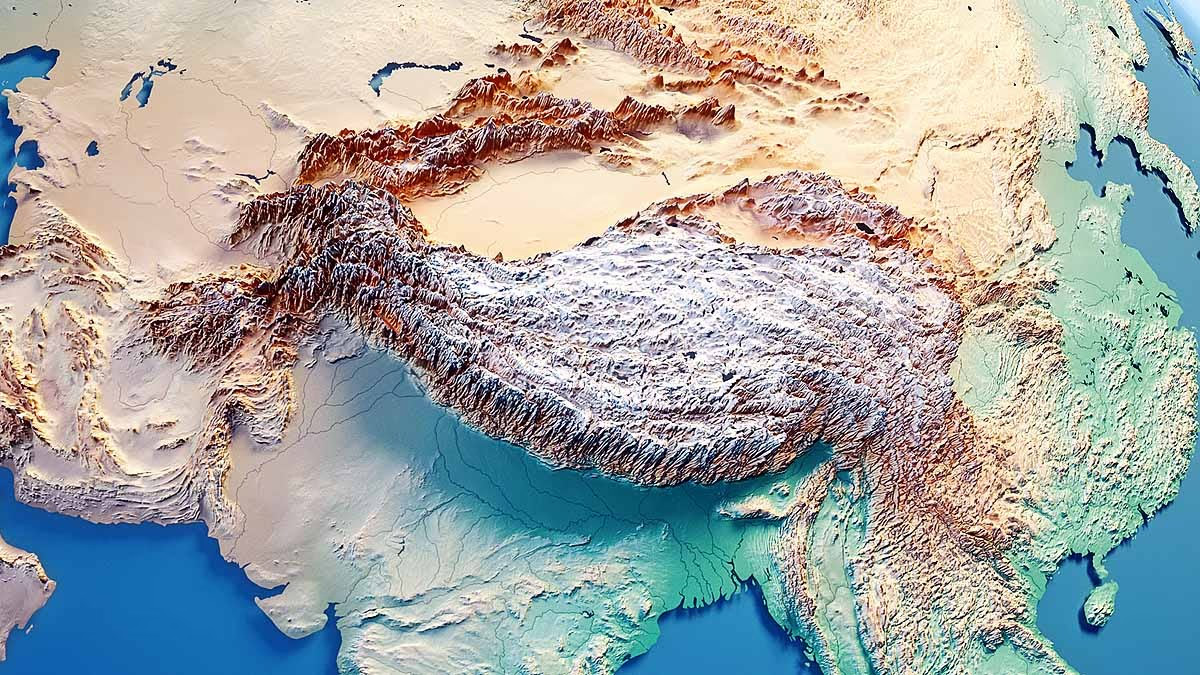
The warning of a megaquake in Japan has captured global attention. Situated along the Pacific Ring of Fire, Japan is perpetually on watch for significant seismic activity. This news has now sparked concern in India, with questions looming: Is a 'Great Himalayan Earthquake' imminent? Scientists affirm there's no reason to panic, yet underline the necessity of readiness. Let's delve into the unfolding story.
Beneath the Himalayas lies a significant fault line known as the 'Main Himalayan Thrust.' Here, the Indian tectonic plate is subtly subducting beneath the Eurasian plate, accumulating pressure for centuries. A swift discharge of this tension could trigger an earthquake with a magnitude of 8 or greater.
Also Read: 'Toxic Cocktail' of Pollution Impending in Delhi-NCR; Five New Threats Loom
Such a quake could wreak havoc across Northern India, Nepal, and neighboring territories. Millions could be impacted, with landslides and building collapses posing dire threats. The Himalayas host dense populations and frail structures, amplifying potential damages.
The 1934 Bihar-Nepal Earthquake (Magnitude 8.0) – Thousands perished.
The 2015 Nepal Earthquake (Magnitude 7.8) – Over 9,000 fatalities.
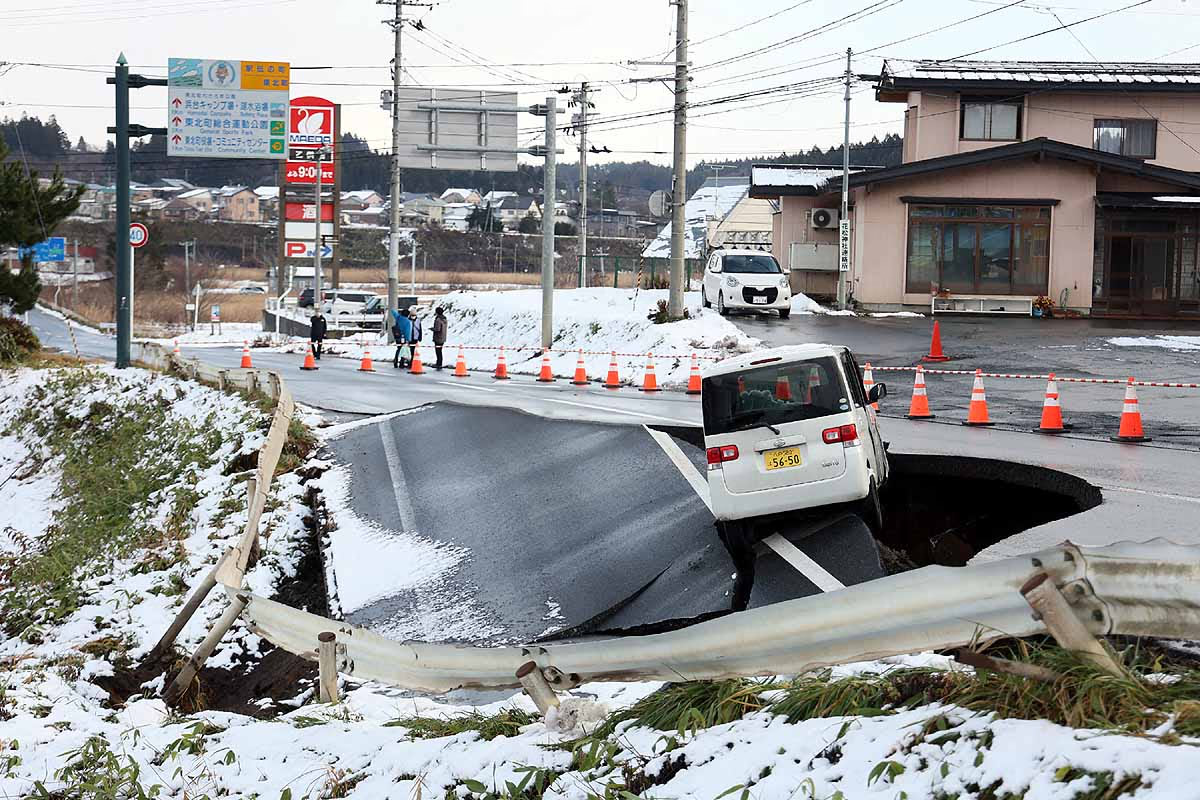
Source: aajtak
Recently, Japan issued a stark warning of a possible megaquake along the Nankai Trough. This announcement has rekindled memories of the Himalayas. While both regions are earthquake-prone due to tectonic confrontations, the conditions in India and Japan differ.
Dr. Om Prakash Mishra, Director of the National Center for Seismology, reassures that the Himalayas are currently functioning as a safeguard. Minor quakes (Magnitude 2.5-3.5) routinely occur, gradually alleviating built-up pressure. Though these tremors cause minimal harm, they avert more significant seismic events, lessening concerns about a 'Great Himalayan Earthquake' in the immediate future.
Also Read: New Earthquake Map Alarms... Heightened Risk Over Delhi-NCR, Dehradun-Rishikesh
This process is termed 'aseismic creep'—the release of pressure without a major quake. Scientists purport that the Himalayas now serve as a 'safety valve.' However, the long-term risk endures as tectonic activity persists, potentially accumulating substantial pressure unexpectedly.
The Indian government has recently overhauled the earthquake zoning map. The Bureau of Indian Standards (BIS) has reclassified the Himalayas within the highest-risk zone, 'Zone VI,' in their updated seismic design codes—the most significant change in decades.
Approximately 61% of India now lies within a medium-to-high earthquake risk zone, with areas such as Uttarakhand, Himachal, Jammu & Kashmir, the North-East, and Gujarat being most susceptible. Hence, future constructions need to adhere to robust, earthquake-resistant guidelines.
Also Read: Multiple Quakes in Japan Over 24 Hours, Largest at Magnitude 6.8... Tsunami Warning Issued
Continuous Monitoring: Seismographs installed throughout the Himalayas.
Early Warning Systems: Innovations for advance alerts by seconds.
Public Awareness: Educating communities on earthquake preparedness.
Enhanced Building Codes: Necessitating earthquake-resilient constructions.
Japan’s warning should serve as a lesson, yet there are no signs of an imminent major earthquake in India. Minor quakes play a constructive role in deferring greater threats. Nevertheless, nature's playbook remains elusive. Scientists emphasize that risk never ceases, but preparation can mitigate potential damages.