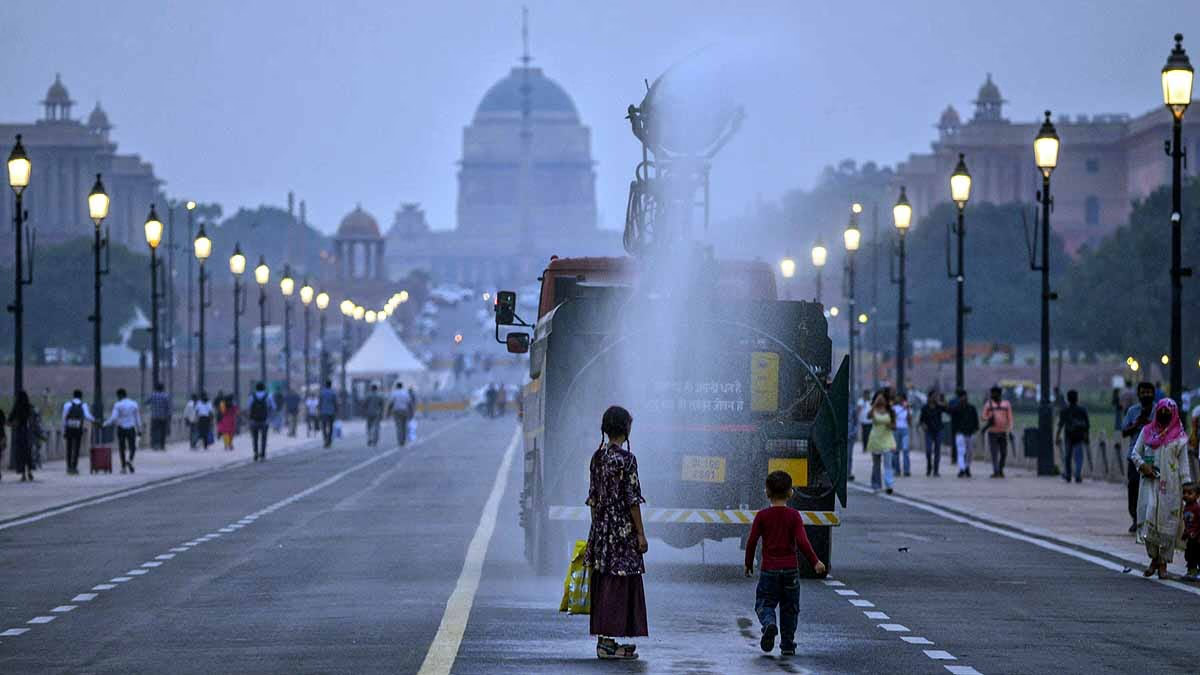
Delhi-NCR's pollution, which began in October this year, has extended into December. Air quality has lingered in a 'very poor' to 'severe' range persistently, despite minimal contribution from stubble burning. The Center for Science and Environment (CSE) in its report 'Toxic Cocktail of Pollution During Early Winter in Delhi-NCR' has highlighted that local sources of pollution are now the primary culprits.
According to the report, levels of PM2.5 accompanied by Nitrogen Dioxide (NO2) and Carbon Monoxide (CO) have escalated, forming a toxic cocktail. Experts agree that small-scale measures are ineffective; impactful changes in vehicle emissions, industry, and power plants are crucial.
Discover More: A Flower Garland in the Cosmos: James Webb Uncovers Cluster of 20 Galaxies
Analyzing trends between October and November (up to November 15), based on data from the Central Pollution Control Board (CPCB), the report identifies five new threats explained through scientific insights.
This season, pollution spanned over 80 days from October to December, when traditionally it persisted only till November. Throughout November, the AQI was consistently very poor to severe.
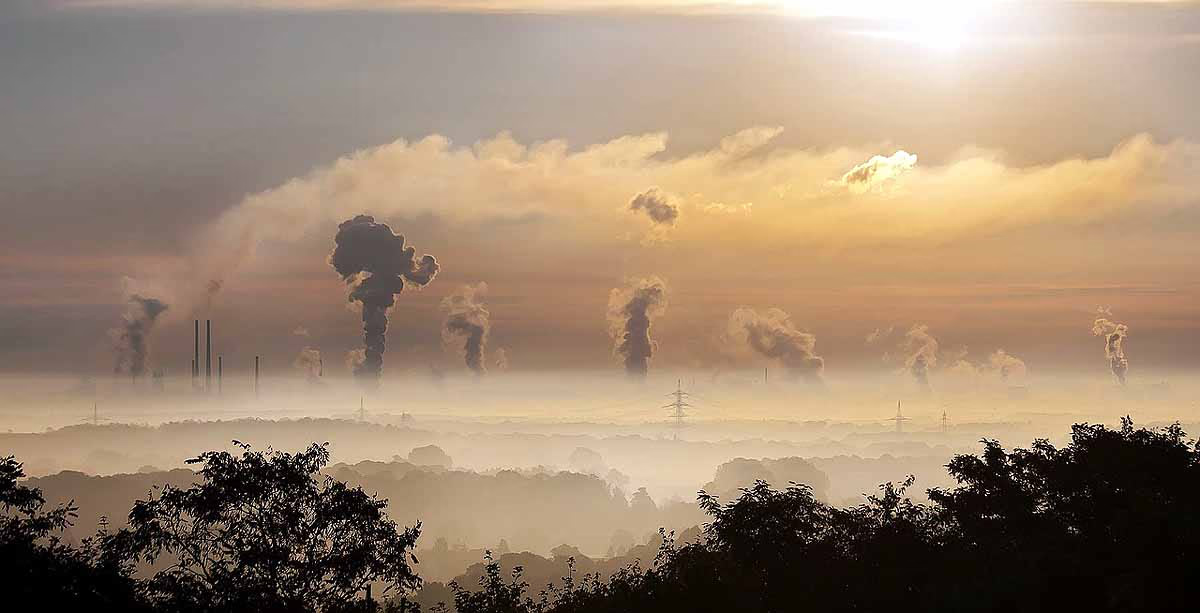
Source: aajtak
Scientific Fact: The average PM2.5 level is 9% lower than last year, but unchanged from the three-year average, hovering around 100 micrograms per cubic meter (µg/m³). Peak levels slightly reduced, yet daily averages remain hazardous.
Reason: The winter boundary layer becomes shallow, trapping pollutants. Emissions from vehicles rise in the mornings (7-10 AM) and evenings (6-9 PM), leading to a rapid increase in PM2.5.
CSE's Anumita Roychowdhury notes this trend illustrates the decreasing influence of weather reliance, stressing the need for local source control.
From just 13 hotspots in 2018 to several newly emerged ones, Jahangirpuri records an annual PM2.5 average of 119 µg/m³, followed by Bawana and Wazirpur at 113 µg/m³. Emerging hotspots include Vivek Vihar (101 µg/m³), Nehru Nagar, Alipur, Siri Fort, Dwarka Sector-8, and Patparganj all exceeding 90 µg/m³.
Scientific Fact: These areas not only surpass standards but also the city average in pollution. Northern and Eastern Delhi are most affected.
Reason: Traffic, industry, construction, and waste burning increase dust and gases. The report highlights these hotspots as becoming permanent, persisting over four years.
Discover More: Army Capabilities of Thailand and Cambodia: A Comparison of Military Equipment
Due to floods in Punjab and Haryana, incidents of stubble burning were considerably reduced. During October-November, its contribution mostly remained below 5%, with a few spikes between 5-15% and peaking at 22% on November 12-13.
Scientific Fact: PM2.5 affected AQI over 34 days, PM10 over 25 days, and ozone over 13 days. Yet, the air remained polluted, indicating local sources are culpable.
Reason: Vehicles (diesel increases NO2 and CO), industry, power plants, waste burning, and domestic fuel usage. The CSE report mentions stubble reduction curtailed peak spikes, but average levels remained dangerously high.
Scientific Fact: NO2 and PM2.5 levels surge simultaneously during mornings and evenings due to traffic emissions. CO exceeded the 8-hour standard (2 mg/m³) over 30 days at 22 stations. In Dwarka Sector-8, it persisted for 55 days, with Jahangirpuri and North Campus recording 50 days each.
Reason: Vehicle emissions become trapped during winter, damaging lungs, blood, and heart. The report cautions that this cocktail makes breathing even more hazardous.
Scientific Fact: The entire region behaves like a uniform air shed, dispersing pollution. Smaller towns face more frequent smog episodes.
Reason: Delhi's pollution travels with the wind, plus local traffic and industry. Long-term trends show PM2.5 steady from 2022, with a 2024 annual average of 104.7 µg/m³, showing no improvement.
Implement GRAP rules strictly, especially on vehicles and dust.
Enhance CO and NO2 monitoring.
Vehicles: Mandate electric transition for all vehicles, scrap outdated vehicles. Expand public transport, promote cycling and walking. Implement parking caps and congestion taxes.
Industries: Shift to affordable clean fuels (natural gas), reduce taxes. Electrify processes, enforce strict emission controls.
Waste: Stop burning – segregate waste, rectify existing waste issues, promote recycling.
Power Plants: Comply with emission standards.
Construction: Recycle waste, control dust, ensure smart year-round monitoring.
Domestic: Provide clean fuels for cooking and heating.
Stubble: Incorporate into soil or generate ethanol gas through bio-methanation to boost farmers' income.
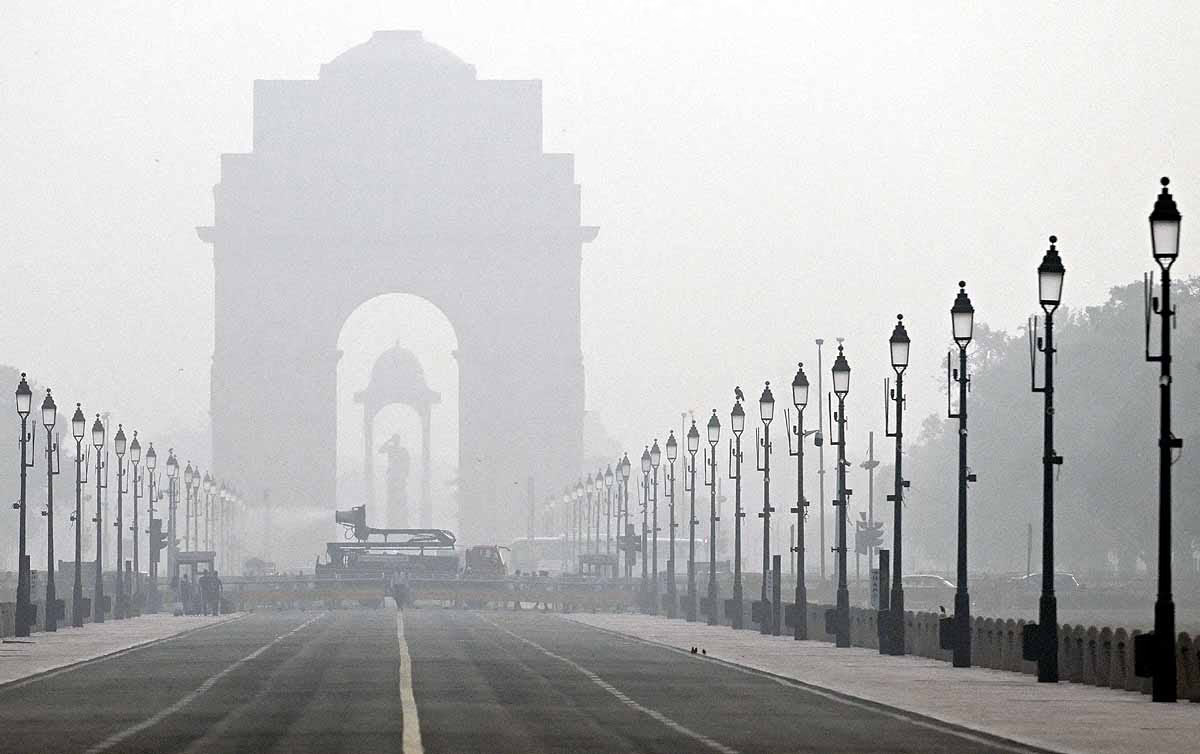
Source: aajtak
All eyes are on PM2.5, but levels of NO2 and CO are also rising, creating a toxic cocktail.
Scientific Fact: NO2 and PM2.5 levels surge simultaneously during mornings and evenings due to traffic emissions. CO exceeded the 8-hour standard (2 mg/m³) over 30 days at 22 stations. In Dwarka Sector-8, it persisted for 55 days, with Jahangirpuri and North Campus recording 50 days each.
Reason: Vehicle emissions become trapped during winter, damaging lungs, blood, and heart. The report cautions that this cocktail makes breathing even more hazardous.
Small towns in NCR like Bahadurgarh, Panipat, and Rohtak are now as polluted as, or more than, Delhi. From November 9-18, Bahadurgarh experienced smog for 10 consecutive days.
Scientific Fact: The entire region behaves like a uniform air shed, dispersing pollution. Smaller towns face more frequent smog episodes.
Reason: Delhi's pollution travels with the wind, plus local traffic and industry. Long-term trends show PM2.5 steady from 2022, with a 2024 annual average of 104.7 µg/m³, showing no improvement.
Discover More: India's New 'Sky Hunter' Ready for Deployment... The Falcon Drone to Join Forces Soon
The CSE report indicates pollution has stabilized at a high level, suggesting a 'Leapfrog Strategy' is needed. We are at an inflection point – either cut emissions or face upward trends.
Implement GRAP rules strictly, especially on vehicles and dust.
Enhance CO and NO2 monitoring.
Vehicles: Mandate electric transition for all vehicles, scrap outdated vehicles. Expand public transport, promote cycling and walking. Implement parking caps and congestion taxes.
Industries: Shift to affordable clean fuels (natural gas), reduce taxes. Electrify processes, enforce strict emission controls.
Waste: Stop burning – segregate waste, rectify existing waste issues, promote recycling.
Power Plants: Comply with emission standards.
Construction: Recycle waste, control dust, ensure smart year-round monitoring.
Domestic: Provide clean fuels for cooking and heating.
Stubble: Incorporate into soil or generate ethanol gas through bio-methanation to boost farmers' income.