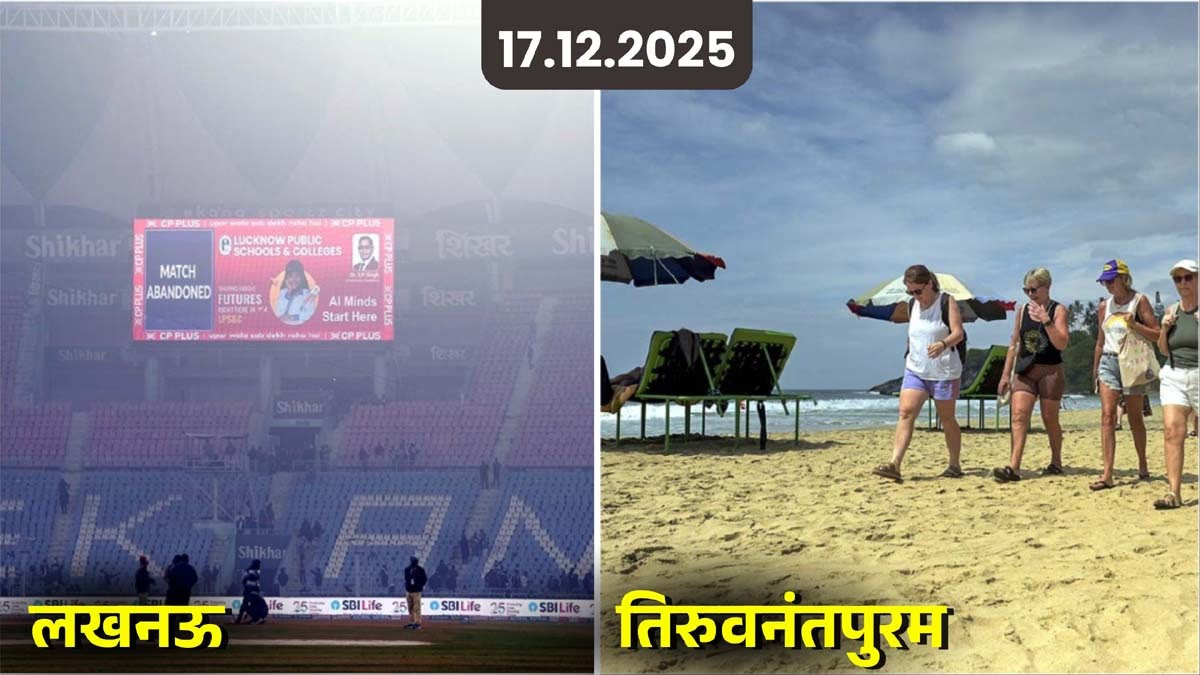
The much-anticipated fourth T20 match between India and South Africa at Lucknow's Ekana Stadium couldn't be played due to thick fog and smog. This cancellation left cricket fans deeply disappointed. This incident prompted Congress leader and former minister Shashi Tharoor to comment humorously on social media.
Tharoor stated, 'Cricket fans awaiting the start of the #INDVSSA match in Lucknow are having a pointless watch. With a dense smog-shrouded northern India and AQI reaching 411, visibility is too poor for cricket. A match in Thiruvananthapuram could have solved this, where AQI is just 68.'
Read More:
Tharoor's observation highlights the stark weather difference between northern and southern India. Fog and smog are common in the North during winters, unlike the South.
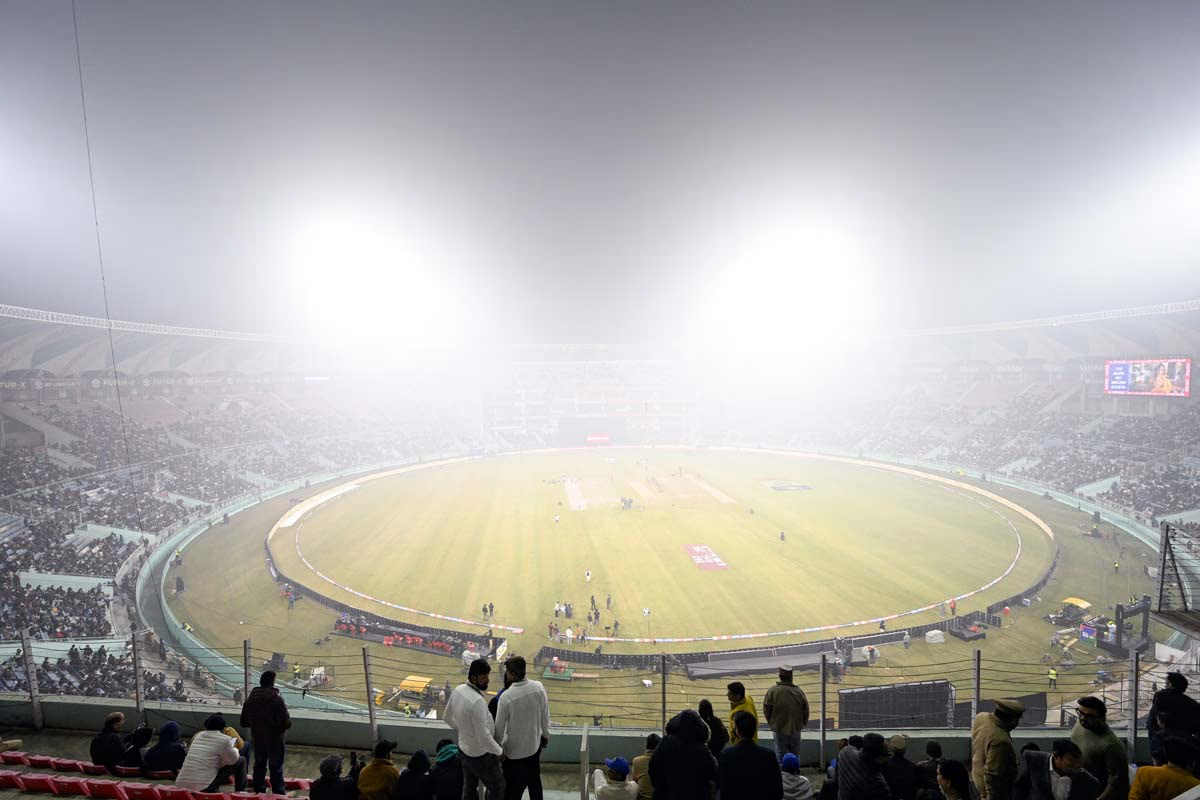
Source: aajtak
Is South India Completely Fog-Free?
Not entirely. Certain regions in South India experience light fog, like in some inner parts of Karnataka or coastal areas. However, in stark contrast to the North, the South rarely endures thick, long-lasting fog that results in zero visibility. Northern India experiences fog during winters in places like Delhi, Lucknow, and Punjab, whereas winter days in southern cities like Chennai, Bengaluru, Hyderabad, or Kerala tend to be clear and sunny.
Weather in India is influenced by geography, temperature, and wind patterns. Here are the main reasons...
Read More:
A Temperature Discrepancy...
Winters in North India (Ganges plains – Punjab, Haryana, Uttar Pradesh, Delhi) see temperatures plummeting (down to 6-12 degrees Celsius). The ground cools rapidly at night, causing moisture in the air to condense into droplets—forming fog, known as radiation fog.
In South India, winters remain mild, with temperatures rarely dropping below 20-25 degrees Celsius, preventing the moisture from transforming into fog.
The Impact of Western Disturbances...
During winters, winds from the Mediterranean (Western Disturbances) clash with the Himalayas, bringing moist air to North India which combines with cold winds to create fog. These disturbances don’t affect South India as it lies beyond their reach. Here, warm sea winds are prevalent.
Maritime Influence and Geography...
Southern India is surrounded by water on three sides (Arabian Sea, Indian Ocean, Bay of Bengal). Warm, moist winds from the ocean maintain a balanced temperature and prevent moisture from settling. In contrast, North India's geographic features allow colder air to settle, generating and spreading fog.
The Role of Pollution...
In North India, fog often evolves into smog (smoke + fog). Pollution particles (PM2.5, aerosols) trap moisture, making fog denser and more persistent. Air Quality Index (AQI) levels in cities like Delhi-Lucknow often exceed 300-400. The South boasts lesser pollution levels (AQI 50-100), resulting in clearer fog conditions.
Read More:
Northern India’s winters are characterized by extreme cold, stagnant air, and high humidity—ideal conditions for fog. In the South, the climate remains warm and balanced year-round due to maritime influence. Therefore, flights, trains, and matches often face cancellations in the North, while life carries on as usual in the South.