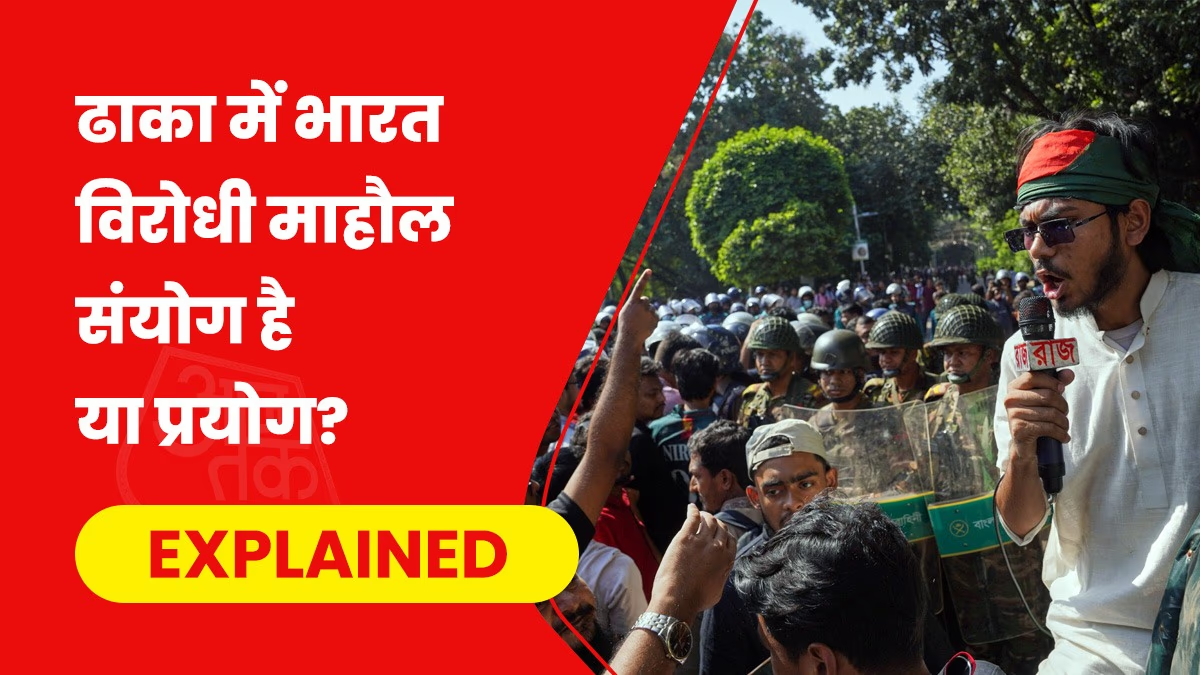
In August 2024, after an uprising, Bangladesh's Prime Minister Sheikh Hasina resigned and left the country. Previously, the whispers against India in Dhaka have now turned into an open outcry. Leaders are making overtly anti-India speeches. Recently, a party leader even threatened to isolate India’s northeastern states. Amidst the upcoming general elections in February, anti-India sentiments are being fueled.
This is a common political tactic. With general elections just two months away, Bangladesh's political dialogue revolves around India. It's a strategy reminiscent of what happened in the Maldives.
What Happened in the Maldives?
Two years ago, during the Maldives' general elections, Progressive Party leader Mohammad Muizzu started speaking against India. Accusing the then-government of being overly friendly with India, he claimed Delhi was interfering. Muizzu's slogan 'India Out' called for the removal of Indian soldiers and products. Despite Indian tourists contributing significantly to the Maldives' economy, Muizzu’s anti-India narrative won the election. Interestingly, he had to backtrack on his statements later.

Source: aajtak
The tactic of leveraging anti-India narratives to win elections seems tested and successful. Currently, with Hasina’s government gone and her relations with India weakened, opposition parties are capitalizing on anti-India sentiments as an electoral strategy.
Concerns Raised by Hasina’s Son
Former President Hasina’s son, Sajeeb Wazed, expressed concerns in an interview with Indian Express. He stated that extremist activities in Bangladesh pose threats to India. According to Wazed, the Yunus government has allowed Islamic parties like Jamaat-e-Islami undue freedom, despite their minimal electoral support. There are claims that by blocking liberal parties and manipulating elections, the Yunus government is trying to install these Islamic parties in power.
What Does PM Yunus Gain?
Yunus, an economist known for his civil society involvement, was not initially into politics. However, his indifferent stance towards India became evident when he formed an interim government. Following his appointment, minority groups, especially Hindus, faced severe violence in Dhaka without any strong government condemnation. The violence only subsided after objections from India and other countries.
His Alarm Over Northeast
A few months back, Yunus labeled India’s northeastern states as landlocked regions in an incendiary statement, suggesting Bangladesh as a maritime guardian. He brought in China's angle, hinting at bypassing India. This is alarming due to China's growing interests in the northeast and surrounding areas.
Source: aajtak
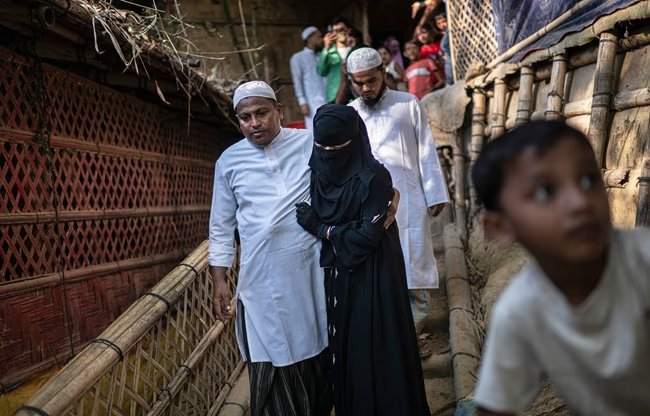
Bangladesh already hosts terrorist training camps, with Al-Qaeda-associated terrorists active, and now commanders from Lashkar-e-Taiba addressing public events. It’s clear extremism in Bangladesh is escalating, as reflected in the leaders' election rhetoric.
Why the Sudden Shift?
The shift of Dhaka’s politics around anti-India sentiments isn’t coincidental but a consequence of power change. Hasina was India’s steadfast ally, and her departure marked a diplomatic shift. The new regime’s distancing from Delhi is seen as a pivotal move.
Moreover, geopolitical alignments are shifting. Recently, Bangladesh’s rapport with China, known for its tense relations with India, has strengthened. There are also renewed connections with Islamabad, despite long-standing hostilities, united by a common foe in India and shared religious ties.
Bangladesh faces a power vacuum. Most leaders from Hasina's Awami League are either exiled or imprisoned. Khaleda Zia's Bangladesh Nationalist Party faces similar problems, with Zia herself ill and residing in London. This leaves the stage to parties driven by religious extremism.