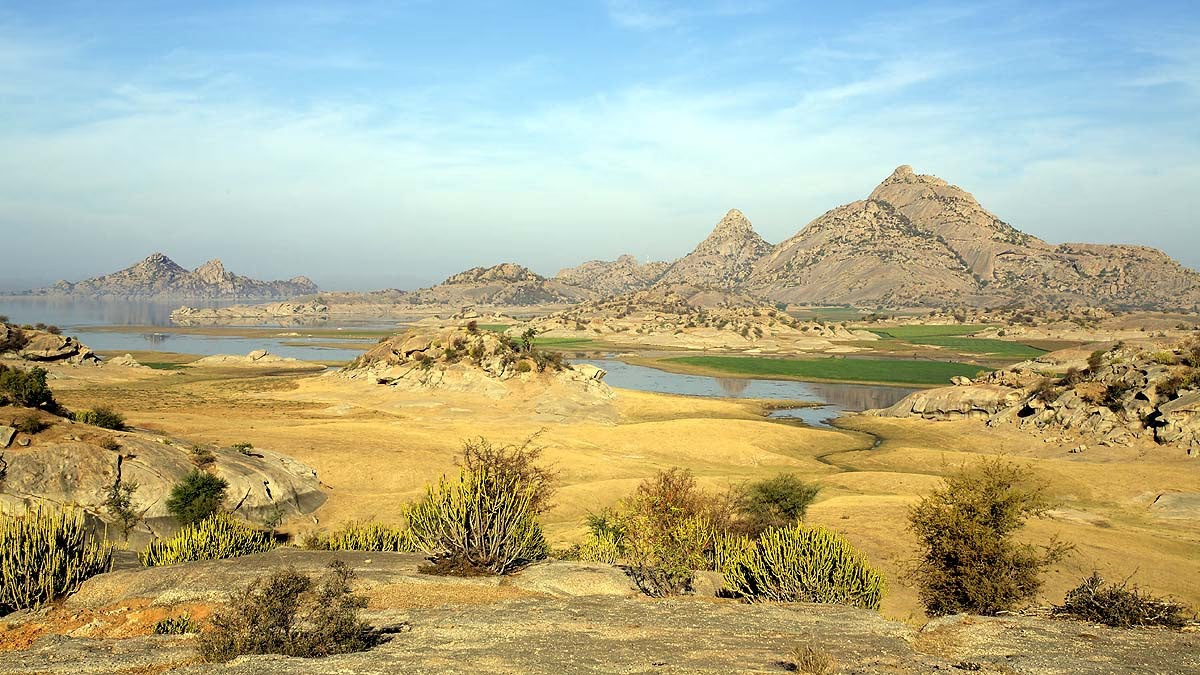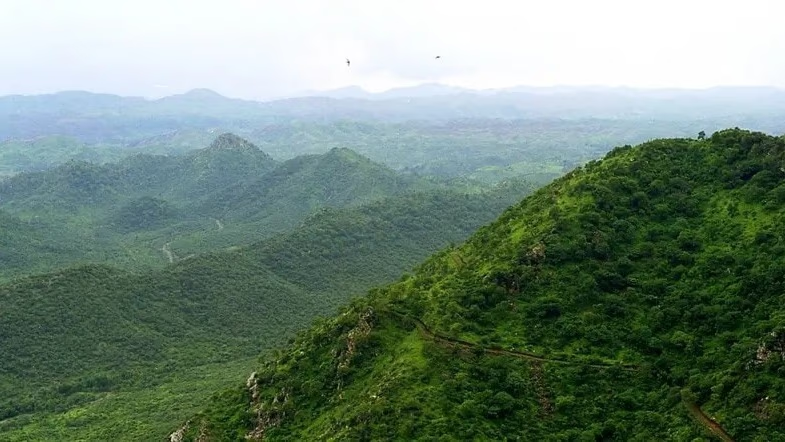
The Aravalli Range, India's oldest mountain range, is at the center of a nationwide debate. It's not just about a definition; it's about the future of North India's environment and the very fabric of life itself. Critics claim the new definition makes mining easier, potentially threatening these ancient mountains' future.
Throughout Rajasthan, protests erupted, heralding the start of a public march against this on December 24. The central government, however, denies all allegations, arguing Supreme Court definitions are being misinterpreted to fuel confusion.
Let's understand why this controversy exists. It all began with a Supreme Court ruling addressing illegal mining in the Aravalli hills, demanding clarification from the central government. The court noted the lack of a clear definition of the Aravallis, which led states to decide for themselves which mountains qualify as such and which can be open to mining.
Clearing the Confusion
To resolve this, the central environment ministry formed a committee, whose recommendations to the Supreme Court are now under scrutiny. Their guidelines stated that if a group of mountains rises over 100 meters, a 500-meter radius around it will be considered part of the Aravalli Range, prohibiting any mining activities there.
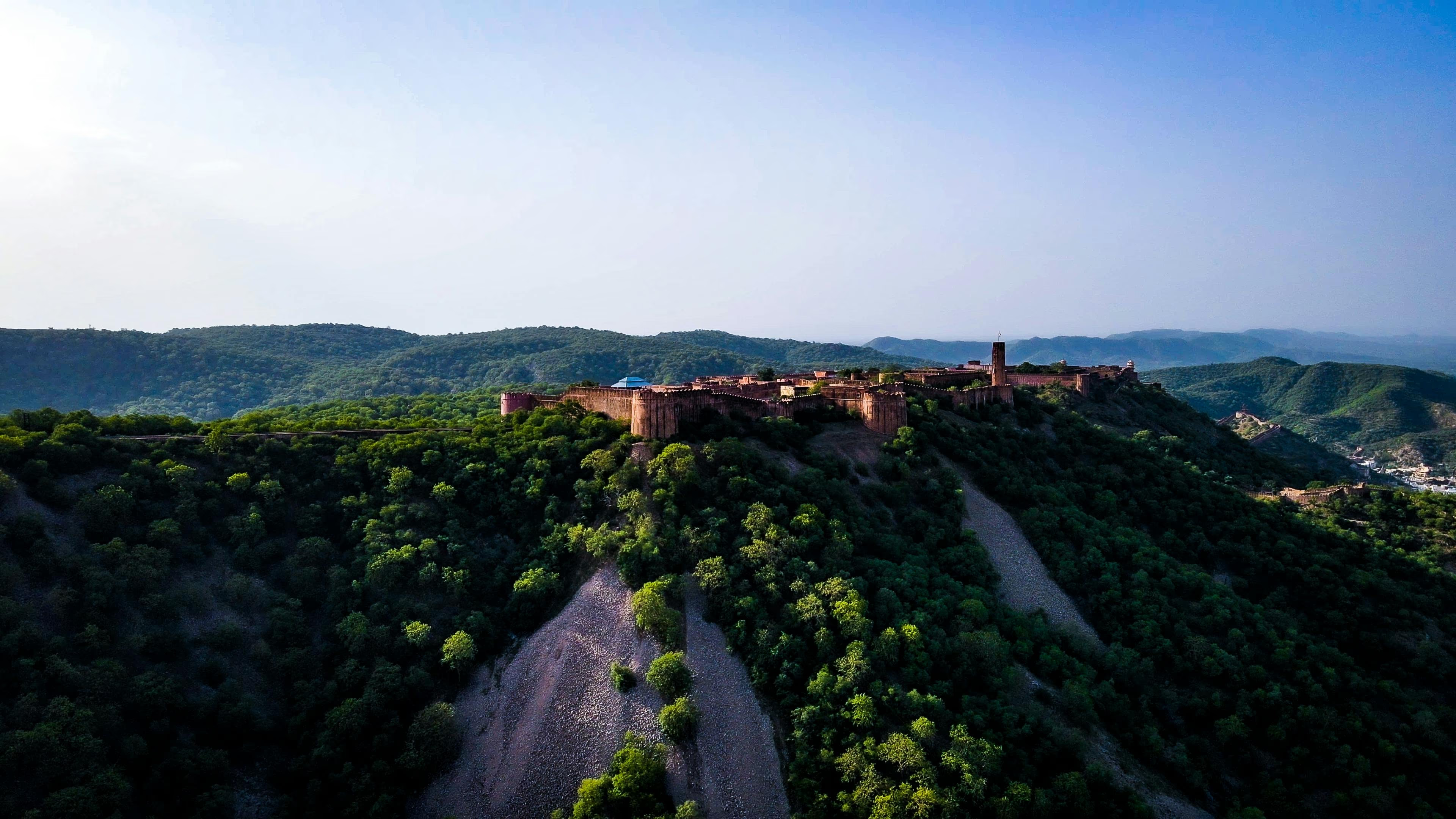
Source: aajtak
Adding, if another mountain within proximity also rises over 100 meters, its 500-meter range too will fall under the Aravalli zone, with government intervention needed to stop mining.
Also Read:
These recommendations were presented to the Supreme Court, which accepted them, stating sustainable mining could occur in areas not defined within this range. Sustainable mining aims to extract minerals without long-term harm to the environment, water, forests, or human life.
The Real Cause of Public Discontent
The Supreme Court's decision sparked outrage, particularly among the youth, who argue that under the new definition, many Aravalli hills won't be recognized, leading to rampant mining. They claim that 90% of the Aravalli hills will be destroyed since most don't exceed 100 meters.
This isn't entirely unfounded. An October 2023 Forest Survey of India report shows that out of Rajasthan's 15 districts with 12,081 Aravalli hills, only 1,048, or 8.7%, are over 100 meters high. The implication is stark as the new definition endangers over 90% of these hills, confined to those in Rajasthan.
In response, the Forest Survey of India recommended last year that instead of 100 meters, mining should be restricted to smaller hills of around 30 meters with a slope of more than 4.57 degrees. However, the central environment ministry's recommendations retained the 100-meter benchmark, sparking ongoing debate.
Also Read:
The Central Government's Argument
A conflicting narrative exists. While critics argue this definition removes the mountain status from 90% of the Aravalli, the central government claims it safeguards the same percentage forever, eliminating exploitation risks. They assert misinterpretation of the Supreme Court's decision has prevailed, misleading many into believing hills not meeting the height will be disqualified.
The government clarifies the height merely identifies mountains and if one exceeds 100 meters, its surrounding 500 meters is automatically protected. Additionally, if another mountain within this 500-meter radius also stands tall, its circle too joins the protected Aravalli zone, naturally safeguarding smaller hills under taller neighbors.
Yet, the lingering question persists: with most hills under 100 meters, how clear is it which will remain and which face mining threats?
Laws Already in Effect in Rajasthan
Aravalli stretches from Gujarat's Palanpur through Rajasthan and Haryana to Delhi, spanning 692 kilometers, with 550 kilometers lying in Rajasthan—80% of the range. Interestingly, the new definition has been enforceable in Rajasthan since 2006. The recent change is its extension to Gujarat, Haryana, and Delhi.
Also Read:
For instance, while the Aravalli mountains near Udaipur are reasonably high, their altitude drops as the range extends toward Haryana and Delhi, endangering those mountains from exclusion and subsequent mining.
Three Key Questions
Three critical questions arise here.
First: Why do mining mafias target the Aravalli hills?
Second: Why are the Aravalli hills vital for North India's ecology?
Third: Should these hills vanish, what impact will it have on North India's populace?
The answer to the first is the Aravalli's vast mineral repository. The central government notes 81 types of minerals could exist within its rocks, with 57 being actively extracted, including zinc, lead, silver, cadmium, marble, and granite. If you adorn your home with granite today, it likely comes from these hills. Rajasthan alone garners ₹4,500 crore annually from mining the Aravalli, thus explaining the intense focus on its exploitation.
Aravalli Continues to be Ravaged
Beyond government actions, illegal mafias also ravage Aravalli mountains, mining construction materials and piercing these terrains. The fear persists that the government may have altered the Aravalli's definition to permit such exploration unabated. Crucially, these hills are integral to North India's ecology. Should they perish, Rajasthan's desert could extend, encroaching further.
Further implications involve the trajectory of monsoon clouds, directed east by these mountains, ensuring their journey to the sub-Himalayan region. Their absence would disrupt this pattern, with similar consequences for the Ganges-Yamuna river belt. These mountains arrest the frigid western winds from Central Asia and mitigate the spread of Thar desert sand across North India. They also act as water reservoirs, gradually releasing it to nourish rivers like Chambal, Sabarmati, and Luni, underscoring their ecological significance.
Destroying them will severely impact North India. Air pollution would skyrocket, as the mountains block desert dust. Without these buffers, Delhi-NCR would become a dust bowl, escalating respiratory challenges. Moreover, the absence of the Aravalli impedes monsoons, jeopardizing agriculture and expediting desertification in fertile lands.
Also Read:
A Grim Scenario
The 2017 report reveals that desertification risks rise as Aravalli's gaps widen. Consequently, lakes and ponds could dry up, as deforestation and mining minimize rainfall, preventing groundwater replenishment. This condition would severely disrupt agriculture, with wind erosion rendering farmlands barren.
Without Aravalli, hot wind currents pose a greater threat, leading to deadly heatwaves and elevated temperatures, impacting populous areas like Delhi, Haryana, and Punjab. This scenario elucidates why safeguarding Aravalli is pivotal—it's not merely an ecological obligation but a national priority.
The Aravalli mountains' history predates India itself, estimated to be 2.5 billion years old. Home to India's oldest mountain range, it dwarfs the Himalayas in antiquity, formed during Earth's nascent phase as tectonic plates collided, birthing these ancient mountains.
Initially grand, they eroded over millennia through natural elements, with mafia mining now posing their greatest threat. These entities harvest building materials, steadily diminishing Aravalli's expanse, estimated to have shrunk by 40% due to such exploitations.