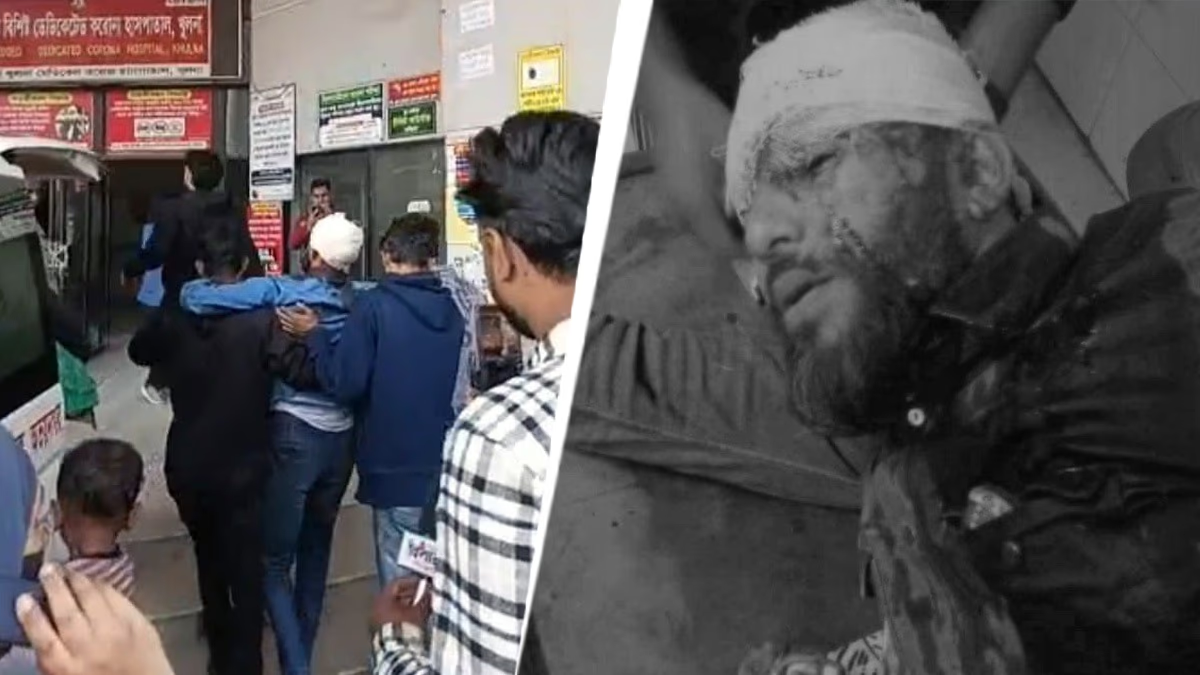
Bangladesh... In this neighboring country of India, extremism has ignited a fire that continuously consumes humanity, culture, art, sects, and communities. Amidst a recent spate of atrocious events, there was one silently raging blaze among the many burnt and charred remains.
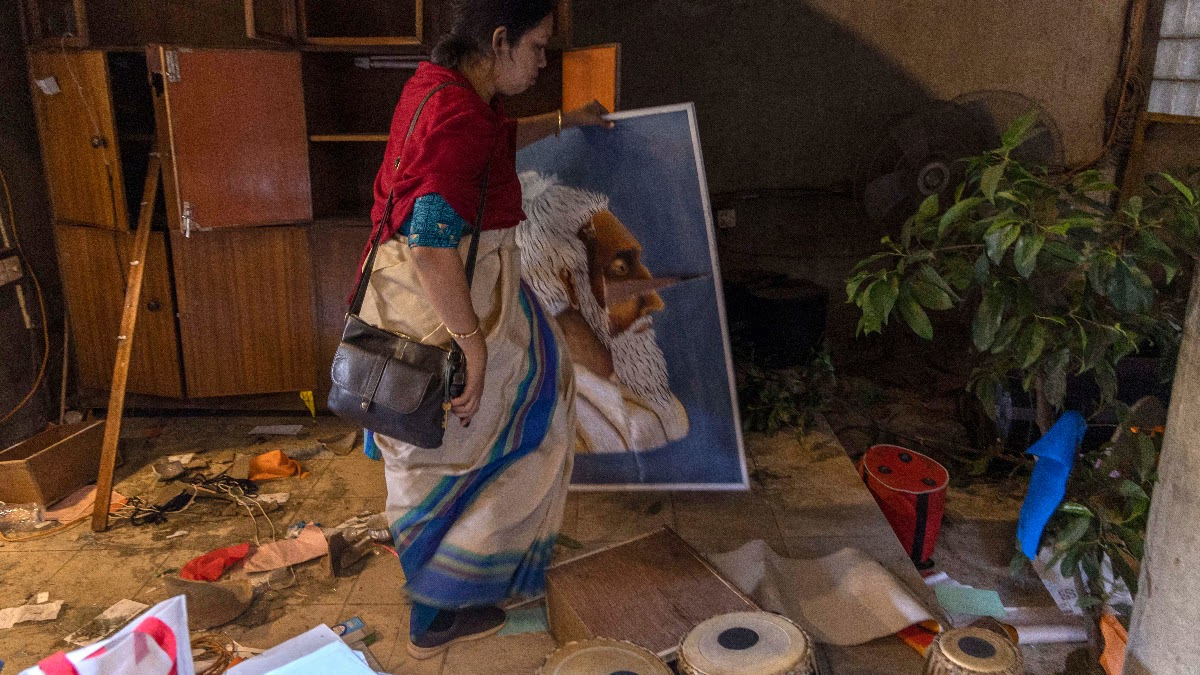
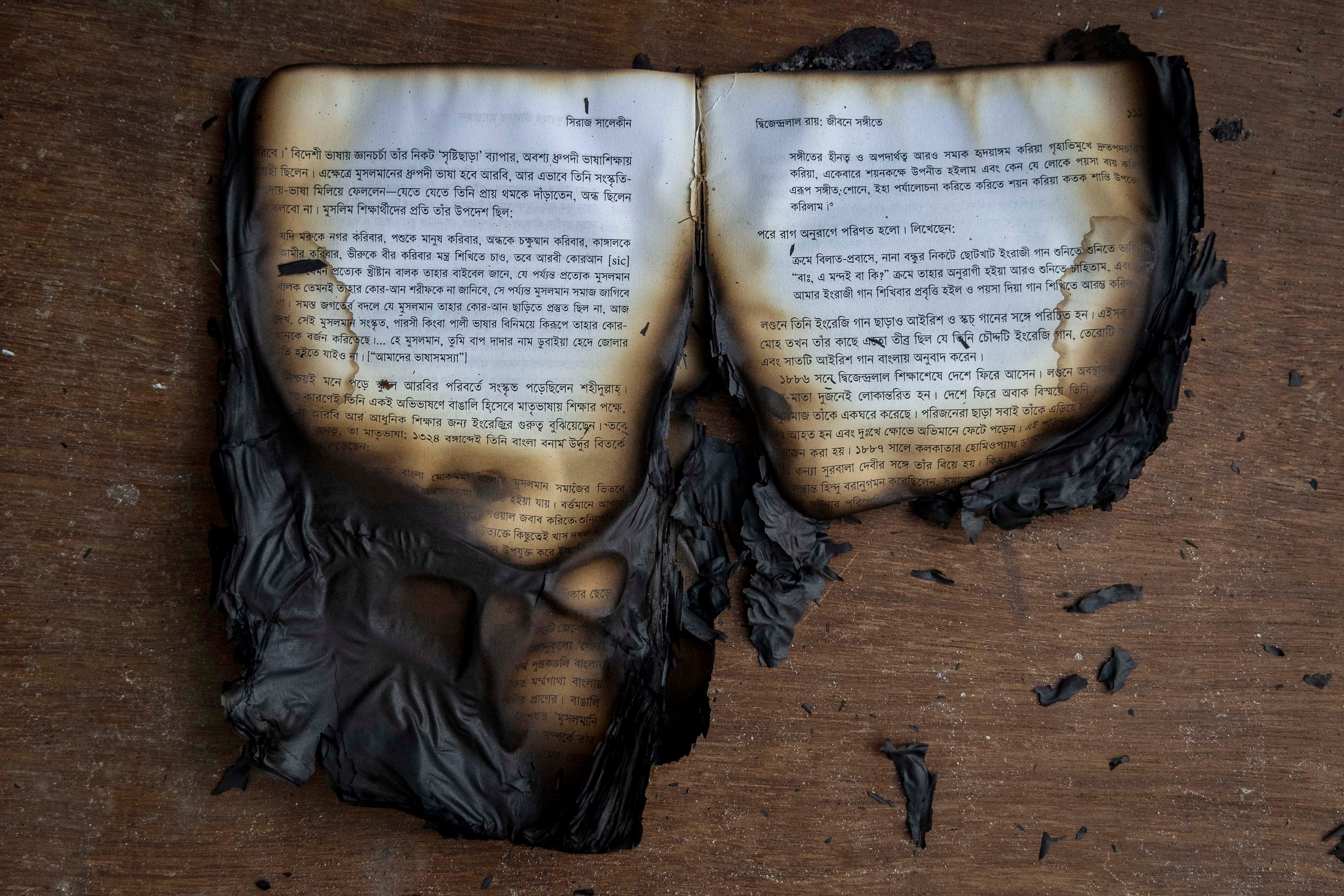
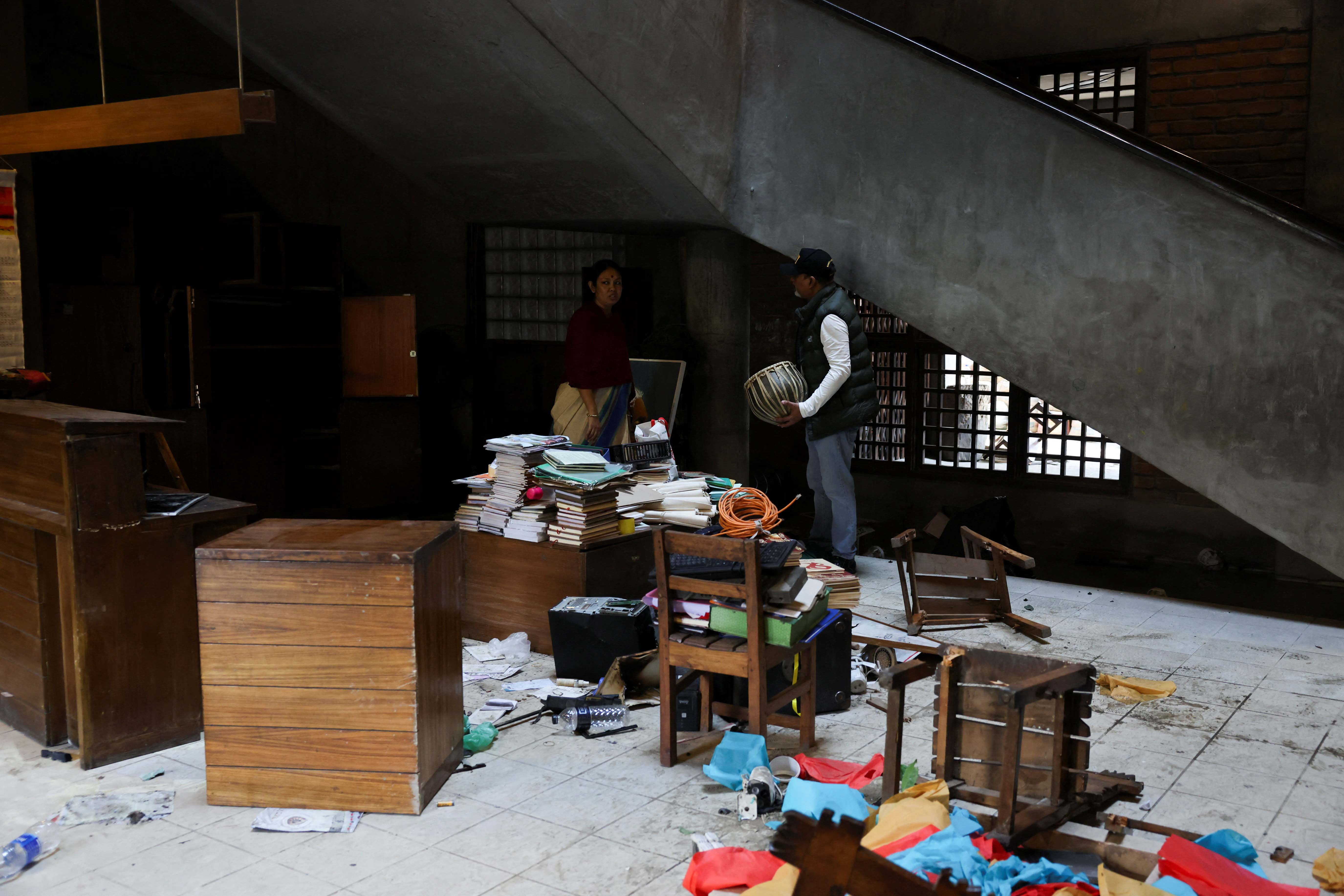
The question arises: who does this 'corpse' belong to? The answer: it belonged to art, culture, and Chhayanaut, the largest symbol of its preservation. On December 18, 2025, Chhayanaut's office, located near Dhanmondi in Dhaka, Bangladesh, was ravaged and engulfed in flames. The result... now lies the charred, broken remnants of the 'Chhayanaut' building in Dhanmondi...
To understand what Chhayanaut means to Bangladesh, we take a look back in time.
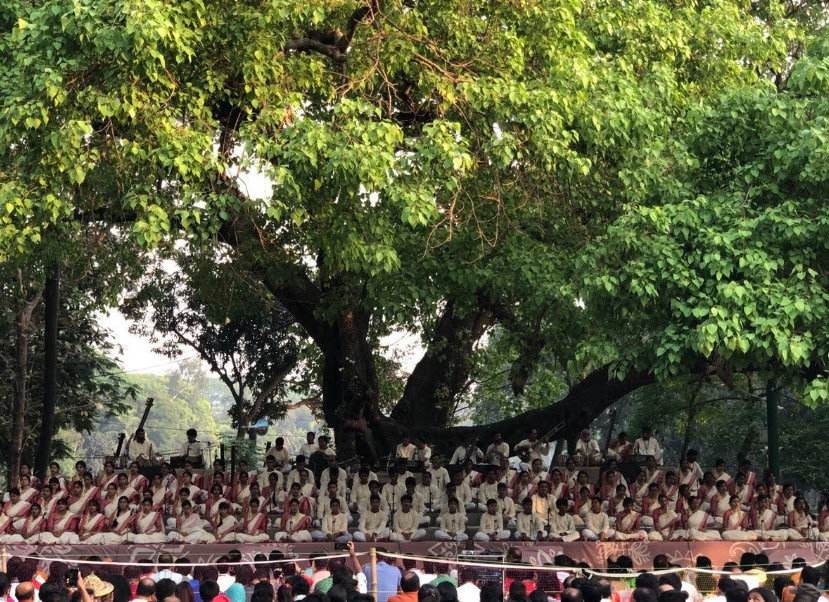
On April 14, 2001... Ramna Park in the capital city of Dhaka was vibrant with artists dressed in colorful attire. These artists were gathered under a banyan tree, their stage defined by the platform beneath it. To the local populace and far beyond, this banyan-studded site is known as Batmul, the 'banyan root.' But this root, this origin, this shade wasn't just of the banyan, it was a rich reservoir of traditions and cultures—a true representation of human identity and real connection to the earth...
Source: aajtak
However, as the artists began singing '
Oh, mother, how beautiful you appear, nurturer of villages
,' the very next moment their tune, rhythm, and sound were drowned by two deadly explosions. As the dust and smoke settled, ten blood-soaked bodies lay unidentifiable. Music turned into chaos, with Batmul, the epitome of cultural vibrance, stained with blood.
Ramna Park Batmul Blast
This incident under the Batmul at Ramna Park was immediately dubbed the 'Batmul Blast,' creating headlines across the globe. A saddened segment of artists soon declared that the spot known for music and culture shall not be remembered for a blast. Chhayanaut will continue to preserve Bangladesh's cultural heritage.
The question now is, what exactly is Chhayanaut, and what culture was Batmul keen on preserving that fateful afternoon on April 14?
The answer is simply this: Chhayanaut has been a cultural institution in Bangladesh for the past 65 years, maintaining the spark of song, music, art, and culture in this neighboring region of India. On that April 14, 2001, afternoon, Chhayanaut was celebrating 'Pohela Boishakh' (Bengali New Year, marked with the beginning of Boishakh month and the harvest festival). This long-standing tradition, conducted for nearly 40 years under the shade of Batmul, was because it is Chhayanaut's birthplace. Its cultural foundation, its roots, intertwined with this banyan over the years, yet this wasn't tolerated by fundamental extremist factions.
Source: aajtak
Thus, on December 18, 2025, the office of Chhayanaut in Dhanmondi faced tremendous vandalism and was set aflame. Chhayanaut is now a pile of ashes, along with the hopes and dreams nurtured by musicians like Kalim Sharifi, poet Sophia Kamal, Waheedul Haque, and Mokhloser Rahman—ones who envisioned a vibrant, inclusive cultural representation of Bangladesh.
Yet, regret remains that Chhayanaut has turned to ashes...
What was Chhayanaut, and why this mourning over its demise? This pain is hard to comprehend without knowing its history. When a society's identity is threatened, culture becomes not just entertainment but a tool of resistance. Language, music, theatre, and folk traditions muster the courage to confront oppressive policies. In Bangladesh, Chhayanaut was an example of such cultural resistance. It wasn't merely a cultural organization but a living consciousness of Bengali identity, freedom, and cultural pride.
Chhayanaut was established in 1961, during a time when present-day Bangladesh was part of Pakistan, known as 'East Pakistan.' During that era, when the Pakistani military regime attempted to marginalize Bengali language and culture, Chhayanaut was conceived as a resolute opposition to authoritarian attempts.
Bengali soil prided in Baul and Rabindra Sangeet... These core notes were banned by the Pakistani military regime. Amid such times, cultural warriors like musician Kalim Sharifi (also a founder of Bangladesh Radio and Television), poet Sophia Kamal (feminist leader and advocate for an independent Bangladesh), Waheedul Haque (former editor of The Daily Star and Tagore song expert), Sanjida Khatun (Bangladeshi musician), and Mokhloser Rahman (Sidhu Bhai) envisioned an organization through which Bengali culture could be safeguarded via music, drama, and dance.
Source: aajtak
How 'Chhayanaut' got its name?
The name 'Chhayanaut' was proposed, meaning 'Dance in the Shade of a Tree'—synonymous with protection, shelter, and continuity. The significance of the name Chhayanaut extends beyond this. Delving deeper into its meaning, it's one of the notable ragas, 'Raga Chhayanaut,' from the Kalyan thaat, traditionally sung in the early night. It composes a deep, romantic experience. It not only provides melody but embodies a profound, spiritual bliss.
This elevates music from being merely an art form to a path of self-realization, which is the essence of Indian music's spiritual tradition. This explains why most Baul music is constructed in ragas from the Kalyan thaat, such as Bilaval, Ahilya Bilaval, Yaman, Hamir, and Raga Chhayanaut.
Chhayanaut... Where Art and Culture Fought the Battle for Identity
Let's return to Chhayanaut. The work undertaken by Chhayanaut in the 1960s wasn't easy. Despite the ban on public performance of Rabindra Sangeet, Chhayanaut clandestinely and openly kept it alive. Its branches spread like an 'underground network' across various districts and cities.
This is why Chhayanaut slowly transitioned from being a cultural organization to a cultural movement. The centenary celebrations of Rabindranath Tagore's birth in 1961 further energized this movement. Bengali society realized that an attack on culture was, in essence, an attack on identity.
The inaugural executive committee of Chhayanaut appointed Sufia Kamal as the president and Farida Hasan as the general secretary. Vice presidents included Zahur Hussain Chowdhury and Saidul Hassan. The committee featured names like Waheedul Haque, Sanjida Khatun, Kamal Lohani—individuals who would later become cultural icons of Bangladesh. The first program took place at the Engineers Institute Auditorium in Dhaka, showcasing a collection of old Bengali songs. In 1963, music classes began in the verandah of 'Bangla Academy.' Regular teaching of Rabindra Sangeet, Nazrul Geet, tabla, violin, and sitar commenced. Later that year, formal establishment of the Chhayanaut Music School occurred.
Pohela Boishakh Celebration Under Batmul's Shade
Chhayanaut's most historic and identity-defining tradition is the celebration under the 'Batmul' at Ramna Park of 'Pohela Boishakh,' or Bengali New Year. It began in '1964,' gradually evolving into Bangladesh's largest symbolic cultural celebration. The morning would resonate with Rabindranath Tagore's song “Esho he Boishakh,” which wasn't just a welcome for the new year, but an announcement of cultural renaissance.
During the '1971 Bangladesh Liberation War,' many key members of Chhayanaut moved to India. In Kolkata, they formed the 'Mukti Sangrami Shilpi Sangstha,' where Bengali artists performed for refugee camps and freedom fighters. Through the musical drama ‘Roopantorer Gaan,’ they sang tales of struggle. Programs held at Rabindra Sadan featuring artists like Hemant Mukhopadhyay, Debabrata Biswas, Kanika Bandyopadhyay, and Suchitra Mitra collected funds dedicated to the liberation war. This cultural movement later inspired filmmaker Tareque Masud's documentary ‘Muktir Gaan.’
Source: aajtak
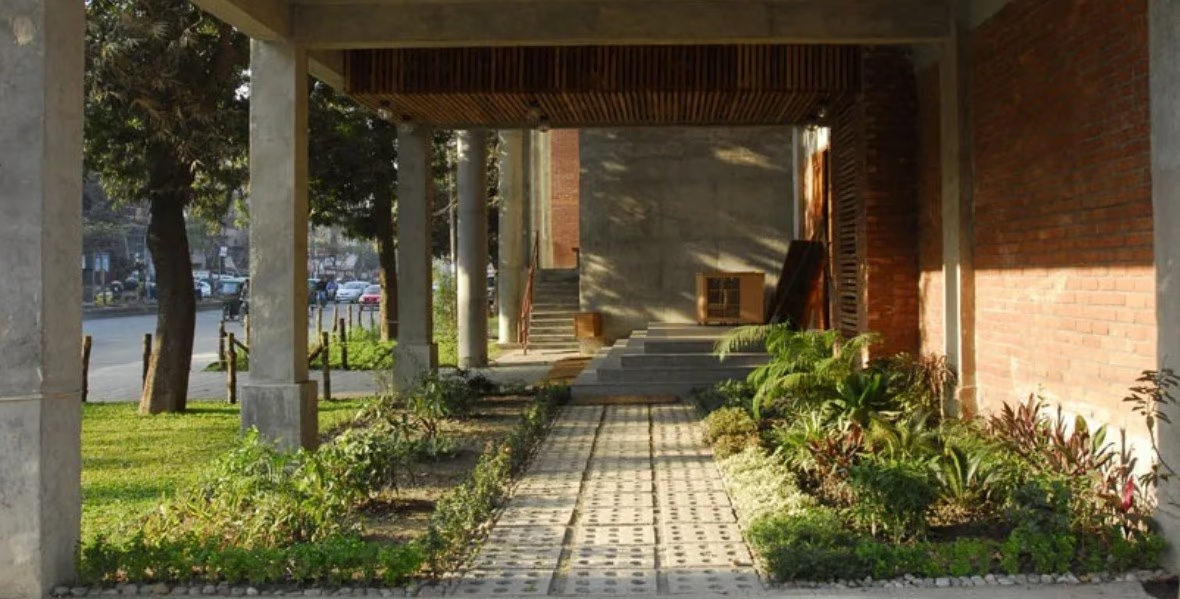
After independence, Chhayanaut received permission to operate at Dhaka University's 'University Laboratory School,' where it thrived freely for nearly three decades. This arrangement was made possible through the cooperation of then-principal Dr. Nurun Nahar Faizunnnesa and Vice-Chancellor Prof. Mozzafar Ahmed Chowdhury. In 1999, the Bangladesh government allocated an acre of land for Chhayanaut in Dhanmondi, resulting in the 'Chhayanaut Culture Bhavan,' designed by renowned architect Bashirul Haq, which houses a modern auditorium, library, music classes, recording studio, and a cultural museum.
On April 14, 2001, during the Pohela Boishakh celebration at Ramna Batmul, a horrific terrorist attack occurred. As the song 'Oh, mother, how beautiful you appear, nurturer of villages' was being sung, two bomb explosions happened. The attack claimed the lives of 'ten people' and injured around fifty others. The attack was orchestrated by the terrorist group 'Harkat-ul-Jihad-al-Islami (Huji).' Courts later sentenced the perpetrators. Chhayanaut affirmed that terrorism cannot halt Bengal's New Year and cultural traditions.
In 2015, Chhayanaut was honored with **the Rabindranath Tagore International Prize established by the Indian government. In 2019, it received the 'Shilpakala Padak' from the Bangladesh government.
Bangladesh is burning, bodies are aflame, and the tradition of culture, music, and consciousness drifts away as ashes... even Chhayanaut is consumed. The question remains, when Boishakh returns in four months, will Rabindra Sangeet 'Esho he Boishakh' echo beneath the Batmul? The unfortunate answer lies in fire, ashes, and hopelessness... for the beloved 'Chhayanaut' has burned...