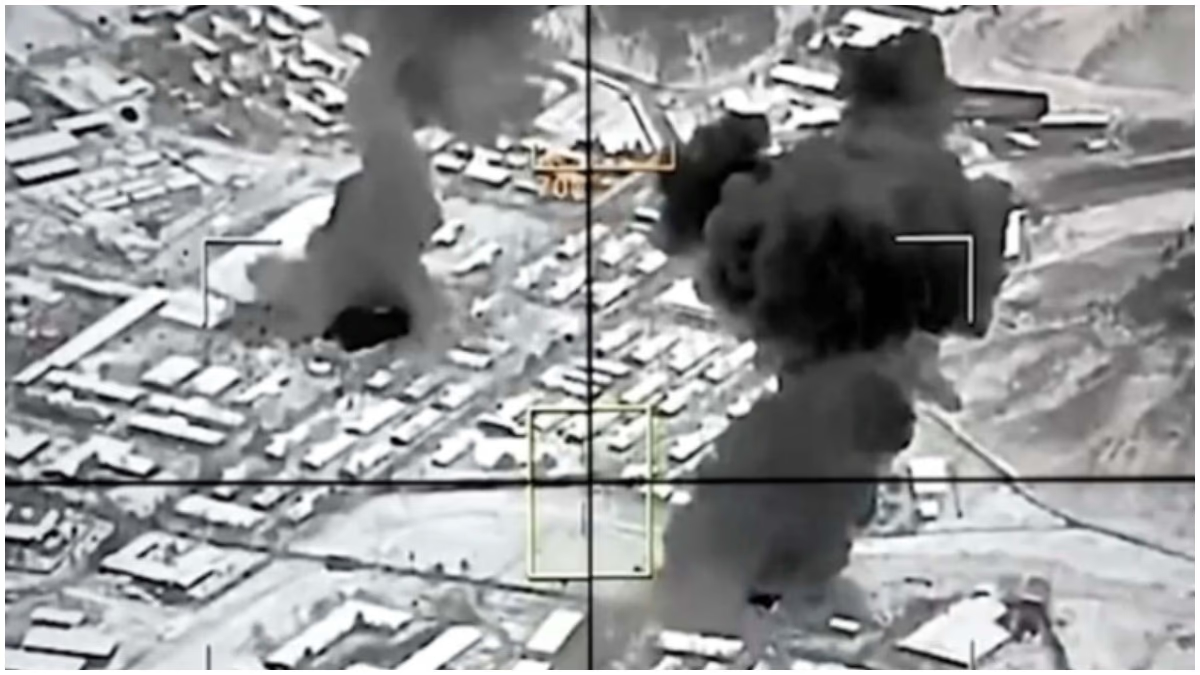
On February 27, 2026, Afghanistan’s Ministry of Defense made a bold claim - targeting Pakistan with aerial assaults. Allegedly, around 11 AM, the Afghan Air Force attacked military installations near Faizabad in Islamabad, an army cantonment in Naushehra, a military colony in Jamrud, and other locations in Abbottabad.
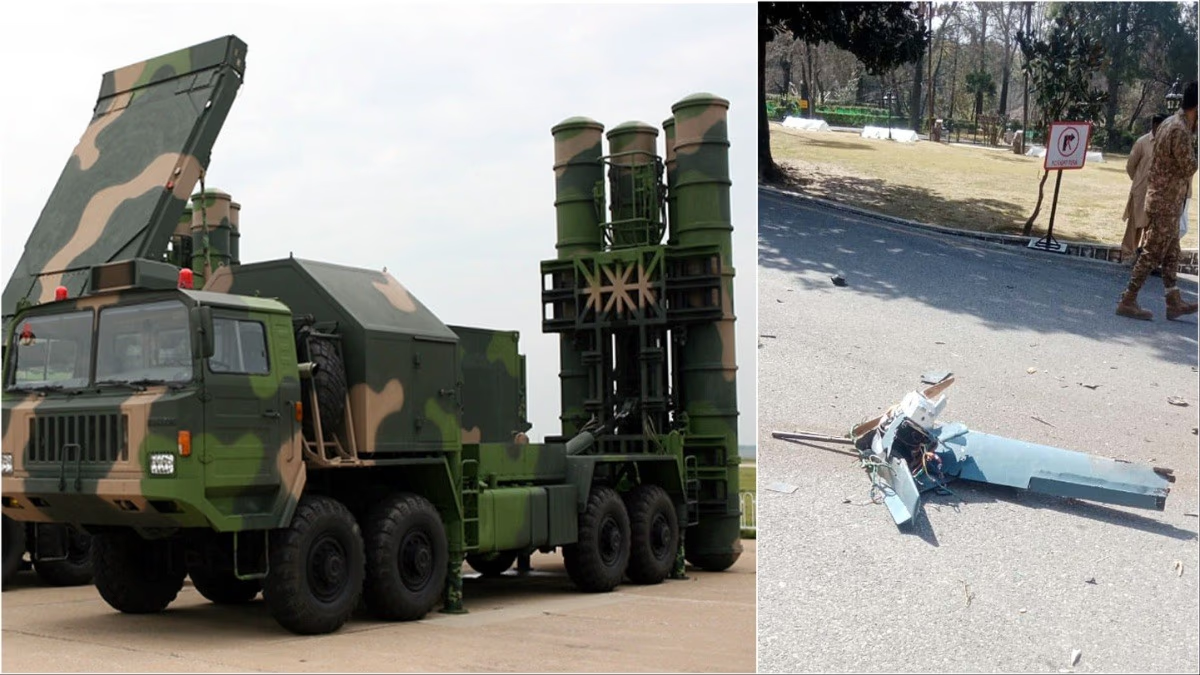
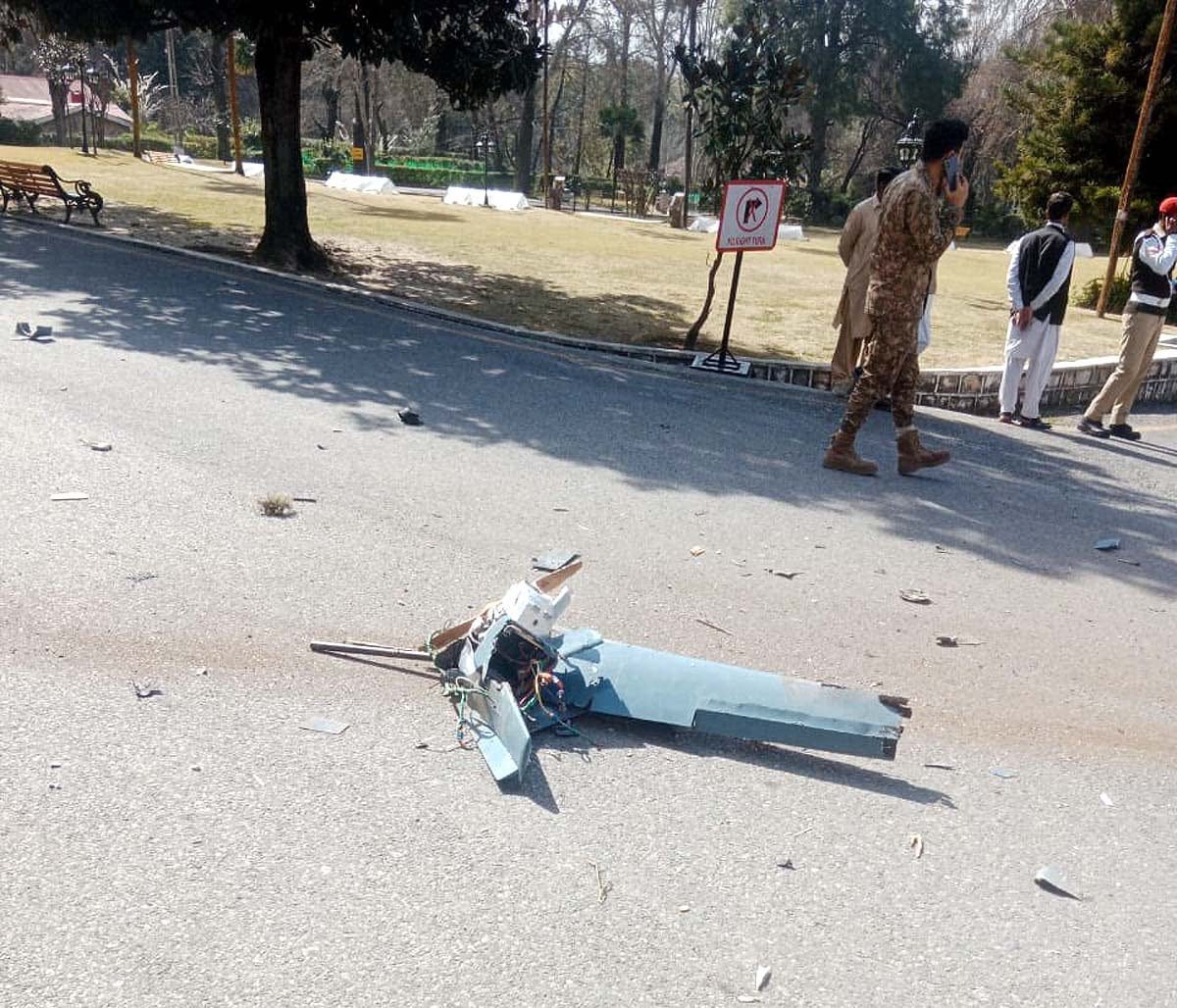
The claim is surprising as Afghanistan lacks a robust air force, comprising mainly outdated helicopters and a few drones. However, Pakistan dismissed this assertion. A Pakistani minister stated that small drones attempted attacks but were brought down by their anti-drone systems without any damage.
Read Also:
Now, the question arises - what missile and drone defense systems are deployed around Islamabad? How many are Chinese? Did these systems fail against Afghan drone strikes? Is this a testament to China's failing defense systems?
Understanding the Afghan Taliban's Claim
The Taliban's MoD declared: “Our Air Force conducted aerial strikes on Pakistani soil – targeting military camps near Faizabad in Islamabad, Naushehra’s army cantonment, and Jamrud’s military colony.”
Source: aajtak
These strikes were in retaliation to Pakistan's previous air attacks on February 22 in Nangarhar and Paktiya provinces of Afghanistan, where Taliban claims 18 civilian casualties.
However, Pakistan asserts the drones were intercepted and thwarted, causing no significant damage. Several media outlets, including Reuters and Al Jazeera, affirmed Pakistan’s position. Videos and claims flooded social media.
Missile and Drone Defense Systems around Islamabad
Being Pakistan’s capital, Islamabad houses the strongest defense systems, primarily reliant on Chinese and a few other international systems. The main systems implemented include...
Read Also:
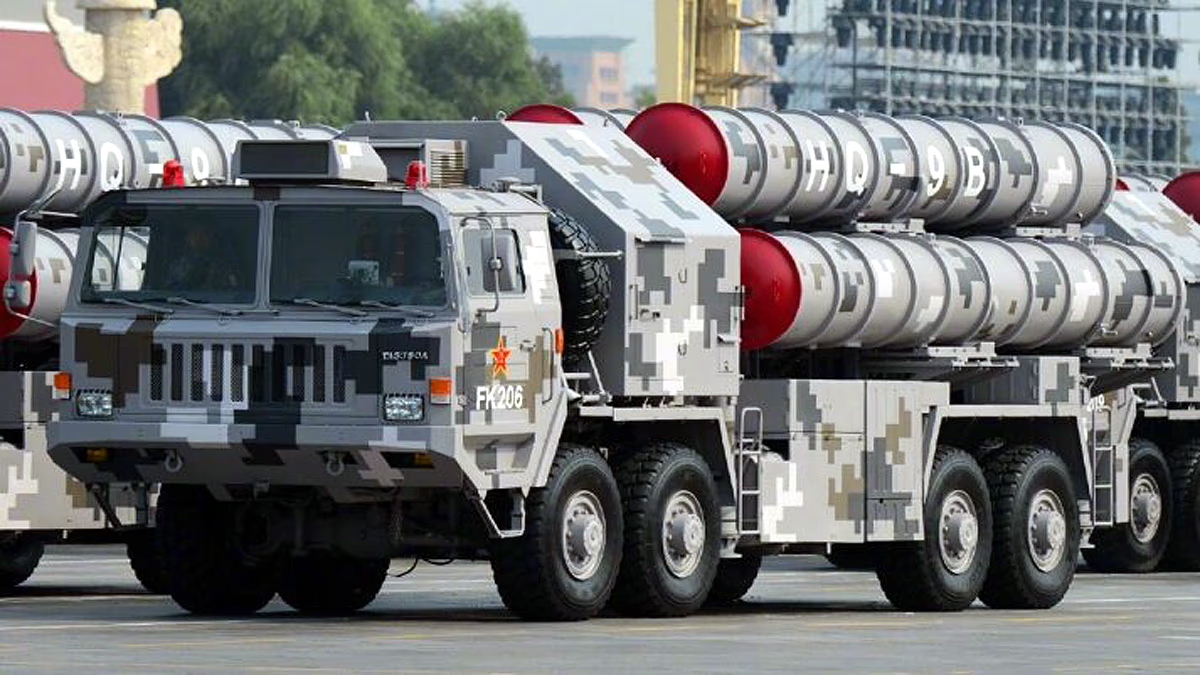
HQ-9 (Long-Range Surface-to-Air Missile)
Range: 200-300 km.
Purpose: Neutralizes enemy jets, missiles, and drones from a distance.
Deployment: Multiple batteries around Islamabad, operational since 2021.
Origin: China (CASC Corporation).
HQ-16 / LY-80 (Medium-Range Air Defense)
Range: 40-70 km.
Purpose: Targets medium-altitude drones, helicopters, and jets.
Deployment: Over 6 batteries in Islamabad and border regions, procured for $373 million in 2014-15.
Origin: China.
Source: aajtak
FM-90 / HQ-7 (Short-Range Air Defense)
Range: Up to 15 km.
Purpose: Counteracts low-altitude drones and missiles.
Deployment: Various locations around Islamabad.
Origin: China.
Anti-Drone Systems
Examples: Sky Fence, Drone Jammer, and Laser Systems.
Purpose: Uses jamming and lasers to neutralize drones.
Deployment: Around Islamabad, Rawalpindi, and military bases.
Origin: Some from China, others from Turkey and elsewhere.
Other Systems:
Pakistan also operates American F-16 jets to aid in air defense. However, the core air defense systems are predominantly Chinese. Overall, 10-15 mostly Chinese batteries surround Islamabad.
Read Also:
How Predominantly Chinese Are These Systems?
An estimate suggests that 70-80% of Pakistan’s air defense systems are of Chinese origin...
HQ-9: At least 4-6 batteries (from China).
HQ-16/LY-80: 6 batteries (from China, purchased in 2014-15).
FM-90/HQ-7: Numerous batteries (from China).
HQ-19: Planned acquisition post-2025 Operation Sindoor, though not fully operational yet. Intended to intercept ballistic missiles.
China remains Pakistan's largest defense ally. During the 2025 Operation Sindoor, the Chinese HQ-9 was inadequate.
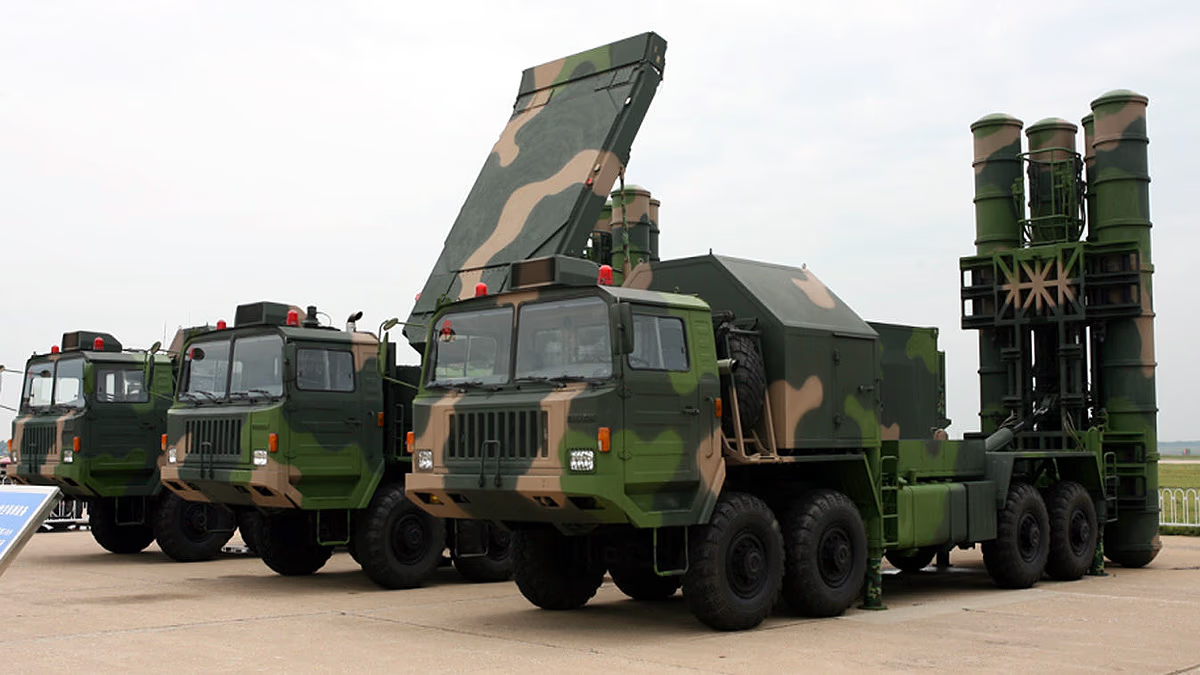
Source: aajtak
Did Systems Fail Against Afghan Drone Attacks?
According to Pakistan, their systems succeeded. Pakistani Minister Atta Ullah Tarar acknowledged the TTP’s attempted drone strikes but claimed their anti-drone systems intercepted them. No damage occurred.
Small drones were downed in Swabi, Naushehra, and Abbottabad. Despite the Taliban's grand claims, there’s no solid evidence. During the 2025 India-Pakistan conflict, the Chinese HQ-9 seemed faulted. However, there’s no failure here.
Read Also:
Is This a Failure of China's Defense Systems?
No, since the systems operated effectively. However, generally…
During the 2025 India-Pakistan conflict, HQ-9 showed drawbacks – unable to fully intercept Indian missiles. Experts claim China's systems are copies of the Russian S-300 but less potent. HQ-9 has been dubbed unreliable as it remains largely untested.
Pakistan continues to depend on China for cost-effective and available defense. The US hasn't provided Pakistan with air defense. Islamabad's defense systems are robust, mainly Chinese. Afghanistan's claims are grand, but Pakistan managed to intercept the drones. There’s no failure yet. However, shortcomings might surface in prolonged conflicts.