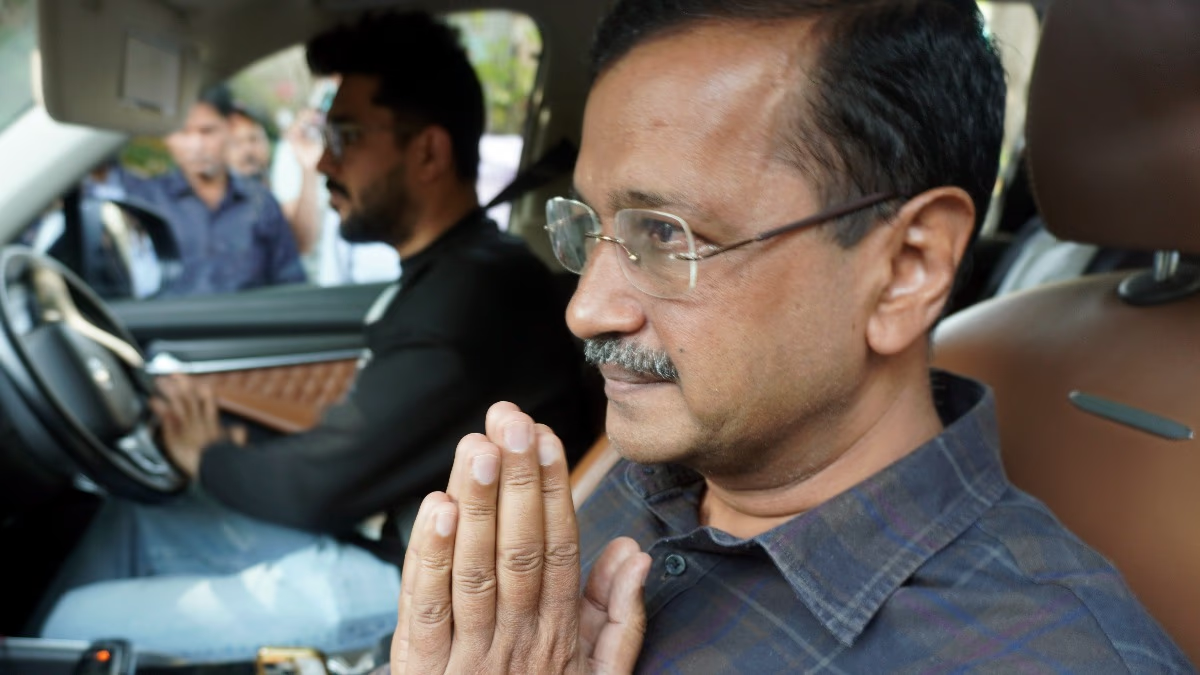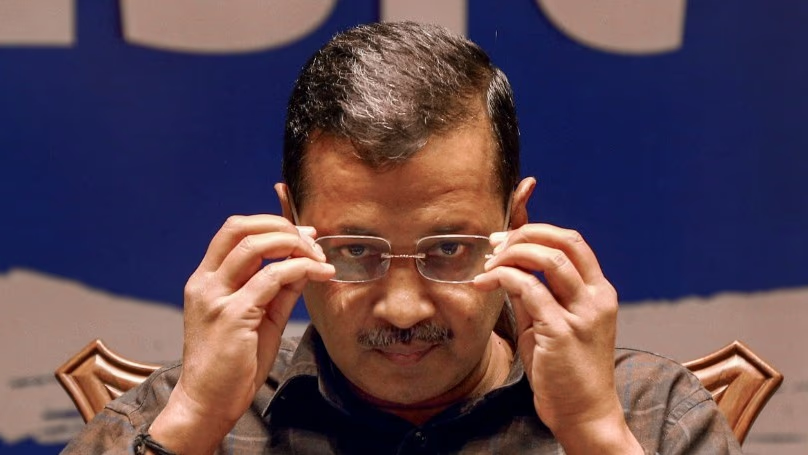
Rouse Avenue Court has cleared former Delhi CM and Aam Aadmi Party (AAP) National Convenor Arvind Kejriwal and his ally Manish Sisodia from allegations in the liquor scam. The court stressed that accusations must be substantiated with concrete evidence. Initially, former excise department commissioner Kuldeep Singh was exonerated, followed by Manish Sisodia and ultimately, Arvind Kejriwal.
What does the court's verdict entail?
The most significant aspect of the Rouse Avenue Court’s verdict is the dismissal of the CBI's case on Friday. Consequently, Arvind Kejriwal, Manish Sisodia, K. Kavitha, and 23 others were acquitted. Let's explore the 10 pivotal remarks by the court that led to the acquittal of former CM Kejriwal and Manish Sisodia.
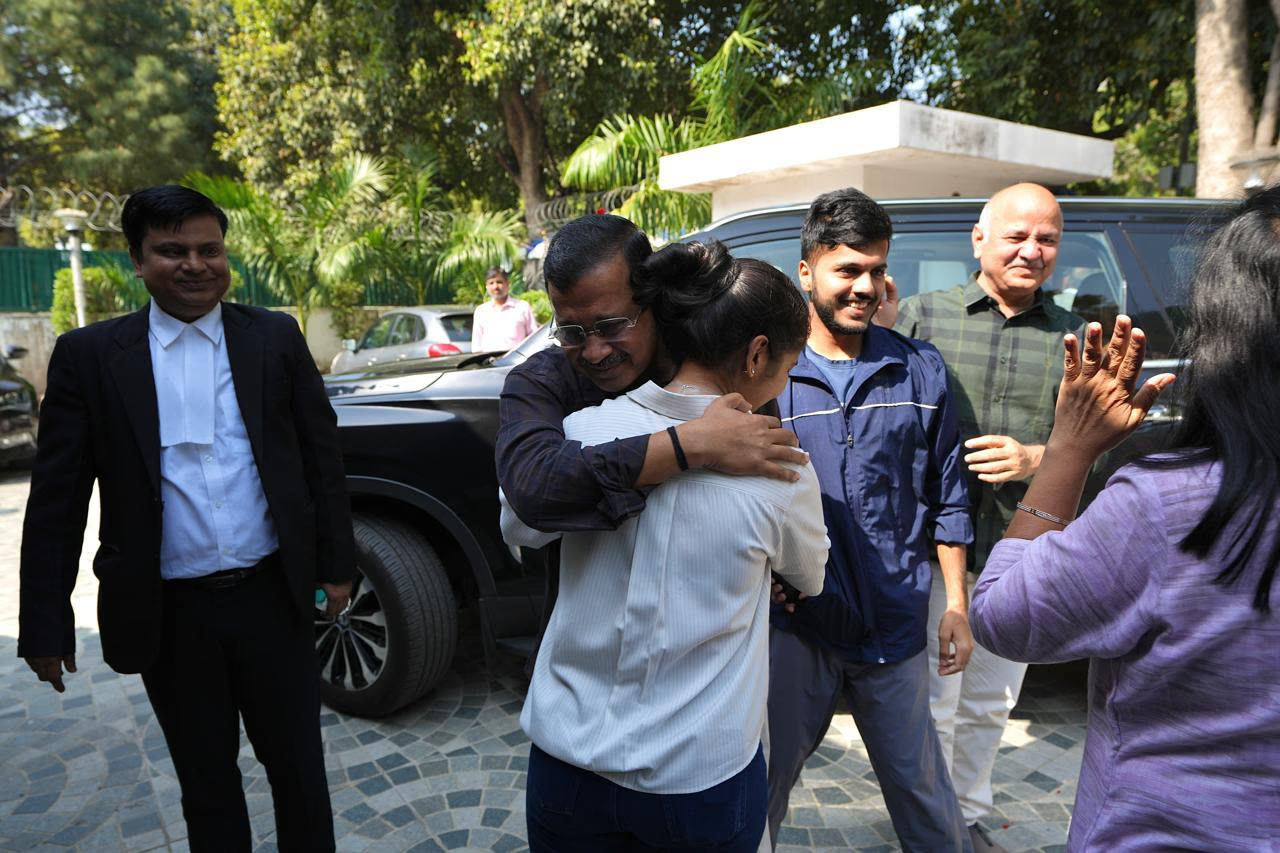
Source: aajtak
1. Lack of Prima Facie Evidence Against Kejriwal
The court noted that the prosecution failed to present compelling evidence directly linking Arvind Kejriwal to the alleged conspiracy. His name mainly appeared in a late testimony by a witness (PW-225), lacking independent corroboration.
2. Overreliance on a Weak Testimonial
The court acknowledged that accusations against Kejriwal primarily relied on a single unsupported line from PW-225’s statement, which was insufficient to establish a criminal conspiracy.
3. No Evidence of Personal Manipulation in Policy
The court found no evidence suggesting Kejriwal personally manipulated the excise policy or provided undue benefits. Simply approving cabinet decisions does not constitute criminal conspiracy.
4. Questionable Investigation Procedures
The judge made strong remarks about parts of the investigation, indicating some actions appeared more like ‘preplanned manipulation’ than fair inquiry.
5. Recommendation for Action Against Investigating Officer
In reference to an accused (A-1), the court recommended departmental action against the investigating officer for charging without substantial evidence, emphasizing the need for evidence-based prosecution.
6. Weak Claims on the 36-Page GoM Report
A crucial prosecution claim rested on a 36-page printed report, which the court found inconsistent with official records, highlighting contradictions in page numbers and timelines.
7. No Proof of Alleged Meetings
The prosecution largely based its case on statements of an ‘approver’ regarding meetings related to policy, with no documentary or electronic evidence to back these claims.
8. Unreliable and Contradictory Testimonies
Multiple charges were built on hearsay or later added statements, weakening the prosecution’s case due to their contradictory nature.
9. Absence of Evidence for Illegal Demands or Bribery
Under the Prevention of Corruption Act, evidence of ‘demand’ is crucial. The court found no clear evidence of illegal demands or bribery in many instances.
10. Failing to Meet the ‘Grave Suspicion’ Standard
The court asserted that during charge proceedings, the prosecution must establish ‘grave suspicion’ based on evidence, a standard it failed to meet.
The court unequivocally stated that mere suspicion or political affiliations are insufficient grounds for prosecution. Solid, lawful, and direct evidence is essential for proving criminal conspiracy. As the prosecution failed to meet these standards, all charges were dismissed during the charge stage.