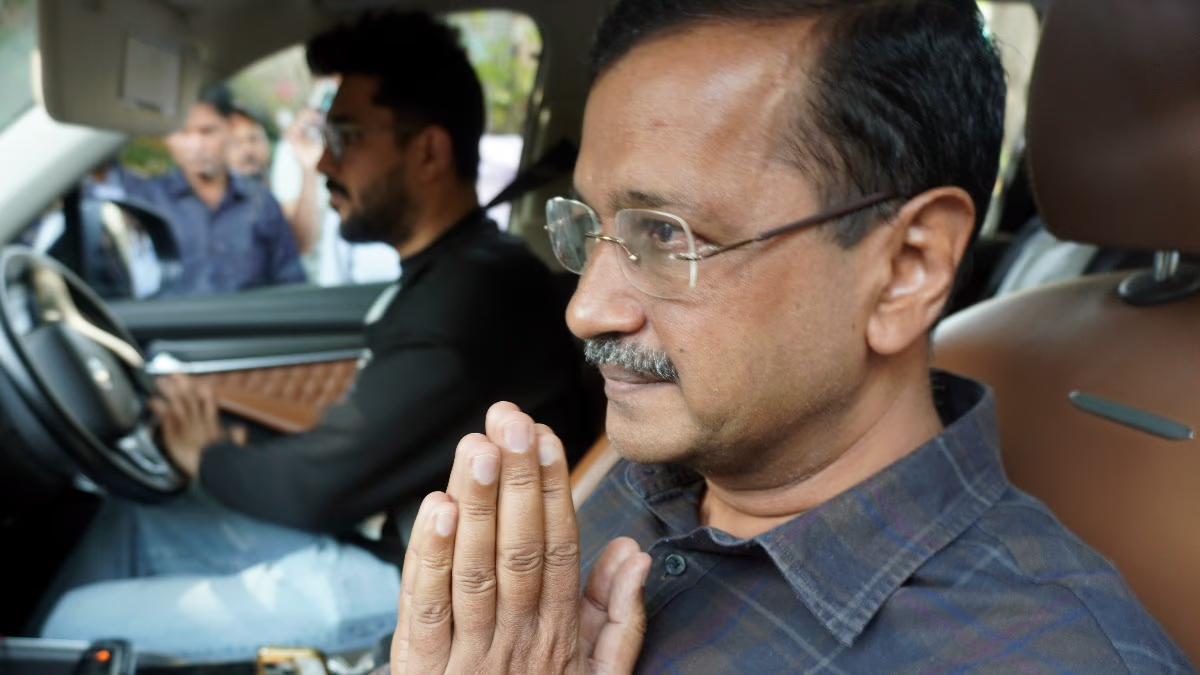
In a significant verdict on Friday, Delhi's Rouse Avenue Court acquitted former Chief Minister Arvind Kejriwal and Manish Sisodia in the much-discussed liquor policy case. The court emphasized that accusations cannot be believed without concrete and sufficient evidence. It noted that the investigation agency's evidence was weak and insufficient, leading to the relief. Meanwhile, the CBI is dissatisfied with the verdict and plans to challenge it in the high court. CBI lawyers will study the order in detail before filing an appeal.
Let's delve deeper to see what the court said in its verdict, the full decision, and how all 23 accused, including Kejriwal and Sisodia, were acquitted.
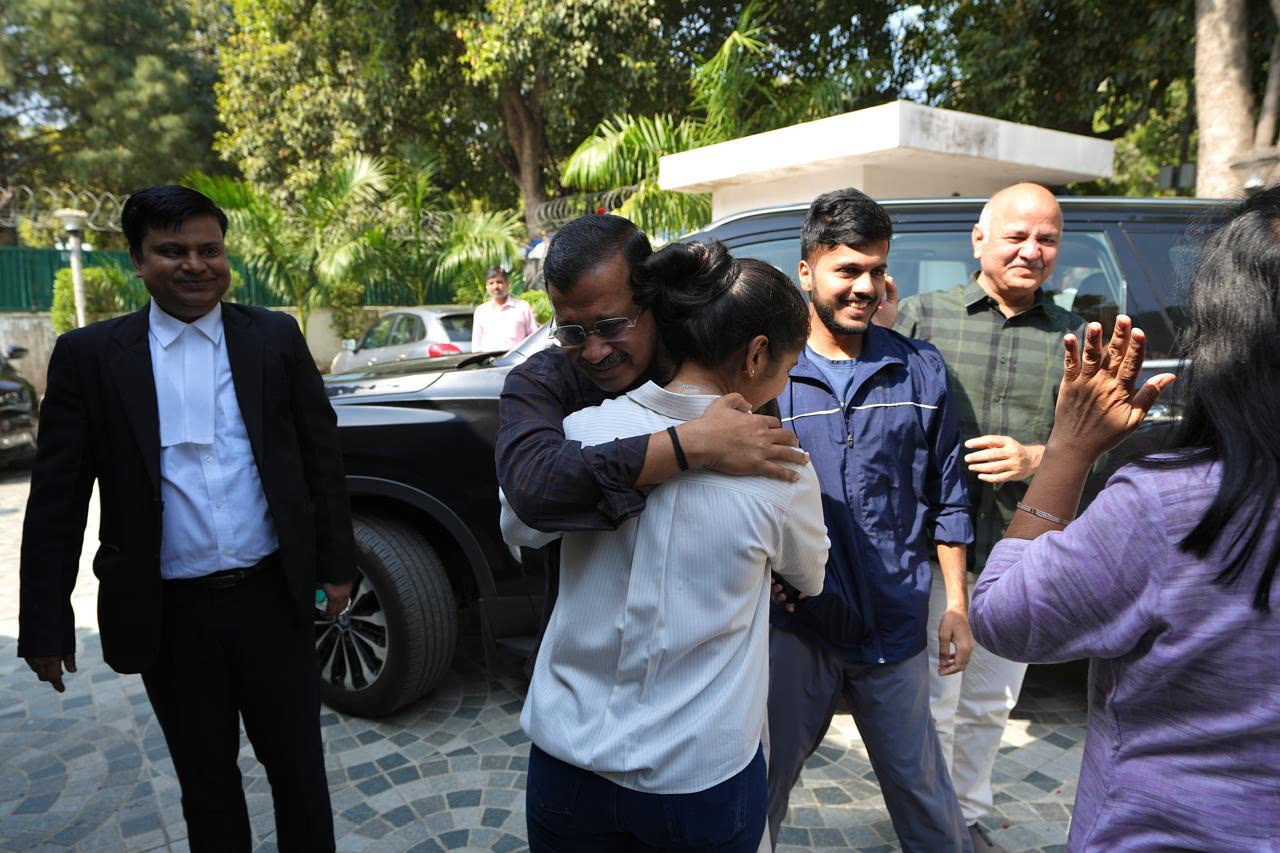
Source: aajtak
Rouse Avenue Court has given a clean chit to the former Delhi Chief Minister and Aam Aadmi Party (AAP) National Convenor Arvind Kejriwal, along with his colleague Manish Sisodia, from the liquor scam allegations. The court clearly stated that charges made without concrete and sufficient evidence cannot be believed. The court initially acquitted former excise department commissioner Kuldeep Singh, followed by Manish Sisodia, and finally Arvind Kejriwal.
CBI to Challenge the Decision in Delhi High Court
Meanwhile, the CBI has decided to appeal against the decision of the special court in the Delhi High Court. The investigation agency argues that various aspects of the investigation and the charge sheet were overlooked or insufficiently considered during the special court's hearing. The CBI has issued a statement saying that the bases and evidence ignored by the court will be presented before the High Court.
What did the court's decision include?
The most significant aspect of the Rouse Avenue Court's decision is the closure of the case filed by the CBI. With this, all 23 accused, including Arvind Kejriwal, Manish Sisodia, and K. Kavita, have been acquitted.
What did the court say about Arvind Kejriwal?
The court made three major comments regarding the allegations against former CM Arvind Kejriwal. The court stated that if there are serious charges, there should also be solid evidence to support them. The court also mentioned that the claim of Kejriwal being the main conspirator in the case does not hold without solid evidence. Allegations made without concrete evidence weaken public trust in those holding public office.
Comments on Manish Sisodia
The court's most important comment regarding Manish Sisodia was that there is no indication of criminal intent on his part.
The prosecution's case could not stand in the court's examination. 2. Reading documents and statements together reveals that there was administrative deliberation. 3. No indication of criminal intent was found. 4. The theory of a major conspiracy lacks strength. 5. There were also many contradictions within the prosecution's story.
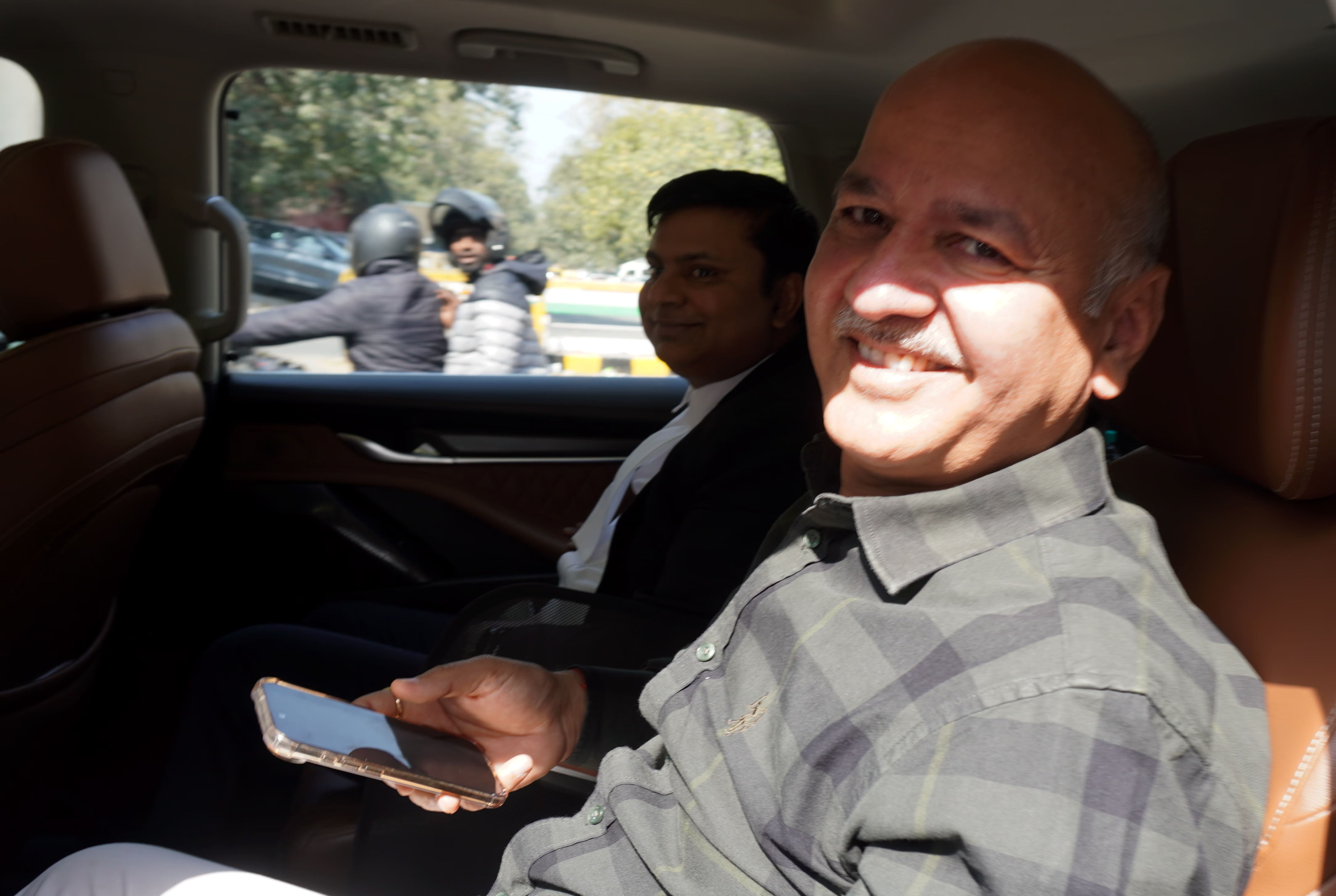
Source: aajtak
The Court Also Noted-
It is apparent from the entire process that consultations occurred at multiple levels, and documents indicate that institutional-level discussions took place. However, the CBI failed to establish a case against Manish Sisodia even at first glance. There is no substantial suspicion against him. Therefore, Manish Sisodia is discharged from the charges.
Notably, during the hearing, Kejriwal was present in court, and other accused, including K. Kavita, joined via video conferencing. The judge remarked that it had been only four months since they took over this case and needed to ask some questions. Subsequently, the judge posed six questions to the investigating officer (IO) that turned the verdict in favor of Arvind Kejriwal and Manish Sisodia.
The Judge Asked-
1. Why did you not attach a copy of the confession with the charge sheet? 2. Why was the legal opinion not filed as a separate document? 3. If the legal opinion was sent by email, why wasn't its copy attached? 4. Did you personally read those legal opinions? 5. It seems no one has properly read the legal opinions. 6. The three legal opinions referred to do not support the prosecution, yet it is claimed they do.
The court questioned the CBI's investigation, asking why certain statements and opinions were not included in the record. Furthermore, it raised the question of the basis for referring to the opinions of three legal experts as being in their favor. The court also expressed serious objections to the use of the term 'South Group.'
Strict Comments on the Charge Sheet
The Court Stated—
1. It is crucial to scrutinize all documents carefully while filing the charge sheet. 2. Two witnesses made statements contradicting the prosecution's claims. 3. Do you expect the court to accept everything you say without question? 4. You must remain impartial. 5. I am astonished; it's the first time I have seen so many deficiencies in a charge sheet, with many aspects not matching with witnesses and evidence.
Comments on Kuldeep Singh
1. There is no evidence against you. 2. I am surprised as to why you were made accused number-1. 3. It seems they made you an accused just to fit the story. 4. There is no evidence against the former Deputy Excise Commissioner Kuldeep Singh.
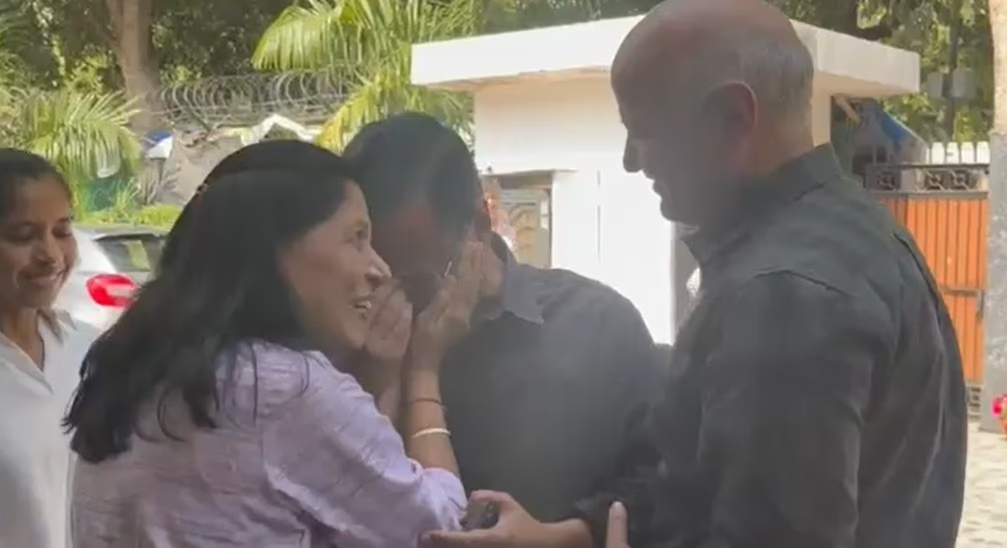
Source: aajtak
Special Judge Jitendra Singh Pointing out Flaws in the Investigation Said—
1. There is no concrete evidence against Kejriwal. 2. A case does not hold at first sight against Sisodia. 3. There are numerous misleading statements and significant flaws in the charge sheet. 4. The conspiracy theory is filled with internal contradictions. 5. Kejriwal was made an accused without evidence, contrary to the principles of law. 6. There's no concrete material or recovery against Sisodia.
Following such comments, the court first acquitted former excise commissioner Kuldeep Singh, followed by Manish Sisodia, and then Arvind Kejriwal.
The 10 Key Points Raised by the Court
1. No Prima Facie Evidence Against Kejriwal
The court said the prosecution could not present any substantial material to prove that Arvind Kejriwal was directly involved in the alleged conspiracy. His name emerged mainly in a statement provided late by a witness (PW-225), which lacked independent verification.
2. Excessive Reliance on a Weak Witness Statement
The court noted the charges against Kejriwal were primarily based on a line from PW-225's statement. Criminal conspiracy cannot be established solely on one unsupported statement.
3. No Evidence of Personal Manipulation in the Policy
The court found no proof that Kejriwal personally manipulated the excise policy or gave undue advantage to anyone. Approving a cabinet decision alone cannot be termed a criminal conspiracy.
4. Questions on the Investigation Process
The judge made sharp remarks about parts of the investigation, indicating some steps appeared more like 'pre-planned manipulation' than a fair probe.
5. Recommendation for Departmental Action Against the Investigating Officer
Concerning an accused (A-1), the court recommended departmental action against the investigating officer for making an accusation without sufficient evidence. This highlights the court's concern that prosecution should be evidence-based.
6. Claim Regarding the 36-Page GoM Report is Weak
One of the prosecution's key claims was based on a supposed 36-page printout report, which the court found did not match the official record. There was a contradiction in the number of pages and the timeline.
7. No Evidence for Alleged Meetings
The ‘approver’s statements were mainly in support of alleged meetings related to the policy. No documentary or electronic evidence was presented for these meetings.
8. Hearsay and Contradictory Testimony
Many charges were based on statements that were either hearsay or added later. Such contradictory and subsequently added statements weakened the prosecution's case.
9. No Proof of Illegal Demand or Bribe
Under the Prevention of Corruption Act, ‘demand’ evidence is crucial. The court found that in many cases, illegal demand or bribe verification wasn't clearly established.
10. ‘Grave Suspicion’ Standard Not Met
At the stage of framing charges, the court must see ‘grave suspicion’ based on material on record. The judge said the prosecution failed to meet this standard, too.
The court clearly stated that trials cannot proceed solely on rumors, political positions, or mutual relations. For criminal conspiracy, solid, lawful, and direct material is essential. Since this standard wasn't met, all accused were discharged at the charge framing stage.