Amid rising tensions with Iran, the U.S. has bolstered its military presence in the Middle East. President Donald Trump has mentioned sending a significant armada, including the USS Abraham Lincoln aircraft carrier, several destroyers, and F-15E fighter jets.
Additionally, the U.S. has dispatched extra batteries of the THAAD and Patriot missile defense systems to the Middle East. These deployments aim to protect U.S. forces and allied nations like Israel and the UAE from potential Iranian attacks.
THAAD Explained
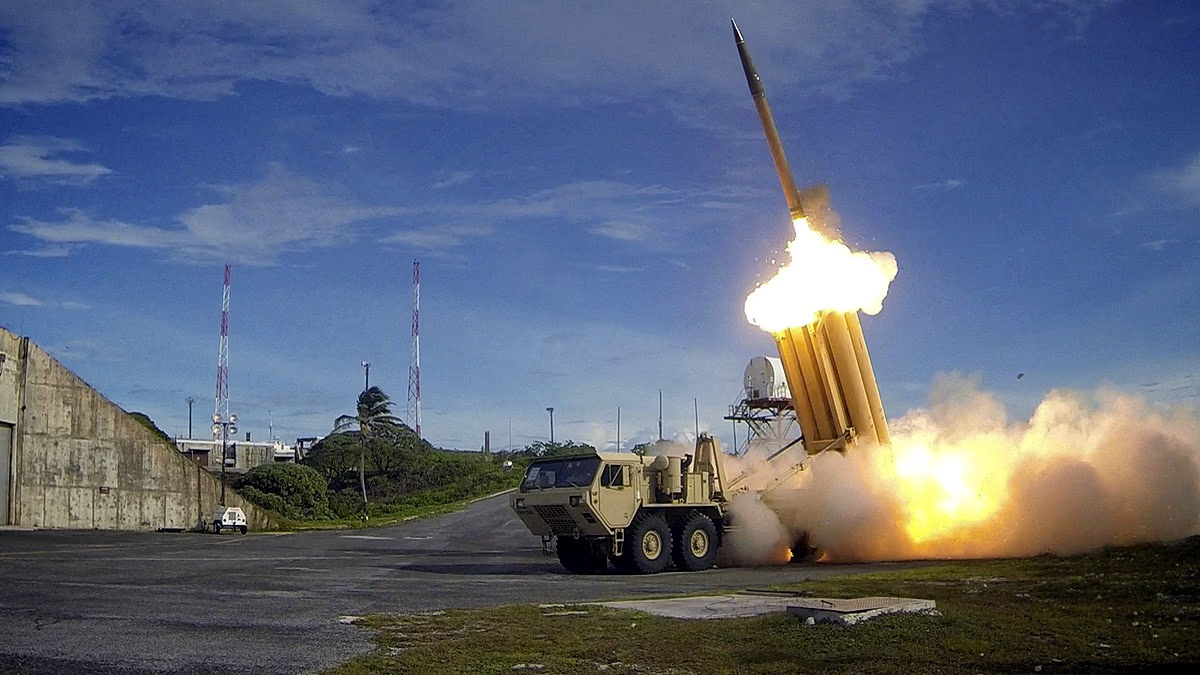
THAAD, an advanced anti-ballistic missile defense system by the U.S. Army, stands for Terminal High Altitude Area Defense. It is designed to neutralize ballistic missiles (short, medium, and intermediate-range) in their terminal phase, enhancing security aspects especially pertinent to the current geopolitical climate.
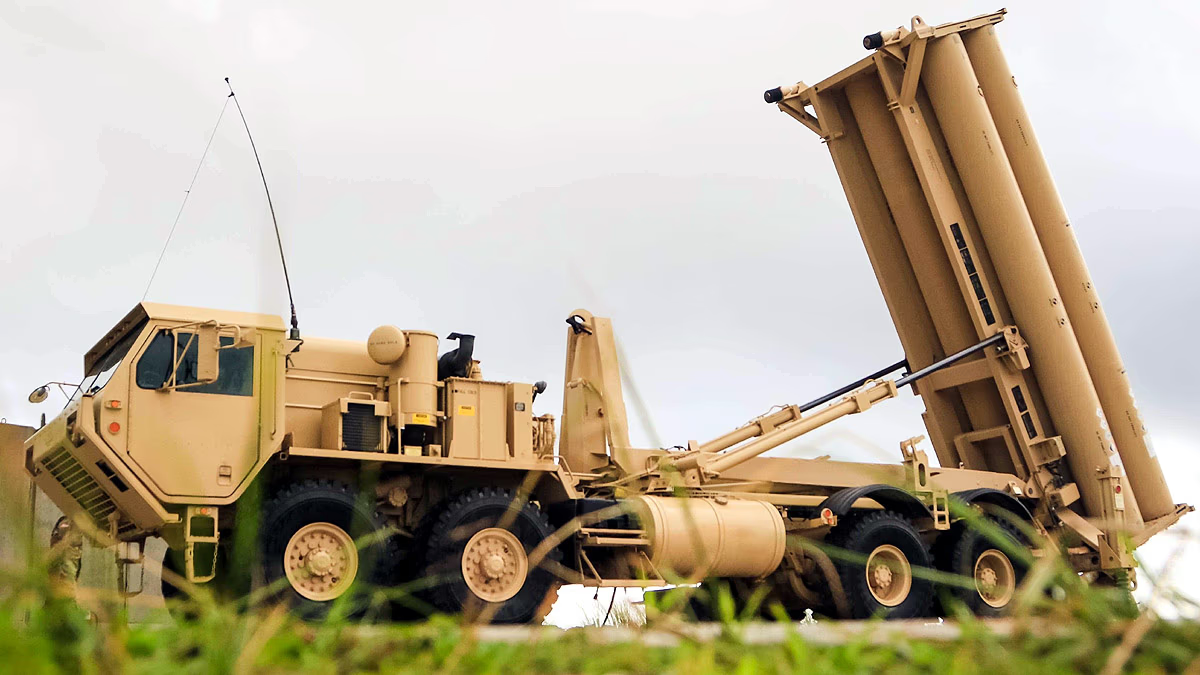
Source: aajtak
Range: 150-200 km (some reports suggest up to 200 km).
Altitude: Up to 150 km (operates both within and beyond the atmosphere).
Speed: Interceptor missiles accelerate at over 10,000 km/hr.
Hit-to-Kill Technology: Lacks an explosive warhead; the interceptor directly collides with enemy missiles, harnessing speed and kinetic energy for interception.
Mobility and Rapid Deployment: Launcher, radar, and control units mounted on trucks, can be deployed anywhere within hours.
How THAAD Works
A typical THAAD battery includes 90 personnel and comprises several components...
AN/TPY-2 Radar (X-band): Capable of detecting missiles from more than 1000 km away, equipped with high-resolution capabilities.
Launcher: 6-8 truck-mounted launchers, each equipped with 8 interceptor missiles.
Interceptor Missile: A single-stage solid-fuel rocket, devoid of any warhead – relies on hit-to-kill principle.
Fire Control and Communication Units: Manages operations and connects with other systems such as Patriot and Aegis.
Support Equipment: Includes command, communication, and logistics elements.
This system intercepts ballistic missiles during their descent – reducing the impact of Weapons of Mass Destruction (WMD) on the ground.
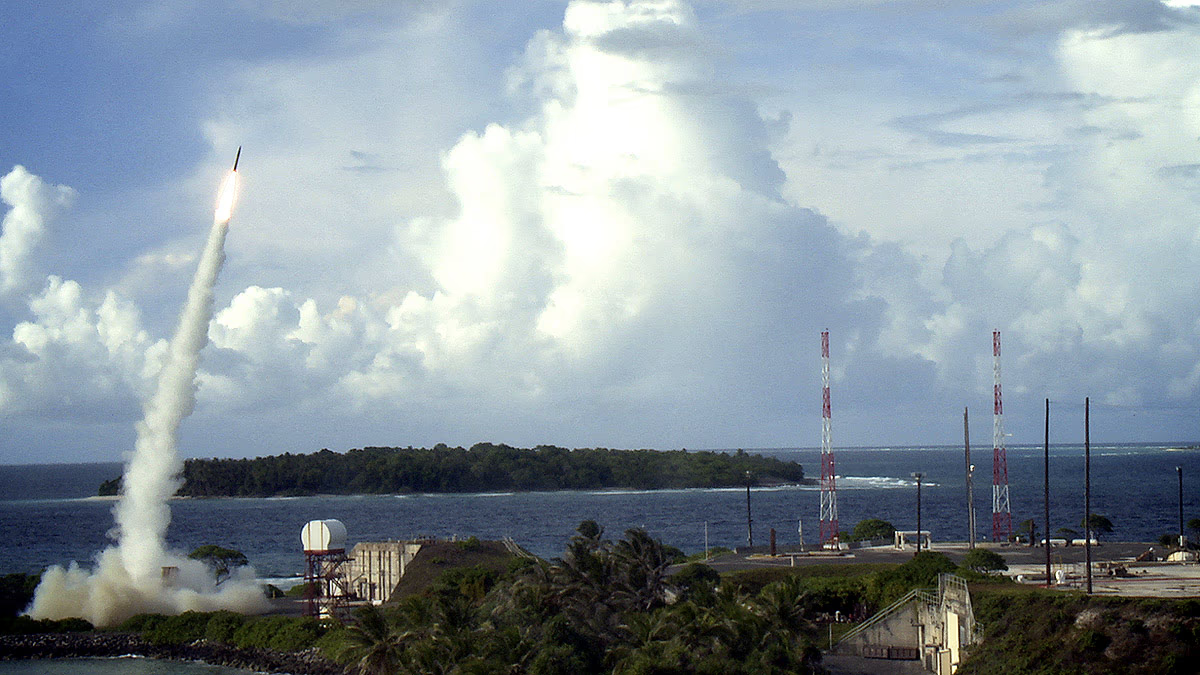
Source: aajtak
Why is the U.S. Deploying THAAD to the Middle East?
Tensions have peaked following protests and crackdowns in Iran, resulting in a seemingly unstable government. Iran possesses short and medium-range ballistic missiles (like Shahab, Fateh) capable of targeting U.S. bases, Israeli territories, or naval ships.
In June 2025, the U.S. and Israel launched strikes on Iran’s nuclear sites. Now, the Trump administration is preparing again, yet THAAD is being deployed to shield against potential Iranian retaliations. Reports by WSJ, NYT, and CNN indicate additional THAAD batteries being positioned in Kuwait, Saudi Arabia, UAE, or Israel.
Israel has had a THAAD battery since 2023. Together, THAAD and Patriot form a layered defense system, with THAAD serving at high altitudes and Patriot covering lower zones. Trump stated our armada has been sent, hoping it remains unused; however, this is a defensive maneuver signifying readiness for conflict.
THAAD Performance and Limitations
Performance: Successful interception in 17/17 flight tests, boasting a 100% strike rate.
Combat Proven: Utilized in defense of Israel during a 2025 12-day conflict, expending over 150 interceptors.
Limitations: Costs significantly (~$12-13 million per interceptor), limited stock (scarce by 2025). Not intended for long-range ICBMs, limited to SRBM/MRBM/IRBM engagements.
In the Iran-U.S. discord, THAAD serves as America's shield - capable of thwarting Iranian missile launches. The situation remains delicate, and further developments may ensue in the coming days.