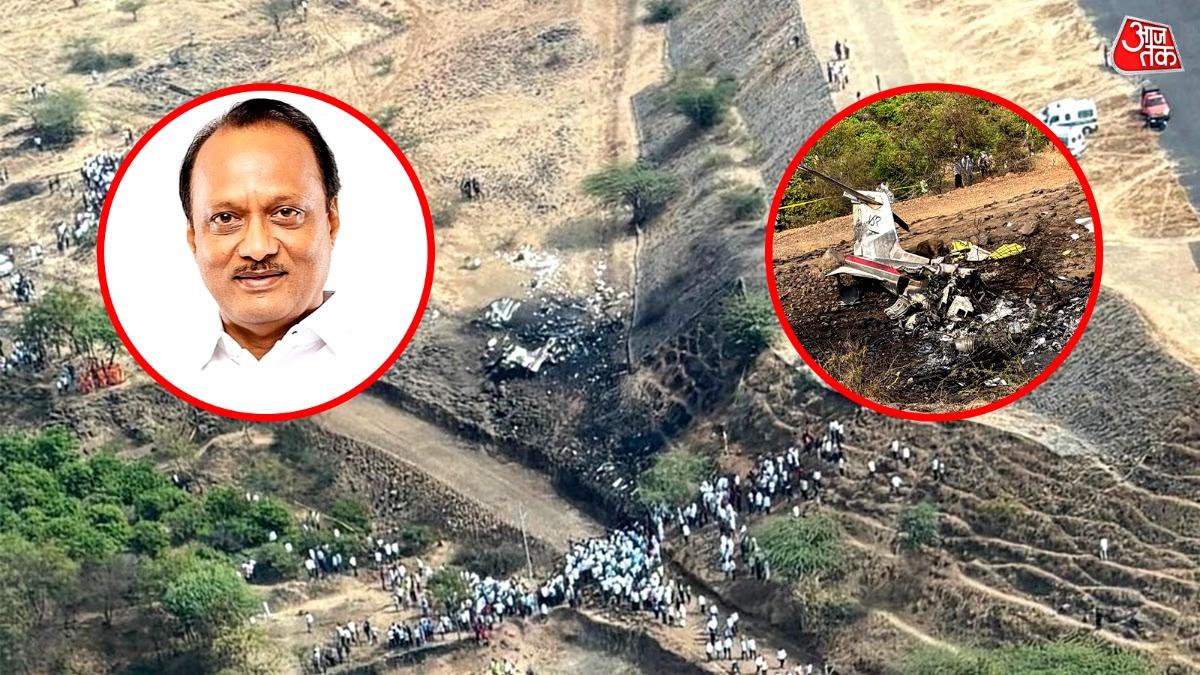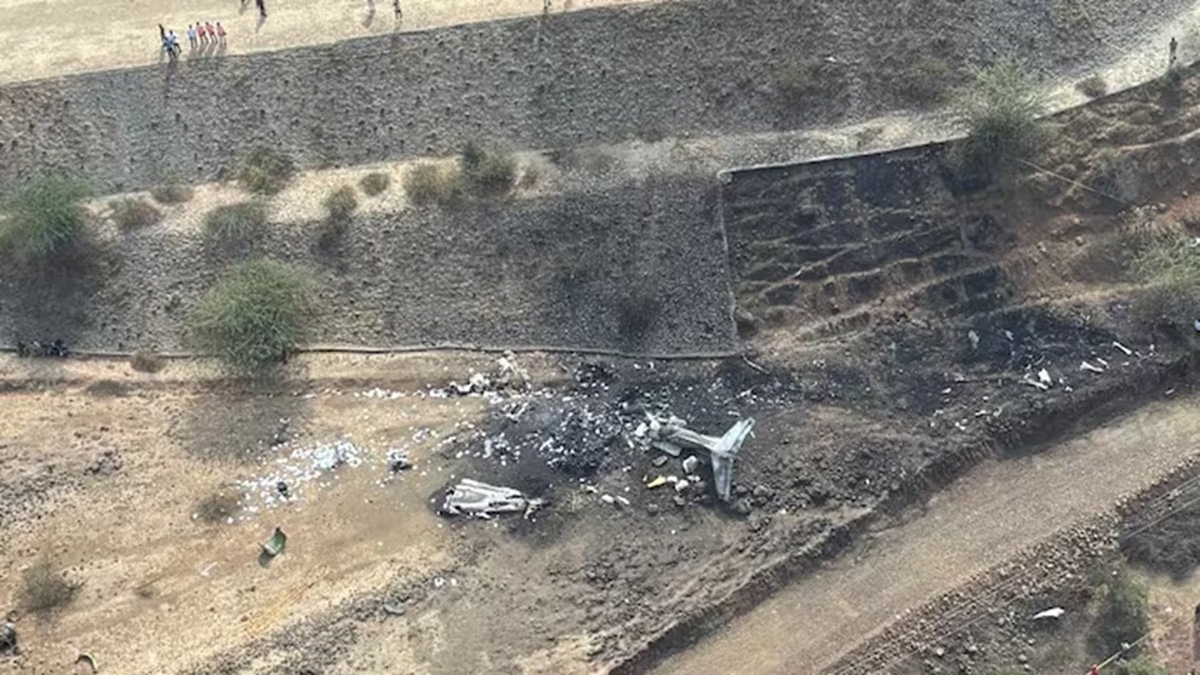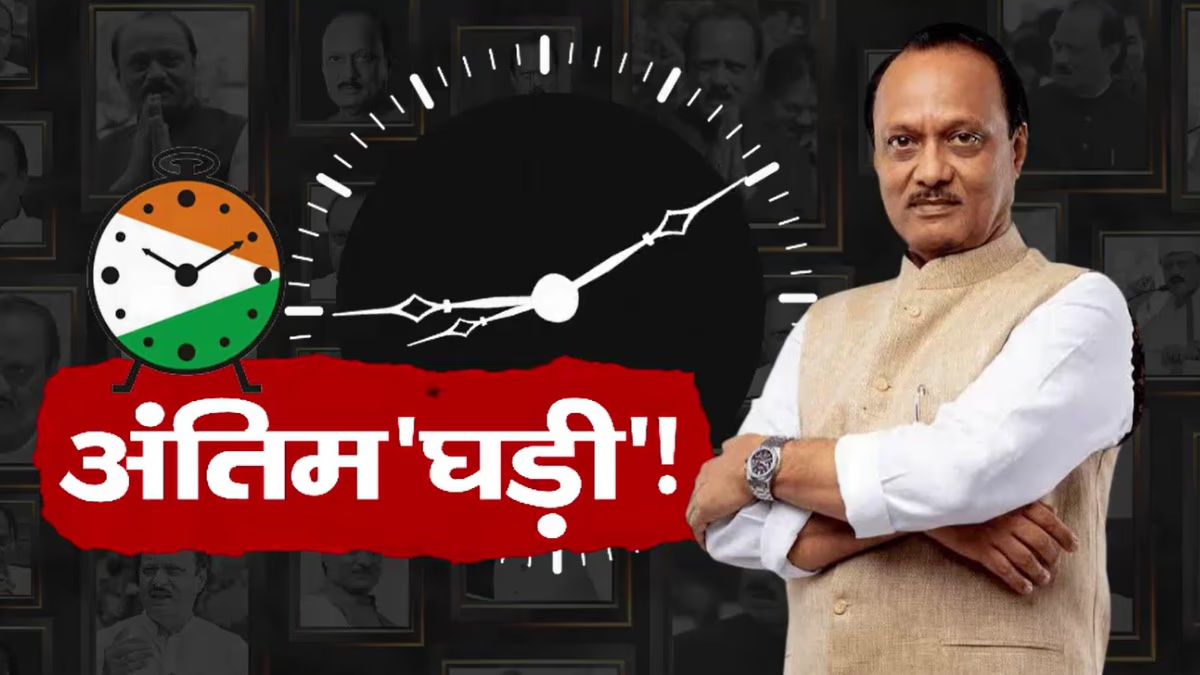
In Maharashtra's political scene, Ajit Pawar, the man known for keeping 'time' in his grasp, saw his life-clock stop permanently at 8:45 AM on Wednesday. A catastrophic plane crash near Baramati Airport not only claimed the life of the state's Deputy CM but also four others on board. The question remains whether this was merely an accident or if there’s a deeper technical failure or conspiracy. Preliminary findings show that the plane had no technical faults.
On Wednesday morning, as flames rose from the plane's wreckage near Baramati, identifying victims proved difficult. Eyewitness accounts and police sources reveal Ajit Pawar's body was identified by a watch—a unique personal item that also symbolized his party. A man who lived by strict discipline and time had his identity confirmed by the same clock in death.
Source: aajtak
Ajit Pawar's remains were brought to Baramati. Those present witnessed his cousin, Supriya Sule, breaking down outside the hospital, bringing tears to many eyes. His cremation is scheduled on Thursday at 11 AM at Baramati's Vidya Pratishthan Ground, with Home Minister Amit Shah in attendance.
The Complete Timeline of the Last 7 Minutes
The preliminary investigation deemed the aircraft fully airworthy, piloted by experienced aviators, with no MAYDAY call, yet the crash occurred. The focus now shifts to the last seven minutes as the aircraft circled Baramati’s airstrip. On January 28, at 8:10 AM, Ajit Pawar took off from Mumbai to Baramati for district council election rallies. The flight was routine, with no weather warnings.
At around 8:37 AM, the plane vanished from radar, only to reappear two minutes later. FlightRadar24 data indicates a 'go-around maneuver'—an aborted landing attempt followed by gaining altitude. The first landing attempt occurred at 8:38:18 AM but failed due to poor visibility, prompting the pilot to go around at 8:38:45 AM. The aircraft returned to its previous path.
Then came the decisive moment. At 8:42 AM, pilots informed ATC of runway visibility issues. At 8:43:11 AM, the aircraft made a second approach, and pilots confirmed 'runway in sight.' ATC cleared landing on Runway-11. By 8:44 AM, the aircraft was near the threshold but suddenly plunged into an adjacent ravine, erupting into flames.
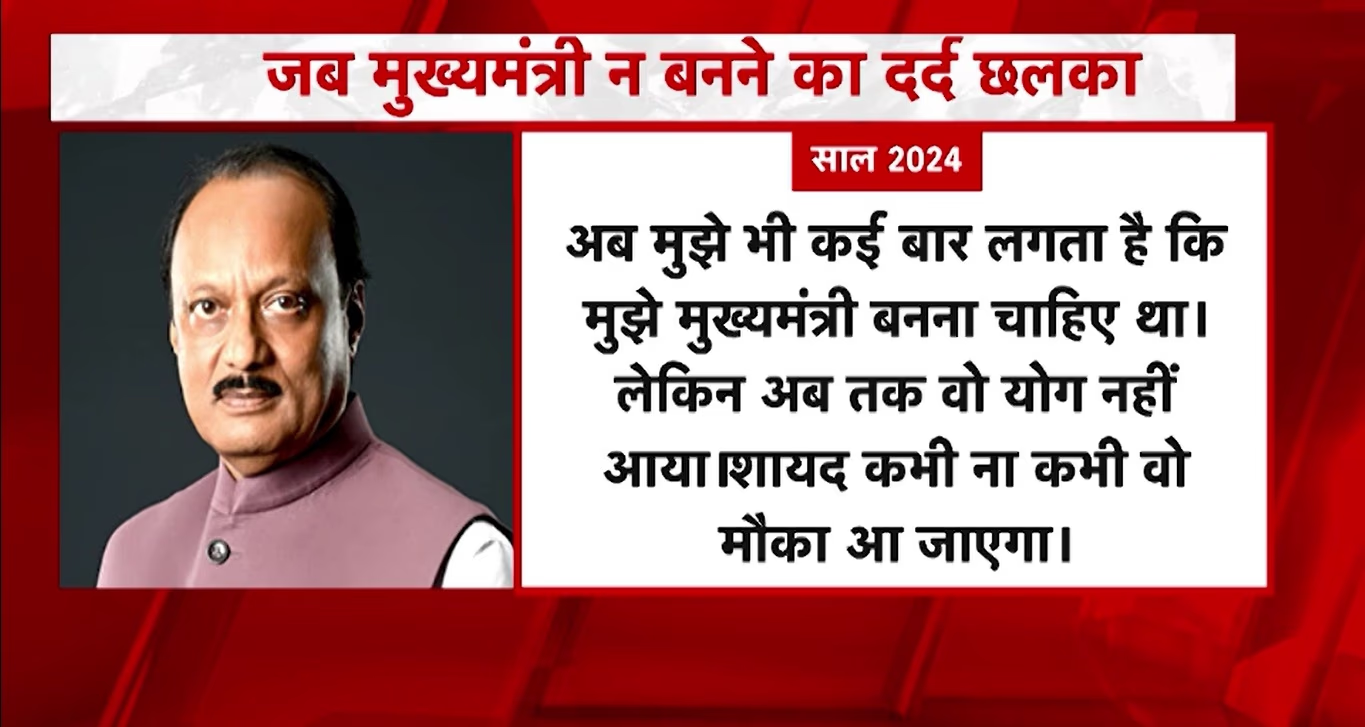
Source: aajtak
The Main Angles of the Investigation: What Went Wrong?
The Civil Aviation Ministry stated visibility was approximately 3,000 meters at the time. Yet eyewitnesses, communications with ATC, and flight data suggest confusion regarding the runway. Baramati’s runway is a 'table-top' runway on an elevated surface, often causing height perception issues for pilots without Instrument Landing Systems (ILS), relying solely on visual cues.
The ill-fated 'Learjet 45' belonged to Delhi-based VSR Ventures. Intriguingly, this plane had previously slipped during landing at Mumbai Airport in September 2023. Despite owner V.K. Singh's claims of airworthiness certification by the DGCA, opposition questions the oversight due to this 'old wound.'
AAIB and DGCA have initiated a joint investigation, meticulously examining debris, ATC logs, flight data records, and CCTV footage.
Currently, investigation agencies (AAIB and DGCA) are focusing on three primary angles.
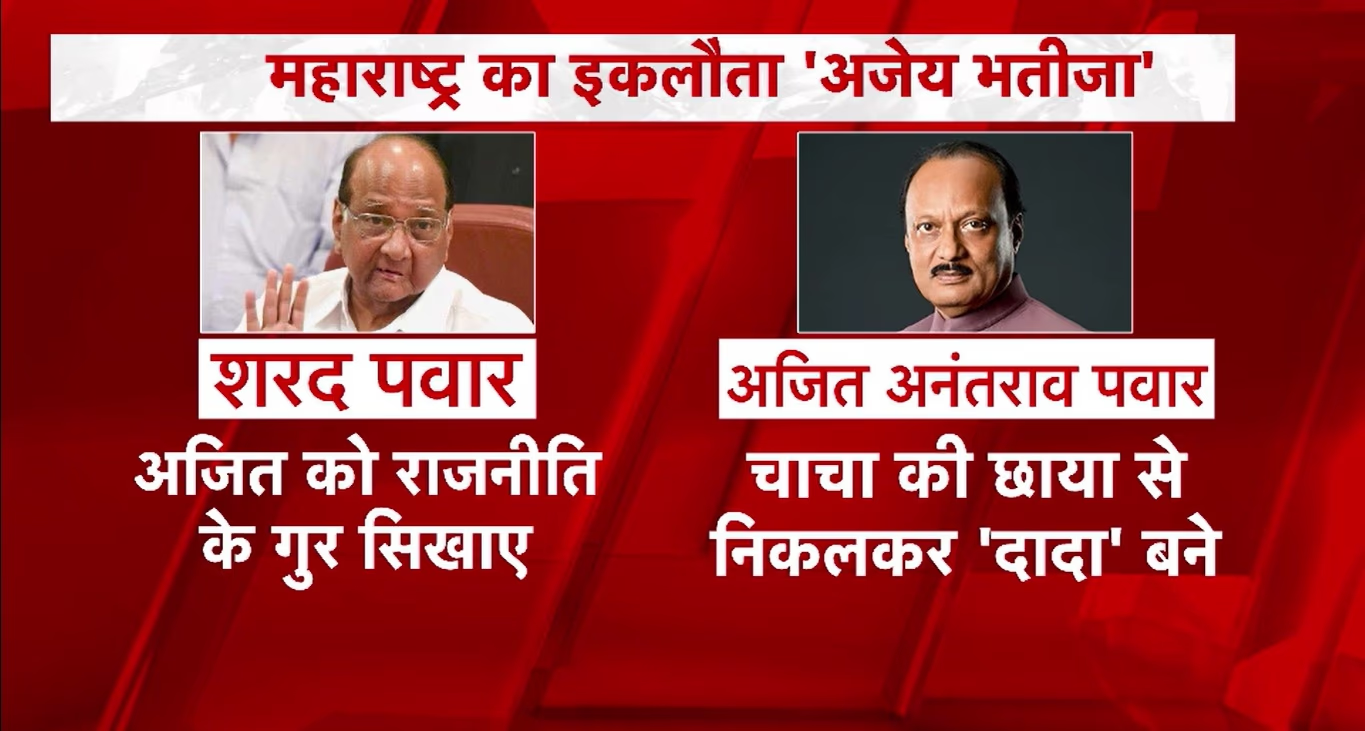
Source: aajtak
1. Weather and Visibility:
The first and most significant angle is weather. Why did pilots report runway invisibility if the visibility was 3,000 meters? Was there reduced visibility at higher altitudes? Did fog or low-level clouds create last-minute confusion? While CCTV shows adequate ground visibility, experts acknowledge differences between aerial and ground visuals.
2. Technical Aspects:
The initial findings confirm the aircraft's 100% airworthiness. The Airworthiness Certificate was valid, no technical issues noted. Pilot-in-command Sumit Kapoor had 15,000 flying hours, and co-pilot Sambhavi Pathak had 1,500. Both were medically fit.
Yet, the question remains—did any system suddenly fail? Was there a misjudgment in height or speed? Or did the table-top runway's optical illusion override technology?
3. Human Error:
The third angle is the most sensitive—human error. Did pilots misjudge runway distance? Was the post-go-around approach rushed, leading to optical delusions? According to ATC records, there was no readback post landing clearance. Just moments later, ATC observed flames near the runway threshold, indicating a rapid sequence of events.
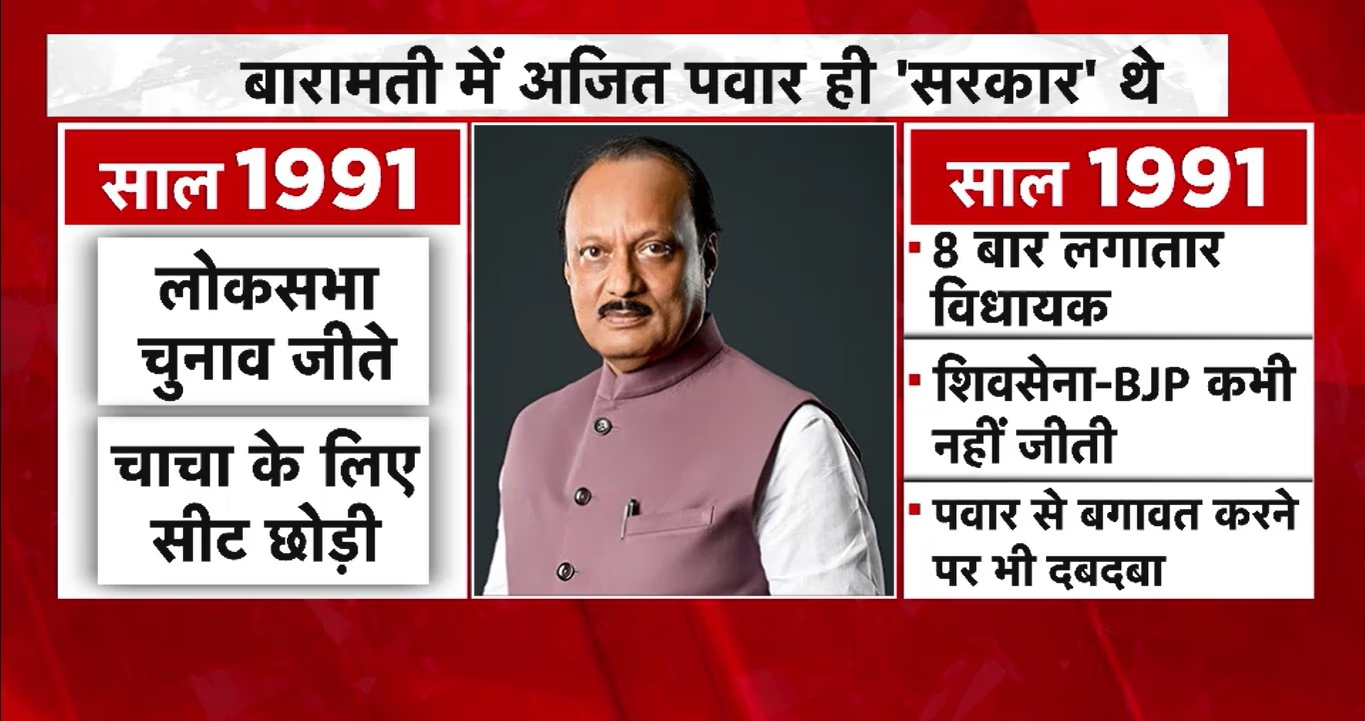
Source: aajtak
Political Resonance: The Talk of Conspiracy
The crash news invoked national grief but soon transitioned to politicking. West Bengal's Chief Minister Mamata Banerjee expressed deep suspicion, demanding a Supreme Court-supervised inquiry. Akhilesh Yadav and Shiv Sena (UBT) leader Sachin Ahir questioned how such a critical VIP flight faced such a severe lapse. However, Chief Minister Devendra Fadnavis dismissed these remarks as opportunistic politics.