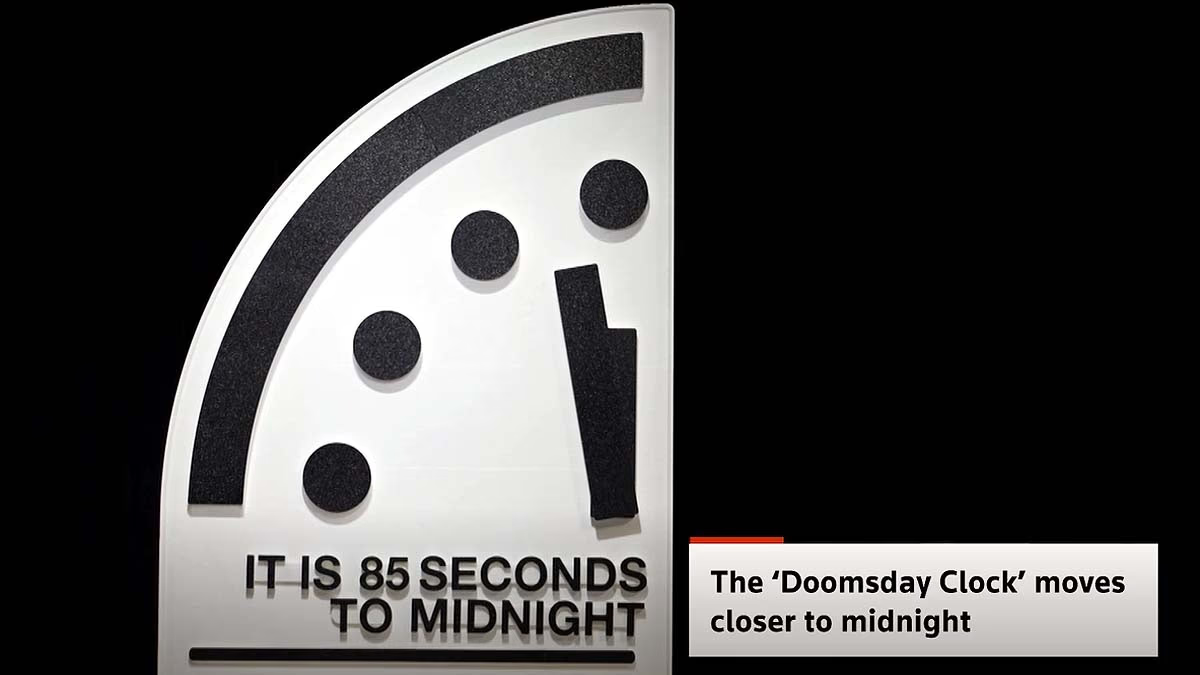
The team of atomic scientists has reset the renowned Doomsday Clock to just 85 seconds before midnight. This is the closest it has ever been, symbolizing how near the world is to potential annihilation. Last year, it was set at 89 seconds, so we've moved 4 seconds closer.
The Clock was created by the non-profit organization, Bulletin of the Atomic Scientists, in Chicago during the Cold War in 1947 to raise awareness about global threats.
This clock serves as a metaphor for how close humanity is to disastrous events, measuring risks like nuclear war, climate change, AI (artificial intelligence), and other global dangers. Experts point fingers at aggressive policies by Russia, China, and the USA, conflicts like those in Ukraine and the Middle East, the deterioration of nuclear arms control, and AI misuse, leading us to a more perilous position. Let's delve into the Clock's purpose, the changes, and the reasoning behind them.
Read more:
What is the Doomsday Clock?
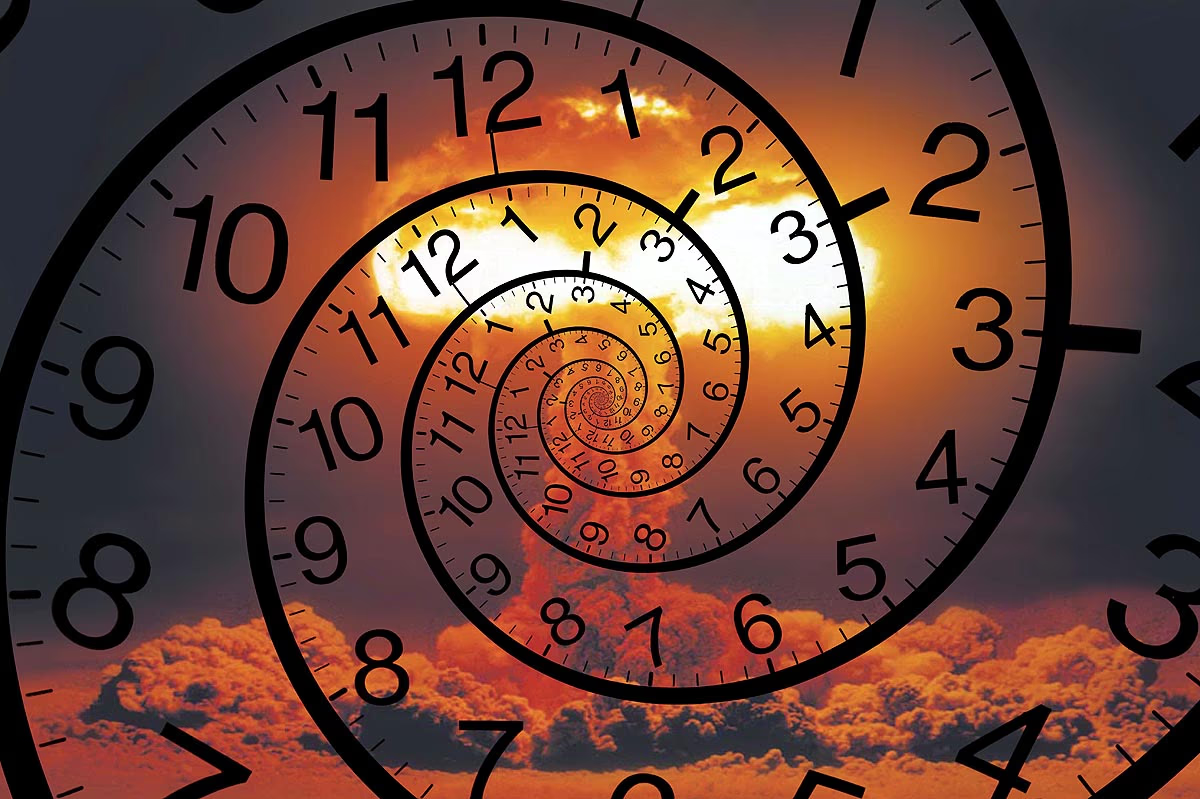
The Doomsday Clock is not an actual clock; it's a symbolic metric representing how near humanity is to doomsday. Established in 1947 amidst the Cold War tension between the U.S. and the Soviet Union, it was conceived by scientists including Albert Einstein and J. Robert Oppenheimer, who were part of the team developing nuclear bombs.
The Clock is updated annually, where midnight denotes total destruction. Closer to midnight implies greater danger. Initially, it was set at 7 minutes before midnight in 1947, and the furthest it ever was, 17 minutes, was in 1991 when the Cold War ended. Now, it's at 85 seconds – the closest ever.
Source: aajtak
Why Did the Clock Move Closer in 2026?
Scientists indicated that since 2025, there have been no significant improvements. Key reasons include...
Rising Nuclear Threats
The aggressive postures of Russia, China, and the USA. Russia utilized nuclear hypersonic missile Oreshnik in the Ukraine conflict and deployed it in Belarus.
American and Israeli bombardments on Iran, ongoing skirmishes at the India-Pakistan border, and threats from China over the Korean Peninsula and Taiwan.
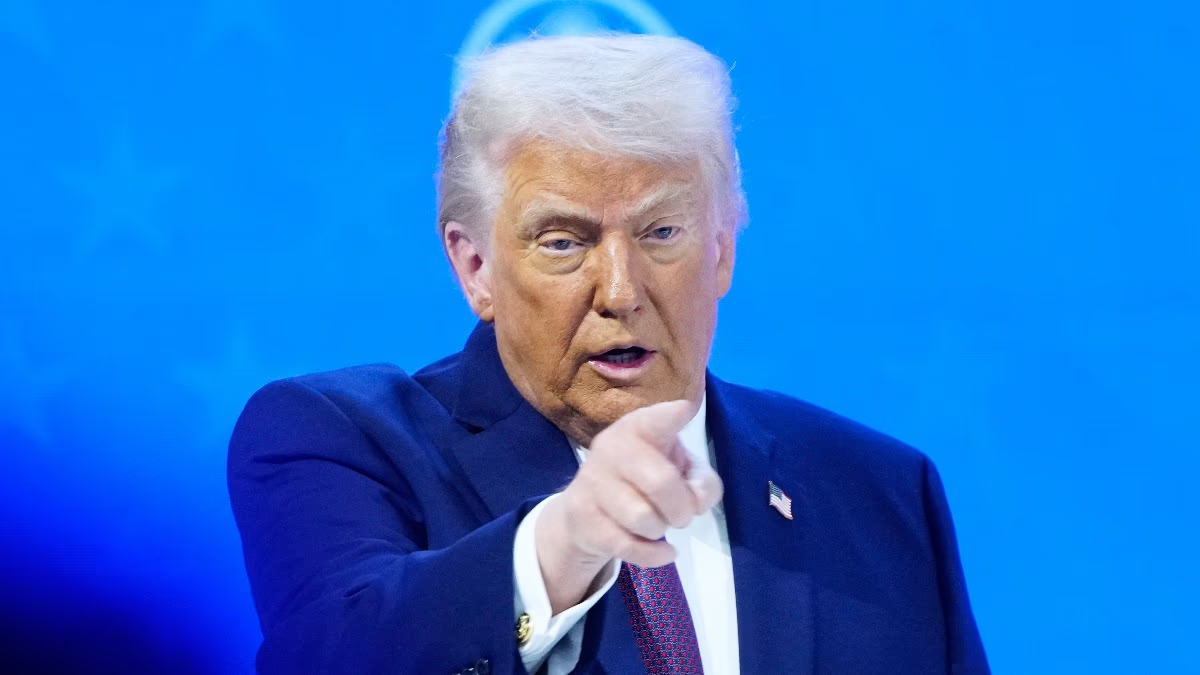
President Donald Trump ordered resumption of nuclear testing after 30 years. Except for North Korea, no country had performed tests for 25 years.
The NEW START treaty (limiting nuclear arsenals between US and Russia) is set to expire on February 5th. Putin proposed a one-year extension, but Trump did not respond.
AI and Technological Risks
The integration of AI into military systems without regulation poses risks like easier fabrication of biological weapons. Spread of misinformation fueled by AI can accelerate warfare. Nobel laureate Maria Ressa warns that misinformation from social media and AI travels faster than truth. Your chatbot is merely a probabilistic entity, not based on facts.
Read more:
Climate Change and Other Threats
Climate change persists as a major concern, potentially escalating conflicts over resources.
Policies under Trump: U.S. military forces sent to capture Venezuelan President Nicolás Maduro, plans to annex Greenland, threats to Latin America. These actions weakened transatlantic cooperation.
Bulletin President Alexandra Bell stated that leadership is lacking globally. New imperialist tendencies and Orwellian regimes push the Clock even closer to midnight, with nuclear risks at an intolerable high.
Clock Changes Over the Years
In the last four years, the Clock has moved closer three times. The risks of nuclear testing returned in 2025, proliferation increased, and three wars are casting nuclear shadows.
Lack of global unity: The winner-takes-all approach of powerful nations hinders the mitigation of nuclear, climate, and AI threats.
Domestically, Trump's actions: attacks on science, education, civil service, and media.
Impact on the World?
This Clock serves merely as a warning but suggests that without increased cooperation, destruction is probable. Scientists caution that countries like Russia, China, and the USA are becoming more nationalistic, undermining global unity. Regulation on nuclear weapons and AI control is essential.
Bell highlighted that China's nuclear testing would be most beneficial, with its arsenal expanding. This scenario urges us to reconsider global leadership's actions. Without change, the Clock inches closer.