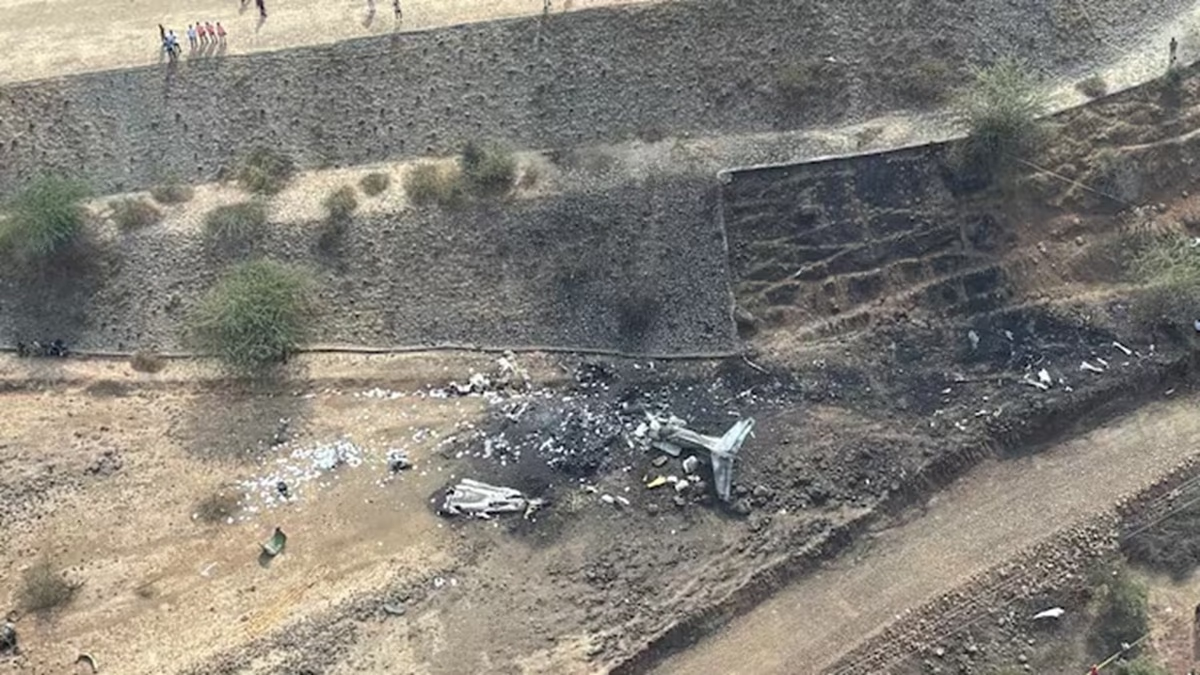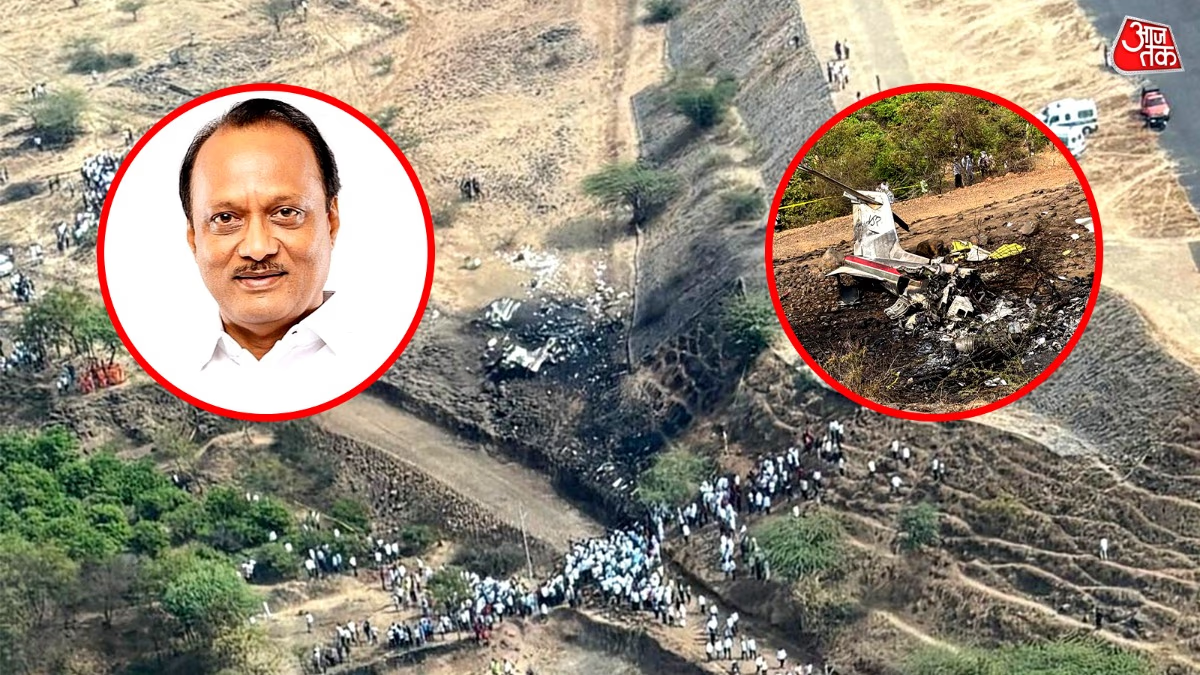
The owner of the aircraft in which Maharashtra's Deputy CM Ajit Pawar was traveling has come forward with a statement. VK Singh, the owner of the Learjet plane, mentioned that the pilot possibly couldn't see the runway and made a 'missed approach.' Singh remarked, "Initially, it seemed the pilot might not have seen the runway, hence executed the missed approach. If a pilot isn't comfortable proceeding with the landing, a missed approach is conducted."
A 'missed approach' is a standard aviation procedure when a safe landing can't be completed during an instrument approach, commonly referred to as a go-around.
Understanding a Missed Approach
In aviation, a missed approach is a standard process followed by pilots when an instrument approach (like ILS, RNAV, VOR) does not result in a safe landing. Simply put, if the landing attempt is unsuccessful or doesn't seem safe, the pilot aborts the approach and ascends the aircraft again. This is known as a missed approach.
This procedure is prescribed by agencies like the International Civil Aviation Organization and the Federal Aviation Administration. It appears as a separate section in every instrument approach chart detailing the missed approach steps.
In brief, a missed approach means "when landing doesn't occur, safely ascend again." It's a life-saving procedure, especially in adverse weather or low visibility conditions. In the Baramati incident, this process was pivotal.
What is a Go-Around?
A go-around is another safety maneuver in aviation, halting the landing attempt and immediately ascending. It's routine yet crucial, initiated by the pilot or directed by Air Traffic Control (ATC).
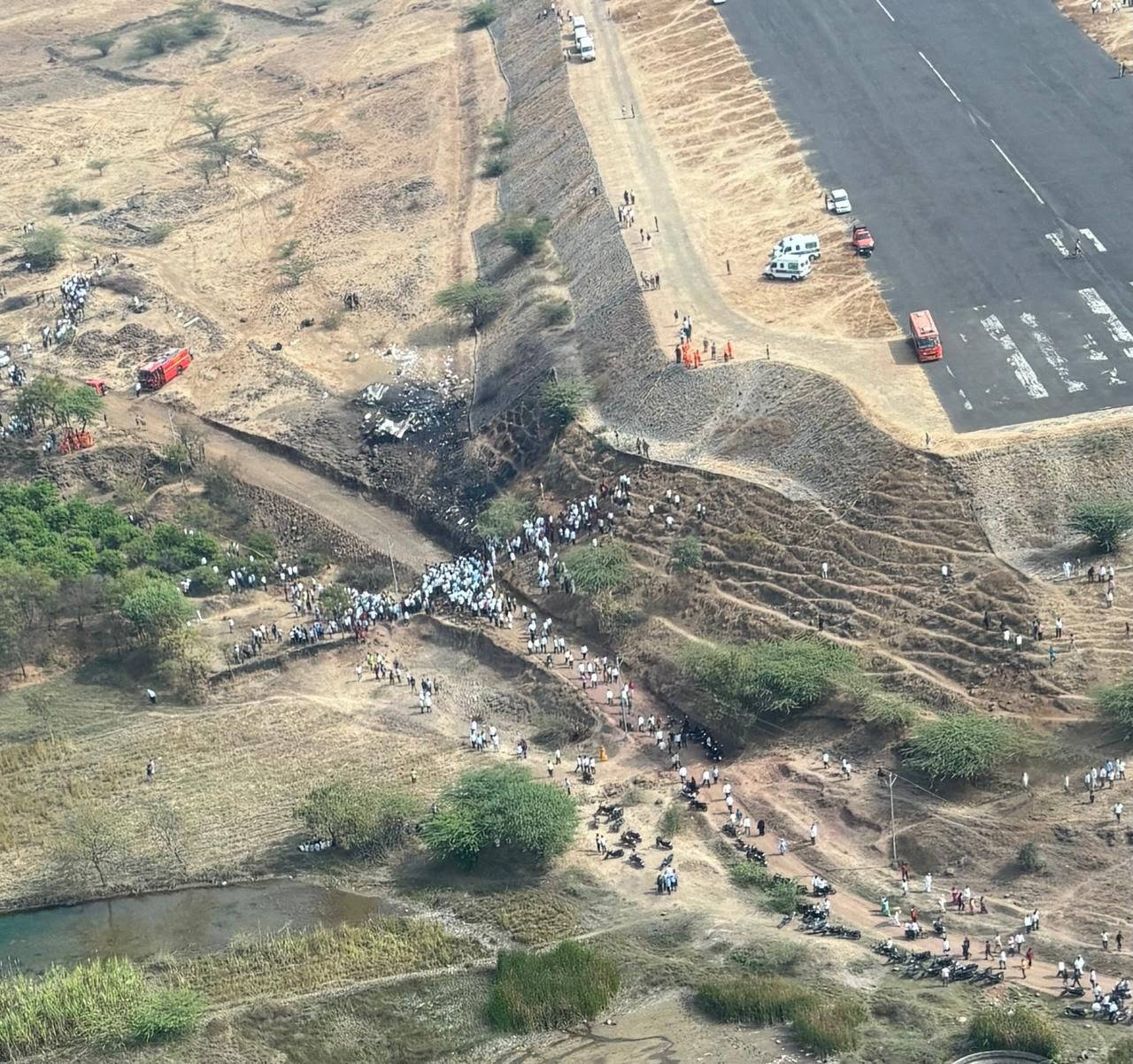
Source: aajtak
This Learjet plane had to perform a go-around on Wednesday morning, meaning it couldn't land successfully on the first attempt. Later, it was cleared to land in Baramati.
However, after clearance, the plane failed to provide any 'read-back' to the ATC and, shortly after, ignited by the runway's edge.
Understanding Read-Back
In aviation, a read-back is a crucial safety procedure where pilots repeat important parts of a message or instruction from ATC. This "closed-loop" communication ensures the flight crew has correctly heard and understood the controller's instructions.
Multiple images of the plane crash have gone viral on social media.
The 16-year-old chartered plane operated by VSR Ventures Private Limited crashed at Baramati Airport during a second landing attempt. It's an uncontrolled airfield where local flying instructors and trainees typically provide traffic information.
3,000 Meters Visibility, Yet No Runway in Sight
The Aircraft Accident Investigation Bureau is analyzing why, despite the reported 3,000-meter visibility, the crew struggled to maintain visual contact with the runway.
Understanding the Entire Event
The Ministry of Civil Aviation issued a statement based on reports from the person managing Baramati's air traffic control, detailing the sequence of events. Despite calm weather reports, the flight faced visibility issues during landing attempts.
At 8:18 AM, the plane first contacted Baramati air traffic control, released by Pune's approach 30 nautical miles (about 55 km) before Baramati.
The crew was advised to descend at will under visual meteorological conditions, informed of calm winds and approximately 3,000 meters visibility.
On the final approach toward the runway, the crew reported runway not visible, initiated a go-around to reposition for another attempt.
Initially indicating the runway was still not visible, the crew shortly followed with "runway visible," and ATC approved the landing at 8:43 AM.
However, the crew missed the mandatory read-back for this final approval. At 8:44 AM, just a minute after the last communication, ATC personnel saw flames near the edge of the runway.
Notably, on the morning of January 28, 2026, Maharashtra's Deputy Chief Minister and NCP leader Ajit Pawar's private chartered Learjet-45 crashed during landing at Baramati Airport. The plane was en route from Mumbai to Baramati for Zilla Parishad election campaign events involving Ajit Pawar.
The crash occurred around 8:45 AM during the second approach attempt. Fog and low visibility led to the plane's crash landing post-go-around maneuver, veering off the runway and subsequently catching fire.
The aircraft carried a total of 5 passengers, including Ajit Pawar, his PSO Vidip Jadhav, attendant Pinky Mali, pilot Sumit Kapoor, and co-pilot Shambhavi Pathak. Tragically, all perished at the scene.
Pieces Land Near Residential Buildings
Eyewitnesses reported a loud explosion, with plane debris scattering toward residential buildings. One said, "Before landing, the plane tilted. We witnessed the blast, which was terrifying."
Another witness noted control loss seemed evident about 100 feet above the runway.
"As the plane descended, we feared a crash. Rushing toward it, we saw flames as four to five explosions followed, preventing access to the crash site."
On-site, witness Pramod Madhurikar stated victim identification and ambulance transport happened soon after the crash, with the fire brigade arriving shortly thereafter.