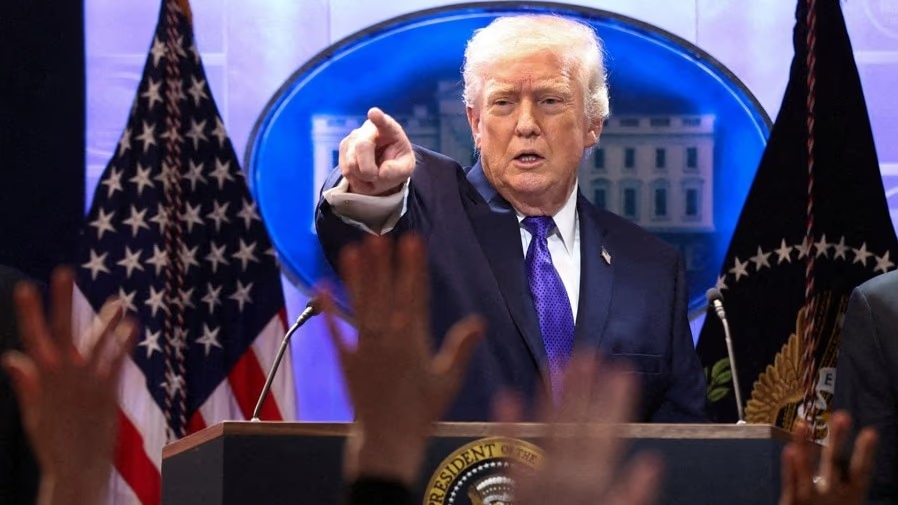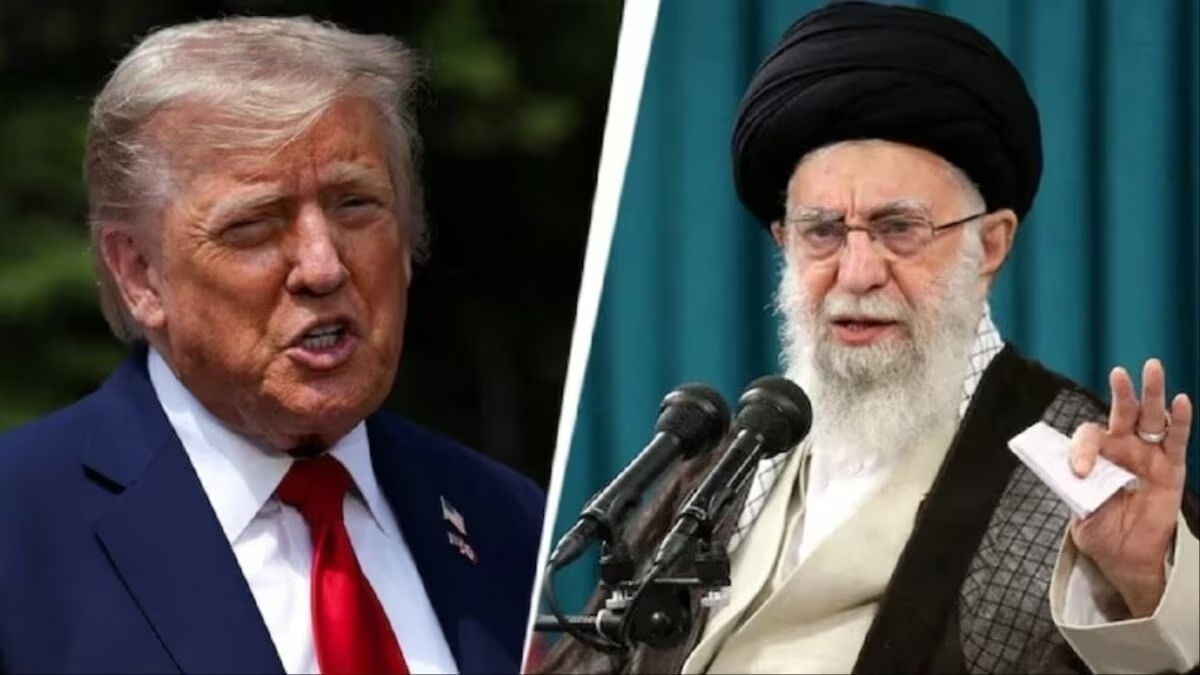
Tensions between the United States and Iran have reached a boiling point in the Arabian Sea. The increasing presence of American military forces raises concerns of inevitable conflict between the two nations. On one side, U.S. President Donald Trump issues stern warnings, while on the other, Iran's Supreme Leader Ali Khamenei remains unwavering.
Two rounds of negotiations over the nuclear agreement have occurred between the two nations. Discussions have revolved around nuclear enhancements, lifting sanctions, and regional security. Despite this, the distinct red lines of both parties remain visible.
Read more:
According to sources, the Trump administration is considering a proposal allowing Iran very limited or 'token' nuclear enhancement, provided no potential exists for nuclear weapon creation.
Source: aajtak
A senior administration official hinted that if Iran offers solid and technically reliable guarantees, the U.S. might consider this option.
After taking stringent measures under IEEPA and other sanction laws, Trump seeks a 'politically sellable' agreement. The official made it clear that if Iran wants to avoid conflict, it must present a proposal that the U.S. cannot refuse.
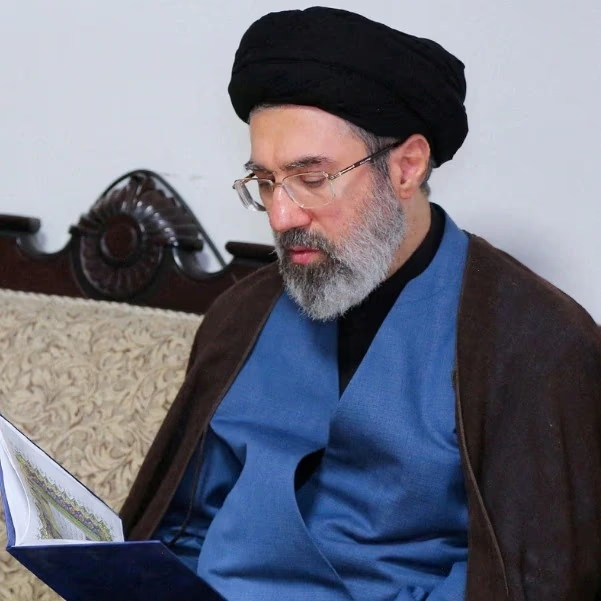
However, military options remain on the table. The Pentagon has provided Trump with several possible military strategies, including a direct plan aimed at targeting Ali Khamenei and his son Mojtaba. A senior adviser stated, "The President has not yet decided to attack, but he may at any moment."
Iranian Foreign Minister Abbas Araghchi announced that Iran would soon present a comprehensive proposal. He emphasized that the aim of negotiations is to ensure that Iran's nuclear program remains entirely peaceful. He also claimed that during the recent meeting in Geneva, the U.S. did not formally demand 'zero enrichment.'
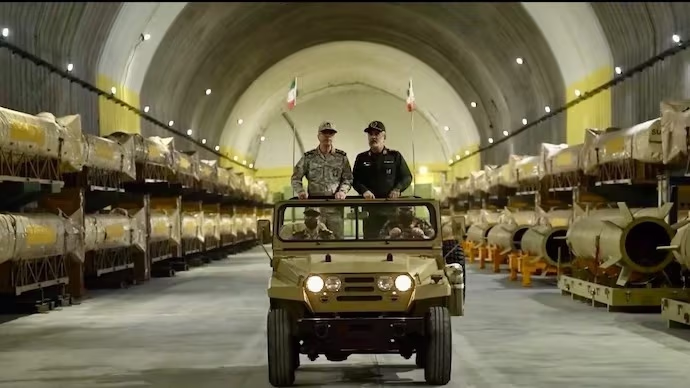
Source: aajtak
Read more:
The American position remains 'zero enrichment,' but discussions could entertain very limited enhancements under strict inspection as part of a proposal.
Rafael Grossi, head of the UN's nuclear watchdog, is also engaged in discussions about technical measures. Potential steps could include the return of international inspectors, stringent monitoring, and dealing with the stockpile of highly enriched uranium.
Gulf Nations and mediators Oman and Qatar agree that any agreement must be one both sides can claim as a victory.
Currently, the ball is said to be in Iran's court. Should Tehran's proposal fail to meet U.S. conditions, the possibility of military action cannot be dismissed. The forthcoming days could prove crucial for regional and global politics.