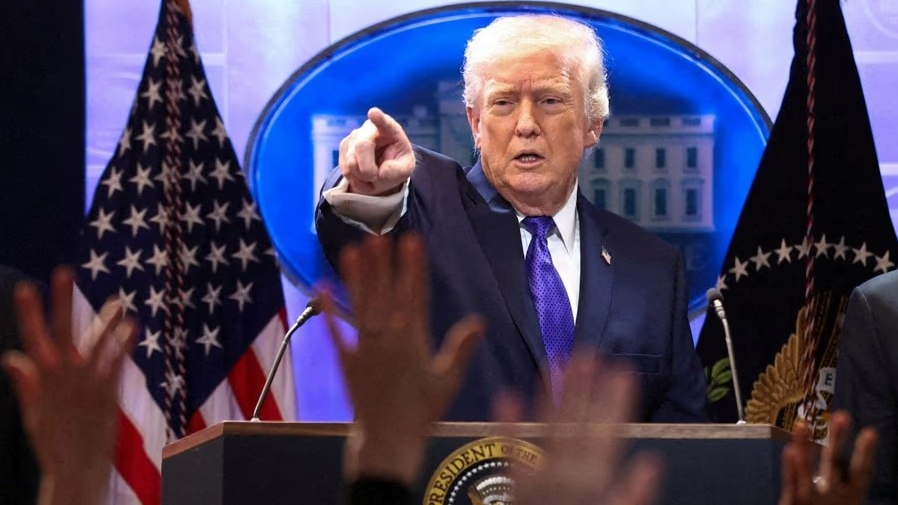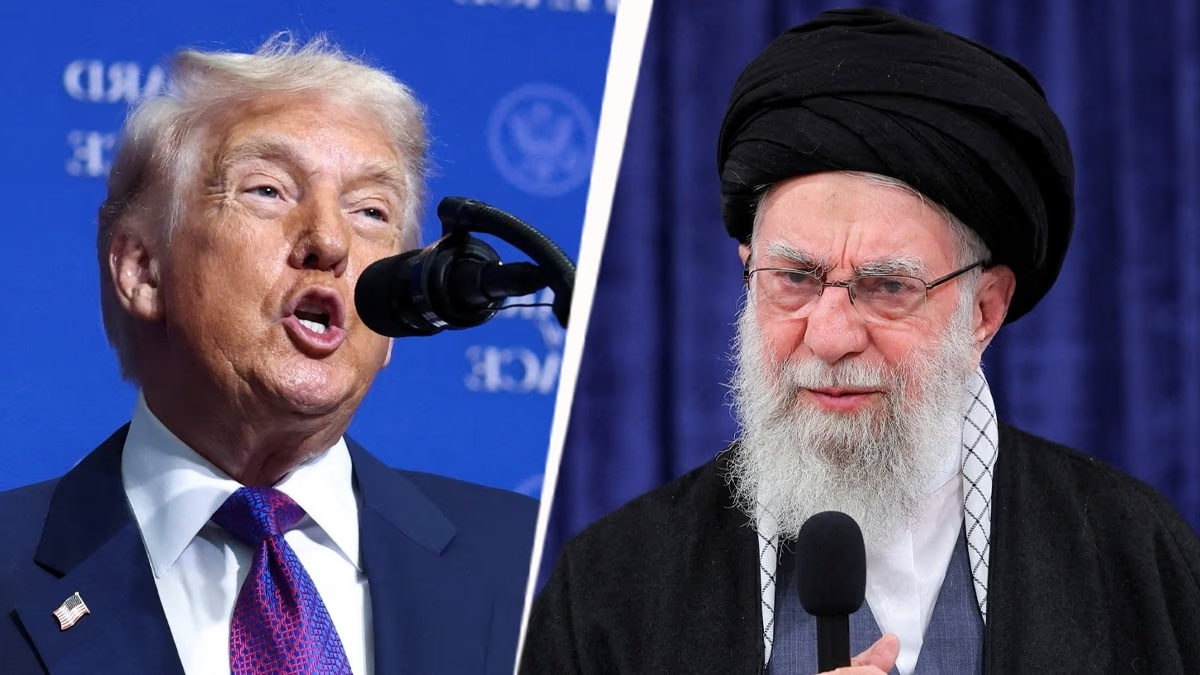
The U.S. has been steadily increasing its military presence in the Middle East. Recent deployments of additional warships, fighter jets, and air defense systems suggest that if diplomatic negotiations fail, a military option might be considered. President Trump has repeatedly emphasized this.
Should President Donald Trump order an attack, the repercussions would not be confined to Iran alone. Supreme Leader Ali Khamenei has warned multiple times that such a situation could destabilize the entire region.
Read More: If U.S. troops land in Iran, who will win? Discover the true power of Khamenei
Speculations abound about potential U.S. targets in the event of an attack, but the outcomes remain uncertain. Here are seven possible scenarios that could shape the direction of this crisis.
1. Limited Strikes and Political Change in Iran
The U.S. may focus targeted air and naval strikes on sites associated with Iran's Revolutionary Guards, missile sites, and nuclear programs. It is anticipated that the Iranian leadership would be the main target of the U.S. coalition. In this scenario, Iranian leadership might weaken, opening the door to regime change. However, the cases of Iraq and Libya show that even with the removal of the regime, instability may persist for an extended period.
2. Regime Changes Its Leadership Instead
A second possibility is that despite military pressure, the Iranian leadership remains in power but alters its policies. This could involve reducing support for regional armed groups, limiting missile and nuclear activities, and easing internal restrictions.
Some analysts compare this to the "Venezuelan model," where external pressure didn't result in a regime change, but policy shifts occurred once there was a leadership shift. However, given Iran's longstanding resistance to change, significant reforms are considered unlikely.
3. Weakening of the Regime Leading to Military Rule
If U.S. attacks weaken Iran's power structure, but protests fail to gain control, security forces may assume power. The Revolutionary Guards hold substantial influence in politics and the economy, and a military-led government could emerge amid post-attack disorder. Large-scale fragmentation within the state's apparatus has not yet occurred during protests.
4. Iran's Countermeasures
Iran has warned that it will respond to any attack. The Khamenei regime has made it clear that American bases could become targets. Iran might use ballistic missiles and drones to strike U.S. military bases in the Gulf region, including countries like Qatar. Additionally, it could attack countries perceived as U.S. allies, such as Israel or Jordan. Several Gulf Arab countries fear that the response to U.S. action might also land on their soil.
Read More: Trump’s ‘Two-Phase Plan’ on Iran! First Air Strikes, then Major Action if Khamenei Defies
5. Potential Closure of the Strait of Hormuz
Iran might mine the waters of the Strait of Hormuz, situated between the coasts of Oman and Iran, or obstruct shipments. Nearly a fifth of the world's oil and gas passes through this route. Any interference could impact global energy markets. Such a move would also harm Iran's economy, which relies on oil exports.
6. Collapse of Governance and Chaos
There is also the possibility that leadership falls, but no clear governance structure emerges afterward. With a population of over 90 million people, Iran could face internal strife. Ethnic groups such as the Kurds, Baluch, and Azerbaijanis might take action to secure their territories in the absence of leadership.