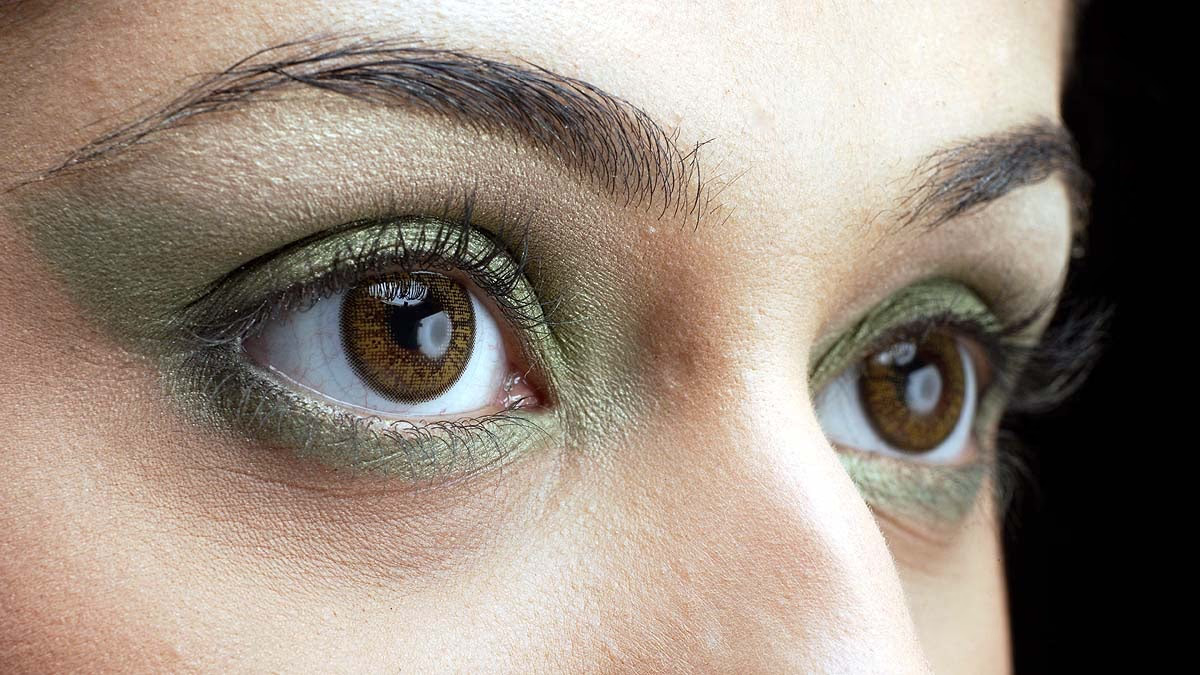
Did you know some women can see 100 million colors, while the average person can only perceive 1 million?
That's no magic, but a rare scientific phenomenon called Tetrachromacy. These exceptional women see colors invisible to men.
How many colors does an average human see?
Our eyes contain three types of cone cells which recognize colors...
Red
Green
Blue
By mixing these three, we can perceive about 1 million colors, a condition known as Trichromacy. Most people, both men and women, are trichromats.
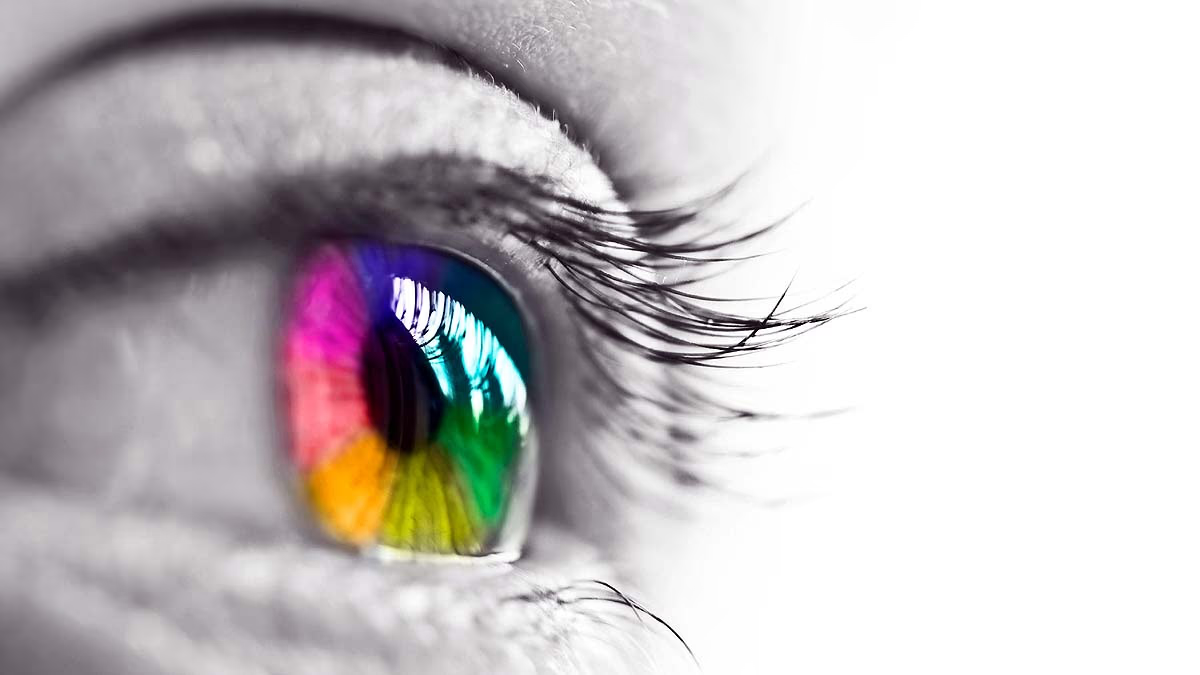
Source: aajtak
What is Tetrachromacy?
In rare cases, especially among women, they possess a fourth type of cone cell. This additional cell captures different wavelengths, allowing them to see up to 100 million colors, discerning minute shades that appear identical to most.
This isn't about new colors, but a richness in shades. For instance, where we see 100 shades of green, they can distinguish 10,000.
Why is it more common in women?
It's a genetic factor, as the genes for red and green cone cells reside on the X chromosome.
Women have two X chromosomes.
If one X has a normal gene and the other a variant, a fourth cone cell can develop.
Men only have one X chromosome (XY), making it rare for them.
Scientists estimate that 2-3% of women might have this genetic trait, but only a few (perhaps a few hundred) fully utilize it.
How is this connected to birds?
The evolution of tetrachromacy links to birds. Many birds like parrots and pigeons are tetrachromats or even pentachromats. Their fourth cone cell sees ultraviolet light, helping them find ripe fruits, nectar, and mates easily.
Source: aajtak
Over time, ancient mammals had only two cone cells. Primates, our ancestors, evolved a third to see ripe red and yellow fruits amidst green foliage. Human Tetrachromacy is a rare activation of this ancient system.
Does it really work?
Yes, it fully works in some women. A famous example is the Australian artist Concetta Antico, whose artwork reveals thousands of shades. Scientific tests show that some women can discern more colors, but it's not universal. While many might have the genetic potential, the brain doesn't always activate it.
How can you find out?
There are online tests displaying very similar shades. If you can easily differentiate them, you might possess this ability. However, proper lab testing is crucial for confirmation.
Tetrachromacy is a wonderful gift of nature, allowing some women to experience an enriched world of colors. It's a reminder of the hidden mysteries in nature and the limits of our own vision. If you're a woman noticing an acute sense of color, you could belong to this rare group.