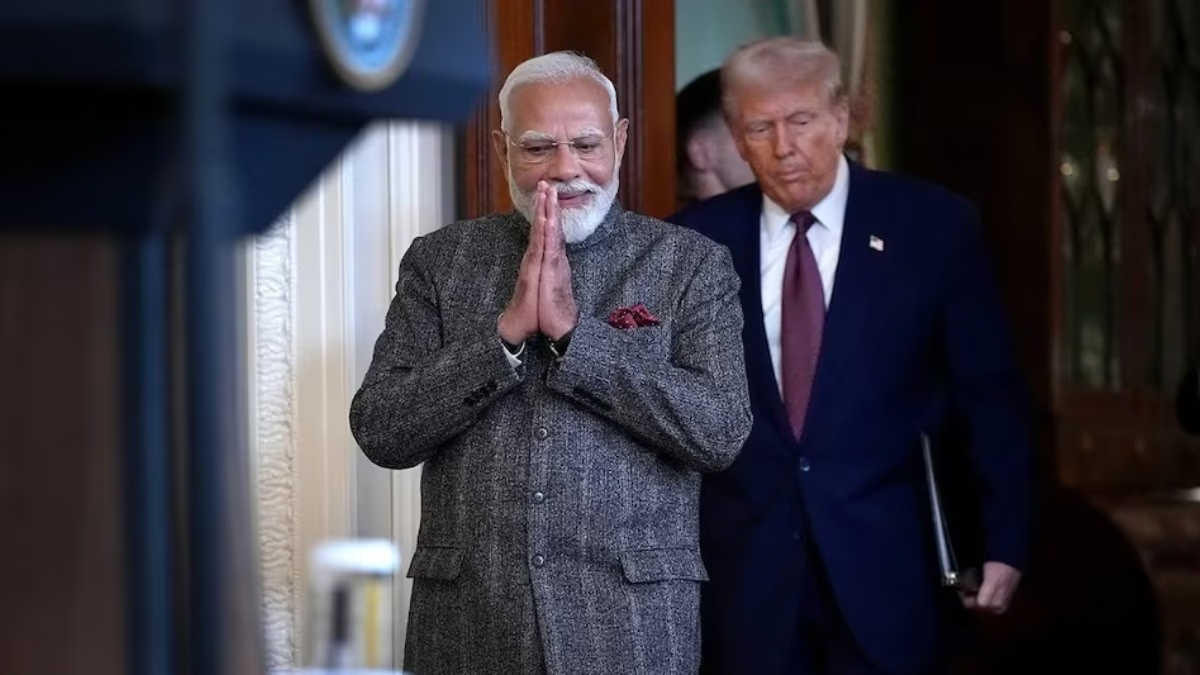
The announcement of the India-US Trade Deal has been made, the framework has been issued, and after the release of the factsheet, there has been a significant quiet change from the US side relating to pulses. Indeed, the US's attempt to include Pulses in the deal with India did not succeed, as India’s uncompromising red line strategy disrupted Donald Trump's entire plan. Let's discover how the Modi government’s firm stance in favor of farmers visibly influenced this trade agreement.
Trump's Strategy on Agricultural Products Failed
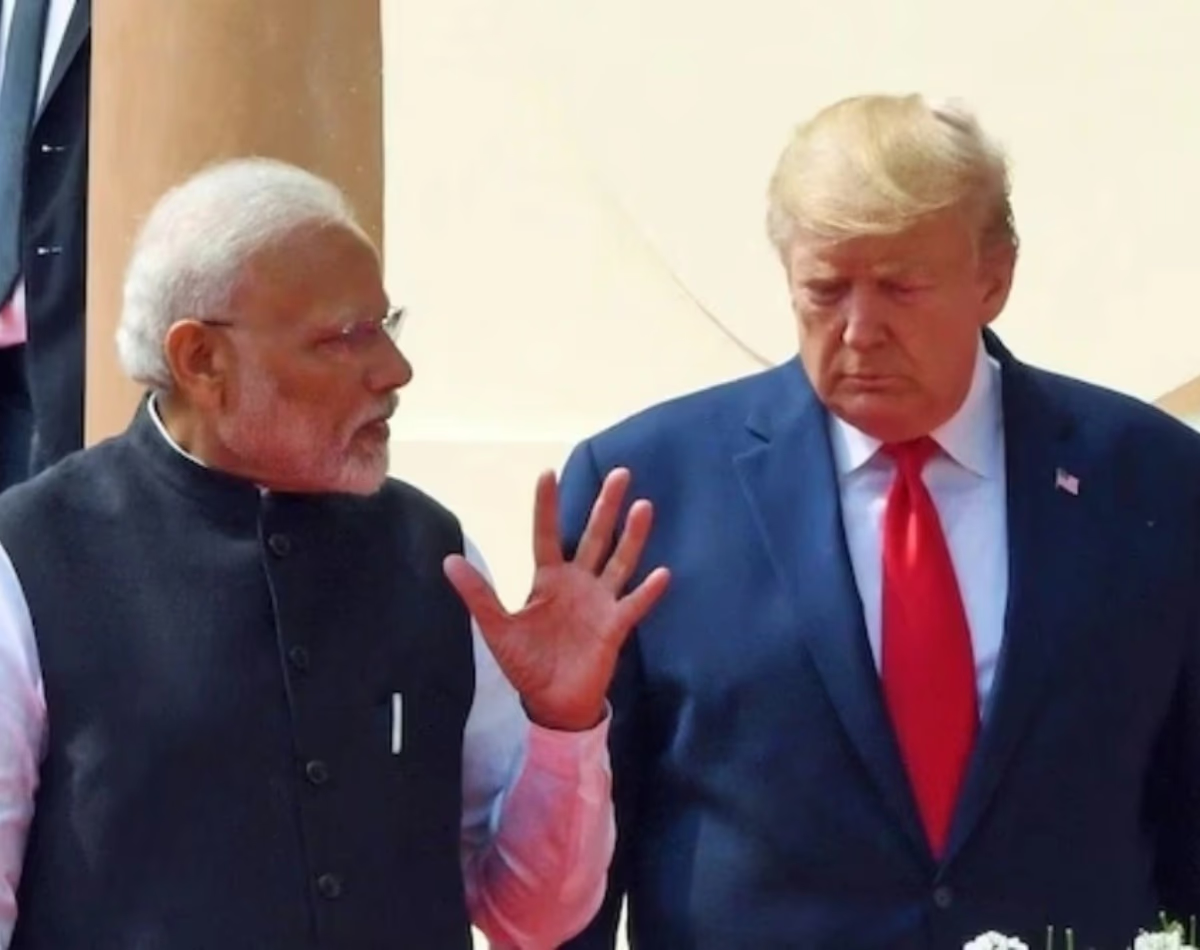
Firstly, let’s talk about the success of India’s strategy aimed at ‘pulses.’ In recent days, Donald Trump had signed an executive order on the India-US Trade Deal. Following that, both nations issued the framework and the factsheet of the deal. However, a new twist came when the US made a sudden change in the India-US Trade Deal Factsheet, which was particularly favorable to India. The White House discreetly removed all mentions of Indian Pulses from its tariff list, meaning Pulses weren't part of this deal.
Reviewing the revised India-US Trade Deal factsheet, under which Indian commitments to buy $500 billion worth of US goods have been shifted from obligatory to intentions or plans—that is, it’s not binding. Moreover, as per the info available on the US White House website, the word agriculture has been removed from the product category list under the deal. Certain goods, including pulses, have been kept out of the Tariff Cut list.
Source: aajtak
India Had Already Drawn Red Lines
Notably, in all trade agreements India has engaged in so far, it has excluded its agricultural and dairy sector. To ensure no compromise on the nation’s farmers’ interests, India had already drawn these Red Lines. This remained a significant reason for the prolonged stalemate in the India-US Trade Deal, as Donald Trump insisted on Tariff-Free entry into the Indian market for American agri-dairy products, whereas India remained firm in its stance, and the results are now evident.
What Was India’s Approach to the Agri-Dairy Sector?
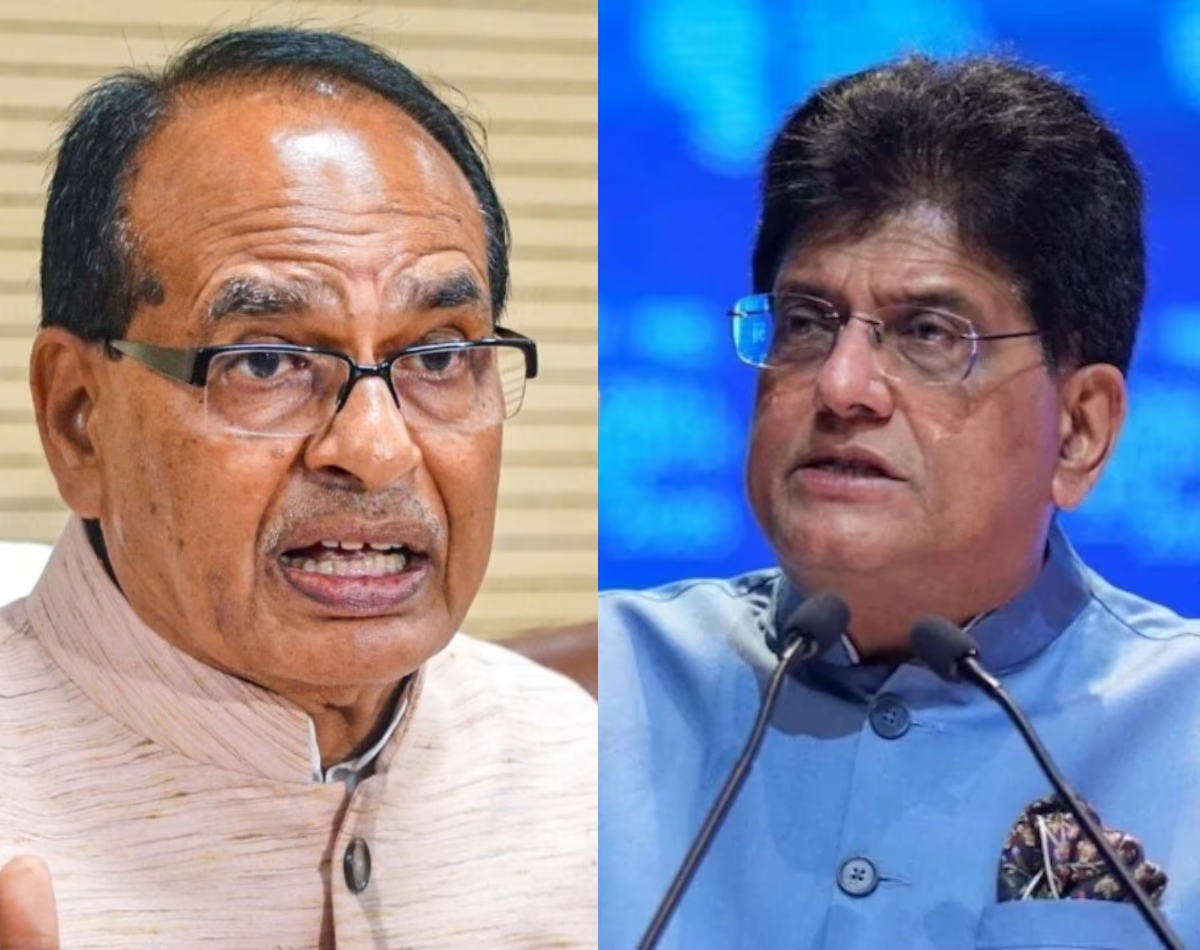
It is notable that from the initiation of talks on the India-US Trade Deal to its finalization, India's stance on the Agri-Dairy Sector has remained clear. When the US escalated pressure to gain entry for its products in the Indian market, last July, Indian Agriculture Minister Shivraj Singh Chouhan firmly declared that India would not succumb to pressure and would not compromise on its core interests, especially concerning its farmers.
He stated, “Nation First is our core mantra, and no negotiations will happen under pressure. Discussions will keep the interests of Indian farmers at the forefront.” With the announcement of the India-US Trade Deal, it remains clear to this day that this agreement will cause no harm to Indian farmers and their agriculture. There is no product included in this that could impact the livelihood of Indian farmers or the nation’s agriculture.
Source: aajtak
Piyush Goyal Also Outlined What’s Excluded in the Deal
Besides Shivraj Singh Chouhan, Union Commerce Minister Piyush Goyal mentioned post the announcement and framework release of the trade deal that this agreement reflects India’s commitment to safeguarding farmers' interests and sustaining rural livelihoods. Sensitive agricultural and dairy products like corn, wheat, rice, soy, poultry, milk, cheese, ethanol (fuel), tobacco, certain vegetables, and meats are fully preserved.
India: Largest Producer and Importer Too
Considering only pulses, India stands as the largest producer, consumer, and importer globally and has continuously emphasized self-reliance in this sector. Over the past few fiscal years, the production figures show, according to reports, that India’s pulse production hovered around 26 million tons in 2022–23, roughly 24 million tons in 2023–24, and between 25–27 million tons in 2024–25.
States like Madhya Pradesh, Maharashtra, Rajasthan, Uttar Pradesh, and Karnataka are the largest producing regions. India also exports pulses to numerous countries where Bangladesh, Nepal, UAE, Sri Lanka, the US, and Canada are prominent. When it comes to imports, a record 7.3 million tons of pulses were imported in 2024–25, covering nearly 15% or more of domestic consumption.